
Temu Watch #9: Temu's US Recovery
How Temu recovers from the US tariffs and moves towards profitability


Contents
Things that caught our attention
Tech Buzz China in the Media
Inside the China Room with Jiang Jiang, August 13th 2025, What Silicon Valley Learned in Shanghai: China’s AI boom - with Rui Ma
The Wire China, August 10th 2025, Rough Times at SenseTime
Tech Buzz China Trips to China


Introduction
In recent Temu reports, we have predicted that the cancellation of ‘de minimis’ in the US would not have a showstopping impact on Temu’s business. Temu did, however, temporarily halt its fully managed business, in which it ships parcels from China to US consumers, when the cancellation became effective on May 2nd. But as I shared in a recent keynote in Berlin (part of which is included below), halting that business was not the result of the cancellation of ‘de minimis’ itself, but the 120% tariffs that were applicable at that time.
When, on May 12th, the tariffs came down to 54%, Temu restarted its fully managed business, no longer just relying on semi-managed and local-to-local businesses from US warehouses.
But Temu has made significant changes to their models and the logistics, and has shown their resilience to trade war antics. In this new Temu Watch, which is based on five detailed interviews with people close to Temu, we update you on the latest developments.
Free subscribers can read about the status of Temu in various markets around the world. Paid subscribers will learn how Temu changed its business models, advertising strategy, logistics and what the outlook is on the rest of the year, including Temu’s expectations for profitability.
Become a paying subscriber to unlock the full report and support our in-depth research into key China tech trends.
Ed Sander, Tech Research Analyst

Markets
Temu's has been performing well outside the United States. Globally, Temu's year-on-year growth rate in the second quarter reached at least 30% while it exceeded 20% in Europe. Temu's expansion speed in Europe remains strong, partly because the company has transferred 20% to 30% of its advertising budget used initially for the US market to Europe.
Emerging markets such as Central and Eastern Europe, Latin America, Poland, Brazil and Southeast Asia also showed significant growth momentum. The US market’s share in Temu’s GMV was less than 40% last year, but even a 20%-30 % drop can be offset by growth in other regions. The company is optimistic about the vast market potential in the regions above, as well as Japan and South Korea.
Temu achieved a global GMV of approximately $35 billion in the first half of the year. [1]
Still, in the field of global trade and e-commerce, tariffs remain a significant trade barrier. And not just in the US. Take Brazil, for example, its tariffs are nearly 30%, and starting from February 2025, the customs clearance process has become more complicated. On the other hand, in countries such as Japan and South Korea, foreign merchants face obstacles in setting up online stores, such as the requirements of local identification and handling of finances, which pose a considerable challenge to foreign merchants.
Europe – tightening regulations
Temu has established a German division and is aggressively recruiting European suppliers of food, confectionery, beauty products, and other FMCG items. They are expanding their original value proposition of ultra-cheap Chinese goods and betting their future on also becoming a legitimate FMCG player in Europe. [2]
However, changes in the import tax policies are looming. The European €150 threshold for import tax exemption is scheduled to be abolished in 2028, but many parties in the EU are calling for an earlier date. Given that most Chinese small packages are worth less than €50, the new policy will impact these goods.
Despite potential price increases, sales are not expected to be affected for more than two to three months after the implementation of the policy. This situation is similar to the market reaction when Amazon implemented the 20% VAT policy in Europe in 2021. At that time, the market experienced some fluctuations in the early stage, but recovered and set a new high within a quarter. It is expected that the new small package tax-free policy will experience a similar period of fluctuations and gradually stabilise after about one to two months. Consumers may express dissatisfaction with the new policy on social media, but this sentiment usually subsides quickly.
In addition, Europe's requirements for logistics and environmental certification are becoming increasingly stringent, and small packages must comply with WEEE (Waste Electrical and Electronic Equipment) environmental standards. Although the cost of ecological labels is not high, the related labour costs have increased significantly, and the compliance requirements of products have become more complicated. These changes will have a profound impact on the operating model and cost structure of cross-border e-commerce platforms.
With the implementation of the new European small package tax-free policy, combined with the existing logistics commodity inspection, merchants will face higher costs. In the one to two months after the implementation of the regulations, profits are expected to fluctuate, and the decline may reach 20% to 30% or even more. Although the total transaction volume of the platform may remain unchanged during this period, the profits of merchants will be significantly reduced.
Meanwhile, the EU Commission has preliminarily found Temu in breach of the Digital Services Act concerning illegal products on its platform. Consumers shopping on Temu are very likely to find non-compliant products among the offerings, such as baby toys and small electronics. If the decision is upheld, it could result in a fine of up to 6% of the total worldwide annual turnover of Temu and trigger an enhanced supervision period. Besides this case on illegal and dangerous goods, the EU is also investigating Temu for illegal dark marketing patterns in its app. [3]
Southeast Asia
Although Temu has achieved success in some markets, expansion in the Southeast Asian market still faces challenges, mainly due to regulatory barriers and fierce market competition. In the region, the company's prices and average order value are less competitive than those of Shopee and Lazada. Amazon, on the other hand, has launched a cheaper product line, leading to more intense market competition. More notably, Shein provided substantial subsidies in its new round of funding, undermining Temu's marketing advantage.
Besides competition, Temu has encountered some other major obstacles in its expansion in Southeast Asia. First, Indonesia was concerned that Temu might impact local industries and refused to issue a business license. To address this challenge, Temu tried to enter the market by acquiring local companies, similar to TikTok's strategy with Tokopedia, but this attempt was not approved. Although Indonesian company Bukalapak expressed its willingness to cooperate, it still has not received regulatory approval.
US – the impact of tariffs
Changes in US tax policies and de minimis policies have had a significant impact on the performance of major cross-border e-commerce platforms in the first half of 2025. In the first quarter of 2025, Temu's total merchandise volume increased by 15% to 20% compared with the same period last year. However, due to the adjustment of the de minimis policy in April, sellers became hesitant in managing inventory. As we discussed in Temu Watch #8, Temu suspended marketing investment in the US on May 1 when the US eliminated duty-free shipping for small packages under $800. This led to a halving of Temu's fully managed supply in the second quarter, with 30% of it turning to semi-managed, which in turn caused its total merchandise volume to fall by 20% to 30%.
These changes have had a significant impact on Temu's market share and revenue. After the business was interrupted in early May, about a third of merchants abandoned the US market and turned to Europe or other regions. Some merchants chose to sell on other platforms, such as Amazon, after a decline in sales due to price increases.
After May 12, with the adjustment of tariff policies, marketing activities resumed. Temu restarted its cross-border parcel service (fully managed model) to the United States in late May, but many products were not put back on the shelves until July. As a result, from May to June, the order volume in the United States was not ideal and did not gradually recover until late July.
Tech Buzz China’s Ed Sander explained at the K5 Conference in Berlin in June why the cancellation of de minimis will not ‘kill’ Temu.
Some products with high historical sales and strong compliance were put back on the shelves at the end of June. By July, sales had returned to April levels, and a large-scale promotion is expected in early August. Regarding the number of SKUs, the number of fully managed SKUs in the United States was about 4 million at the beginning of the year. By early July, this number was about 3.3 million. It is expected that the number of SKUs will have recovered to more than 3.5 million by the end of July. However, the number of fully managed SKUs may not return to 4 million until August.
After the fully managed model was restored, major merchants switched their core products from the semi-managed Y1 model (see below) to the fully managed model. Some merchants who shifted their focus to Europe began to reintroduce European inventory to the US market as the US strategy resumed.
Temu's operations are expected to rebound in the US. Specifically, it reached 60% to 70% of past levels during Prime Day (July 8-11), and is expected to recover to 80% to 90% by August and September. By early September, 60% of the business volume previously lost in the fully managed model is expected to have recovered.
Sino-US trade relations are expected to enter a new phase on September 1, and tariff policies may be further eased. Before the Geneva meeting on May 12, issues related to fentanyl and trade tariff disputes frequently appeared, being mentioned once every 1-2 weeks, explicitly targeting China. However, since the Geneva meeting, US President Trump has no longer mentioned fentanyl and trade tariff differences.
Although negotiations between China and the United States on issues such as rare earths have not yielded concrete results, the overall atmosphere remains positive. At present, the current tariff level may have reached a peak of 30% (excluding small packages, which are currently exposed to 54%), while tariffs on commodities are expected to drop to 20%. However, given the limited bargaining chips that China can offer, it is almost impossible to return to the original tariff level.
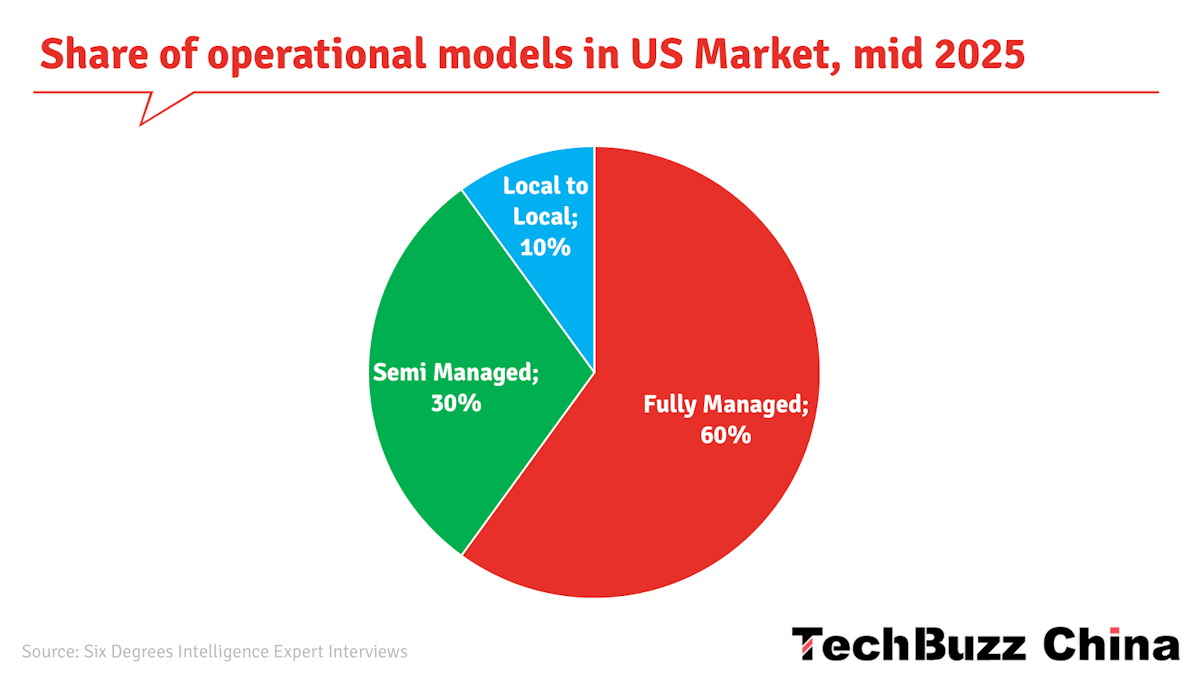
In the US market, the composition ratio of GMV is 60% for fully managed, 30% for semi-managed, and 10% for local-to-local. The tariff on fully managed deliveries has been significantly reduced from the original maximum of 120% to about 54%, which has almost restored the cost of direct shipment to the level before the policy adjustment. By adopting the T01 customs clearance (bulk import of goods over $2500) and a B2B2C model, Temu has successfully kept the prices of most goods unchanged, with only a few highly competitive categories having a slight price increase.
A short explainer about custom policies, courtesy of Latepost.
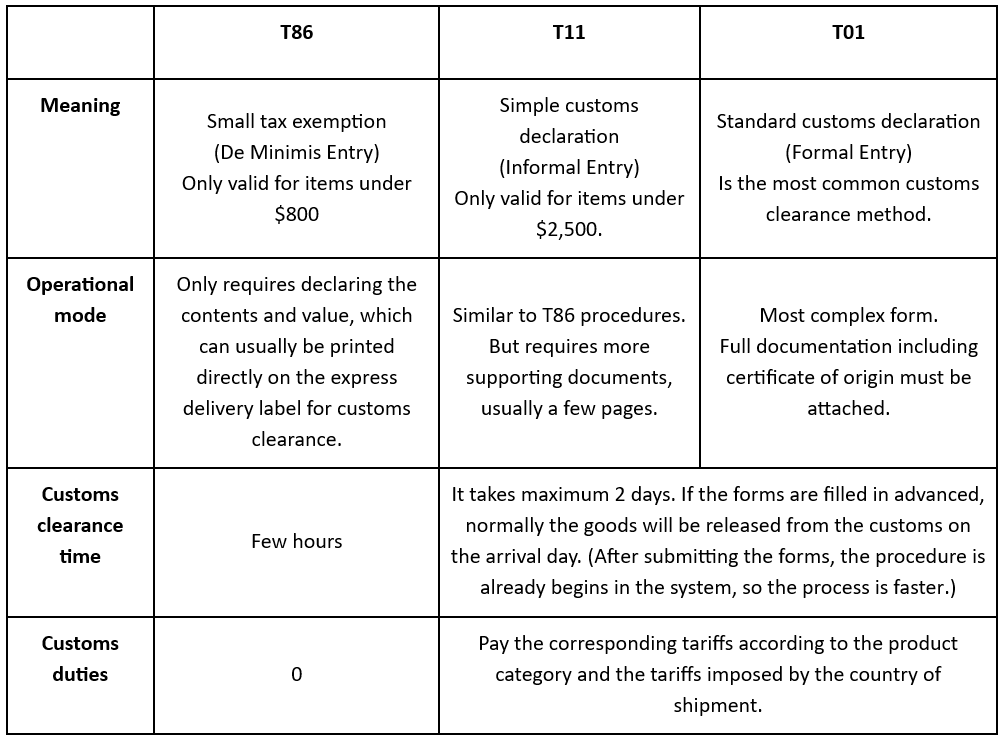
There are three common customs clearance methods for cross-border e-commerce in the United States. Source: LatePost. [1]
After the cancellation of the T86 (de minimis) policy, cross-border e-commerce goods entering the US have only two options:
Simplified customs declaration (T11) for goods valued under $2,500
Standard customs declaration (T01)
Both procedures involve automated inspections, so the real slowdown isn't the customs formalities, but the queues. If forms are filled out in advance (essentially queuing in advance), goods can generally be released the same day. Even if forms are filled out upon arrival, customs clearance is still possible within two days. Therefore, the customs clearance process doesn't significantly impact the fulfilment timeframe for Chinese goods. [1]
T01 is the most stringent customs clearance method, requiring the value of goods to be estimated strictly based on the original invoice and country of origin. When the total value of a shipment is high enough, the T01 customs clearance cost per item can be very low. Direct mail parcels are taxed based on the retail price. At the same time, when merchants stock up domestically and move goods to overseas warehouses (as in Temu’s semi-managed model), the value of the goods is declared based on the "purchase cost price" commonly used in corporate trade, and the tax bases of the two are different. [1]
The United States is also stepping up its efforts to prevent countries close to China from engaging in transhipment. In early July, the United States' new tariffs on Vietnam specifically included a tax requirement for goods transiting through a third country. On July 30th, Trump signed a new executive order suspending the duty-free policy for small packages from all countries starting August 29th, completely severing the tax-free access provided by transhipment. [1]
Offloading to Canada
As traffic in the US app and website has not yet fully recovered, some goods are shipped to Canada first. In the past, goods were shipped from Canada to the United States to circumvent the high inspection rate and certification issues in the United States, but now they are mainly shipped from the United States to Canada. From a logistics perspective, goods shipped from the United States to Canada are usually delivered within 3 to 4 days.
This model of direct shipment from the United States to Canada can not only digest inventory but also improve distribution efficiency in Canada. However, after the fully managed business in the United States is restarted, the transhipment from the United States to Canada will be terminated to avoid additional tariffs. In July, the daily order volume in the Canadian market was about 100,000. With the expansion of the US business in the future, Canada will operate independently.
The rest of this article is accessible for paid subscribers.
Changes to the operational models
Temu now has several different operational models (click on the links for our earlier explanations):
Local-to-Local
In Temu's global business, the fully managed model accounts for more than 70% of its operations. This model is prevalent in regions such as Europe, Central and Eastern Europe, Latin America, Southeast Asia and Poland. Merchants prefer this model because it is easy to operate and has low costs. However, Temu strictly controls the price of goods and unifies the supply price globally, which limits the profit space of merchants.
After May 2, the fully managed model almost stopped operating in the US, but it did not end completely. The platform introduced a new semi-managed Y2 model (see below) and a 3P model. Still, due to the low acceptance of merchants, the fully managed model was subsequently restored and upgraded following May 12th (see Temu Watch #8).
Changes to the fully managed model
A new fully managed service was implemented in July, which showed a significant improvement over the previous model. Under this new model, merchants need to start paying the corresponding tariffs. The transportation strategy has also been adjusted. For large and heavy goods, Temu prioritises sea transportation; for small goods, regardless of their weight, it tends to choose air transportation under the fully managed model. In addition, under the new fully managed model, merchants must agree to conduct comprehensive advertising on the platform, and even merchants who choose the semi-managed model need to follow this requirement (see ‘Merchant Advertising’).
The new fully managed model is expected to bring an increase in revenue for Temu, which is different from the previous model, which has struggled to become profitable. Currently, it is only open to medium-sized and large merchants, as well as some new merchants with resilience. About 20% of merchants who have seriously violated regulations cannot resume cooperation unless they re-register their stores.
Development of the semi-managed model
The semi-managed model includes two methods: Y1 local warehouse storage, and Y2 domestic air transportation. Y1 is suitable for a variety of hot-selling products and can avoid the risk of cross-border tariffs, but it will occupy a lot of funds for merchants. This model can avoid the 54% tariffs altogether, and the logistics time is 1 to 3 days, which is comparable to Amazon's speed. However, it also faces the challenge of high supply chain costs and limited growth space in the short term.
Temu launched a new Y2 service at the end of April, allowing sellers to ship directly from China, clear customs after arriving in the United States by air, and then be delivered by the logistics company cooperating with the platform. The Y2 model is a just-in-time (JIT) order system, which ships orders from China only after they are placed, eliminating the need for pre-stocking. Even if sellers have already signed up for other programs, such as fully managed or semi-managed Y1, Temu requires them to re-sign for Y2. Y2 provides traffic support and advertising resources to large sellers (such as key accounts), primarily covering North America.
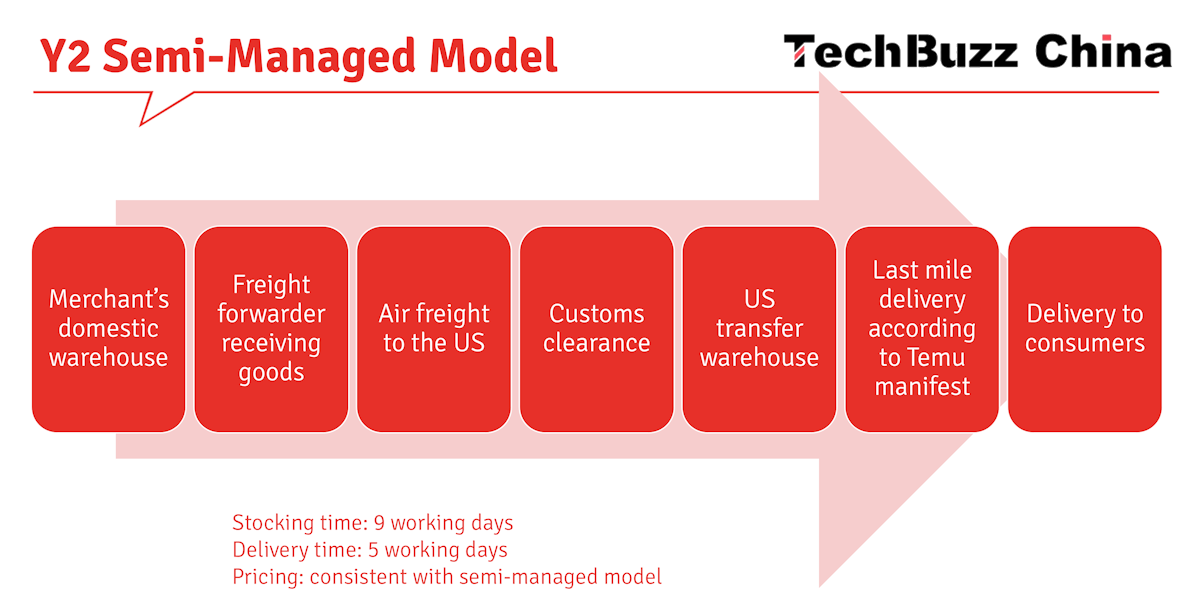
Compared to the Y1 model, the Y2 model has caused the merchant's EBITDA to decline, but the sales volume has rebounded, which is generally beneficial.
These two types of semi-managed models have increased the frequency of product display on the homepage and have dedicated traffic entrances, such as local warehouse search options. During the tariff fluctuations after April, the semi-managed business of some merchants was hardly affected. Although the project is still seeking partners and the business is expanding rapidly, the prices of goods and the operational processes of sellers have not yet been fully stabilised.
Third-party business
Although the third-party seller business of the Temu platform is growing slowly, the number of participating merchants is increasing. Temu expects to resume and upgrade its fully managed services first, while gradually advancing the development of third-party business. If the platform fails to resume fully managed services, many merchants may choose to switch to the third-party model. In the long run, the platform aims to minimise its reliance on fully managed services and will provide moderate support to third-party businesses.
Products
Due to the adjustment of tax policies in the US, about 7% of low-priced goods have been removed. Temu cleans up non-compliant goods every month, including electronic products. During the period when the fully managed service was interrupted, the loss rate of goods was as high as 70%. However, as the order volume increased, goods that were not in stock before were put back on the shelves. In addition, goods that did not sell well on other platforms or were cleared in the first half of the year will also be put back on the platform.
Semi-managed branded goods and clearance goods have become the main source of sales. At present, due to compliance issues, the proportion of electronic products that have been removed from the shelves is between 10% and 15%, accounting for 3% to 5% of all goods. In the US, Temu has adopted the T01 model (See ‘US – the impact of tariffs’), with stricter compliance requirements, increased supervision, and improved product certification standards, especially for electronic products and high-risk products.
Pricing
Among different markets, the average selling price in the United States and Europe is the highest, while the average selling price in Southeast Asia is the lowest.
In Temu's pricing strategy, the initial tariffs are mainly borne by merchants, and only a few high-quality merchants can receive a 10-20% subsidy. The price of goods was raised by 10% before the ‘Temu Hunter Week’ event (June 28 – July 19). This 10% increase may be used for future tariff payments and merchant subsidies.
After the fully managed model was restored in July, Temu observed some price adjustments in the US. About 55% of the goods maintained their original prices, while the prices of the remaining goods increased by an average of about 5%. Specifically, the price increases of daily necessities, clothing, accessories and small electronic devices ranged from 5% to 7%. The price increase of less competitive categories, such as small household appliances and beauty and personal care products, was relatively small, about 4%.
The price increase of some products is due to the rise in merchant costs, such as the cost of re-certification of 3C products being passed on. In terms of pricing strategy, merchants will refer to the prices of physical stores and competing platforms such as Amazon. To maintain price advantages, Temu increases its prices by only 8%-9% when competitors' prices rise by 10%-12%. For fully managed products that have not increased in price, the platform decided to implement a low-price strategy by reducing profits to attract users and re-establish a low-price image.
Some of the lower-priced products belong to the second quarter's inventory, and Temu plans to attract users while clearing them. This low-price policy is expected to continue until September, which is the peak season for e-commerce in the second half of the year. Although it may attract more users in the short term, if the supplier's profit cannot be guaranteed, it may affect product quality and supply chain stability. Temu needs to find a balance between price competitiveness and supplier relationships to ensure long-term sustainable development.
In the current market environment, Temu faces the challenge of balancing low-price strategies with supplier profits. In the fully managed model, the profit margin of suppliers is already minimal, with an average gross profit margin of only about 10%, and further price cuts may lead to losses. About 10% of merchants are loss-making due to penalties. To prevent this proportion from increasing, the platform avoids excessive price cuts.
For semi-managed goods, due to the high logistics and customs clearance costs, the prices of some goods increased by 5% to 10%. These adjustments have led to some changes in the price gap between the Temu platform and Amazon. The price difference between fully managed goods and Amazon was adjusted from 40%-60% to 50%-60%, while the difference between semi-managed goods and Amazon was adjusted from 70%-80% to 80%-90%. Despite this, the prices of most goods on the Temu platform are still lower than those of Amazon, mainly due to the lower traffic and commission costs of the Temu platform. Although the pricing of individual merchants may be higher than that of Amazon, Temu's price advantage has weakened overall, but the gap with Amazon has not changed significantly.
Merchant recruitment and profitability
Temu has adopted several features to attract and support merchants. For instance, merchants can increase exposure by offering discounts, and the platform will charge a 10%-20% coupon commission to them. This operating model is similar to the GMV Max advertising product of the ByteDance engine, which is designed to increase the visibility of merchants.
In the fully managed model, merchants can remain profitable, even in the face of US tariffs as high as 54%. This is because the platform will support them in various ways, including various subsidies. The proportion of these subsidies is usually between 10% and 20%, which reduces the actual cost that merchants need to bear to about 30%. Under this cost structure, merchants can still achieve a net profit margin of 3%-4%. These measures have effectively helped merchants maintain profitability in a high-tariff environment.
Under the semi-managed model, the merchant's profit is 10%-12%, which is similar to the level of Amazon. Following the success of local investment promotion, numerous US cross-border e-commerce companies have sourced products from China and Southeast Asia, subsequently joining the Temu platform. There are currently about 3,000 to 5,000 semi-managed merchants on the platform, and this number is expected to increase to 7,000 to 8,000 by the end of the year.
For overseas merchants, the entry requirements are more stringent. They must have a physical store or online store on platforms such as Amazon, Target, Costco, etc., and they need to provide relevant certificates. These measures not only balance the platform's revenue and merchant profits but also enhance the platform's competitiveness and development prospects, laying a solid foundation for future growth.
Temu does not support price increases by merchants. Meanwhile, the changes to the operational model have resulted in increased costs for customer service, rules and compliance, and advertising. Changes in other aspects are more minor, but tariff costs have become the main burden. Finally, competition among merchants has become fiercer, and price wars have intensified, which is also a significant challenge facing Temu.
Merchant advertising
Temu launched its advertising feature in April 2023, allowing fully managed and semi-managed merchants to run ads directly in the backend. The US was the first market to launch this feature, which was subsequently expanded to select European countries and now covers more European countries as well as South Korea. In terms of advertising, mid-sized merchants have become the primary force. Notably, smaller companies have also begun to advertise, indicating increasing engagement. Ad content has expanded beyond popular products to include more common items, indicating that more merchants are submitting ads.
A full-site promotion function is part of the fully managed service upgrade (see ‘Changes to the fully managed model’), and merchants need to agree to pay 6-8% advertising fees. This function is similar to the full-site promotion of domestic Chinese e-commerce platforms, which uses AI technology to help merchants place advertisements. Most merchants believe that full-site promotion can significantly increase sales when inventory is sufficient. However, sellers hope that the platform can provide a more precise breakdown of advertising costs to reduce their doubts. Large sellers are usually able to accept such advertising rates, while small sellers are more likely to be dissatisfied with them.
Regarding paid traffic resources and fully managed business, Temu plans to conduct a trial in the US market first. At the same time, when the fully managed business in five countries (UK, France, Germany, Italy and Spain) performs well, it will also be tried simultaneously. However, this promotion will not be fully launched in all countries, but will be carried out in markets with better performance.
Considering the market fluctuations, Temu will not force fully managed merchants to place advertisements in 2025. Starting from 2026, it will gradually promote fully managed merchants to participate in traffic placement in the United States, Europe, Japan and South Korea.
Under the semi-managed model, the platform recommends that merchants offer a discount of about 20% to obtain more orders, which is regarded as an advertising expense. Usually, merchants will provide discounts of more than 10%, thereby bringing additional profit margins to the platform.
Due to the increase in taxes, the cost of merchants has risen, the US semi-managed advertising business has performed poorly, and the willingness of merchants to place ads has decreased. Despite this, some hot-selling merchants continue to maintain a high willingness to place ads because of subsidies, and Temu allocates resources through smart coupons and other means.
In the semi-managed business, brand merchants and some stable mid-level merchants participate actively. Still, the participation of small merchants is low, and the overall penetration rate is not high. The advertising test results of fully-managed merchants are also not ideal. They failed to fully recover from the end of May to the beginning of June. The delay in listing goods impacted the effectiveness of advertising, causing dissatisfaction among merchants.
Sellers advertising on the Temu platform typically have budgets between $20,000 and $100,000. Temu employs a unique advertising strategy: when advertisers place ads on the platform, Temu provides an equivalent amount of advertising support on off-platform platforms like Meta.
If the €150 tax exemption in Europe is lifted, the primary impact will be on merchants, not the platform. Temu operates advertising platforms in both Europe and the US, but these platforms are not fully accessible and are restricted to specific regions. Concerns about the tax exemption changes have led some sellers to accelerate budget spending and increase their advertising spending outside the Temu platform, but the overall impact has been minimal.
Logistics
Pinduoduo's earnings in the first quarter of 2025 fell short of expectations, primarily due to increased investment in domestic and international operations. The company has established several new JIT warehouses in China, including in Guangzhou Baiyun, Weihai, Shandong, and Shanghai Lingang, leading to higher warehousing and logistics costs. Notably, Pinduoduo has not yet specified when it will reduce expenses, and it expects high investment to remain over the next three years.
Temu's overseas expansion strategy is progressing steadily. Temu has established over 50 self-operated warehousing facilities overseas. The company has established three self-operated warehouses in Germany, bringing its total to 10 across Europe. The company covers the European market through its German logistics network and adopts a just-in-time (JIT) and stocking model to reduce costs. To further enhance its logistics capabilities, Temu has also increased the number of certified warehouses, third-party warehouses, and freight forwarders.
To achieve profitability by 2026, the company is implementing several measures, particularly in logistics, to reduce costs. Specifically, the company has piloted community delivery and consolidation models in the UK, Germany, France, Italy, and Spain. Under this model, goods are shipped directly from the airport using a B2B or B2C small-to-large package conversion method. They are then consolidated by SKU and delivered to community delivery points for unpacking and labelling. This process improvement aims to reduce costs associated with warehousing, labelling, and multiple sorting and packaging. While forward logistics issues have mainly been addressed through ocean shipping, chartered flights, and overseas stocking, optimising reverse logistics remains a challenge. The company plans to continue its efforts to ensure the achievement of its established profitability targets.
US – the move to local warehouses
Due to the fluctuations in US tariffs, Temu stockpiled a large amount of goods, covering more than a dozen major categories and the top 20 best-selling products, which led to an increase in inventory risk.
Temu's warehousing system in the United States is mainly composed of self-operated warehouses and certified warehouses, with a total of about 110 warehouses. Among them, self-operated warehouses account for about 50%, certified warehouses account for about 35%, and third-party warehouses account for about 15%.
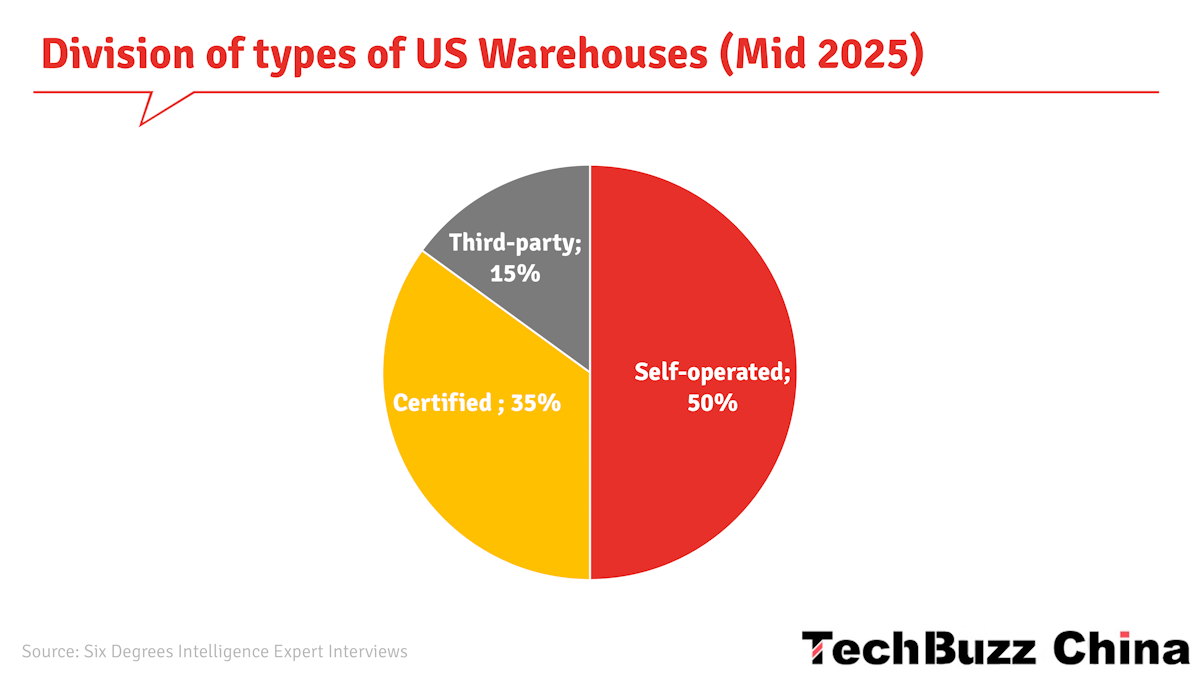
Temu's self-operated warehouses are directly managed and operated by the company, covering the work of shipping, classification and distribution. Temu bears all operating costs. The core advantage of self-operated warehouses is that they can integrate warehousing and distribution, thereby improving efficiency and reducing expenses. No new warehouses were added this year
Certified warehouses are warehouses managed by partners and are specifically used to store Temu's products. Some original third-party warehouses have been upgraded to certified warehouses. It is expected that after the fully managed business resumes in the second half of this year, the proportion of third-party warehouses will be further reduced.
Fully managed goods are now mainly stored in overseas warehouses, with Temu self-operated warehouses being preferred. Semi-managed goods are stored in certified warehouses first, but may also be placed in self-operated warehouses. Generally, the number of fully managed goods is greater than that of semi-managed goods. In the long run, as the proportion of fully managed ocean freight increases, the number of fully managed commodities is expected to gradually increase. This warehousing structure enables Temu to manage inventory flexibly, optimise operational efficiency, and control costs to a certain extent.
Temu faces many challenges and opportunities in implementing warehouse integration and logistics strategies. The success of warehouse integration depends not only on the type of warehouse, but also on the cooperation of merchants. Merchants must use labels and price cards specified by Temu. This warehouse integration service is particularly suitable for semi-managed merchants who use Temu warehouses, especially when Temu has price advantages in certain logistics channels (such as UPS). However, some merchants, especially those who operate large items or multiple platforms under the semi-managed model, may choose to ship their own goods for cost considerations. Temu flexibly allows some merchants to adopt separate warehousing and distribution, and even use their own warehouses and logistics channels.
Temu has made adjustments to its stocking standards, reducing the original requirement of more than 100 pieces of daily sales for seven consecutive days to 50 pieces. This change was made between April and June. In terms of overseas warehouse expansion, Temu has taken a cautious approach to the US market because the market outlook for the third and fourth quarters is still unclear. However, if things go well, it may add 20 to 30 overseas US warehouses by the end of the year. Temu chose to start the pilot with flexible certified warehouses and decide whether to expand further based on the order volume.
Transportation modes
When choosing a mode of transport, Temu needs to consider the quantity, cost and timeliness of the goods. Generally, large amounts of low-cost goods are more suitable for sea transport, while high-value, small-volume and time-sensitive goods should be transported by air. However, increasing the proportion of sea transport also faces challenges, mainly because the long transportation cycle may cause changes in market demand and increase the risk of unsalable goods.
For goods that are already unsalable, Temu has several options. They can choose to transship them to Canada, or return them to Hong Kong first and then ship them back to mainland China. However, in the United States, inventory transfer faces some difficulties. For example, the cost of shipping to Mexico is high, and the demand is insufficient. If Canada cannot digest these stocks, the pressure to return them to Hong Kong will be very high. Merchants are usually reluctant to destroy goods locally, which may lead to a large number of returns, which in turn impacts logistics and warehousing.
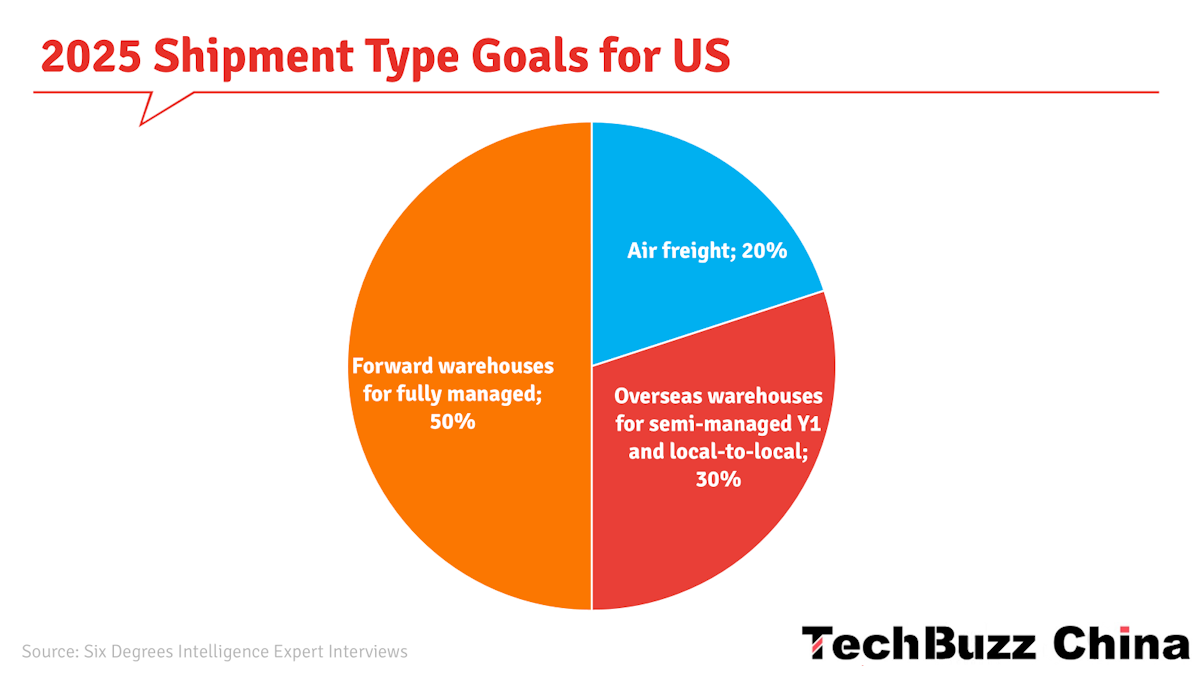
Regarding logistics strategies, it is expected that the increase in the share of sea freight from April to June will continue to September, and the proportion of air freight and sea freight may be close to half and half by the end of the year.
Temu's current fully managed goods mainly rely on air transport. Considering that customs clearance usually takes 2-3 days, Temu prefers air transportation for this model. Although the company is working to increase the proportion of sea transport, it is expected that air transport will remain the primary mode of transportation before September and at a high level before the Black Friday promotion season.
For the fully managed overseas (forward) warehouse model, goods are first transported to an overseas warehouse and then shipped from there.
Temu has set an ambitious goal to achieve an overseas delivery ratio of 80% (currently 40-50%) by the end of the year, with air freight accounting for the remaining 20%. The 80% overseas delivery target encompasses semi-managed and local-to-local deliveries (30%), as well as fully managed overseas warehouses (50%). It is not yet sure whether the goal of an 80% overseas shipment ratio can be achieved by the end of this year.
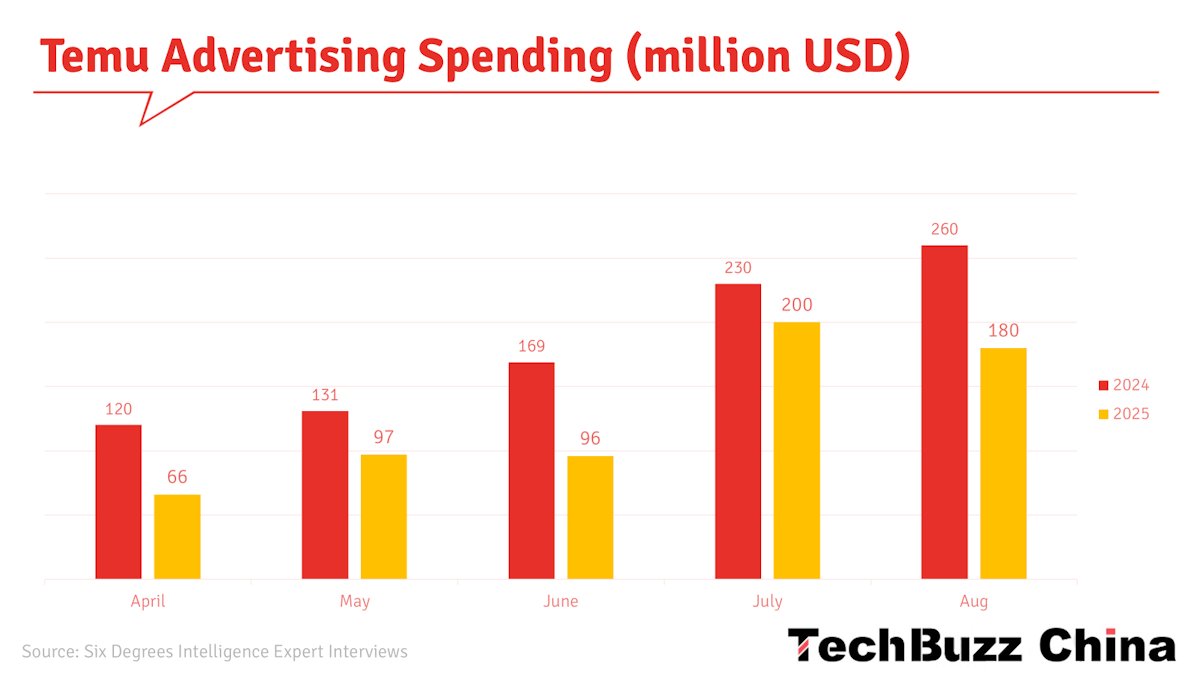
Advertising spending
Temu's ad spending strategy has changed significantly over the past year. Starting in April of this year, there is a fluctuating trend in Temu's ad spending. It invested $66 million in April, increasing to $97 million in May, and then slightly declining to just over $96 million in June. As of July 20th, it had invested approximately $150 million, with projected monthly spending reaching $200 million. During this period, Temu held its ‘Temu Hunter Week’ promotion, which ran from June 28th to July 19th. Planned spending for August is between $170 million and $180 million. Compared to the same period last year, we see some notable differences: $120 million in April, $131 million in May, $169 million in June, $230 million in July, and $260 million in August.
If we look at where Temu spent its budget, of the $120 million in April 2024, $89 million was spent on Meta and $24 million on Google platforms (primarily on YouTube). By July 20, 2025, global month-to-date advertising spending had increased to $150 million, with Meta accounting for $105 million, Google for $16 million, and YouTube between $13 million and $14 million.
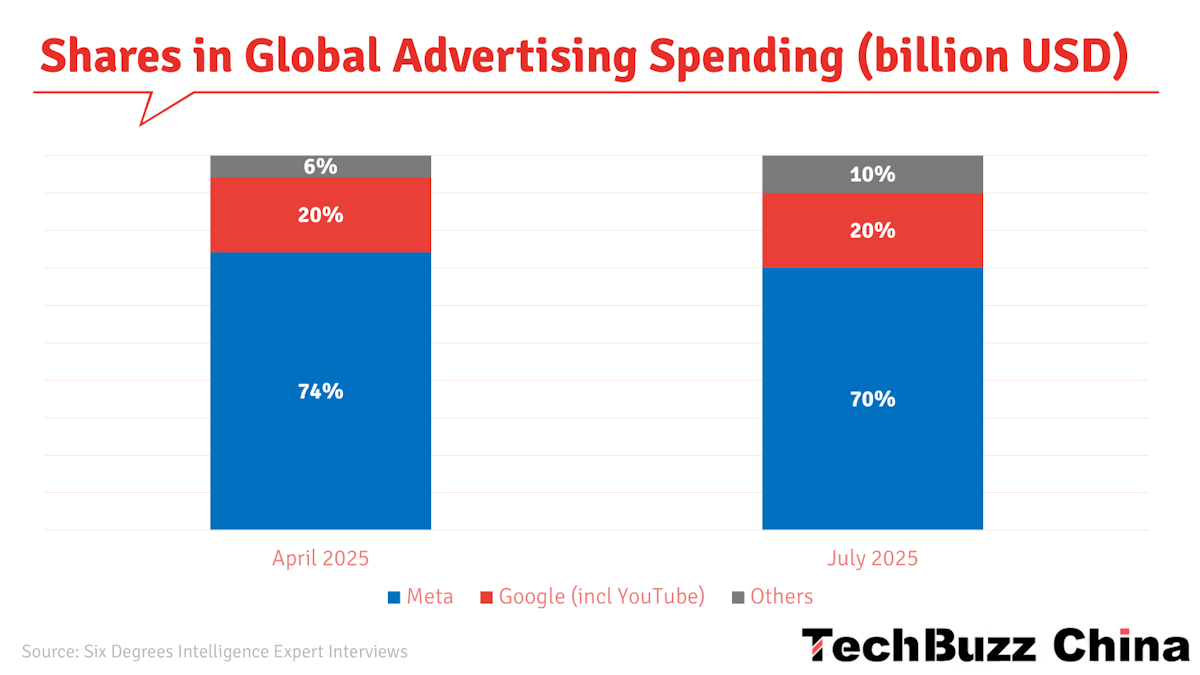
Temu's advertising strategies in the European and US markets differ significantly. In Europe, Temu primarily advertises through Meta and Google platforms. Specifically, Google advertising in Europe is focused mainly on search and display, while in the US, YouTube advertising accounts for a larger proportion.
US – temporary shutdown
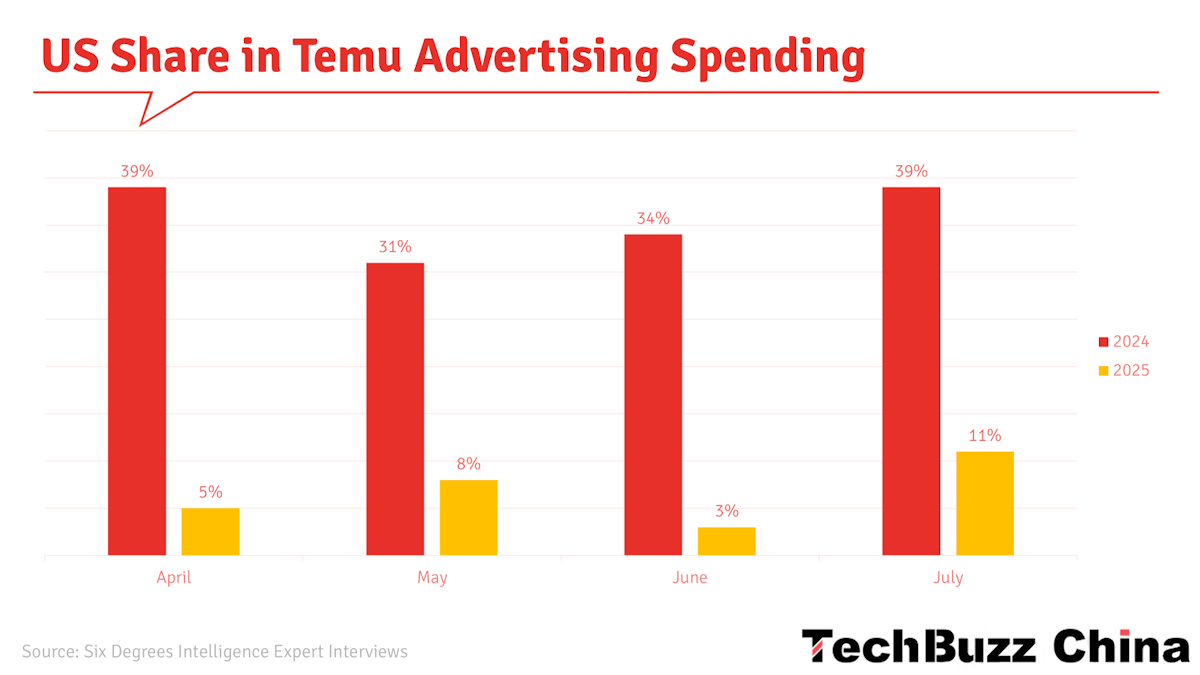
Between April and May 2025, Temu significantly adjusted its advertising strategy in North America. From April to early May, Temu almost completely halted advertising there. In the first quarter of 2025, Temu invested $1 billion in the United States. However, in the second quarter, investment was reduced to $400 million, and even the budget on platforms such as Meta was suspended for more than a month. The adjustments resulted in a decrease of about 10 million daily active users and a churn rate of 33%.
This year, the North American share in advertising spending in this period was 5% in April, 8% in May, 3% in June, and 11% until mid-July. By comparison, North America accounted for 39% in April of last year, 31% in May, 34% in June, 39% in July, and 42% in August. This indicates that Temu has significantly adjusted its North American strategy this year, reducing advertising investment in new customer acquisition.
In the third quarter, Temu restarted advertising, and the budget increased to $1.25 billion, but the actual expenditure will depend on the recovery of daily active users in the United States. At present, Temu has about 40 million daily active users in the United States, a decrease from 50 million to 60 million last year, and its user base fluctuates significantly. Temu's first task is to increase the number of daily active users, and then examine the return on investment of advertising.
Even with the improvement in the regulatory environment, Temu remained cautious, pausing most campaigns and retaining only a small budget to maintain the advertising account's learning function. It wasn't until late May that advertising in North America began to recover, but the increase was modest.
Europe
Temu's advertising strategy in the European market has also undergone significant changes. From April to July 2025, Temu's advertising share in Europe was 49%, 50%, 48%, and 42%, respectively, with a decrease in the final month. By comparison, the figures for the same periods in 2024 were 22% in April, 24% in May, and maintained between 19% and 20% in June and beyond.
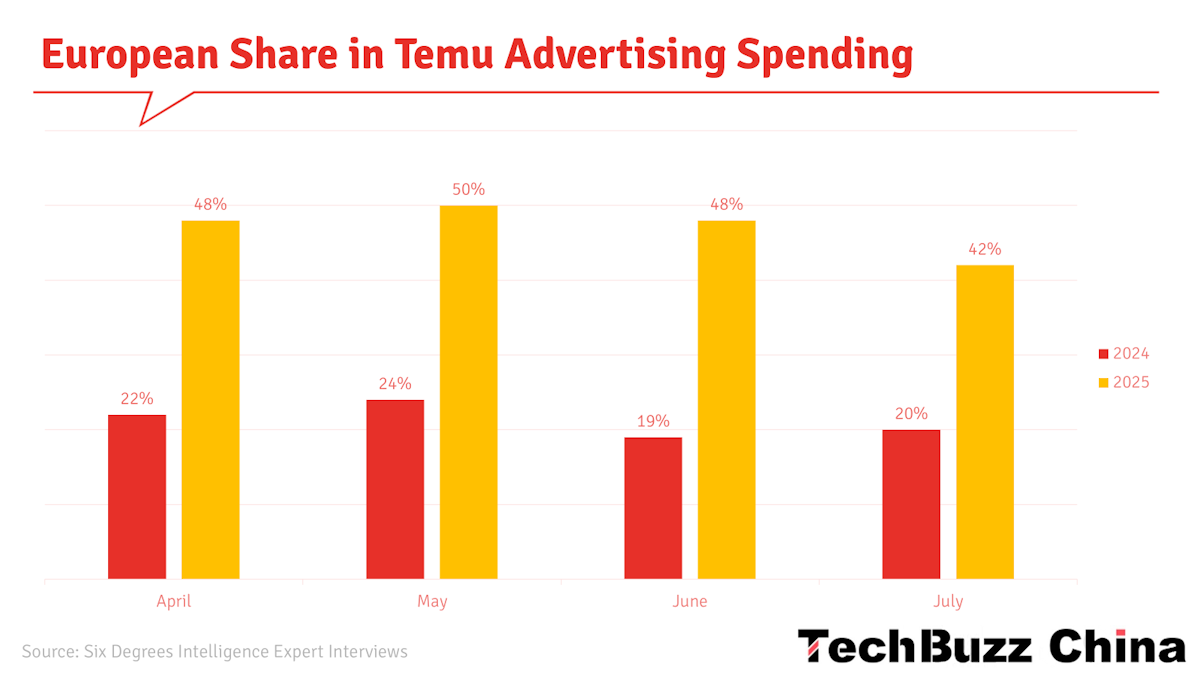
The decline in July 2025 is primarily attributed to France's qualification review restrictions, which began in the second quarter. These restrictions, which took effect at the end of June, reduced traffic in France and prompted advertisers to reduce their budgets. Notably, Germany and Spain have recently shown significant growth, while other European countries have remained largely stable.
Customer acquisition versus reactivation
The proportion of advertising in the European market in 2025 was significantly higher than in 2024, partly due to a shift in budget from the US market. But tariffs were not the only reason why advertising budgets decreased in the US and shifted to Europe…
Temu's advertising has been running for over two years, resulting in a significant increase in customer acquisition costs, reaching limits in some regions. Advertising return on investment (ROI) is falling below 40% in several regions, triggering an automatic shutdown mechanism.
Based on these challenges, Temu has reduced its US advertising budget in 2025, a decision unrelated to the tariff policies. The number of Temu ad shutdowns in 2025 increased significantly compared to 2024, reflecting stricter budget control. In this context, when Temu's advertising spending fails to cover operating costs, and when ROI is unsatisfactory and traffic is insufficient, the relevant accounts or campaigns should be immediately suspended.
Customer acquisition costs have risen to $45-50 since launching in the US market in 2022, resulting in declining returns. While the cost of acquiring a new customer in first-tier European countries is relatively high at $35 to $45, second- and third-tier countries still offer significant growth potential. Even without the impact of US tariffs, advertisers still planned to focus on expanding into the European market in 2025.
Specifically, in the second half of last year, the strategy was to allocate 40% of resources to customer acquisition and 60% to activation. In 2025, however, only 10-15% of resources have been allocated to customer acquisition, while 85-90% have been allocated to activation. This change reflects a significant shift, with a greater emphasis on activating and retaining existing customers.
In the European market, the ratio of new customer acquisition to existing customer activation is 4:6. In new markets, Temu's advertising strategy primarily focuses on attracting new users, accounting for 70%-80% of the budget. In contrast, a smaller amount of advertising is used for retargeting to activate existing users. In contrast, in the Middle East and Latin America, new users and active users account for a 50/50 split, but new user numbers increase during holiday periods. In markets with smaller user bases, such as Australia and New Zealand, Temu needs to flexibly adjust its budgets for new user acquisition and user activation based on data.
Activation ads are primarily categorised into two types: retargeting and repeat purchases. Retargeting ads are directed at users who have previously engaged with an ad. For example, Google and Meta can track data for 180 days, while Applovin can track data for a year. Repeat purchase ads target Temu users and are delivered through specific demographic data provided by Temu and may be sourced from its own data or that of competitors. These demographic data typically include information such as mobile phone numbers, email addresses, or Facebook IDs, making it impossible for other platforms to identify the specific source. Repeat purchase ads target a broader audience, including registered users, existing purchasers, and even buyers of particular brands.
Temu has adopted differentiated delivery strategies on different advertising platforms. For new user acquisition ads, Temu mainly prefers to deliver on emerging or low-cost programmatic platforms such as AppLovin, Unity, DV360 and TTD. In terms of repurchase ads, Meta has become Temu's preferred platform, mainly because its data protection measures are relatively complete. As for remarketing ads, Temu will deliver on leading platforms such as Google, Meta and TikTok. As long as these platforms support remarketing functions, a certain budget will usually be allocated. This diversified delivery strategy enables Temu to strike a balance between user acquisition and retention at different stages, while also making full use of the unique advantages of each platform.
Advertising ROI
ROI performance varies across markets. African markets, especially Morocco and South Africa, have performed exceptionally well at 48%-49%. ROI in most of Europe remains between 40% and 41%. ROI in other regions varies by category and budget, with strong performers reaching 60%-70%.
Temu implemented a ‘circuit breaker mechanism’ in Europe; if the return on investment falls below 40% within 30 days, the associated budget will be immediately halted. While the US lifted the circuit breaker restriction in May 2025, it remains in place in Europe, the Middle East, and Southeast Asia.
The unified 40% ROI limit has had a significant impact on advertising strategies and budget allocation in different markets. The costs of acquiring new customers and reactivating existing customers vary across regions, leading to some interesting phenomena. For example, the cost of acquiring a new customer in North America can exceed $40, while in Europe, the cost of activating an existing customer is typically between $15 and $20. This cost difference has led to a significant increase in the activation rate of existing customers in the European and American markets.
Due to unsatisfactory ROI performance, budgets for acquiring new customers are often suspended, while activation of existing customers is more effective. This results in new customer budgets being more likely to reach the upper limit in the European and American markets. In general, the global unified 40% ROI standard results in a higher probability of budget interruption in the European and American markets than in other regions.
Furthermore, some countries, such as France and Austria, have implemented new regulations, such as those for product safety and quality testing of white-label products, which have impacted advertising. Some categories currently being advertised have been removed from shelves or halted due to regulatory restrictions, though these impacts are not directly related to tariffs. These factors, combined, have impacted ROI and advertising strategies across different regions.
Organisation
Temu entered the US market on September 1, 2022, with initial operations supported by a domestic team. Currently, its overseas operations are not yet fully independent. Its US headquarters is located in Boston, with plans to relocate to Ireland and establish independent operations by the end of 2025.
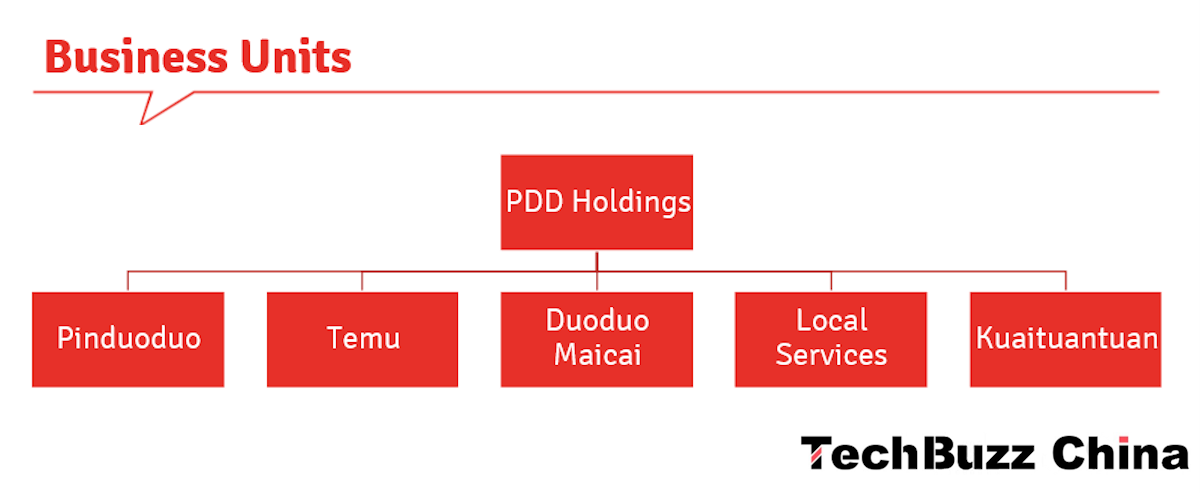
To accommodate rapid business growth, PDD Holdings has restructured its internal organisation, dividing its business into five key segments: the main Pinduoduo app, Temu, Duoduo Maicai, local life, and Kuaituantuan. This restructuring will enable each business line to develop more focused and efficiently.
LatePost reported that in late July this year, Temu completed a round of organisational structure adjustments. Among the nearly 20 second-level supervisors, eight are responsible for category operations. They are also responsible for the fully managed and semi-managed cross-border business (that is, managing Chinese sellers). The remaining second-level supervisors were sent to various overseas markets to recruit local-to-local merchants in the semi-managed business, national logistics and other local companies. [1]
Local-to-local merchants are sellers with local entities and qualifications. Recruiting them is not easy. Temu analysed that in the US, this is relatively easy due to the large number of existing Amazon sellers who have inventory and understand logistics. The European market is fragmented, with each country having its own small local e-commerce platform, rather than a highly concentrated large platform like Amazon. Meanwhile, the Latin American market is inherently undersupplied, and with Amazon and local e-commerce company Mercado Libre (market cap at $100 billion), merchants don't need to choose Temu. [1]
Outlook
The United States and Europe will continue to be the primary investment markets in 2025 and the first half of 2026. Meanwhile, Southeast Asia, Japan, South Korea, and Latin America are experiencing significant losses, primarily due to high customer acquisition costs and logistics challenges.
Recent changes in the global trade environment and regulatory policies have had a significant impact on Temu's business performance in various markets. First, (upcoming) changes in regulations and tariffs in Brazil and Europe may impact the achievement of its goals. Meanwhile, operations in Vietnam have been temporarily suspended due to licensing issues with local regulators. Furthermore, stricter US scrutiny of shipments from Mexico has impacted the flow of goods from China to the US via Mexico.
The development of semi-managed business has also encountered obstacles. The growth of the number of merchants and the number of products has been limited, and the willingness to place ads and the return on investment have not performed well. In the face of these challenges, Temu is taking corresponding strategies. Suppose the recovery of the fully managed business is slow. In that case, Temu hopes that some fully managed merchants, especially large sellers, can participate in the flow of investment to ease the pressure on sales of overseas inventory.
GMV Targets
Temu's global expansion strategy is achieving remarkable results. The company's global GMV is expected to increase by 30% to 40% over the previous year by the second half of 2025, mainly due to increased traffic, orders and repurchase rates. Specifically, the global GMV in 2024 was between US$55 billion and US$60 billion, while the goal for 2025 is to reach at least US$75 billion. Notably, monthly GMV exceeded $10 billion in June 2025, an encouraging sign.
While this represents significant growth, it is much lower than Temu’s expectations we reported at the end of 2024: $100 billion. A few months ago, Temu already lowered this target to $90 billion. Temu has further lowered its global GMV target for 2025 from $90 billion to $80 billion. This adjustment is mainly because the US market did not perform as expected. If the US market does not improve significantly, $75 billion may be a more realistic target.
Temu's current priority is to restore and increase GMV, and the main goal for the third quarter is to reach and exceed the level of the same period last year. But despite the strong performance in the first half of the year, growth in the third quarter and beyond may face challenges. Data shows that daily active users in major markets such as the United States, Europe, Brazil, and Chile declined in July 2025 compared to June, suggesting uncertainty about growth in the third and fourth quarters. Despite the strong performance in June, achieving the full-year GMV target remains highly uncertain.
GMV targets are closely tied to market share, with the strategic goal of capturing 20% of China's total cross-border e-commerce exports. China's cross-border e-commerce market is projected to reach $500 billion by 2025, and the company aims to achieve a $100 billion market share. [Note: this expert quoted a higher GMV target than two other experts.] The market is expected to grow by approximately 30% to $650 billion by 2026. The company aims to achieve a 20% market share, corresponding to a GMV target of $130 billion. This dynamic target setting based on market share is more realistic, especially considering that the company currently only operates in about 100 countries. At the same time, competitors such as AliExpress, Shein and Amazon already have operations in more than 200 countries.
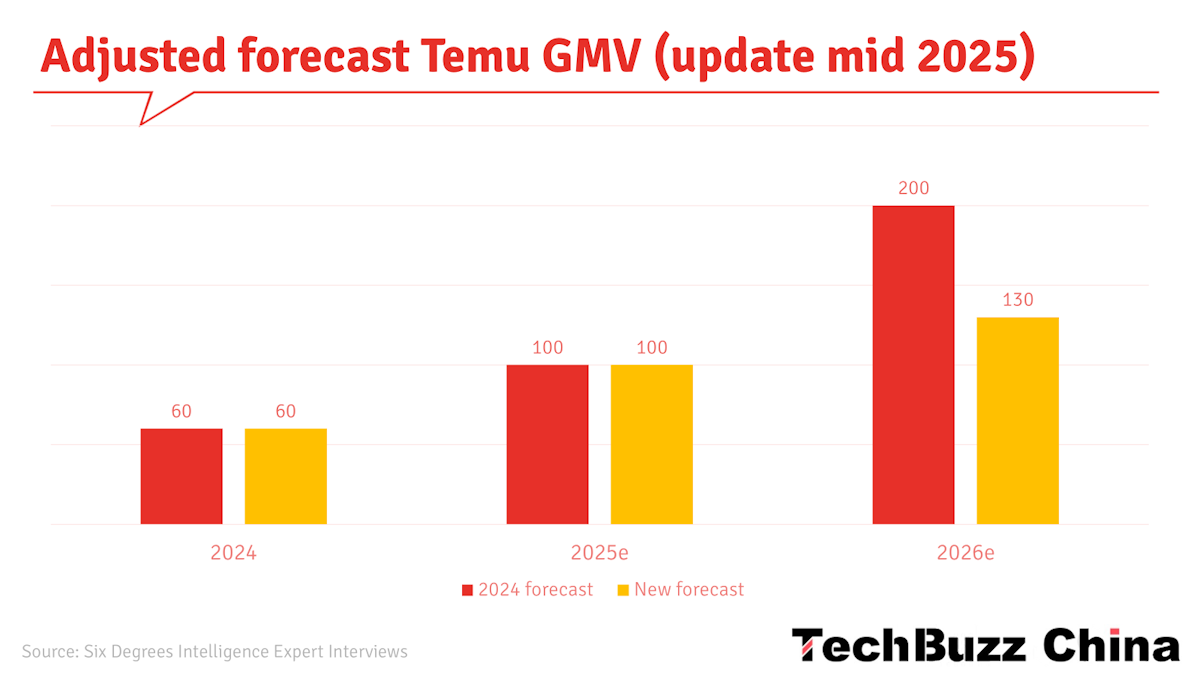
Note: the targets in the chart above differ from those mentioned by two other experts close to Temu, who claimed the 2025 target had been lowered to $75-$80 billion.
To meet its challenges and achieve new goals, Temu is applying several strategies. First, they plan to adjust their assortment to reduce the proportion of goods below $20 and increase the proportion of high-profit goods above $50. Secondly, Temu aims to boost the average order value by introducing categories like smart home products, thereby mitigating the impact of taxes. Finally, they will share tax costs through combined sales or promotions.
PDD’s investment priorities for 2026 remain somewhat uncertain, primarily focusing on Temu and domestic instant retail (more on that soon). Furthermore, Temu's infrastructure investments are substantial, potentially mirroring Amazon's growth trajectory. Specifically, Temu's logistics system and proprietary warehousing facilities are expected to expand and improve over the coming years.
US
Temu faces multiple challenges in the US market. Although other e-commerce platforms have also seen price increases after the tariff adjustment, Temu has maintained its competitive advantage by controlling the increase. However, Temu suffered considerable losses in the US market, and after restarting the fully managed service, it needs to increase investment to win back users. During the suspension of the fully managed service, the Temu app lost a large number of users, and many people stopped using the platform. To attract these lost users to return, the platform decided to offer low-priced goods once again.
Europe
There are some interesting trends in the competitive landscape of the European e-commerce market. In this period of volatility, companies with strong execution capabilities, such as Temu and Amazon, may benefit. In contrast, companies with weaker execution capabilities, such as Shein and AliExpress, may face challenges. Currently, Amazon still dominates the European market with a market share of about 50%. Looking ahead, Temu's market share may grow significantly to 20% to 30% by 2025-2026.
Although Shein's growth rate has reached double digits, it has not yet exceeded 20%. TikTok’s growth rate is expected to be very significant in 2025 (note that it only launched in Mainland Europe this year). Regardless of how the market changes, the positions of Amazon and Temu are unlikely to be threatened by other platforms. Amazon will continue to dominate the European market, and Temu is expected to become the second-largest platform. However, it is difficult for Temu to replace Amazon because most large sellers still regard Amazon as the preferred platform. Only when sellers develop a preference for Temu will it have the opportunity to become a market leader.
Temu is actively promoting its localisation strategy in the European market. First, the company is accelerating the establishment of local warehousing facilities in Europe, covering Central and Eastern Europe through Poland, while using German warehouses to serve major Western European countries. Secondly, Temu adopts a B2B2C bulk customs clearance method, which is expected to reduce the tariff cost of a single item by 5% to 8%. In addition, Temu plans to achieve 80% of European orders shipped directly from local warehouses by the end of the year. Finally, as the European market improves its compliance and digital management levels, Temu is also emphasising its semi-managed model to diversify risks and enhance operational efficiency.
The importance of the European market in the company's overall business is gradually increasing. Specifically, in the first quarter of 2025, Europe accounted for 38% of the total GMV. Then in the second quarter, due to the significant decline in the US market, the European share of the global GMV further increased. Looking forward to the whole year, it is expected that the GMV share of Europe will fluctuate between 40% and 45%. This trend indicates that the European market's strategic position within the company's business layout is continually improving.
There are also challenges ahead in Europe …
Recently, there has been increasing discussion about the EU's abolition of the €150 tax-free quota. If the new policy takes effect, all goods entering the EU will be subject to a 10%-20% tariff, and additional VAT will be required, with a total tax rate of up to 15%-25%. This will have a significant impact on cross-border e-commerce platforms and sellers. Taking the Temu platform as an example, most of its products are priced below €20, and the new policy may increase the tax burden to 20%-30% of the selling price. In addition, each package may incur an extra €1 to €3 in handling fees, and customs clearance time may increase by 3 to 5 days, which can impact user experience.
The EU will also conduct stricter reviews of price declarations, increasing compliance risks for Temu. These changes may challenge the low-price strategy in the European market, and the profit margins of some products may drop from 30% to single digits. If price adjustments are not made, some small sellers may be forced to exit the market. Platforms such as Temu will face more tax obligations, including collecting VAT and ensuring that goods meet EU standards. Although the tax-free policy adjustment in Europe is not expected to take effect immediately, it may be implemented in 2026. These changes will undoubtedly reshape the competitive landscape of the European cross-border e-commerce market and have a profound impact on all participants.
Profitability
Temu has made significant progress in its economic model in the US market. Initially losing $10 per order, it is now essentially breaking even or slightly profitable. The average order value rose from $40 to $43-44, customer acquisition costs dropped from $15 to $8 [note: considering the information above, these must be for registered users, not converted buyers], and logistics costs dropped from $15 to $12. Despite this, the company's overseas business remains unprofitable. The US market has reached break-even, and losses in the European market have improved.
Temu has taken a series of measures to strengthen its long-term development and market competitiveness. First, the platform has strengthened the management and constraints on merchants, which is beneficial to large sellers and high-quality merchants. Secondly, the platform actively expands multiple sources of income, including advertising revenue, customs duty payment, overseas compliant warehousing and logistics, etc., and also improves the penalty mechanism. Finally, the new version of the fully managed model has been improved and adjusted in many aspects, and these changes have jointly improved the overall profitability of the platform. The main purpose of these measures is to optimise platform operations, increase revenue, and enhance its competitive position in the market.
Advertising fee revenue increased by about 6-8%, affecting 60-80% of merchants. For example, assuming that the GMV is $1 million, 60% of the merchants, or $600,000, pay 6% advertising fees, and the platform obtains $36,000 in new revenue. In addition, the platform further increases profits by increasing commodity prices and average selling prices.
Although GMV has decreased, the platform's net profit has increased significantly due to reduced advertising expenses and increased other income. If GMV can recover in late August or early September, the platform's net profit is expected to increase significantly. These changes combined have had a positive impact on the platform's overall financial performance.
Due to the restoration of the fully managed system and changes in tax policies, Temu's overall gross profit margin has declined. Regarding the profit target, it is unlikely that Temu will break even in the United States by the end of 2025. However, if there is no tariff issue, it is still possible to break even by the end of the year, especially considering that the semi-managed and local-to-local businesses are already profitable. The performance of the US market in September will be key. If it can recover to the level of April, the loss in the fourth quarter may be controlled within 5%; otherwise, it may be higher.
The US loss rate in the third quarter is unlikely to improve significantly in a short period of time, mainly due to the pressure of logistics costs. Temu used to rely primarily on segmented transportation, which once accounted for 90% of its transportation methods and was about 20% cheaper than full-haul transportation. However, due to the decrease in orders from the United States, segmented transportation could no longer operate, so Temu needed to look for middlemen such as Yuntu, a change that increased logistics costs by 20%. In addition, the order volume in the US market has decreased, resulting in an unsatisfactory delivery effect. These factors have jointly led to a further increase in overall costs.
From a global perspective, the loss in the first quarter of 2025 is the same as that in the fourth quarter of 2024, while the loss in the second quarter increased by 9%. The main reason for the increase in losses in the second quarter is the poor performance of the US market and the increase in tariffs and logistics costs. The European market performs best, followed by the US market, while the Southeast Asian market is the weakest due to fierce competition.
Temu still faces several other challenges in achieving profitability in the coming period. First, the platform has eliminated features like automatic price adjustments, which once fostered low-price competition. As a result, some merchants who relied on low-price strategies are now struggling to continue operating. However, Temu's support programs are encouraging merchants to develop industrial clusters and technological innovation, and many manufacturers that previously engaged in OEM have excelled in this area.
Regarding international expansion, Temu has established its own warehouses on the East and West Coasts of the United States, as well as in the United Kingdom, Germany, France, Italy, and Spain, and has invested significantly in promoting community-based delivery. While these investments will increase costs in the short term, they are likely to improve operational efficiency and user experience in the long term.
Temu’s profitability plan is divided into three phases: a loss-making period from September 2022 to the end of 2024, a goal of achieving break-even from the end of 2024 to the end of 2025, and full profitability starting in 2026. The company is currently advancing its international operations according to this timeline.
Looking ahead, Pinduoduo's overall profitability is expected to improve by 2026 compared to 2025, but the improvement may not be significant. Temu's semi-managed model is scheduled to begin commercialisation in 2026 and generate advertising revenue. Even if Temu's business does not break even in 2025, it is expected to achieve annual profitability by 2026.
Key Takeaways
Temu's Resilience and Recovery in the US: Temu temporarily halted its fully managed business in the US due to 120% tariffs but quickly restarted when tariffs dropped to 54%, leveraging T01 customs clearance and B2B2C models to largely maintain prices and recover sales volumes by July.
Global Expansion and Market Performance: Temu achieved a global GMV of approximately $35 billion in the first half of the year with year-on-year growth rates of at least 30% globally and over 20% in Europe, compensating for a temporary drop in the US market.
Adjusted GMV Targets: Temu has lowered its 2025 global GMV target from an initial $100 billion to $90 billion, then $80 billion, and potentially $75 billion, primarily due to the US market not performing as expected.
Strategic Shift in Advertising: Temu has significantly reduced its US advertising budget in 2025, reallocating 85-90% of its budget towards activating and retaining existing customers rather than new customer acquisition, due to rising costs and declining ROI.
Evolving Operational Models: Temu is adjusting its operational models, including a new fully managed service with tariff and advertising requirements, and developing its semi-managed (Y1 and Y2) and third-party businesses to diversify risk and improve efficiency.
Logistics Optimisation for Profitability: Temu is making significant investments in logistics, establishing over 50 self-operated overseas warehouses and piloting community delivery/consolidation models in Europe, aiming to reduce costs and improve efficiency towards its 2026 profitability goal.
Pricing Strategy and Merchant Profitability: While some product prices have increased, Temu is maintaining a low-price strategy for many products and supporting fully managed merchants with 10-20% subsidies to help them achieve a 3-4% net profit margin despite tariffs.
Regulatory and Competitive Challenges: Europe faces tightening regulations, potential abolition of tax exemptions, and increased compliance costs, while Southeast Asia struggles with regulatory barriers, fierce competition, and licensing issues in Indonesia.
US Market Profitability Progress: The US market, which initially incurred significant losses, is now essentially breaking even or slightly profitable, attributed to an increase in average order value and a significant reduction in customer acquisition and logistics costs.
Overall Profitability Outlook: Temu's profitability plan aims for break-even by the end of 2025 and full profitability starting in 2026, despite increased global losses in Q2 2025 due to US market performance and higher tariffs/logistics costs.
Sources
This article has been compiled from an analysis of exclusive expert interviews within the Six Degrees Intelligence network, supplemented by insights from the articles listed below.
Images by Tech Buzz China’s Ed Sander, unless stated otherwise. These images may not be reproduced without Tech Buzz China's prior consent.
[2] Abby Yang LinkedIn July 2025 [1] Latepost 2025-08-05 [3] European Commission 2025-07-28