
China’s Internet Companies Get Cooking (Part 1) – Meituan & Pupu
How Meituan Takeaway and Pupu Supermarkets went up the supply chain in 2025.

Content
Things that caught our attention
Temu and Tariffs: Insights into China's Expanding E-Commerce Sector with Ed Sander (interview with European Guanxi)
Tencent bans Tencent, or why WeChat is still my favorite app (by Rui Ma)
A good reminder of what is in China's 15th 5 Year Plan (by Rui Ma)
Interesting thread on humanoids (by Rui Ma)
Xiaomi EV news (by Rui Ma)
Introduction
Last year, all eyes were fixed on the meal delivery war between JD, Alibaba and Meituan. But while the biggest battle raged on the demand side, with over RMB 100 billion in consumer discounts handed out collectively, things were also stirring on the supply side.
In 2025, Meituan formally launched Raccoon Canteen, a ‘food court’ meets ‘dark kitchen’ format where merchants can prepare dishes and have them delivered by Meituan. In the summer, JD followed with 7Fresh Kitchen, an initiative in which JD actually operates the kitchens and delivers through its own platform and those of its competitors. JD also began opening public JD Food Malls.
Meanwhile, in southern China, Pupu Supermarkets, a major player in the front-end warehouse format of the instant retail market, also began opening its own kitchens.
This two-part report has been simmering for a few months, but it was temporarily put on ice due to other, more time-sensitive topics. But now the delivery war has calmed down, and the Chinese government made it clear it won’t tolerate ‘involution’ in the sector, it’s high time to share these insights with you.
In the first part of this report, we will provide an overview of Pupu's and Meituan's initiatives. Next week, we will continue with a thorough explanation and assessment of JD’s 7Fresh Kitchen and how it compares to Raccoon Kitchen. The information in these reports is drawn from more than 10 expert interviews and over 20 articles from the Chinese tech and business media.
The first part of this report will be free to read; the second part, covering JD Kitchen, will be accessible only to paid subscribers. Please consider supporting our work with a paid subscription to unlock the second part of this report.
Ed Sander, Tech Research Analyst

Why the sudden rush to innovate in the catering market?
There are several reasons for the changes in the catering market in recent years. On the one hand, competition among food delivery platforms has been heating up, especially during last year’s subsidies battle. But these subsidies are unsustainable, and platforms will eventually have to offer other selling points, such as speed, assortment, and quality.
Meanwhile, the instant retail market, where groceries and non-food items are delivered from physical stores and front-end warehouses, is also seeing increased competition. Alibaba has integrated Taobao and Ele.me into Taobao Instant Commerce to improve its instant retail capabilities. Meituan is rapidly expanding its network of ‘lightning warehouses’, and JD is trying to regain the market share it lost with JD Daojia (now JD Miao Song). High-frequency user scenarios, such as meal delivery, help create density among both customers and couriers, which can be used to improve instant retail performance. In other words, the meal-delivery war is also largely related to instant retail, which is expected to cannibalise part of the traditional retail market. After all, you will only buy an item in one channel, and if you can get it within an hour, why wait a day or longer for delivery?
But to grow in the meal delivery market, the players need to innovate to become the preferred platform; a much healthier strategy than handing out consumer discounts, which only end up hurting most of the stakeholders involved and train consumers to be even more price sensitive. Platforms have been looking for pain points to address.
The most prominent issue in the meal-delivery sector is the uneven quality of food, particularly the prevalence of substandard food delivery services such as ‘dark kitchens’. These services have severely disrupted market order, harmed consumer rights, and hindered the industry's healthy, sustainable development. Under the traditional food delivery platform model, the entry threshold for merchants is relatively low, making it difficult for platforms to monitor and supervise them. This has led some unscrupulous merchants to use inferior ingredients and prepare meals in substandard environments to reduce costs. [1]
These low-quality, low-priced food delivery products have flooded the market, creating a phenomenon where “bad money drives out good money.” This has made it difficult for many quality-focused restaurants to stand out from the competition and for consumers to enjoy a safe, healthy, and delicious food-delivery experience. This has not only undermined consumer trust in the food delivery industry as a whole but also created a bottleneck to improving quality in the food delivery market, urgently requiring new models and forces to break the deadlock. [1]
Meal-delivery platforms like JD and Meituan have launched new initiatives to address this issue.
Meituan
At the 2024 Catering Industry Conference, Wang Puchong, Meituan’s core local business CEO, said that Meituan had reached the ‘biggest turning point.’ He acknowledged that Meituan’s growth had been modest and that the urban population would not increase beyond 800 million. To drive growth, Meituan Waimai (Takeaway) has made tapping into the needs of different user segments one of its main tasks. [2]
Meituan’s strategy aimed to address price reductions in the restaurant industry and optimise its merchant structure, thereby reducing costs and improving efficiency. To better execute this strategy, Meituan established a supply exploration department dedicated to optimising its merchant structure in April 2024, headed by Chu Zheng, who had worked at Meituan for 7 years. Since the department's establishment, Meituan Waimai has launched a variety of initiatives, including Raccoon Canteen, Satellite Stores, and Food Collection Stores. [2]
The Supply Exploration Department researches new supply models that break from traditional transaction methods, in which merchants rely on the platform to acquire traffic after opening a store. It conducts pilot programs in regions with high consumption levels or abundant talent resources, such as Beijing, Shanghai, and Guangdong.
Meituan’s launch of these initiatives has multiple strategic objectives. First, these initiatives aim to support high-quality merchants in countering competition from JD.com, which launched its food delivery business in Q2 2025 and positions itself primarily as a high-quality merchant platform. Second, they continue Meituan’s exploration of the self-operated model. Finally, these strategies will help optimise the food delivery supply structure and increase the proportion of high-value orders.
Meituan is also continuously promoting the implementation of its ‘Internet + Open Kitchen’ model. By February 2025, 117,000 businesses had launched ‘Open Kitchen Live Broadcasts’ on Meituan, spanning a wide range, from chain restaurants in shopping malls to mom-and-pop neighbourhood eateries and takeout shops. It was expected that by the end of 2025, over 200,000 businesses would have joined the ‘Open Kitchen’ program. [4]
Data show that among businesses that implement kitchen live-streaming, repeat purchase rates are 15-20% higher than the platform average, and average order value is 10-15% higher than that of similar businesses. More notably, research shows that approximately two-thirds of customers, at the same price, will prioritise businesses offering live-streaming kitchen services.
Brand satellite stores
More and more brands are trying lower-cost operating models. Brands such as Pizza Hut have begun opening small stores or pure takeaway stores since 2022. In 2023, Meituan began testing brand satellite stores (品牌卫星店, Pinpai weixing dian) that help brands and small and medium-sized businesses improve their takeaway business while enhancing the platform’s control. These satellite stores are mainly aimed at well-known brand merchants. [3] Meituan helps these brands optimise operating costs and achieve significant improvements in operational efficiency. [4]
Although Meituan had tried this model before, it previously focused primarily on traffic allocation; it has since expanded to deeper involvement in site selection and the supply side. Satellite stores require Meituan to take a more active role in daily operations, rather than simply allocating traffic and advertising sales to merchants. It provides merchants with site selection in first-tier business districts based on back-end data, such as underground floors of shopping malls and remote storefronts near large residential areas. Meituan helps merchants reduce rent costs, with the lowest investment cost being one-tenth of a typical store's. It also supports menu and product planning, daily operations, and participates in pricing discussions for certain products. [3]
Brand satellite stores typically open in less prominent locations within first-tier cities’ commercial districts, with stores ranging in size from 30 to 50 square meters and requiring an initial investment of approximately RMB 100,000 to 200,000. Satellite stores lack dine-in service and employ fewer staff, reducing operating costs.
Satellite stores are primarily concentrated in the dining sector, which aligns with Meituan’s overall takeout order structure, as 75% of its orders come from lunch and dinner. However, the branded satellite store model also has unique advantages for milk tea and coffee brands. Notably, some brands are planning to expand this satellite store model into smaller beverage outlets, such as afternoon tea. This model is particularly attractive for milk tea and coffee brands with per capita spending of RMB 20-30 or more, as it allows for more flexible expansion strategies while maintaining brand image.
Store growth:
Brand satellite stores were first tested in 18 cities in 2023, and about 300 stores were opened that year. [3]
By April 2024, Meituan’s satellite stores had expanded nationwide on a large scale, attracting more than 100 brands, such as Haidilao, to settle in. [3]
By September 2024, Meituan Satellite Stores had entered into cooperation agreements with 150 brands and opened nearly 1,000 stores. By the third quarter of 2024, Meituan Waimai had accelerated its expansion at a rate of about 100 new satellite stores per week. [3]
As of July 2025, Meituan had partnered with more than 800 leading restaurant chains to open more than 5,500 branded satellite stores. [4]
Meituan planned to expand to 10,000 satellite stores by the end of 2025, providing 6-12 months of commission-free support to new stores, and free agency operation services to brand merchants. [3]
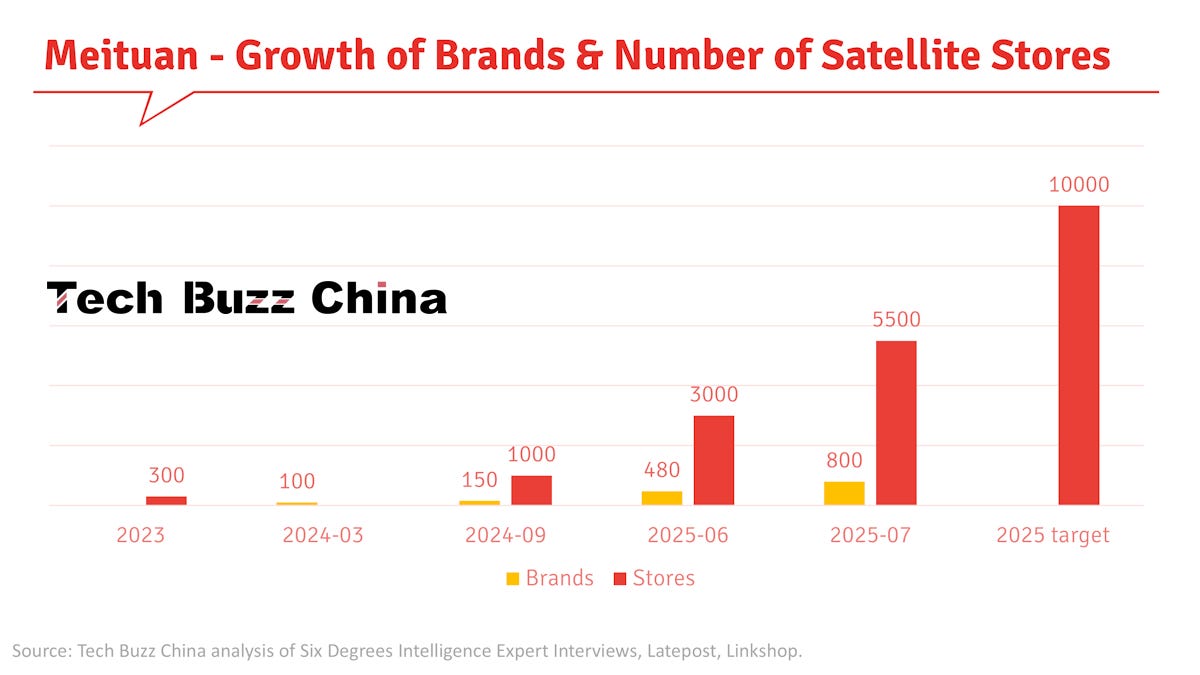
Despite strong growth in store numbers, the development of brand satellite stores has not yet fully met expectations. Each brand's satellite store averaged 4,000-5,000 orders per month, totalling approximately 45 million orders per month. As such, brand satellite stores account for slightly over 1% of the overall food delivery market, but not yet 2%. To adapt to market changes, brand satellite stores are transitioning from purely catering businesses to new retail, such as partnering with brands like Miniso, whose business primarily relies on instant retail and lightning-quick warehouse services.
Branded satellite stores are expected to have a positive impact on Meituan’s overall business in the medium to long term, increasing transaction volume, optimising the food delivery business structure, and providing long-term competitive advantages and business growth.
Food Collection Stores
In 2024, Meituan also launched ‘food collection stores’ (美食集合店, Meishi Jihe Dian), a kind of aggregated store where consumers can buy products from multiple merchants, which is basically the pick-up equivalent of Raccoon Canteen (see below). Meituan recruited multiple catering brands to establish a presence, participated in daily management, and selected products from the aggregated store. With the Food Collection Stores, Meituan hoped to address poor hygiene standards and user distrust of small- and medium-sized merchants’ takeaway stalls. [3]
Meituan opened its first food collection store in Beijing in June 2024 in cooperation with shared kitchen startup Panda Star Kitchen. Both parties jointly manage food hygiene and enable merchants across categories to operate simultaneously in a shared, hundreds-of-square-meter offline kitchen. After joining, merchants can operate two types of stores. One is a normal, ordinary takeaway store that can obtain Meituan’s exclusive label recommendations and traffic support, such as ‘Quality Selection, Must-Order List’; the other is the ‘Food Treasure Club’ (食宝汇, Shibaohui) collection takeaway store, where Meituan is responsible for product selection and operations. [3]
The ‘Food Treasure Club’ selects a portion of the products provided by each merchant and puts them in the store. Consumers can order a variety of food items at once, including full meals, fast food, coffee, fruit, and barbecue. By September 2024, it had a monthly sales volume of about 8,000 orders. [3]
Compared with satellite stores that choose to partner with brands, food collection stores aim to attract small- and medium-sized businesses to join. Meituan participates in daily management, formulates operating hygiene standards, redesigns food delivery routes to separate the production area from the delivery area to ensure hygiene, and seeks to convince consumers that the stall model can also provide clean takeout. [3]
Meituan also hopes to have greater influence over the prices of food collection stores. The initial plan for the food collection stores is to deduct a portion of the product's actual payment to cover delivery, traffic, and operating costs. The merchants only need to be responsible for supplying food, which is a bit like the ‘fully managed model’ of the food delivery industry. [3]
The food collection stores follow an earlier experiment with takeaway kitchens, but now Meituan is more involved in design and supplier selection. The previous takeaway kitchen model suffered from poor food quality and low hygiene standards, while high rents made it difficult for merchants to maintain operations.
These newly developed business models have seen significant growth in per-store revenue and per-customer spending, increasing merchants’ profitability several times over. These innovative initiatives are changing traditional merchant customer-acquisition models and creating new opportunities for Meituan’s business development.
Business District Takeaway
Then, in early 2024, Meituan launched a feature that allowed users to buy food from multiple stores and have a courier deliver it together. Unlike the Food Collection Store format, where Meituan opened a large store and set up multiple stalls, the business district focuses on bringing businesses together in the same area to increase average order value. However, due to order volume and diverse user consumption needs, such business districts are mostly found in first-tier cities. In April 2025, this functionality was available only in Beijing, Shanghai, Shenzhen, and Changsha. [2]
In a business district, users can place orders at up to 3 stores, but each store must meet the merchant’s minimum delivery price, which is the same as ordering individually. The advantage of cross-store collective ordering is that users can place orders on a single page without switching between stores. At the same time, it is convenient for couriers to pick up meals, thereby improving overall delivery efficiency. However, the delivery price is the same as for individual orders. [2]
Image source: Meituan
Raccoon Canteen
Under its “retail + technology” strategy, Meituan has launched four innovative projects, Raccoon Canteen, Happy Monkey, Little Elephant Supermarket, and Keeta (which we discussed in depth last month), to explore a second growth path for the company. Raccoon Canteen is a key strategic component of Meituan’s food delivery business, providing centralised kitchen services to business merchants.
Meituan launched Racoon Canteen (浣熊食堂, Huanxiong Shitang) in late 2024/early 2025. It allows Meituan users to order meals from multiple merchants at once for home delivery (instead of ordering from different places and potentially having multiple couriers arrive at your door at different times). Meituan basically opens large ‘dark stores’ (currently several in Beijing) and sets up multiple stalls for chain restaurants.
Raccoon Canteen’s operating model is similar to the ‘food court’ concept in shopping malls, but it has adapted it to an online platform. Each operating unit is expected to introduce 2 to 3 merchants, and the mix of these units will be adjusted based on local market demand.
The initiative is not primarily driven by a desire to reduce delivery costs. The core tasks of Raccoon Canteen include ensuring food safety and improving merchants' operational efficiency. By adopting centralised kitchen models and food safety traceability systems, the quality and safety of takeout meals are enhanced.
Meituan will train staff and conduct daily safety and hygiene inspections of stalls, including merchant food purchase lists, kitchen utensils after closing, and the cleanliness of storage space. [5]
Raccoon Canteen aims to improve the quality of its food delivery through centralised kitchen management and transparent cooking-process demonstrations, thereby establishing a competitive advantage on the supply side and continuously improving its delivery infrastructure. Simultaneously, Meituan plans to improve delivery efficiency through a direct delivery solution and synergise with Raccoon Canteen’s meal deal ordering model. Meal deals can meet diverse consumer purchasing needs by bundling milk tea, hamburgers, and desserts in a single order.
By consolidating multiple merchants into a single location, the meal deal model reduces the number of deliveries, simplifying what used to be 3-4 deliveries into a single transaction. Within Meituan’s ecosystem, emerging businesses play distinct roles and collaborate with one another. Raccoon Canteen focuses on building merchant resources and a supply chain system to lay the foundation for future automated delivery services.
Raccoon Canteen has created an ecosystem synergy by leveraging Meituan Waimai’s traffic resources and the supply chain system of Kuailü, Meituan’s B2B business. In terms of supply chain, it primarily relies on cooperation with Kuailü to create synergy, while for fulfilment and delivery, it collaborates with the instant retail module. Raccoon Canteen is a core component of Meituan Waimai, attracting customers to the platform through demonstration projects and driving internal data-driven synergies through updates to the data module.
Raccoon Canteen’s operating model relies entirely on food delivery services, showcasing its asset-light operations, rapid expansion, and efficiency. This aligns perfectly with Meituan’s strategic plan for the future development of its food delivery merchants. The business prioritises food safety, operational efficiency, and product quality.
Merchant onboarding requires meeting specific entry criteria, categorised as hard and soft. Hard criteria include holding a valid business license and a product operation permit, and not having been subject to food safety-related penalties in the past three years. Soft criteria require brands to have a chain-store ratio exceeding 50% and to possess digital operations capabilities to access Meituan’s food safety traceability system.
When selecting categories, priority is given to those with high standardisation, high repeat purchase rates, and low food safety risks, such as fast food, tea drinks, prepared meals, main courses, and light meals. High-risk categories, such as Japanese sashimi, are excluded. To balance brand diversity with supply chain efficiency, each canteen is divided into functional areas: main courses, fast food, tea drinks, and light meals. Each area introduces 2 to 4 different brands to reduce direct competition and increase choice. Certain major categories may sign exclusive cooperation agreements. For example, after Heytea is introduced to a specific city, competing brands such as Nayuki will no longer be accepted.
Racoon Canteen is available on the Meituan app and as a mini-program in WeChat. The mini-program interface displays all merchants in a bar at the top, and the selected merchant's dishes appear below. Users can add dishes from various merchants to their shopping cart and place a single order. The rest of the process is identical to regular Meituan orders. As shown below, new customers receive three discount coupons. Videos and pictures of the clean kitchens are also shared in the app. [5]
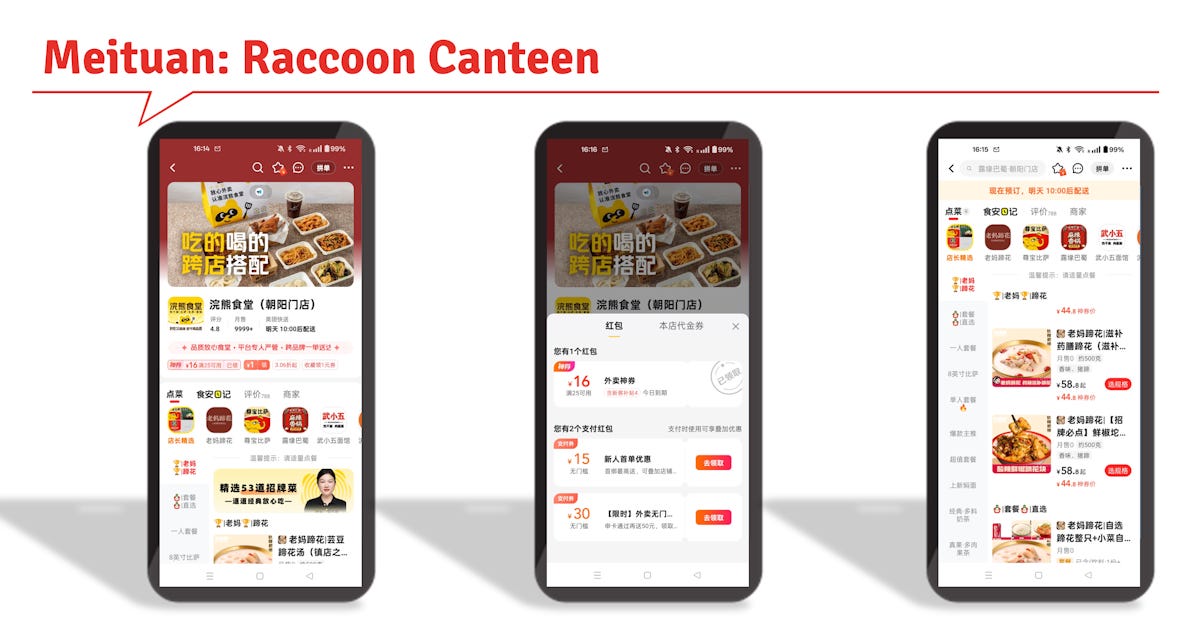
Left: a Raccoon Canteen location page in the Meituan app. Middle: ‘red envelope’ coupons. Right: product menu.
The Raccoon Canteen offers various advantages for different stakeholders.
Consumers
Consumers are increasingly concerned about food safety and transparency. Raccoon Canteen, through methods such as live-streaming its store manager’s food safety diary, openly showcases its kitchen operations, thereby building trust with consumers. These transparency measures have not only increased the number of orders but also raised the average order value, becoming a key strategy for attracting customers.
While the individual stores of merchants offer more variety than those in Raccoon Canteen (which offers only a selection), Raccoon Canteen makes ordering from multiple merchants much more convenient. No more quarrels with your partner if you will eat Sichuan or Dongbei dishes tonight; you can order both! And you can also save on delivery fees. Product pricing and delivery times are similar in the individual stores and Raccoon Canteen. [5]
Merchants
The food delivery industry is highly competitive, and merchants face a cost-revenue imbalance. Raccoon Canteen helps merchants improve operational efficiency by reducing rent and supply chain expenses. By strategically deploying Raccoon Canteen, Meituan aims to strengthen its competitive advantage in high-tier cities to meet the takeout needs of its core user group.
In first-tier cities, rent typically accounts for 30-45% of total expenses for traditional food delivery merchants. By joining the Raccoon Canteen platform, this share can be reduced to about 15%, with rent savings accounting for 50-70% of the overall cost reduction. Among all aspects, rent savings are the most significant. One Raccoon Kitchen stall is about 20 square meters, and the staff size is about 4 people; merchants don’t need to open multiple offline dine-in stores to achieve sufficient coverage. [5]
In addition, supply chain cost optimisation accounts for 15-20% of the overall cost reduction, making it a crucial area for savings. Simultaneously, through the shared delivery system, the per-order delivery cost is reduced, and with additional factors such as platform subsidies, a total cost reduction of 10-15% is achieved. In comparison, the potential for operational optimisation is smaller, with estimated maximum cost savings of 10%. Overall, rent savings are the most significant and the main driver of cost reduction.
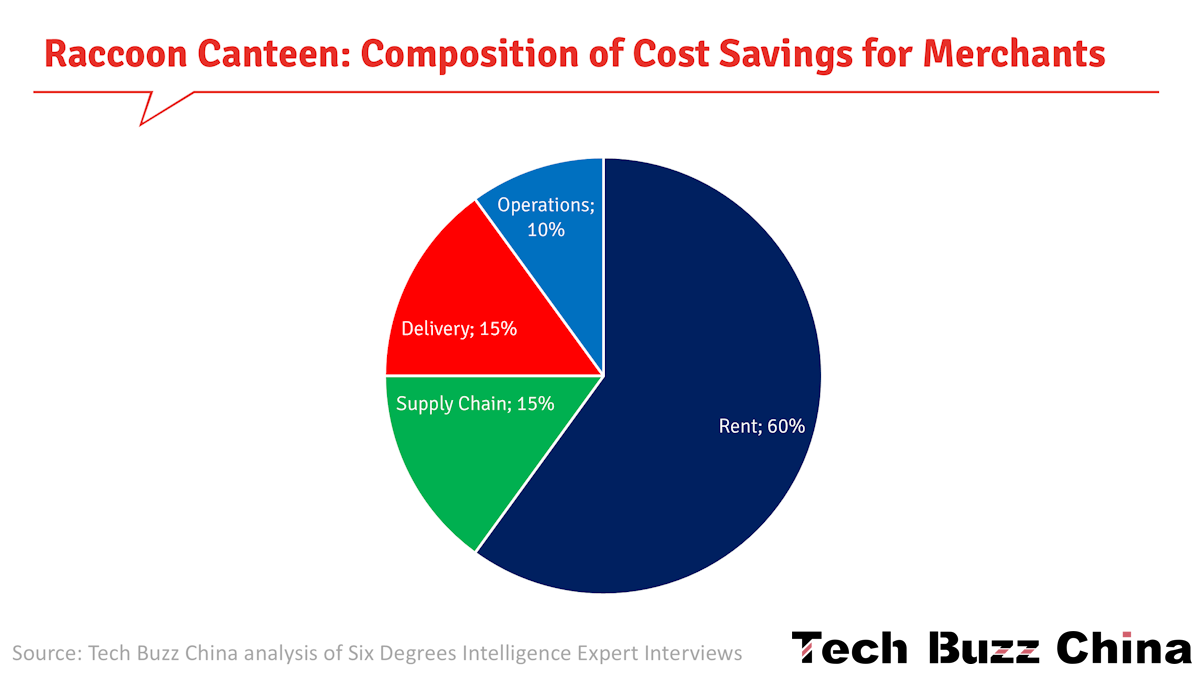
Raccoon Canteen’s data-driven operational strategy has shown significant potential for cost optimisation. Future cost optimisation will primarily be achieved through efficient operational strategies, including the use of pre-prepared dishes and optimised order combinations to streamline food preparation. This strategy has proven highly effective, increasing food production capacity by 2-3 times during peak hours and reducing the average cost per order by approximately 30%.
Across time periods, Raccoon Canteen can more effectively schedule food preparation and delivery by aggregating data and optimising menu combinations, thereby improving overall operational efficiency. This data-driven approach allows operational strategies to be precisely adjusted according to the characteristics of different time periods, ultimately achieving comprehensive efficiency optimisation.
Well-known large-brand merchants might be concerned about disruption to in-store dining when launching a takeaway business in their offline stores, but joining a takeaway collection store like Raccoon Canteen eliminates those concerns. Furthermore, they can leverage the platform’s traffic and aggregation to gain additional exposure.
It can also increase visibility within the Meituan app. Merchants that may have been ignored by consumers due to insufficient store locations or publicity efforts will also have the opportunity to appear on the aggregation page alongside other popular merchants, attracting more attention from potential consumers.
Another major advantage of Raccoon Canteen is its reliance on Meituan’s comprehensive instant-delivery network. This not only drives substantial order volume for partner merchants but also increases order value through unique advantages in food safety assurance and transparent operations. Finally, Meituan utilises advanced technologies, such as point-to-point delivery services and unmanned delivery, to provide robust technical support for Raccoon Canteen’s business model.
Platform
Meanwhile, for Meituan, Raccoon Canteen improves operational efficiency by reducing delivery times and the number of couriers. It should also generate less packaging and waste.
However, varying food-preparation speeds across merchants pose a challenge for this new model. If one merchant is slow, the whole order will be delayed.
While Raccoon Kitchen started out as a delivery-only format, Amap photos show that dine-in is also available at several locations.
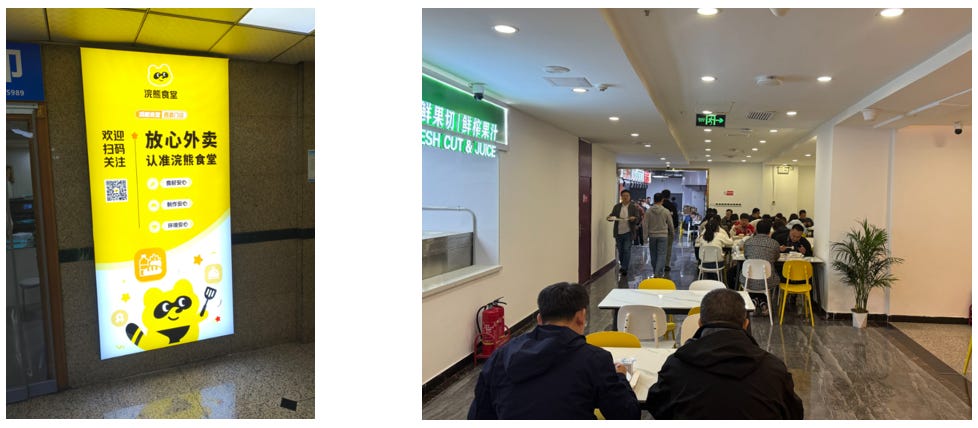
Progress
Raccoon Canteen is still exploring its business models, with pilot operations in only a few cities, reflecting Meituan’s cautious investment strategy in this new business area. Meituan is adopting a phased approach to developing Raccoon Canteen: first verifying the effectiveness of the economic model for individual outlets, then testing the effects of citywide coverage density, and finally determining whether large-scale promotion and replication are suitable based on the results.
In mid-2025, an instant retail operations expert of Meituan shared that Raccoon Canteen’s progress had been slow due to its complexity. Meituan’s lack of experience in brick-and-mortar operations had hampered rapid expansion. Even in its resource-rich Beijing headquarters, it took a long time to open just over a dozen stores. In resource-scarce regions, progress is expected to be even slower. Even with 100 stores, their impact would still be quite limited compared to the tens of thousands of businesses operating in the city. The expert claimed that the project’s primary purpose was to showcase quality and brand image, not to compete for market share. While the company may consider engaging other parties to manage the business in the future, no specific plans have been announced.
By September 2025, Raccoon Canteen operated 10 stores in Beijing, Hangzhou and other places, attracting more than 100 catering businesses, including Lao Xiangji and Dicos, to settle in. It plans to invest in building 1,200 stores over the next three years and has begun recruiting partners, with an investment of approximately 1.5 million yuan per store. [6]
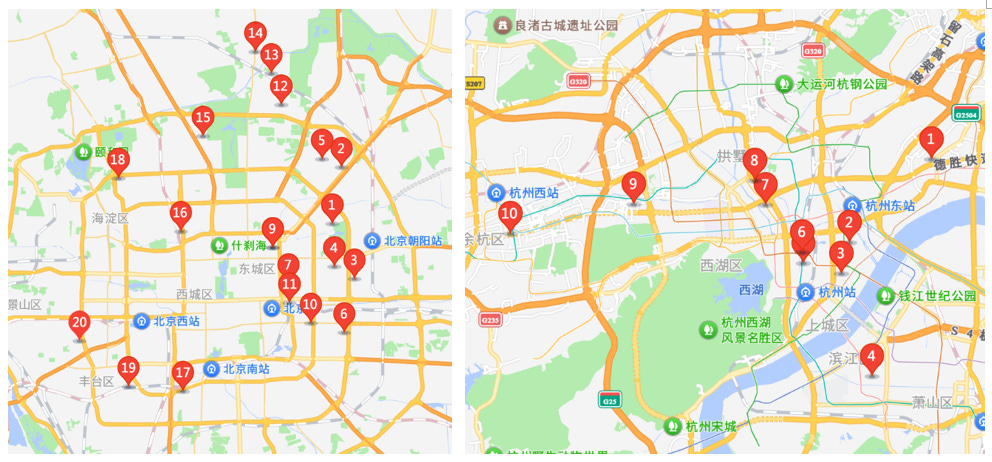
At the time of writing, in early 2026, Amap found 23 Raccoon Canteens in Beijing and 10 in Hangzhou (only part of which are shown on this map).
Raccoon Canteen, as a pure platform service, primarily evaluates its performance based on the number of transactions and the proportion of merchants onboarded, with the latter reflecting initial recruitment effectiveness. Another important metric for evaluating Raccoon Canteen’s business effectiveness is the repeat purchase rate.
Previously, a user ordered only one takeaway; after the emergence of collection stores like Raccoon Canteen, the user ordered 2.8 items, and the average order value increased by nearly 70%. [2]
Raccoon Canteen has become a major investment area for Meituan over the past two years, innovatively addressing food safety supervision issues through Meituan’s full-platform traffic support and transparent kitchen display model.
Outlook
The Raccoon Canteen concept is a key infrastructure component for the future development of the food delivery industry, aiming to deliver a complete automated delivery and standardised catering service cycle, thereby optimising the supply structure of the food delivery ecosystem. The food delivery industry has evolved from the initial 1.0 development stage to the 2.0 data-driven operation stage and is about to enter the 3.0 era of automated delivery. Meituan is proactively deploying Raccoon Canteen to improve delivery fulfilment and merchant service levels.
Meituan plans to open over 1,200 Raccoon Canteens within the next three years, a target considered conservative by industry insiders, with the actual number potentially reaching 1,500 to 2,000. In terms of location, priority will be given to bustling commercial areas and high-end residential communities in first-tier and new first-tier cities, where the food delivery market has strong demand, consumers have high expectations for food quality, and purchasing power is strong.
Nationwide, the distribution of Raccoon Canteens is likely similar to that of food courts, with approximately 3 to 5 Raccoon Canteens per food court. When Raccoon Canteen expands to 1,500 locations, it may put competitive pressure on delivery merchants who have not joined the platform. Due to the difficulty in competing with comprehensive service platforms like Raccoon Canteen, small delivery outlets may gradually withdraw from high-tier city markets.
Between 2025 and 2026, the focus will be on core areas of high-tier cities to assess the feasibility and profitability of this business model. After 2026, Meituan will decide whether to fully expand the Raccoon Canteen model to new first-tier, second-tier, and even third- and fourth-tier cities based on market feedback. Notably, economically strong county-level cities may be selected as pilot areas to assess market conditions and the model's suitability.

Image source: Meituan
By 2027, Meituan will complete the strategic deployment of Raccoon Canteen 3.0 and fully integrate its unmanned delivery system, potentially triggering a major transformation in the food delivery industry. At the same time, the future food delivery industry may place greater emphasis on delivering comprehensive solutions from origin to destination to meet diverse consumer needs, such as services for family gatherings or large-group meals.
The large-scale central kitchen, combined with a food delivery model, is poised to become a future industry trend, aligning with national policies aimed at improving consumer quality and optimising the consumption structure. However, this model may significantly impact traditional small shops located in prime commercial areas. In the long run, the Raccoon Canteen project is strategically important to Meituan’s revenue growth and business expansion. Although the food delivery market in first- and second-tier cities is nearing saturation, Meituan can maintain its market share by changing its supply-side model.
It’s important to note that Meituan’s main metric for its food delivery business is currently the total number of orders on the platform, not the number of goods sold. Despite model innovation, the growth potential of the food delivery market remains very limited; even a 5% increase in orders is considered extremely difficult to achieve. Therefore, the key to the success of the Raccoon Canteen project lies in whether this new operating model can continue to rely on the Meituan platform for order processing, thereby ensuring Meituan’s market position in first- and second-tier cities.
Meituan and its partner merchants are expected to improve profitability through the 3.0-era business upgrade. Meituan has recognised the limitations of relying solely on efficiency and low prices as a competitive strategy and is therefore undergoing a strategic transformation. Simultaneously, Meituan’s strategic focus is on driving the company's digital transformation powered by AI and unmanned delivery systems. This transformation will redefine its value assessment system, shifting from a traditional food-delivery platform model to a technology-innovation-centric business model.
As a leader in the food delivery industry, Meituan has accumulated extensive experience in platform operations. With its massive user base, sophisticated delivery system, and comprehensive merchant management mechanisms, it provides a strong platform support for Raccoon Canteen. By analysing user consumption behaviour data in depth, Meituan can accurately grasp market demand and provide Raccoon Canteen merchants with targeted operational advice and marketing strategies, helping them improve operational efficiency and sales performance. [1]
In terms of resource allocation, Meituan is expected to prioritise its core businesses, such as Xiaoxiang Supermarket, when allocating key resources, including supply chain systems, user traffic, and delivery fulfilment, while maintaining experimental investment in emerging business formats. Meanwhile, Raccoon Canteen shoulders the responsibility of changing the status quo in the food delivery industry. It needs to promote its central kitchen operations concept to consumers, which will require extensive market education.
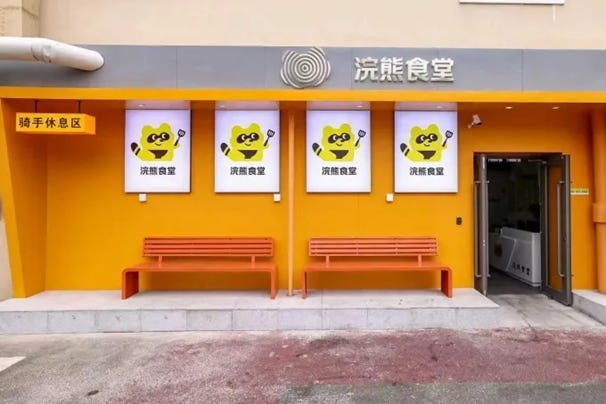
Image source: Meituan
Note: next week, in the second part of this report, we will return to Raccoon Canteen to compare it with JD.com’s 7Fresh Kitchen.
Pupu Kitchen
Pupu Supermarket (朴朴超市, Pupu Chaoshi) might be a name you are not familiar with, but it is an important player in the instant retail sector in southern China, especially in its home base, Fuzhou. Pupu’s front-end warehouses (‘dark stores’) are market leader in Fuzhou, where is almost has a monopoly with 70% penetration rate and over RMB 10 billion in sales. Pupu and Yonghui Supermarkets together hold nearly 80% of Fuzhou’s retail market. [6] But now, competitor Meituan’s Xiaoxiang (Little Elephant) has entered Fuzhou, and Pupu will need to fight hard to defend its home base.
Many of its competitors, including Meituan’s Xiaoxiang, have learned from Pupu’s best practices, like operating larger front-end warehouses with more SKUs. But when 30-minute delivery becomes standard, simply having a wide selection of products is no longer a barrier to entry, and platforms must find new growth paths. Pupu faces regional markets becoming increasingly saturated, competitors closing in, and stringent capital-market requirements for growth stories. [7]
After operating its front-end warehouses since 2016, Pupu began diversifying in 2025, opening Pupu Kitchens (朴朴厨房, Pupu Chufang) and preparing to open its first public-facing supermarket. Within the context of this report, we’ll take a closer look at Pupu Kitchen.
According to an industry expert, Pupu’s launch of Pupu Kitchen may actually be a response to competition from Yonghui’s catering service, rather than only a defence against Meituan’s Xiaoxiang entry into the Fuzhou market with its front-end warehouse business. By offering “four meals a day”—breakfast, lunch, dinner, and late-night snacks, and 24-hour service, Yonghui Supermarket has successfully attracted some of Pupu’s original customer base. This catering service has attracted customers who might otherwise order from Pupu, reducing Pupu’s order volume.
Yonghui’s catering service involves on-site cooking within the store, a transparent process that allows customers to see the ingredients and cooking steps, thereby enhancing trust. Yonghui’s freshly prepared catering experience is excellent, giving consumers greater peace of mind when ordering online.
Pupu began pilot testing of its Pupu Kitchen delivery service in the Red Star Business Building, Pupu’s headquarters, and the surrounding residential areas in Fuzhou, Fujian province. In these areas, when logging in to the Pupu Supermarket app, a primary entrance and a banner for Pupu Kitchen Delivery appear on the homepage. The Pupu Kitchen delivery channel featured eight food categories, with prices primarily in the RMB 10-20 range. [8][6]
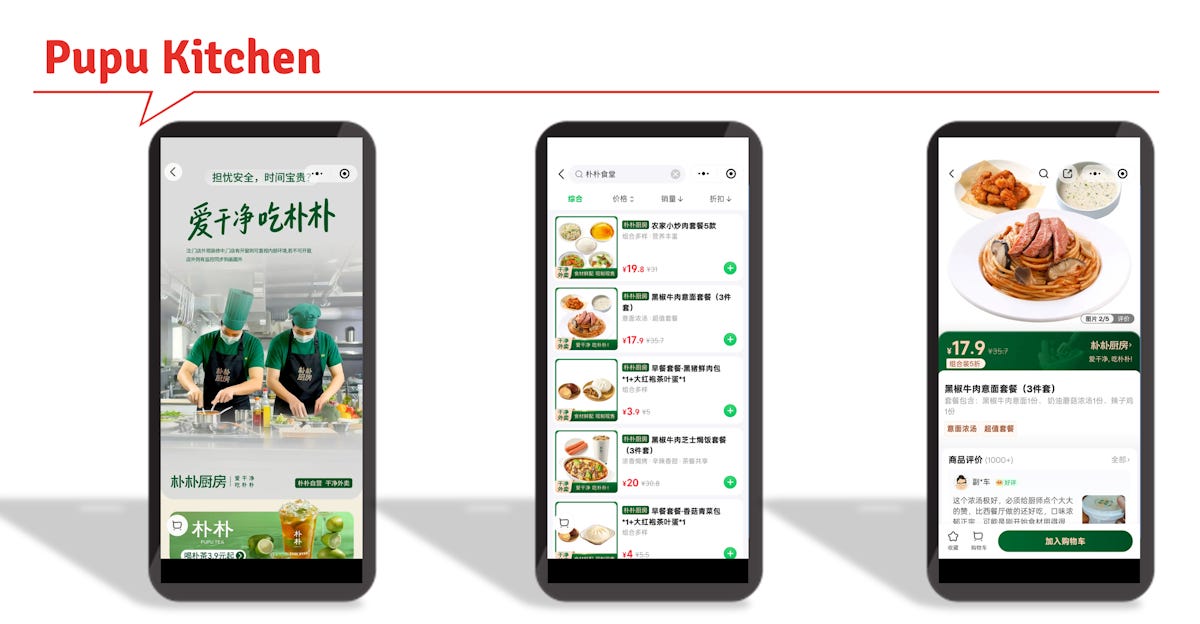
Pupu Kitchen offers over a hundred food and beverage items, including set meals, stir-fries, noodles, and pizzas. Given Pupu Supermarket's very high penetration rate in Fuzhou, the launch of Pupu Kitchen should not experience a shortage of sales and will increase purchase frequency among Pupu users. Pupu Kitchen can help drive traffic to the retail business and further retain consumers. [9]
Pupu has an established supply chain and fulfilment resources, and can directly source its food through Pupu Supermarket’s fresh-ingredient channels. This is particularly true for its 10 private-label brands, which encompass high-volume categories. Its takeaway fulfilment service is undertaken by the original Pupu Supermarket delivery team. [6]
Pupu Kitchen’s fully self-operated business relies on Pupu’s existing supply chain and delivery network, realising the retailization of catering through a shared central kitchen model. The launch of Pupu Kitchen is not just a simple business expansion but also a deep exploration of the value of existing traffic. By introducing high-frequency catering consumption scenarios, it creates synergies with the original fresh food and department store businesses, improving overall order density and user stickiness. [7]
New Pupu warehouses in the Fujian region will be equipped with Pupu Kitchen. Many of Pupu’s old warehouse properties are not suitable for heavy catering and cannot obtain required licenses, which is detrimental to Pupu Kitchen's expansion. Pupu’s old warehouse does not need to add a new Pupu Kitchen; it can simply build a new Pupu Kitchen in the adjacent property. With a slight adjustment to the system, it can then combine orders for delivery. It is expected that the new offline supermarket for Pupu will also be combined with Pupu Kitchen, thereby increasing the profitability of Pupu supermarket and better promoting Pupu Kitchen's business. [11]
In October, Pupu Xiamen began recruiting catering managers, suggesting the Pupu Kitchen business may be expanding from Fuzhou to Xiamen. [10] There are also reports that Pupu Kitchen will enter the white-collar work meal market with high-quality, affordable takeaway meals. [7]
Challenges
Food service and retail differ fundamentally in their operational logic, and simply reusing resources may not yield the desired results. Differences in demand between fresh produce procurement and catering ingredients, increased complexity in inventory management, and food safety risk control will all test Pupu’s operational capabilities. [10] For a company known for its standardised front-end warehouse operations, simultaneously managing offline supermarkets, front-end warehouses, and catering businesses places extremely high demands on its organisational and management capabilities. [7]
The key to Pupu’s successful foray into the food and beverage industry lies in its ability to integrate retail and catering businesses. Simply combining different business formats is unlikely to generate synergy; only by understanding the inherent logic of the two businesses and creating a closed-loop experience can a sustainable business model be established. This process requires sustained resource investment and patience, and short-term results may be limited. [10]
Furthermore, in 2024, fulfilment costs accounted for 17.5% of revenue. With the addition of the catering business, increased operational complexity may further pressure fulfilment costs. Whether Pupu can build a talent pool and management system suitable for diversified businesses remains to be seen. [7]
Pupu Kitchen’s average order value of RMB 10-20 makes it difficult to guarantee high-quality ingredients, potentially raising concerns about food safety management among consumers. Low-priced catering, such as Meituan’s Pinhaofan group meals, often uses frozen meat or scraps, making quality difficult to guarantee. Pupu’s pricing strategy can easily create a vicious cycle of “low price, low quality,” making it difficult to justify the cost of high-quality catering.
One expert claimed that Pupu is collaborating with third-party catering services. Continuing to rely on such external partnerships could erode competitiveness and damage its brand image. This is because when external partners fail to generate profits, they often neglect product quality control, ultimately resulting in a quality crisis. If Pupu Kitchen continues with its current pricing and partnership model, it risks failure.
Next week, we will continue this report with a look at JD.com’s 7Fresh Kitchen.
Key Takeaways & Summary Video
Shift to supply-side innovation: Following an intense “delivery war” on the demand side, major platforms like Meituan and Pupu have shifted focus to supply-side innovation to differentiate through food quality, assortment, and speed rather than unsustainable subsidies.
Expansion of Brand Satellite Stores: Meituan has rapidly scaled takeaway-only “satellite stores” for established brands such as Haidilao, aiming to reach 10,000 locations by the end of 2025 to help brands expand with lower investment costs.
Addressing quality and hygiene: New initiatives such as Raccoon Canteen and Food Collection Stores aim to address the “bad money drives out good money” phenomenon caused by low-quality “dark kitchens” by implementing centralised management and transparent food safety standards.
Higher transaction values via aggregation: Data from collection stores shows that users order an average of 2.8 items per transaction, up from 1 previously, increasing the average order value by nearly 70%.
The Raccoon Canteen model: Launched by Meituan in late 2024, this format serves as an online food court, allowing consumers to order from multiple brands in a single transaction for a single delivery fee.
Significant merchant cost reduction: By joining Raccoon Canteen, merchants can reduce rent expenses from 30–45% down to approximately 15%, while also optimising supply chain and delivery costs.
Transparency drives value: Meituan’s “Open Kitchen” live-streaming has proven successful, with participating businesses seeing repeat purchase rates 15–20% higher than the platform average.
Vision for automated delivery: Meituan plans to open up to 2,000 Raccoon Canteens by 2027, fully integrating them with AI and unmanned delivery systems to transform the industry into a technology-innovation-centric model.
Pupu’s retail-catering integration: Southern China’s Pupu Supermarket launched Pupu Kitchen in 2025 to defend its market share, leveraging its existing “dark store” network and private-label supply chain to offer low-cost prepared meals.
Strategic synergy with instant retail: Platforms are using high-frequency meal delivery to increase order density, which helps improve the performance of instant retail (groceries and non-food items) and cannibalise traditional, slower delivery markets.
The summary video below was created using Google Notebook.
Sources
The information in this report is compiled from exclusive expert interviews within the Six Degrees Intelligence network, augmented with insights from the articles below.
Images by Tech Buzz China’s Ed Sander, unless stated otherwise. These images may not be reproduced without Tech Buzz China’s prior consent.
[1] 2025-07-31 Linkshop [2] 2025-04-10 Tech星球 [3] 2024-09-19 Latepost [4] 2025-08-28 Linkshop [5] 2025-01-15 Tech星球 [6] 2025-09-23 Linkshop [7] 2025-10-25 Linkshop [8] 2025-09-18 HKUST [9] 2025-09-20 张聊零售 [10] 2025-10-30 Linkshop [11] 2025-12-01 张聊零售