
Reports about the death of community group buying are greatly exaggerated …
… but the roads are strewn with corpses of startups and Big Tech initiatives.

Tech Buzz China is partnering up with Six Degrees to host a Happy Hour for investors looking to meet each other in advance of the Berkshire Shareholder Festival! We'll have snacks and drinks and we are super excited to meet you! It's on Friday May 5th, 3-6 PM in Downtown Omaha! Sign up here!

Things that caught our attention
Chapter 1: A recap - The rise and fall of community group buying
The arrival of the big players
Chapter 2: Meituan and Duoduo, the last two standing
Please note that Chapter 2 is only available to paying subscribers.
Things that caught our attention
Alibaba's Spanish cross-border website Miravia, launched in December, seems to be off to a good start. Check out our Twitter thread here.
In our deep-dive article on AIGC in China we summarized the proposed AIGC law, referencing the translation by China Law Translate. If you want to know more about this legislation, check out this article by China Law Translate’s Jeremy Daum.
The Hurun 2023 Global Unicorn List was released yesterday with Bytedance (#1), Ant Group (#3), WeBank (#6) and Cainiao (#10) in the top 10 of most valuable unicorns. The USA has 666 unicorns on the list, China has 316. [Source]
Douyin sees strong growth in F&B content and e-commerce (133% YoY). [Source] Check out the deep-dive we wrote about Douyin's Local Services last month here.
In the past months we wrote about the Rebirth of Xiaohongshu and Douyin’s initiatives in local services. Now the two topics seem to merge as Xiaohongshu is also starting a group buying business.
Talking about Xiaohongshu, The China Project reported how, after the platform put a lot of effort into getting male users on its originally female-dominated platform, many existing users have seen increased harassment. To read more about the changing demographics on Xiaohongshu, check out our deep-dive of February.
Key Takeaways
While the field was initially flooded with independent players, the entry of internet giants have killed pretty much all but OG CGB innovator Xingsheng, who is nonetheless in the process of cutting back operations
The industry is projected to grow GMV by 50-60% in 2023 compared to 2022. New market expansion will contribute 30%, while 70% will come from enhancing existing businesses
Even amongst the internet giants only Meituan and Pinduoduo continue to operate at scale, with Pinduoduo’s Duoduo Maicai pulling away from Meituan and ending 2022 at 1.5x the GMV. Neither, however, were profitable, with Meituan having the worse margin profile. The entire sector’s top goal, therefore, is currently striving for cost reduction and increased efficiency
However, they have their work cut out for them, as the business model has several key challenges that are very difficult to resolve: balancing price and quality, limited target audience, and limited cost savings, even when armed with big data
Duoduo Maicai’s advantage comes from the fact that 45% of its users come from the Pinduoduo platform, which is 400mm DAU strong
Despite losing the lead to Duoduo after achieving 120Bn GMV in 2021, Meituan has done well in optimizing its product categories and relentless operational improvements
Growth for CGB will ultimately come from the lower-tier markets, although operations will also be very costly. Currently, Meituan Select and Duoduo Maicai only have an 8-9% penetration rate in county and township markets
Introduction
It’s been a while since Tech Buzz China wrote about Community Group Buying in March 2022. Therefore, we will start with a history of this e-commerce trend up to early 2022 in Chapter 1. Next, we explore what happened in the past 12 months in Chapter 2.
Chapter 1 provides a guide to community group buying for those unfamiliar with the concept. This chapter is based on a series of Dutch articles Ed wrote in 2021 and a keynote he has given in recent years and is free for all subscribers. If you are already familiar with CGB, we suggest you skip directly to Chapter 2, which shares proprietary findings from the Six Degrees Intelligence database about the subject as well as recent developments, mostly taken from Chinese language media. Chapter 2 is only available for paying subscribers.
Chapter 1: A recap - The rise and fall of community group buying
Many Chinese live in so-called xiao qu, or gated, (typically) multi-building apartment complexes. In addition to housing for thousands of residents, many xiao qu also have their own restaurants, shops, and even kindergartens.
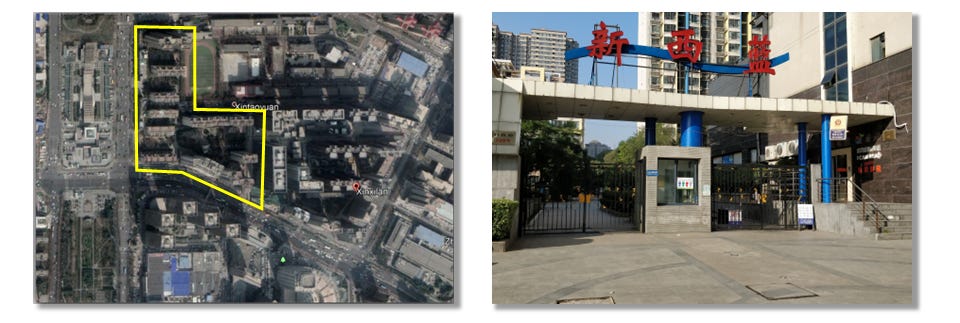
A typical xiao qu in Xi’an.
The community leader
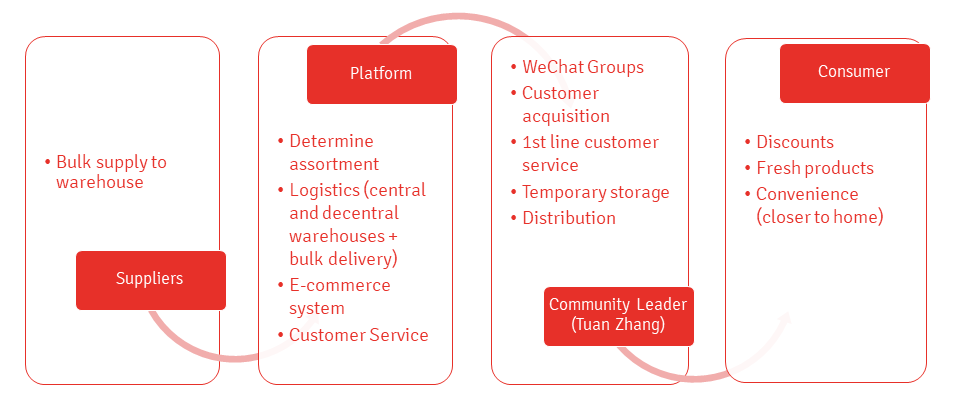
In 2018, a new internet trend emerged, which lent itself perfectly to such xiao qu: community group buying (社区团购shequ tuangou, after this referred to as 'CGB'). The principle is simple: an internet platform enables users to buy products in bulk for a lower price. The platform facilitates the flow of goods from manufacturer or farmer to consumer, eliminating retail and sometimes even wholesalers. Community leaders (团长, tuan zhang) collect orders for these bulk purchases within their community. These community leaders are usually housewives who want to earn some extra money, or the pop-and-mom mentioned above shops in a xiao qu.
Community leaders receive a commission for their work as intermediates. Depending on the platform, it ranged from 5% to 20% of the sale price, earning them an average of 200 yuan daily initially.
You might think: 'If those community leaders get a commission, how can this model be more interesting for the platforms than selling via retail?'. The community leaders do more than just distribute goods within the residential community. They acquire new customers, promote offers, provide first-line customer service, and more. Due to the social aspect, conversion rates are also above average; people are more likely to buy from people they know who belong to the same neighborhood group.
The community leader usually shares special deals with people in the residential community via one or more WeChat groups (which have a maximum number of members of 500). Group members then place orders with the community leader or directly in WeChat mini-programs. The platform delivers the orders the next day (from a grid warehouse in the same city) to the community leader, who stores the goods and then informs the customers. These usually pick up their orders themselves, but some community leaders also deliver the orders to the homes of good customers. A community leader typically has a big refrigerator or freezer to keep the products fresh.
Community leaders are often given a target upon registration that they must achieve within a certain period to retain their role on the platform. At one of the platforms, Niwonin (later acquired by Nice Tuan), this target was 30,000 yuan per month in 2019, to be achieved within three months. [9] On average, community leaders on that platform sold 40,000 RMB per month in that year.
The customers
Consumers who use CGB are generally women between the ages of 30 and 50. CGB is especially popular outside the big cities, where consumers have more time and are more price-conscious. Because the community leader is someone from their neighborhood and they often know them personally, they often rely on their recommendations.
While a community leader often actively recruits customers, consumers can also directly register on a platform. In that case, a consumer chooses a community leader in his area via mini-programs in WeChat and then sees the products that this person offers.
The people who buy together via CGB live near each other. In contrast, someone you purchase a product with on Pinduoduo can be a stranger from a completely different part of China.

Left: Community leader promoting its products and mini program in a WeChat chat group. Middle: CGB app Xingsheng with chosen community leader/delivery address. Right: customer profile page in the Xingsheng app with chosen community leader/delivery address.
The platforms
CGB mainly supplies fresh products such as vegetables, fruit, meat, fish, and non-food items for daily use. The choice within a product category is usually limited to ensure that large quantities of one SKU (Stock Keeping Unit) are sold. The large volumes this creates also give a platform more room for negotiating with suppliers.
In 2019, several startups were active with impressive monthly GMV (gross merchandise value): [9]

Monthly GMV of CGB startups (2019). [9]
Many of these companies had existed for some time. Still, they only started working according to the CGB model in 2018, after community group buying had developed organically in WeChat chat groups since 2016.
Selling via WeChat had been quite normal for some time. So-called wei shang (微商), WeChat sellers, had used the Moments social media feed in WeChat to showcase and sell products through the app. They were young mothers or other Chinese with some extra free time, or Chinese abroad buying for consumers in China (dai gou). When CGB started to take shape, the wei shang were the most obvious source for community leaders.

Wei shang in WeChat's Moments timeline.
In 2020, Xingsheng, one of the early players, had been active in Hunan for two years, had 13,000 convenience stores (via their initial decade-old offline business) and 280,000 group leaders, and achieved 22-25% savings in store management costs through zero inventory and low spillage. It had an average order value of 30 yuan, an average item price of 13 yuan, and a gross profit margin of 22%, higher than that of China’s largest supermarket chain Yonghui. In 2020 Xingsheng’s GMV quadrupled to 40 billion yuan, which is more than Hema’s 2021 GMV of 34 billion. [21] As we will see, this attracted the attention of some of the big internet companies.
The success factors
In episode 80 of the Tech Buzz China podcast, we identified the following factors required to make CGB a success:
In addition to fruit and vegetables, also sell non-food (toilet paper, cooking oil, etc.) to increase the average order value. At one point, Niwonin had 90,000 SKUs, 40% of which were fresh produce.
Expand the logistics network with warehouses in the city.
Sell your own private-label products.
Other factors include offering the right SKUs based on consumer needs, good cooperation with community leaders, cold chain logistics, and good customer service.
The advantages of CGB for those involved are:
Platforms earn a margin on sales and have lower logistics costs, as goods are delivered in bulk for one residential community, thereby saving costs of the last mile delivery. The costs of marketing & sales are also lower. The community leader takes care of customer acquisition, promotion of offers, collecting orders and distribution to individual consumers.
Community leaders are paid a commission, the height of which depends on their efforts; active community leaders receive a higher commission than shops that only act as a pickup point.
Consumers get a lower price through bulk purchasing and, in some cases, fresher products because lead times from source to consumer tend to be slightly shorter. They can also pick up their purchases close to home.
The arrival of the big players
In 2020, about 10% of all groceries in China were sold via e-commerce. 50% was sold via fresh (wet) markets and 40% via supermarkets. Thanks to the COVID crisis, grocery delivery models (including CGB) started taking off in 2020. It was a good alternative for consumers who did not want (or were not allowed) to leave their xiao qu to do their shopping offline. During the crisis, teams were appointed in a xiao qu to shop for several people who were in quarantine.
CGB was a model that fit the situation very well. According to QuestMobile, by September 2020, the number of monthly active users of CGB mini-programs in WeChat had risen to 101 million, a growth of 68% compared to the same month in the previous year. This caught the attention of China's major internet players.
They finally seemed to have discovered a profitable model for grocery delivery. Despite the population density in the cities, this had been a challenge in China. Average order values were low, and delivery costs were high. In addition, having the right cold-chain infrastructure and a fast turnaround for perishable goods in the logistics chain was a challenge.
Some companies, such as Alibaba's Hema (Freshippo) and JD's 7Fresh, were trying a combination of apps and delivery from a store to customers within a few kilometers radius. This solved the cold chain problem. But the low average order value and the delivery costs via couriers, which can amount to 10 yuan, ate up a large part if not the entire margin.

Grocery delivery models
Unlike other delivery models, CGB does not have to incur high delivery costs for individual consumer orders. Delivery is made in bulk to the community leader (often for dozens, if not hundreds of consumers in their community of residence), so the cost is comparable to that of delivery to a retailer.
According to Kaiyuan Securities, last-mile delivery fees with CGB are 2% of the sales value, while they are 13% when delivering to individual customers. [10] Xingsheng claimed to be able to reduce delivery costs per consumer from 7-10 RMB (€0.90 – €1.28) for an individual delivery to 1.5 RMB (€0.19) for a CGB order. According to a Hema employee, profit was made with 20 orders per community group as long as no discounts were given.
And so, Alibaba, JD, Pinduoduo and Meituan all started setting up their own CGB platforms or invested billions of yuan in CGB startups.

Source of fees: Xingye (China Industrial Securities). Independent platform Shixianghui offers 5-15% commission.
In Q2 2020, Didi was the first big internet company to enter CGB in Chengdu, followed by Chongqing. The Didi Chengxin Youxuan team expanded to 16,000 within six months.
In April 2020, Meituan piloted in Jinan, Shandong and in July and it established a separate business unit, Meituan Select (美团优选, Meituan Youxuan), moving thousands of employees away from Meituan Maicai. In September, Meituan planned to expand to 1,000 cities and towns in 3 months.
At Pinduoduo (PDD), founder Colin Huang insisted the company entered CGB after seeing that Xingsheng’s success had made PDD lose volume of agricultural products it was selling in Hunan. PDD moved 1,000 employees (1/6th of its entire staff) into the new CGB division Duoduo Maicai.
Meituan and Pinduoduo both followed the strategy of trying to be first in a city. Didi instead aimed to get 10 million orders in each province, making it fall behind in national coverage. By the end of October, PDD was active in 120 cities, twice as much as Meituan and ten times as much as Didi. [21]
By February 2021, the average daily order volume of Meituan Select and Chengxin was more than 20 million. Duoduo’s was 15 million. While Meituan opened new cities more slowly than Duoduo, it later accelerated when it mobilized agents from takeaway, shared power banks, and other businesses to recruit grid station franchisees and team leaders. [21]
Unexplored market
Research from iResearch [11] found that nearly two-thirds of people who buy fresh produce online did so at least once a week in 2019. This high buying frequency was interesting for e-commerce companies. Other reasons for their interest in CGB were the large number of consumers and the still low e-commerce penetration in the regions that CGB users lived in; it was very popular outside the higher-tier cities in China. In those lower-tier cities, smaller towns, and villages in China often referred to as the ‘sinking market,’ other forms of grocery delivery, such as Hema's ship-from-store, were unavailable.
Due to the population density in the major cities, the retail space per inhabitant is much higher, and there is always a large supermarket just around the corner. Retail penetration is much lower in small towns and rural areas, but it is where most consumers live. In China, approximately one billion people live outside the so-called first & second-tier cities (Shanghai, Beijing, Shenzhen, Guangzhou, and virtually all provincial capitals).

In rural areas, (mobile) internet access and accessibility via asphalted roads have greatly improved in recent years, making small villages more accessible. CGB was therefore a good way to get a foot in the door in an area where e-commerce, especially for groceries, was not yet as established as in large cities such as Beijing and Shanghai. In the battle with Pinduoduo, which had a strong position in these markets, it offered an interesting entry model for companies such as Alibaba.
Hurting the 'real economy'
The government was less pleased with the arrival of the major players in the CGB market. First, it threatened what the government calls the 'real economy'; various small retailers selling the same products, as well as supermarkets, wet markets, and suppliers. Major internet companies would grow even bigger by entering a new market segment, where they had already made their mark in the supermarket sector with new retail initiatives. This could be to the detriment of small pop-and-mom shops and farmers who sell their products to consumers in local markets. More profit for the internet companies and potential unemployment elsewhere, the government concluded.
This danger was exacerbated by the fact that competition between internet players in a new market segment is usually accompanied by burning capital through discounts for consumers. In the past decade, we have seen how this repeatedly led to absurd situations in bicycle rental, ride-hailing, and meal delivery. Products and services were often sold below cost and subsidized with marketing budgets. The players with the deepest pockets (and most willing investors) would survive, and those would normally be the usual suspects. Small retailers would be unable to keep up with this race to the bottom and see their turnover slowly flowing to the CGB platforms.
The subsidies also hurt shops acting as community leaders; they were reluctant to help sell the platform’s products at prices disproportionate to those of their own assortment. But they had little choice; if they did not become a community leader, they would lose that turnover to someone else in the xiao qu.
Food manufacturers and suppliers also felt the effects of the fierce price competition from the tech companies' CGB platforms. After receiving complaints from retailers, some manufacturers like Coca-Cola even tried to prevent the wholesalers from selling their products to CGB platforms or forced them to at least charge the regular retail price. [12]

The 'real economy' under pressure from community group buying (photo: Bart-Jan van der Vorst)
No cabbages, semiconductors!
That the government found the development worrying was apparent from an editorial in the state newspaper People's Daily on December 11, 2020. In it, the internet companies were asked not to focus on selling some Chinese cabbages and fruit but to help solve real scientific and technical problems instead. They needed to pursue technological innovation crucial to the country, such as developing semiconductors. [12] Seeing more money burned in consumer subsidies was a clear example of the ‘disorderly expansion of capital’.
On December 9th, 2020, the Nanjing local government banned "unfair competition methods" such as very low pricing and misleading product information, referring to the existing Price Law and the Antimonopoly Law. Managers of Alibaba, Meituan, Didi, and Suning were required to sign a statement that they would not engage in such conduct.
On December 22nd, 2020, the State Administration of Market Regulation (SAMR) and the Ministry of Commerce summoned the internet companies listed in the table above to provide them with a list of restrictions on CGB. The list contained nine don’ts: [14]
Don’t sell products below cost to gain a monopoly position or to drive competitors out of the market.
Don’t make monopolistic agreements (price fixing, limiting the production of goods, market division).
Don’t abuse a dominant market position (extortionate prices, refusal to trade, etc.).
Don’t make mergers or acquisitions without the approval of the regulators that could lead to the formation of a monopoly.
Don’t mislead marketing and defamation against competitors.
Don’t misuse data that could harm the rights and interests of consumers.
Don’t use technical capabilities and user agreements to harm competitors or platform users.
Don’t illegally collect and use customer data that can lead to potential consumer risks.
Don’t sell counterfeit or inferior products.
The government wasn’t looking to ban CGB, but it wanted internet companies to play the game fairly. Echoing the People’s Daily article, the notification read: “It is hoped that Internet platforms will initiate greater social responsibilities and take greater responsibility for creating new momentum for economic development, fostering of scientific and technological innovation, protecting public interests and protecting and improving people's livelihoods.”
In March, the government showed it was serious when it imposed fines on Alibaba-backed Nice Tuan, Tencent's Shixianghui, Pinduoduo's Duoduo Maicai, Meituan Youxuan, and Didi's Chengxin Youxuan for dumping prices in the second half of 2020. [15] They were all fined the maximum 1.5 million yuan after a two-month investigation, except for Shixianghui who was fined one-third of that amount. Although the fines were peanuts for these players, they promised to behave better.
Who would win? The 2021 predictions.
Despite all this government intervention, the internet companies did not hold back in the first half of 2021. Alibaba hired new staff for its CGB division, [16] Tencent invested another $100 million in Xingsheng Youxuan [17] and Didi Chuxing looked to raise $4 billion in investment for its CGB initiatives.
Pinduoduo also planned to invest more than $6 billion in CGB. Alibaba-invested Sun Art Group, which owns the Auchan China and RT-Mart hypermarkets, said it planned to use CGB to bridge the gap between online and offline after a 5% profit drop in 2020. Logistics specialist SF Express launched the CGB platform Fenghuotai [19], and even Bytedance and Kuaishou had plans to enter the CGB market at the time. [18]

Logos of CGB platforms by December 2020
The big question remained who would win this race? According to iResearch, there were already 100 different CGB platforms in China as of December 2018. The original CGB startups that are not backed by the big players were likely to disappear soon, as we have seen in other industries. They simply do not have the financial means to hire as many and more expensive staff, and to invest as much in warehouses and other infrastructure. Early 2021, insiders thought, the three strongest players were Xingsheng (because of their experience in rural logistics), Meitian Select (good experience in business development and an attractive 15% remuneration for community leaders) and Pinduoduo's Duoduo MaiCai (experience with agricultural products and a popular application). [20] They weren’t wrong.

The estimated size of the CGB market according to iiMedia and Kantar.
The 2021 Shakeout
The arrival of the big players quickly started hurting the smaller startups. Xingsheng had entered 161 cities in the first two years of its existence, but when Meituan Select and Duoduo Maicai entered its home base Changsha, it quickly lost 10% market share in Hunan.
According to an employee of Didi’s Chengxin, at the height of the CGB craze, the entire market was burning at least 10 Bn yuan every month. [8] Many internet giants were losing 2 billion yuan every month. [21] In 2021 capital stopped flowing into the CGB initiatives.
While the big tech firms had gone into a price battle, the commissions of community leaders had been reduced, making them less active. Suppliers were pressured to lower their prices, and logistical service providers running grid warehouses also saw their margins squeezed. Then the platforms began reducing their own costs and staff.
The original CGB start-ups couldn’t keep up with the price war and started to scale back. LatePost quoted an employee of a startup saying: "It's like you are in a small canoe, and the enemy in a fancy warship is charging towards you." [21]
Nice Tuan (Shihuituan), the April 2018 start-up, turned profitable in 2020. In March 2021, it received a $750 million investment led by Alibaba. It was the leading CGB platform before the arrival of the big tech companies. But caught in the ensuing price war, Nice Tuan lost 5 – 6 yuan on every 10 yuan of products.
In March and May 2021, it was given a 1.5 million yuan fine twice for product dumping and deceptive pricing. In July 2021, it raised $300 million from investors, $700 million short of its goal. It started scaling down and laying off staff in August 2021, reducing its once 10,000 large staff to a few hundred.
It finally closed shop in March 2022, leaving 10 million yuan in payment debts and deposits of 200 suppliers and 5 million yuan in debts to grid warehouse operators behind, not to mention unpaid employees. [6] Many former staff and operations merged into Alibaba. [8] Nice Tuan had burned $1.3Bn from investors…
Early 2021, Tongcheng Life tried to defend itself against Meituan and Pinduoduo with 100 million yuan worth of subsidies. It went under in July 2021 and declared bankruptcy in early 2022.
Tencent-backed Shixianghui ceased services around the same time.
Of the early players, only Xingsheng remains but had to pull out of 9 provinces and cities in August and October 2022.[4]
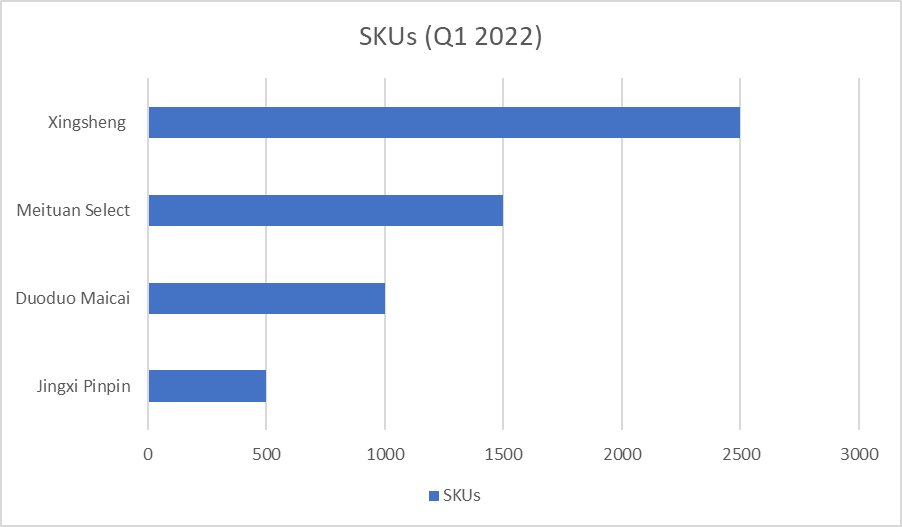
Source: LatePost [22]
But it wasn’t just the startups that were struggling…
When large subsidies were no longer allowed, Didi’s Chengxin Youxuan dropped from 20 million daily orders to 6 million. [21] In September 2021, it began retreating, with the staff decreasing from 16,000 to 5,000. By the end of the year, the CGB initiative had been removed from the Didi Chuxing app. [6] Slowing growth momentum and lower-than-expected customer retention and repurchase rates caused the platform’s demise. It had also found it hard to replicate success in other regions because of differences in supply chain structures. [8]
Internally the failure was explained as: "growth is overly dependent on subsidies, lack of basic skills, and a serious misjudgment of the difficulty of retailing." [21]
Alibaba had four divisions exploring CGB: Ele.me, LingshouTong, Cainiao, and Hema (through its Hema Neighbourhood initiative). In September 2021, CGB was integrated into Taocaicai. The reason for Alibaba’s failure in CGB was described as "the upper-level struggles, the middle-level stands in line, and the lower level has no decision-making power." [21]
In November 2021, Hema Neighbourhood (盒马邻里) pulled out of Guangzhou, Shenzhen and Suzhou. In April 2022, it stopped its service points and self-pickup stations in Beijing, Chengdu, Xi’an, Wuhan, Shanghai, Hangzhou, and Nanjing.
None of the market players achieved their targets for 2021.
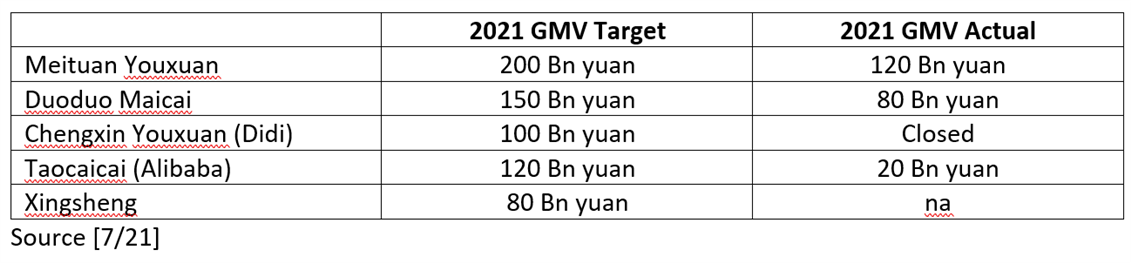
By the end of 2021, the combined GMV of Meituan Select, Duoduo Maicai, and Taocaicai was 220 billion yuan. That’s less than 0.5% of total retail sales of consumer goods. As such, CGB remains a tiny portion of the market. [21]

Source: Bain [8]
Into 2022…
Xingsheng turned a 2% net profit margin by January 2022, when it had 180 million MAU. It had however realized that it was hard to replicate its success in Hunan in other areas, just like its struggling competitors had experienced. Xingsheng closed many cities in Northeast and South China.
In March 2022, Tech Buzz China published an update about CGB. The market had significantly changed by then, and CGB had developed into two forms.
· In larger cities, it was a form of grocery delivery e-commerce, competing with many other models like ship-from-store (Hema, 7Fresh), front-end warehouses (Dingdong, MissFresh), and instant retail (JD Daojia, Taoxianda, etc.).
· In the ‘sinking market,’ the groceries were just supposed to be an entry method for a platform that would later sell all kinds of products. In rural areas, supermarkets were absent, and CGB offered low-cost food delivery without stores and inventory.
Xingsheng’s data showed that the second approach worked: its AOV and order frequencies were higher in the sinking market.
China Merchant Securities cut down its estimated market size for CGB by half to 1 trillion yuan in January 2022. Because:
Big non-food categories had not moved into CGB. Even Pinduoduo scaled back its attempts.
Despite progress, cold chain logistics remained underdeveloped.
Nobody had figured out profitable unit economics.
By mid-2022 the commissions had fallen from 20% to 5-10%. Most CGB group leaders in Beijing earned 1,000-3,0000 yuan per month (versus the 200 per day initially). Only 10% earned more than 5,000 yuan. [7]
JD disbanded its Jingxi Pinpin teams in March 2022 and by mid-2022, the CGB battle had been reduced to a stand-off between Meituan and Pinduoduo, with Xingsheng shakily remaining as the only independent player.
Chapter 2: Meituan and Duoduo, the last two standing
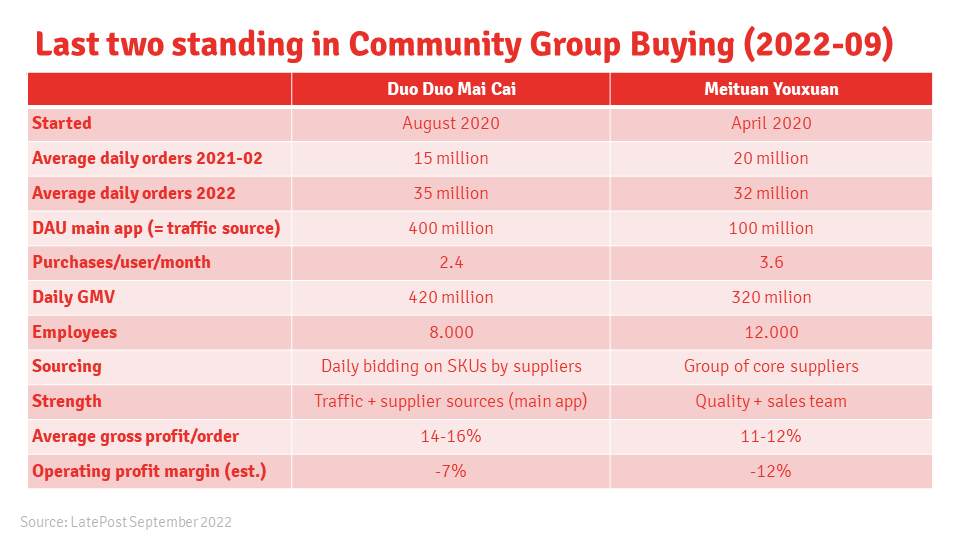
By November 2021, Duoduo Maicai and Meituan Youxuan both had about 30% market share, according to Guojin Securities. [8] When the dust cleared, they were the last ones standing, but both slowed down in order to turn around losses. Mid-2022, they still weren’t profitable, and their operational margins before overhead were estimated to be -7% for Pinduoduo and -12% for Meituan. Meituan Select’s loss in a single quarter exceeded 3 billion yuan. [21]
Meituan Select and Duoduo Maicai both planned to have at least 250 billion yuan GMV in 2022, more than double the result of 2021. [21] Duoduo Maicai’s GMV reached 180 Bn yuan, 1.5 times that of Meituan Select, whose GMV remained flat at 120 Bn compared to 2021. [2] Duoduo was stronger in lower-tier cities and the Southwest (Yunnan, Guizhou, Sichuan), while Meituan led in Southern, Central, and certain Northern provinces. [7]
Common Challenges
Big platform or small player, the CGB business model, for all its purported convenience and savings, have some common challenges:
Focus on low prices usually means abandoning quality. Quality requires investment in processing, transportation, and community leader management, increasing costs. Diligent selection of excellent origins and raw materials, along with strict quality control, is essential. However, fierce competition prioritizes lower prices, sacrificing customer service and pushing premium providers out of the market. Unfortunately, raising the item price is problematic as 45% of goods at Meituan and more than half on Duoduo are cheaper than 9 yuan, and users are very price sensitive.
Limited target audience. CGB platforms mainly serve price-sensitive middle-aged, elderly, and busy young professionals who have limited time for grocery shopping. Attracting loyal customers is challenging, as their user base is driven by consumption patterns rather than income levels.
Cost savings are limited, even when armed with predictive data. CGB platforms experience waste similar to traditional markets for perishable products. Also, eliminating intermediaries doesn't cut costs as much as it does in many other industries.
Nonetheless, the industry is projected to grow GMV by 50-60% in 2023 compared to 2022. New market expansion will contribute 30%, while 70% will come from enhancing existing businesses, such as increasing customer retention and optimizing SKU categories. If we had to pick one strategy to describe the CGB sector for 2023, then it is the same one as the one Zuckerberg announced for Meta – cost reduction AKA “year of efficiency.”
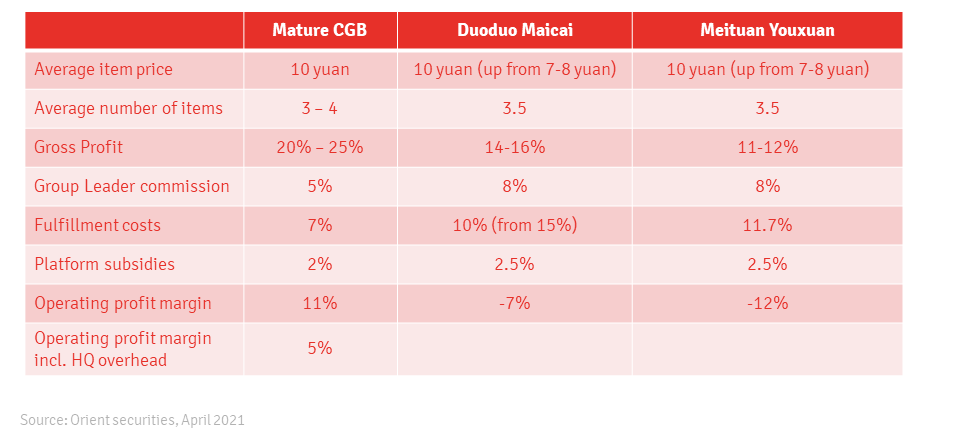
The table below shows how Orient Securities in 2021 calculated CGB could be profitable and how the two players are performing.
Meituan Select
A Brief History
Meituan became interested in CGB after seeing Xingsheng’s initial success (see Chapter 1). While Meituan was one of the last to join the CGB war, it quickly pulled together a 10,000-strong team. [2] CEO Wang Xing had called CGB an important opportunity that comes only once in ten years, and a war that had to be won. He claimed it would bring 300 – 400 million new users to Meituan. [8] CGB became Meituan’s most significant retail project ever.
Meituan had tried a Hema-like project called Xiao Xiang, but it failed and was closed in 2020. Next, it tried the front-end warehouse model, a delivery model that Dingdong Maicai and the now-defunct Miss Fresh were also active in, with Meituan Maicai. When the 30-minute delivery ate up more than the whole margin, Meituan tried again with a next-day pickup model, which wasn’t very successful either.
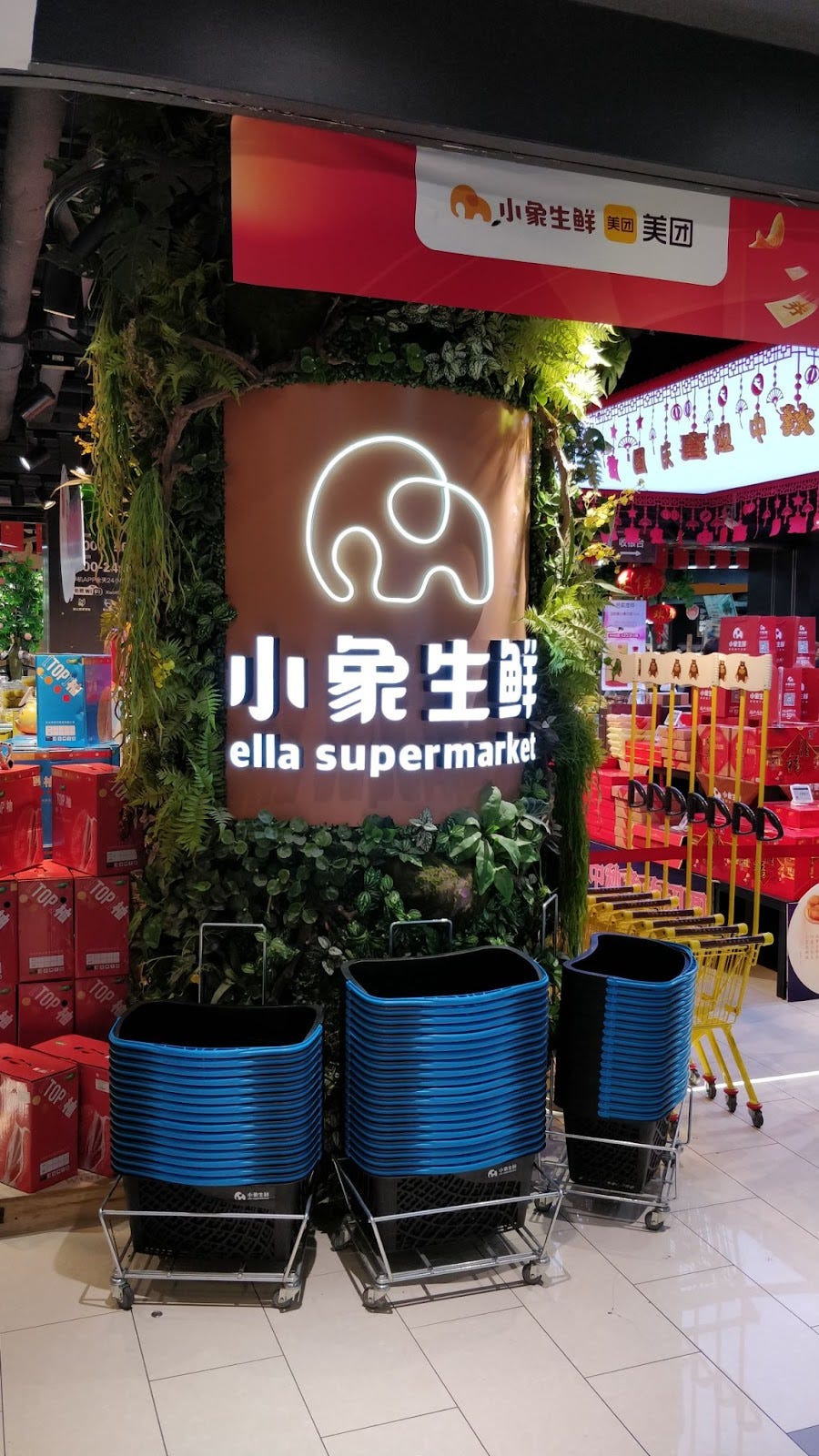
Xiao Xiang, a poor-man’s Hema in 2019.
Meituan entered CGB in Q3 2020, and the heavy investments quickly started showing. In 2021 Meituan’s overall operational result showed a loss, growing from 10.9Bn yuan in 2020 to 38.4Bn yuan in 2021. [6] This was mainly caused by strategic investments, among which its CGB initiatives. During the first three quarters of 2021, Meituan’s losses kept growing.
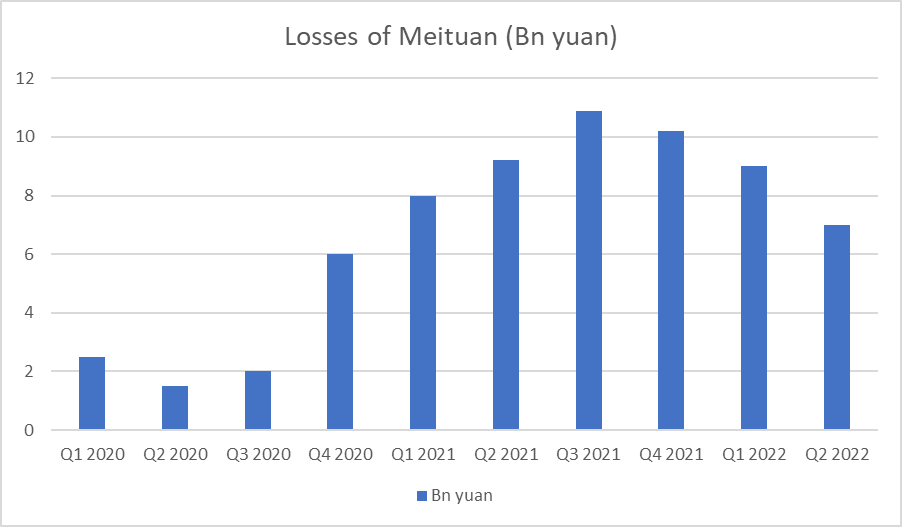
Source: [6/21]
When Wang Xing became convinced that the CGB market was not hundreds of billions but trillions of yuan, he doubled the 2021 GMV target to 200 Bn yuan. [21] Meituan Select’s actual GMV was about 120 Bn yuan in 2021, failing to reach Wang’s lofty goal. At the same time, Meituan invested more than 20Bn yuan in subsidies and infrastructure for CGB and grocery delivery, including cold chain logistics. By the end of September 2021, Meituan’s fixed assets, including properties, warehouses, and equipment, had exploded from 8.6 Bn in 2020 to 22.5 Bn yuan. [8] Meituan also significantly increased the number of SKUs, which also required more promotions.
Grocery delivery is a very different cup of tea from Meituan’s main meal delivery business. With meal delivery, a merchant (restaurant) procures and prepares the goods. Meanwhile, with grocery delivery (Meituan Select and Meituan Maicai), Meituan needs to buy and sell the goods in a self-operated business model. To increase profit margins, Meituan launched private labels of popular products on its e-commerce marketplace Tuanhaohuo.
Mounting Losses
The losses of Meituan Select have been more significant than those of Duoduo Maicai. A key reason is that Pinduoduo has more DAU on its main app (400 million) than Meituan (100 million), and 45% of Duoduo’s orders come from the main app. Staffing is another reason. Meituan Select’s staff decreased from 15,000 to 12,000, but Duoduo had less than 8,000. Meituan has a basic configuration for each province: business analyses, PMO, 5-6 people for each category, and dozens of warehouse administrators. Duoduo’s warehouses have outsourced staff with low wages. Duoduo works with 1-2 promoters in third- and fourth-tier cities and Meituan has 10-15 promoters there. Because of Pinduoduo’s organizational structure with more regional autonomy, its speed of execution is also higher. [21]
Refining Product Category Structure
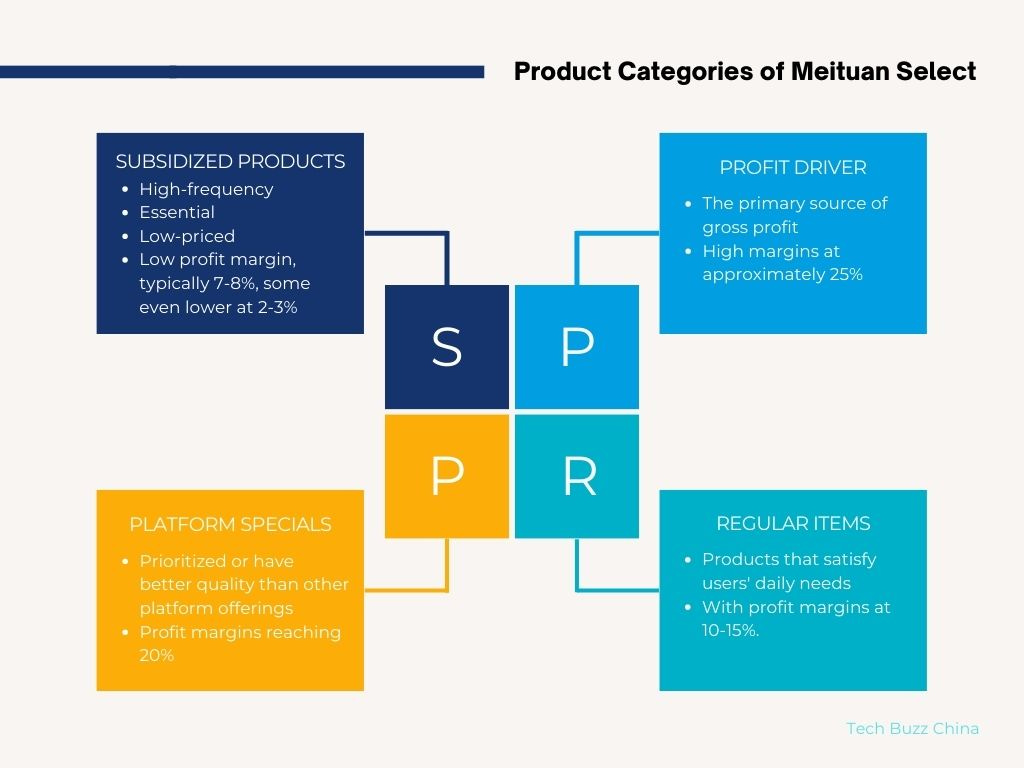
As mentioned, all the platforms are undergoing cost cutting, and Meituan, as the loss leader, is especially keen to turn things around. Once focused on price reduction for all products, it now emphasizes sales volume, gross margin, and user retention by optimizing its product categories. These are divided into four types: subsidized products, profit drivers, platform specials, and regular products. Subsidized products attract customers with low margins (7-8%, some as low as 2-3%) on items like fresh produce, snacks, and condiments. Profit drivers, including grain, oil, dairy, and beverages, account for the largest share and high margins (approximately 25%). Platform specials are usually branded, higher quality products exclusive to the platform and have 20% profit margins. (Duoduo, for example, does not have this category.) Finally, the remaining items, deemed to fall in the “regular” category, have profit margins of 10-15%. Typically, subsidized products should be under 20%, profit drivers 20%, platform specials 10%, and regular products over 50%, although these proportions are optimized in order to hit target gross margins platform wide.
Cost Control
Meituan Select's current loss is likely within 10%, down from 18-19% in late 2021. Gross margin is about 13-14%, with deductions of 6.5-7% for community leader commissions, 10% for warehousing, 4-4.5% for consumer subsidies, 0.5% for product subsidies, 0.5-0.6% for product loss, and 3-4% for personnel costs, resulting in an 8-9% loss. Despite progress since 2021 and 2022, Meituan needs to increase CGB margins to break even. A 17-18% gross margin would be ideal, with 2023 projections currently at 16-17%. A healthy range would have 6% commissions, 3% consumer subsidies, and 2.5% personnel costs.
Key measures to improve margins include:
Lower community leader commission subsidies. Meituan believes it currently overpays community leaders because CGB orders bring in extra foot traffic resulting in incremental revenue for leaders with retail locations.
Reduce consumer subsidies. Although not as high as 6-7% in previous years, they've reached 4.25%. A healthier level is likely around 3%, with a focus on optimizing user experience.
Optimize supply chain for efficiency, margins, and bargaining power while addressing the challenges of packaging rules, merchant resistance, and changes in business contracts and procurement systems.
Reduce personnel costs by streamlining staff during transitions.
Utilize data processing and process control for timeliness and cost balance, meeting deadlines, and monitoring employee efficiency.
Digitalize sorting with barcode scanning, enabling real-time data uploads, analysis, and monitoring.
Modify wages to incentivize efficiency based on performance metrics.
Reduce transportation costs by optimizing warehouse storage and consolidating nearby grid stations.
Reform grid station franchisee operations. Improve grid station stability, which has been an issue since 2021 due to inadequate performance evaluations. Incentivize performance and support resources until the break-even point, after which franchisees must increase profit margins through higher shipment volumes.
Close remote warehouses with low order volume and high transportation costs. Meituan has used data analysis to guide warehouse closures and consolidation, reducing central warehouses from over 100 to just over 80.
Latest Developments
In addition to the above cost cutting measures, Meituan is also experimenting with variations of CGB and rebrandngs.
In April 2022, Meituan announced major layoffs at Meituan Select and Meituan Maicai. Two weeks later, it said it was shutting down Meituan Select. Meituan Select shut down the four north-western provinces, including Beijing. The delivery and fulfillment costs in the capital had been too high. [21]
The idea of Meituan Select is ‘order today’ (before 23:00 hours) and ‘pickup tomorrow’ (before 16:00 hours) at a CGB leader or shop. As with general e-commerce 10-15 years ago, Meituan tries to fill a gap caused by the lack of retail infrastructure – in this case, large brand supermarkets – and a limited variety of products in lower-tier cities. While ordering from traditional e-commerce channels can come with a 2-3 days delivery time in these areas, Meituan can offer substantially faster service and fresher products.
In August 2022, Meituan merged Tuanhaohuo (团好货) into Meituan Select, and on October 11th, 2022, Meituan rebranded Meituan Select to Mingrida Supermarket (明日达超市, ‘Tomorrow’s Supermarket’). This next-day delivery supermarket focuses on lower prices, while the same-day delivery concepts Meituan Maicai (美团买菜) and Meituan Flash Shopping (美团闪购) focuses on speed and convenience.
Mingrida adapts a ‘big warehouse + grid station + self-pickup’ model. [3] Meituan has less than 24 hours between receiving and delivering orders, requiring a highly standardized, large-scale, industrialized supply chain system. Meituan has replicated the traditional fresh food supply chain but has consolidated the many-to-many relationships between wholesalers and retailers into one link between big warehouses and grid stations. Grid stations then deliver to pick-up stores or CGB group leaders.
Chen Liang, the senior vice president of Meituan who once led the CGB and hotel & travel business (which is under attack from Douyin, see our recent report), resigned in February 2023. Guo Wanhuai already took over Meituan Select from Cheng Liang in January 2022. He decentralized a lot of procurement of less important standard products and fresh produce to local departments. Headquarters also limits itself to warehouse planning and marketing activities in bigger cities. [21]
Duoduo Maicai
Duoduo Maicai’s strategy centers around rural China. That’s because it competes heavily with traditional and emerging instant retail businesses in provincial capitals. Traditional players JD.com, Meituan, Alibaba, and Ele.me are expanding into instant retail, offering 3 and 4-hour delivery services. Thus, Duoduo Maicai's believes its core growth potential to lie in rural townships and county-level markets, expecting a 50%+ growth rate in the next few years. Currently, the market is wide open, as Duoduo Maicai and Meituan Select only have an 8-9% penetration rate in these areas.
Duoduo Maicai projects a much lower 10-20% growth rate in prefecture-level cities and provincial capitals. In fact, there is a clear inverse relationship between how developed a city is and its importance to Duoduo. Provincial capitals, for example, which are more developed than prefecture-level cities, only have about 60-70% of their business volume. However, provincial capitals are essential for supply chain development, prompting Duoduo Maicai to establish their presence there first anyway. There is no question that rural and county-level markets form Duoduo’s core customer base.
Managing Suppliers
Duoduo uses a ‘bidding mode’ with the merchants supplying the products. Several merchants bid for a certain volume every day, and the one with the lowest price gets the order. Meituan Select used a buyer model in which each category had a fixed supplier. However, from the second half of 2021, Meituan Select required merchants to bid on daily necessities, with prices at least the same as the competition or 1-2% lower. But Meituan still cultivates a group of core suppliers. [21]
Pinduoduo has advantages in traffic from its main app and supplier network. It uses big data from the main app to find suppliers to do daily bidding for Duoduo Maicai. However, Meituan offers better quality and thus achieves a higher monthly order frequency (3.6) than Duoduo (2.4). [21]
Product Categories and Operations
Duoduo Maicai leverages Pinduoduo’s large user base for customer acquisition, giving it a leg up where customer acquisition is concerned. But its operations is lacking, and it isn’t as good at adjusting product categories to accommodate seasonal changes nor is it great at executing marketing strategies.
Duoduo’s product structure consists of subsidized products, profit drivers, and regular products, with more traffic allocated to profit drivers. Different from Meituan, it does not have the “platform specials” category. It also allocates more traffic to profit drivers.
Duoduo Maicai's grocery margin is lower than Meituan Select's due to perishable products being traffic-driving and promotional items.
By category, non-food products are expected to have the highest sales growth rate, followed by grain and oil, beverages, and fresh produce. Non-food products have the highest sales growth rate in rural townships, while food products dominate in prefecture-level cities and provincial capitals. Neither Duoduo nor Meituan have satisfied the non-food product demand in rural townships. A big reason for Duoduo’s failure here is that because it has been so focused on agricultural products across the entire platform, it has not yet established a supply chain for non-food products at the township level, which requires time to develop. As for food products, the more popular category in prefecture-level cities and provincial capitals, gross margins are low due to spoilage, quality control and fulfilmment costs. Compared to Meituan, Duoduo’s grocery margins are lower, due to their positioning as promotional items to drive traffic.
Finally, Duoduo offers varied incentives for community leaders based on time and region, with no fixed rewards for new customer acquisition. The average reward for acquiring a new community leader is 45 yuan, a two-week assessment period, and a daily sales target of 80+ yuan (6+ orders). Community leader commission rates are 4-4.05% for Duoduo Maicai, lower than the 6.5% for Meituan, because of the platform’s greater traffic.
Cost Control
In 2022, Duoduo Maicai's average item value was just 8 yuan. On the expenses side, it had 3.5% community leader commission which included 1% in rewards, 1 yuan fulfillment cost per item, and an additional 0.3 yuan processing cost for each fruit or vegetable item, which was about 20% of the business. In comparison, Meituan Select has a lower average item value. Duoduo Maicai has a higher 15-17% gross margin and a 4% average loss, excluding wages.
Duoduo Maicai's overall gross margin increased from <10% in December 2021 to 14-15% currently, with expectations for further improvement in 2023. Commission, rewards, fulfillment costs, and processing fees were similar, but the gross margin improved due to the following actions:
SKU Rationalization: Duoduo Maicai has 760 SKUs, 60-70% of Meituan Select's at the provincial level and 50-60% at the tier-1 city level. Reducing SKUs from 1,200 in December 2021 to 760 lowered costs. 2021 data showed that the bottom 30% of SKUs contributed just 6-7% of total sales. Duoduo Maicai plans to expand SKUs to 1,000 in 2023, but this time focusing on high-profit items like electronic accessories and footwear.
Expanding Channels: Duoduo added new distribution channels, such as special goods, damaged goods and nearly-expired products. For instance, normal channel sales for Mengniu milk have a 6-7% gross margin, while nearly-expired products can reach 50-70%, and special channel products 20-30%.
In addition, there were 1% cost-savings from localized management.
Community leader commissions have seen a marginal decline totaling 10.5% when combining basic and incentive commissions.
Performance improvements led to cost reductions, with per-item costs decreasing from CNY 1.1 to CNY 0.96, and cost ratio dropping from 14-15% to 7-8%. The basic delivery price was reduced from CNY 0.35 to CNY 0.3 from efficiencies in outsourcing, warehousing, sorting, and transportation pricing.
Xingsheng retreats further
As the only independent player still standing and with nowhere near the same balance sheet as Meituan or Pinduoduo, Xingsheng is focused on cost control and stable contraction despite posting narrower losses than its competitors. In September 2022, Xingsheng had a gross margin of 23.1%. The company's average net loss for 2021 was -3.5% nationwide. After implementing cost reduction and logistics optimization policies in late 2021, its net loss improved to -2.9% in September 2022, with an expected annual net loss of -2.7%.
Unlike Duoduo, which is focused on the rural market, Xingsheng is retreating. Its 2016 rural encirclement strategy (going after the “sinking market” first and then higher tier cities later) is outdated. In H2 2021, 56% of orders targeted lower-tier markets. By Q3 2022, that number fell to 42%. It continues to operate at the county level, but not in villages, due to higher rural delivery costs. County-level CGB orders are trending upward, but regional growth is challenging. Besides provincial capitals and prefecture-level cities, expansion is paused.
Cost Control
Xingsheng’s cost profile differs from Duoduo and Meituan, starting with its 8.3% commission ratio, which is higher than its competition. Regional storage costs are also relatively high at 6.9% per order (excluding commissions). New user incentives are 1.2-1.5%, inventory costs are 2.7%, and platform fees are 5.5-5.9%, but R&D and mini-program maintenance costs are low. Xingsheng also offers consumer subsidies: 4.6% for special events such as the Mid-Autumn Festival, 2%+ daily, and 0.3-0.6% for group development.
On the infrastructure front, Xingsheng contracted grid stations from 2,000 in December 2021-January 2022 to fewer than 1,000 in August-September 2022 by shrinking stations in lower-tier markets and consolidating low-order ones to optimize delivery routes. It has also achieved further cost savings streamlining supply chain expenses and reducing secondary transportation. By having suppliers manage production and transportation, Xingsheng can lower its transportation management cost ratio by 1.5%. Additionally, the ratios for central warehouses, grid warehouses, and community leaders will decrease by 0.5%, direct warehousing costs from central warehouses to community leaders will drop by 3%, and early-stage operations can be reduced by 2%.
Recent Developments
Xingsheng was recently reported [24] to have suddenly shut down its business in Fujian province, with orders even remaining in a warehouse and not being delivered. At Xingsheng, regions are responsible for their own profit and loss, so Fujian must clearly have been underperforming. Of the 18 provinces it has been active in, only 7 remain (Hunan, Hubei, Jiangxi, Shaanxi, Guizhou, Guangxi, and Guangdong).
When Meituan and Pinduoduo entered the CGB market in Fujian and were ‘burning cash’ in subsidies, Xingsheng could not keep up and lost community group leaders and users. The company retreated its warehouse from Fuzhou to Putian, but since there were few fresh produce suppliers in Putian it still needed to get these from Fuzhou, increasing the logistical costs.
Unlike PDD and Meitian, Xingsheng also didn’t have a good online portal and relied on the community group leaders too much. Fujian only made up 3-4% of Xingsheng’s total revenue. It remains the market leader in its native Hunan, but it’s not unlikely it might retreat from more provinces while it attempts to further save costs. It might even end up the way it started …
Community Group Buying is (still) evolving
CGB has changed a lot since it first burst onto the scene a few years ago, and it continues to evolve. Two categories of products that have started expanding on CGB platforms are unbranded (white label) goods and local services. [27] In the latter category, the platform expands its offering to the entire community business and CGB platforms transform into community services platforms, adding medical examinations, cleaning, catering, movie tickets, travel tickets, etc. Group leaders then convince their followers to buy services they might not have thought about themselves but might still need, like the removal of house mites or cleaning of the air conditioning.
The help of the group leader makes it a relatively low cost approach, and therefore the fees that the CGB platforms like Linlin charge (5-8%) are lower than those on Meituan (20%). Besides, in counties where Meituan has low penetration, these services are a good alternative. Local services could help increase the number of daily usage scenarios, raise the customer lifetime value and, who knows, finally make CGB an economically viable business model. If CGB platforms could create a ‘second growth curve’ by grabbing a slice of the local services market, which according to iResearch will grow from 19.5 trillion in 2020 to 35.3 trillion by 2025, it might just happen.
The CGB market itself? After all the onslaught, it’s still just 100 billion yuan large. [27]
References
[1]联商网编辑部, 2023-03-07, [2]36Kr, 2023-02-27, [3]36Kr, 2023-01-18, [4]Linkshop, 2022-11-18, [5] IThome.com, 2022-10-12, [6]首席商业评论, 2022-10-26, [7]Sixth Tone, 2022-09-03, [8]Caixin, 2022-04-01, [9]Walk The Chat, 2019-03-11, [10]SCMP, 2020-12-15, [11]iResearch, 2019-07-11, [12]Caixin, 2020-12-15, [12]人民日报评论, 2020-12-11, [13]Caixin, 2022-12-23, [14]SAMR, 2022-12-22, [15]SCMP, 2021-03-03, [16]SMCP, 2021-03-10, [17]Bloomberg, 2021-01-08, [18]KrAsia, 2020-11-26, [19]Caixin, 2021-02-02, [20]虎嗅APP, 2021-01-29, [21]LatePost, 2022-09-08, [22]LatePost, 2022-03-22, [23] Latepost, 2023-02-17, [24] Third Eye Retail, 2023-04-11, [25] LatePost, 2023-04-12 [26] 生鲜榜, 2023-04-19, [27] 第三只眼看零售, 2023-04-01

In the same article, there are 2 different views on Meituan's gross margins:
1. "In comparison, Meituan Select has a lower average item value, but higher 15-17% gross margin"
2. "Meituan Select's current loss is likely within 10%, down from 18-19% in late 2021. Gross margin is about 13-14%"
So is Meituan Select's gross margins 13-14% or 15-17%?
Thank you.