
Alibaba’s Xianyu (Idle Fish) swims a different course
Xianyu’s shift to B2C and opening of offline stores

Contents
Things that caught our attention
Why you need to look beyond TikTok to what Bytedance is doing in China.
A wave of senior execs are leaving BigTech to build AI+hardware startups.
Xiaomi will launch a new self-developed advanced mobile chip, XringO1.
Introduction
When I do keynotes about Chinese (cross-border) e-commerce, I often get questions about sustainability and circular economy during a Q&A. Recycling might not be the first thing we think of when discussing China. Still, it is most certainly growing in importance in the Chinese domestic market. And there is also a strong governmental push. In February 2024, at a meeting of the Communist Party’s Central Commission for Financial and Economic Affairs, Xi Jinping called for more consumer goods and equipment recycling. [1]
A few years ago, the Chinese second-hand market received much attention, partially because of the IPO of the 3C recycling platform Aihuishou. Meanwhile, the limitations posed by the coronavirus made consumers more interested in second-hand goods, and people started shedding long-held prejudices against used products, especially in some product categories like electronics.
In 2024, the leading platform in second-hand e-commerce, Alibaba’s Xianyu (闲鱼), gained attention because it was designated a priority business in the Alibaba Group. Xianyu started opening offline Recycle Stores last year as part of its adjusted strategy. During a recent field trip to China, I visited several of these stores and will share some of my findings in this article.
All in all, it was about time for a look at the second-hand e-commerce market. In this first report, we look at the development of Alibaba’s Xianyu and how strategic focus has changed its business model. In the near future, we plan to publish a report about the developments in the broader second-hand market in China.
The free section of the report below outlines Xianyu’s history, publicly available performance statistics and community-driven strategy.
The paid subscriber-only section describes how Xianyu changed its strategy after being designated a strategic initiative within the Alibaba Group. What you will learn in this section:
How Xianyu introduces B2C business to its platform.
How Xianyu took its platform offline.
An exclusive photo report of Tech Buzz China’s visit to several Xianyu stores in Hangzhou and Shanghai.
Xianyu’s challenges and outlook in the coming years.
Subscribe to unlock the full report and support our in-depth coverage of key China tech trends.
Enjoy,
Ed Sander, Tech Research Analyst

The history of Xianyu: Who’s the boss?
The Xianyu platform was originally an idea proposed by Jack Ma, who asked his team to sell idle items that were no longer needed at home online. At that time, materials were relatively scarce, and the idea soon turned to selling new products. The predecessor of Xianyu was a second-hand market on Taobao.com, and the original domain name was 2.taobao.com. This URL now points to Xianyu.
From 2009 to 2014, the number of second-hand goods on Taobao grew so rapidly that the platform set up a special label for second-hand goods. In May 2014, Chen Weiye (nickname: Chu Duan) led his team of 28 people [4] to become independent and develop the Xianyu App, which marked the official establishment of Xianyu as an independent platform.
At the time, the makers used the English name ‘Sharing Fish’ for the platform. Still, nowadays the app is usually referred to in the more literal translation of Idle Fish (in this article, we will stick to Xianyu). [2] Instead of referring to second-hand or used goods, which in China have long had negative connotations, the more neutral term, ‘idle items’, emphasises the value in these goods. According to the platform, ‘idle goods’ was also a broader concept that covers used stuff that still has value and brand-new items that the owners value, such as an ill-chosen gift from friends. [3]
Between 2014 and 2018, Xianyu adopted a series of key strategies to increase its daily active users. First, it implemented the approach of ‘going out of Taobao and entering Taobao’. In terms of ‘going out of Taobao’, Xianyu operates as an independent app and is led by an independent CEO, while external investment is used to attract customers. In terms of ‘entering Taobao’, Xianyu allows Taobao products to be resold on the Xianyu platform with one click. This significantly simplifies the user's publishing process and enables users to trade products on Xianyu more conveniently.

Users can browse through their purchase history on Taobao and select any item for reselling on Xianyu with ‘just one click’. The process also provides a recommended price for pre-owned goods across different categories, typically at 50% of the product's original cost, making the whole process transparent. [4]
At TechCrunch Shanghai 2017, Chen Weiye shared the four principles to their success. [5]
Mobile-first: Xianyu prioritised the development of the Xianyu mobile app over a desktop site. This was not just driven by the growing popularity of smartphones at the time. Another reason was that sharing idle items was highly dependent on cameras and, therefore, more suitable for mobile usage. Moreover, the team wa simply too small (around 20 people) to develop both mobile and desktop sites.
Low threshold: Every adult user with a Taobao or Alipay account could log in and start sharing their goods.
Trust through communication: Compared to Taobao or Tmall, where people purchase goods from small retailers, trust was an even bigger issue among Xianyu users, and this kind of trust is built through detailed communication before or even after the actual purchase. Around 41% of Xianyu users would chat or leave messages to others. The app also had its own credit rating system, and buyers were protected from fraud by Alipay’s escrow mechanism, while Taobao’s customer service team was available for support. [2]
Easy transaction: Facilitating the transaction process was a top priority for Xianyu to avoid technical problems interfering in the process from communication to purchase.
After its first five years, Xianyu has seen many leadership changes since 2019. In 2019, Chen Lei (nickname: Wen Zhong), the business founder of Taobao Live, took over Xianyu from Chen Weiye. He brought his content and live broadcast operation experience to Xianyu and introduced hundreds of (internet) celebrities to it. [6] Besides introducing the Xianyu live broadcast function, Chen Lei adjusted the transaction structure and attracted business merchants to join the platform. However, due to ‘work style issues’, he resigned in 2020.
In just one year, the person in charge of Xianyu was changed to Jin Ke (nickname: Tang Song), who had previously been the head of Taobao clothing. Jin Ke applied his previous experience in Taobao B2C to the second-hand market, focusing on supporting more standardised businesses such as Xianyu Premium (闲鱼优品, Xianyu Youpin), a certified B2C product section launched in 2019. He also shut down C2C businesses such as the offline flea market events of Xianyu Market (闲鱼市集, Xianyu Shiji). [6]
During Jin Ke’s two years in office, Xianyu underwent important changes in its model. Previously, Xianyu emphasised a sense of community and deliberately weakened the identity concepts of traditional e-commerce companies, such as buyers and sellers. It also did not introduce the credit system of Taobao buyers and sellers. In practice, this approach was plagued by constant transaction disputes. Some local ‘fishpond’ communities (see below) have even been shut down due to the emergence of pornographic and other "fringe" content. The focus of Xianyu's development shifted to C2B2C - that is, consumers hand over goods to the platform for inspection. Then the platform sells it on their behalf. [6]
Jin Ke launched the inspection service, introduced more business merchants, and established an offline base. However, due to his excessive introduction of business merchants, Xianyu and Taobao's business conflicted. Xianyu lost its unique characteristics, so he eventually left his position and transferred to Alibaba International Digital Business Group in 2021.
Liu Bo (nickname: Jia Luo), the head of Alimama, was put in charge of Xianyu. [6] Under Liu Bo, Xianyu began to pay more attention to commercial traffic. Then in 2022, Xuan Yi and Ding Jian (nickname: Ji Shan) took charge of Xianyu. They focused on improving user experience.
In the second half of 2023, Xianyu established an innovation team to encourage product managers to contribute new inspiration and project ideas. Approved projects would receive resource support. [6]
Ding Jian currently serves as the general manager of Xianyu. [6]
Xianyu Statistics
Let’s first have a look at Xianyu’s user numbers. Official statements on Xianyu’s user statistics by Alibaba are rare and far between, but we have been able to piece together an overview using different metrics and figures published over the years.

Registered users
While Taobao is still the Chinese e-commerce platform with the highest number of registered users (over 1 billion), the total number of users on the Xianyu platform is also impressive.
The platform had more than 500 million users, making it one of the largest Alibaba apps by users, said Ding Jian, general manager at Xianyu, at a corporate event in May 2023. [7] [8] At the 29th United Nations Climate Change Conference in late 2024, Xianyu announced that it has over 600 million registered users with an annual growth rate close to 30%. [9] [10] Public data shows that the annual compound growth rate of Xianyu users has been close to 30%. [11]
Xianyu has become one of the platforms with the highest market share in the second-hand e-commerce market. According to a Shenwan Hongyuan Research Institute report, Xianyu's penetration rate has reached 72.9%. [13]
However, there is a mismatch between registered and actively trading users. For instance, Alibaba claimed that Xianyu had 100 million users in 2016. Still, according to Quest Mobile, as of the end of 2017, the total number of Chinese users trading second-hand products (across all platforms) was close to 40 million. If correct, most of the Xianyu users in 2016 must not have bought or sold anything on the platform. [12]
Monthly active users
By the end of 2017, Xianyu had 19.61 million monthly active users, ranking first in the second-hand market, followed by Zhuanzhuan, which had 17.47 million monthly active users. [12]
Mobile monthly active users surpassed 100 million in August 2021. [16]
In April 2024, the platform’s number of monthly active users reached 162 million, according to Chinese data aggregator QuestMobile. [17] In July 2024, Alibaba claimed that Xianyu had 178 million monthly active users. [18]
At the end of 2024, QuestMobile released the "2024 China Internet Core Trends Report". Data showed that as of September 2024, Xianyu's MAU (monthly active users) was 181 million, a year-on-year increase of 19.19%, ranking in the top five in the "Top APP User Scale Growth List". [19]
As of March 2025, Xianyu's MAU reached 209 million, according to QuestMobile.
Daily active users
Daily active users commonly refer to people who open an app daily, which also says little about transactions. Since Xianyu has built many communities, many users probably frequently open the app to interact without actually buying or selling something.
Xianyu's DAU has shown a steady growth trend from more than 10 million users in 2018 to nearly 50 million users in early 2024, but its growth has shown large fluctuations:
In 2020, Xianyu increased its daily active users (DAU) through large-scale advertising under Jin Ke. However, this DAU growth was considered low-quality because it did not translate into long-term user retention.
In 2021, DAU jumped to 30 million, mainly due to Xianyu’s new user activities. As a result, Xianyu received Alibaba Group's highest performance score at 3.75 points. [6]
When Jin Ke stepped down, DAU declined from 37 million to 31 million. After Ding Jian and Xuan Yi took over and improved the user's transaction experience, DAU rebounded. DAU reached 36 million to 37 million when it was promoting and advertising, while it was maintained at about 34 million under normal circumstances. DAU has maintained a growth rate of about 15% per year.
Xianyu saw an 18% year-on-year increase in DAU for the quarter ending on June 30, 2023. [14] In September 2023, Xianyu's DAU reached a new peak of 36.7 million. That quarter, DAU was 20% higher than in the same quarter in 2022. [7] [15] Such growth was partly due to the traffic support of Taobao and Alipay.
During 2024, Xianyu saw a 28% increase in downloads and was the 4th most downloaded app in 2024 according to Sensor Tower.
By the end of 2024, Xianyu had nearly 50 million daily active users. [10]
Sellers
In 2020, more than 200 billion items were sold on the platform. [4]
In 2023, more than 100 million people posted items for sale on Xianyu, with four million items posted per day. Users born after 1995 earned an average of RMB 2,700 from selling goods and services (see below) such as financial consulting, night market stalls, taking pets to the vet, in-home makeup and hair care, travel planning, etc. [20]
Looking at the 2023 figures, 20% of the registered 500 million users were buying or selling.
User profile
In mid-2023, Ding Jian said that among Xianyu’s users, those born after 1995 accounted for 43%, and those born after 2000 accounted for 22%. [8] [10]

Note: In early 2024, a Xianyu staff member claimed that the main body of users were born after 1995, accounting for about 60%, while those born after 2000 were close to 40%. Around the same time, another source claimed that Gen Z users, born between 1995 and 2010, accounted for more than 60% of Xianyu’s account holders. [21] The difference might be in the definition. QuestMobile found that while around 43% of people on the platform were born after 1995, users from this cohort accounted for more than 60% of all service orders. [18]
If we compare Xianyu users with users of other emerging social media platforms, such as Douyin and Bilibili, we find a high degree of overlap. This shows that these platforms attract similar young user groups. However, when we compare them with other platforms in the ecosystem, such as Taobao, we find significant differences. Taking Taobao as an example, its main user age group is concentrated between 30 and 50, which is in sharp contrast to the younger user characteristics of the Xianyu platform.
A recent popular term is the “ten thousand yuan households” of Xianyu; those with annual transaction volume exceeding ten thousand yuan. According to official data, this group of users has reached 8 million. They sell trendy toys, clothing, games and even rent out houses on the platform. [10]
Sales
Data shows that in 2024, the number of orders on the Xianyu platform increased by nearly 50% year-on-year. [11]
Xianyu averaged over RMB 1 billion daily gross merchandise value during the 2024 Lunar New Year and more than 4 million product postings daily. [18] This would mean the average sold product had a value of RMB 250.
By the end of 2024, GMV exceeded RMB 400 billion, making it China’s largest C2C trading platform. [10] Taking 2023’s 100 million sellers, the average seller would have earned over RMB 4,000 on Xianyu. However, this average is likely driven up by B2C sellers (see ‘introducing B2C’ below).
2024’s RMB 400 million makes Alibaba’s mid 2021 claim that Xianyu would see GMV of RMB 500 million that year, up from RMB 200 million in 2020, [4] very, very unrealistic. If true, the GMV would have decreased significantly since then, which is very unlikely.

Source: Alizila, 36Kr [4] [10]
A Xianyu staff member shed some light on the possible cause of such inconsistencies. “When processing GMV data in financial reports, Xianyu uses two statistical calibres: book GMV and real GMV. The calculation of real GMV will consider factors such as deducting large transactions and returns to ensure that the data reflects the actual transaction situation. It should be noted that book GMV data is usually sensitive, so the GMV data disclosed in the public relations materials may be inconsistent with the book GMV. In addition, third-party institutions may use different methods than Xianyu when estimating GMV, which may also cause their estimated results to differ from the data in the official public relations release.”
“When analysing the financial report and user growth data for March 2024, the numbers in the PR manuscript did not show substantial growth. Regarding overall sales, GMV (gross merchandise volume) had grown by about 20% per year. It is worth noting that the growth rate of GMV is higher than that of DAU (15%), which may indicate that users' spending power on the platform is increasing.”
Our conclusion? Take Xianyu’s GMV figures with a grain of salt.
Product categories
In the second-hand market, products such as 3C digital products and luxury goods have gradually become the core of profits of the platform because they are large, have relatively high customer unit prices, and are highly standardised and easily covered by pricing and quality inspection systems. In contrast, Xianyu, which is involved in all-category transactions, apparently has a broader market. [22]
On the Xianyu platform, the most outstanding transaction categories include daily household goods, cultural and artistic jewellery, and luxury goods. However, despite the active transactions in the daily household and cultural and creative categories, their contribution to the GMV of the Xianyu platform is not significant.
The category with the most significant transaction volume on the second-hand trading platform is 3C products, which covers a variety of products such as tablets, laptops, CPUs, consoles, keyboards, headphones, drones, selfie devices, etc. Although the customer unit price of the 3C category is not high, due to the large number of transactions and the good standardisation of the products, the overall transaction volume is very considerable.
On the Xianyu platform, the mobile phone category contributes the most to GMV, mainly because the customer unit price of mobile phones, primarily second-hand Apple mobile phones, is relatively high. Even the cheapest second-hand Apple mobile phones are priced between RMB 2,000 and 3,000.
The daily household category is the second largest in the number of transactions, but its GMV is not particularly high, which may be because many transactions are completed offline. Cultural and artistic jewellery ranks third, and this category covers a variety of commodities such as copper coins, handmade products, wood carvings, jewellery and jade.
Second-hand luxury goods rank fourth in transactions on Xianyu, the largest platform in China in this regard. The homepage's luxury goods category is very high because of its good incremental performance.

More than just a second-hand marketplace
Over the years, Xianyu has tried to differentiate itself from other re-commerce platforms by being a social network. Second-hand goods are often non-standard products, and the stronger the non-standard attributes, the more dependent their transactions are on content and community. Therefore, Xianyu has been trying to find a balance between ‘transactions’ and ‘community’ over the years. [22]
In 2015, Xianyu unveiled virtual communities on the app, tapping into the Chinese consumers’ enthusiasm for mixing online shopping with social interaction. These so-called ‘Fishpond’ communities were often populated by users sharing a particular interest, such as photography enthusiasts and Apple fanboys. Xianyu enabled them to exchange information and ideas about their hobbies and swap related merchandise. Fishponds can also revolve around physical neighbourhoods, companies, schools, etc. By 2016, the app had more than 125,000 fishponds. [2] By 2019, this had grown to 1.3 million interest-based communities. [24]
Some users operate permanent virtual stores within the communities, hence the comparison of Xianyu to a digital flea market where people gather to socialise and sell stuff to each other. Moderators voluntarily manage product listings, arbitrate buyer-seller disputes on the ‘Xianyu Small Court’, and answer questions raised by community participants, such as how much their iPhone is worth and how to fix their broken Macs. [2]
At the end of 2019, Xianyu added a location-based service (LBS) feature to the app. This enabled users who are geographically close to each other to connect. The new feature allowed users to filter product listings according to seller location to boost transactions on the platform. [24]
Besides the fishpond, there’s a separate channel where celebrities sell their personal items to followers. This is particularly popular for luxury shoppers, who trust the authenticity of items owned by celebrities and aspire to follow their fashion tastes. [25]
Xianyu demo video. Source: Alibaba Group, circa 2021.
More recent additions that show that Xianyu’s brand is not only limited to the trading platform, but is also a fun life community: [11]
‘Huiwan’ (会玩), a social hub where users can join various ‘circles’ based on hobbies like anime, gaming, fashion, and collectables. They can also browse and contribute to "热门" (Hot) sections featuring trending posts, discussions, and multimedia content. They can also interact with influencers who share insights and product recommendations. Huiwan was launched in 2020 and upgraded in 2023.
The ‘Seafood Market’ (海鲜市场, Haixian Shichang): Launched in May 2023, it promotes buying and selling based on current hot topics. Users can engage in hashtag-based conversations about current events. [23] The Seafood Market features various trading formats, including group buying, item exchanges, and free giveaways.
The ‘Xianyu Outlet’ (闲鱼奥莱, Xianyu Aolai), a channel focusing on B2C sales of discounted, near-new, and clearance items (see ‘Introducing B2C’).
The ‘Xianyu Side Hustle’ (闲鱼副业, Xianyu Fuye), where users can upload their resumes since 2024 to showcase their available time, interests, experiences, and skills for making some ‘money on the side’.

Indeed, Xianyu is not just for selling second-hand goods … young people also share their skills, interests and experiences, and earn income through side jobs.
Xianyu’s side job marketplace, launched in July 2024, enables users to offer services across eight categories and hundreds of sub-categories, covering everything from pet massages to language tutoring. Education and training, pet services and online consultation are especially popular among young people. Xianyu users can search service postings and browse the seller’s resume before placing orders and paying as they would when buying physical products on the platform. [18]
In 2024, the average daily order volume of Xianyu's side jobs doubled year-on-year, and the daily transaction volume exceeded RMB 10 million. In 2024, young people on Xianyu earned an average of RMB 3,660 from their side jobs. That year, 9.5 million young people posted side jobs on Xianyu, of which those born after 2000 accounted for as high as 41%. [11]

Example of looking for services on Xianyu. Image source: Alizila [18]
Xianyu also includes interactive features such as livestreaming, influencer-driven communities and forums, online auctions starting as low as RMB 1, and dedicated channels for finding rare vintage handbags and handmade couture. [4]
Xianyu partnered with Ant Group to offer users access to its sustainability mini-program, ‘Ant Forest’, which is featured on Ant’s mobile-payments platform Alipay. Users can redeem points awarded by Ant Forest for recycling to have trees planted by Ant in China. The total recycling activity on Xianyu in 20218 translated into the planting of about 230,000 trees. [25]
Building trust
Lack of trust in the seller, authenticity, and realistic display of goods have always been issues in e-commerce in China, even more so in the trade of second-hand goods. Under the pure C2C model, the authenticity of individual sellers' products is difficult to supervise.
Just like during the early years of Taobao, in the beginning, issues of credit, security, and user experience were not taken seriously at Xianyu. At one time, Xianyu’s security department only had one employee. [6] However, Xianyu focused more on trust and interaction as it matured to solve the trust issue. It launched a dedicated platform-certified channel featuring high-value products such as electronics and fashion sneakers inspected and authenticated by third-party professionals. Vice versa, sellers new to the scene can choose free mail-in or pick-up services to have their items inspected and sold by the platform. [4]
In 2022, Xianyu integrated its product and community departments and established a user product centre to improve user experience. In 2023, Xianyu invested heavily in its credit system, the ‘Xianyu Small Court’ and other infrastructure solutions. [6]
The rest of this article is available to paying members.
Business model
When analysing Xianyu's business model and its differences from other second-hand trading platforms, several key points emerge.
First, the monetisation ability of the Xianyu platform relies heavily on advertising, while the monetisation ability of other parts is relatively weak. This is because Xianyu is different from other platforms. It provides a unique trading model and operation model. Other second-hand trading platforms pay more attention to the transaction itself and make profits through the difference between buying and selling. In contrast, the Xianyu platform does not hold any goods but sells the goods on behalf of the seller, creating a C2B2C consignment model. This model makes Xianyu unique in the second-hand trading market.
Second, Xianyu has no direct competitors in the market because its trading and operation methods differ from those of other platforms. Other second-hand trading platforms, such as Aihuishou, Zhuanzhuan, Dewu, Hongbulin, and Xiaohua, usually operate in their respective vertical fields, like 3C products or luxury goods, which is different from Xianyu's model. Xianyu meets all of the users' idle product clearance needs, which makes it different from other vertical platforms in terms of traffic structure.
The Xianyu platform's operation model is relatively light because it does not need to hold physical goods or require a large number of commodity fulfilment personnel. This platform mainly solves the problem of idle items for individuals, so in terms of marketing and product strategy, it focuses on the concept of green and recycling, which is different from the category marketing strategy of other merchants.
And then, Xianyu became a focus business
In November 2023, Alibaba CEO Eddie Wu identified Xianyu, along with 1688, DingTalk, and Quark, as the company’s most promising businesses. [21]
Wu disclosed the selection criteria for these four ‘strategic-level innovation businesses’ as follows: having a sufficiently large market space; having a unique market positioning; and being in line with user demand trends and the group's "AI-driven" strategy. [26] These businesses would “in organisational terms, operate as independent subsidiaries and will not be constrained to their previous positioning within the group, enabling them to face the larger market with their own strategies”, Wu had said, adding that the group expects Xianyu to become a lifestyle platform for Chinese consumers. [7]
But this focus also puts more pressure on Xianyu to deliver results…
At a July 2024 meeting of Alibaba’s core executives, Xianyu was required to double its GMV in three years. [27]
Since Xianyu became a focus initiative, its management has put forward two development priorities: one is to increase the number of users and their activity on the platform, and the other is to explore more business models

The Taobao mascot ‘unboxing’ Xianyu at Alibaba’s Qinchengli shopping mall in Hangzhou.
These new requirements explain many of the changes Xianyu has made since 2023. Previously, Xianyu benefited from the endless flow of users and traffic from the Taobao ecosystem and used Taobao to endorse the source of second-hand goods. [22] Although the Xianyu platform consumes Alibaba Group's traffic, the group actually regards this as a traffic investment, hoping that Xianyu will be able to produce more traffic and advertising fees in the future, thereby realising value returns.
Xianyu has also reconstructed its scoring mechanism and opened B2C channels. The pressure of self-sufficiency is gradually changing Xianyu into a different platform. [22]
Introducing B2C
The introduction of B2C sellers had already started long before Eddie Wu made Xianyu a focus business. While individual sellers struggle with declining traffic, Xianyu has gradually increased its support for professional sellers.
Xianyu doesn’t want to ban professional sellers completely, but instead uses them to supplement the platform ecology, thereby bringing Xianyu more abundant products and more GMV. [19] Unlike individual sellers who transfer second-hand idle items, professional sellers on Xianyu are mostly factory-direct sales manufacturers, offline store merchants, and ‘one-click delivery’ players. Professional sellers play the role of intermediaries, earning the corresponding price difference between the source of goods and the price paid by the buyer. [15]
Before 2019, Xianyu did not allow professional sellers to enter, and professional sellers would be directly blocked. However, after Chen Lei became the second person in charge of Xianyu, Xianyu's attitude towards professional sellers changed. [15] Professional sellers take advantage of Xianyu's low threshold to list new products in large quantities, resell them in bulk, or even disguise themselves as individual sellers, destroying the platform's original C2C ecology and damaging the trading experience of ordinary users. [19]
In 2019, under Chen Lei's leadership, Xianyu's C2C model evolved into a C2X model. According to Chen Lei, X represents a diversified transaction path, and the user's things can flow to C (consumer), B (merchant), and even S (service provider). [19] (X2C would actually have sounded more logical to us, but okay…)
In 2019, Xianyu also provided relevant support resources for merchants. For example, the ‘Xianyu Premium Products’ channel (闲鱼优品, Xianyu Youpin) allows qualified merchants who have been certified by the platform to launch products in the channel. The following year, the third CEO, Jin Ke, promoted professional seller services and launched tools such as ‘Idle Butler’ (闲管家, Xian Guanjia) and ‘Fish Shop’ (鱼小铺, Yu Xiaopu) to help professional sellers. [19]
‘Idle Butler’ is a desktop-based seller management tool designed to help sellers efficiently manage their stores, particularly those operating multiple accounts or handling large volumes of transactions. ‘Fish Shop’ serves as an upgraded version of the previous "Pro" accounts, offering sellers a suite of features to optimise their operations: increased number of product listings, multi-specification and inventory management, product grouping, featured product sections, product pinning, a data dashboard, operational guidance, fan engagement tools, etc. These features are tailored to sellers aiming to scale their operations and engage more effectively with their customer base.
In July 2024, Xianyu's general manager, Ding Jian, said idle goods transactions are a niche market nowadays. Xianyu hopes to turn users' money-saving behaviour into a trendy lifestyle so everyone can accept circular consumption. He also said, "Xianyu is not just about second-hand products." [26]
Unlike many second-hand stores that sell only used goods, Xianyu has actually become a new B2C sales channel. Various outdoor brands have given Xianyu prices much lower than official stores for product display and inventory clearance. For example, a new warm blanket from an outdoor brand, which typically costs 3,000 yuan, only costs 700 yuan in Xianyu's offline store. [10]
Online, the ‘Xianyu Outlet’ (闲鱼奥莱, Xianyu Aolai) channel has been launched. Unlike Xianyu's traditional C2C model, the outlet store is more inclined to B2C, focusing on brands with minor defects, approaching expiration, and clearing out. Xianyu also plans to have it appear as a featured product in Xianyu's offline stores (see below). [10]
In terms of the distribution of order volume, pure B2C orders account for about 20%, while pure C2C orders account for 80% (2023 figures). If we look at GMV, or the total amount of merchandise transactions, B2C users account for nearly 30% to 40%, while C2C users account for 60% to 70%.
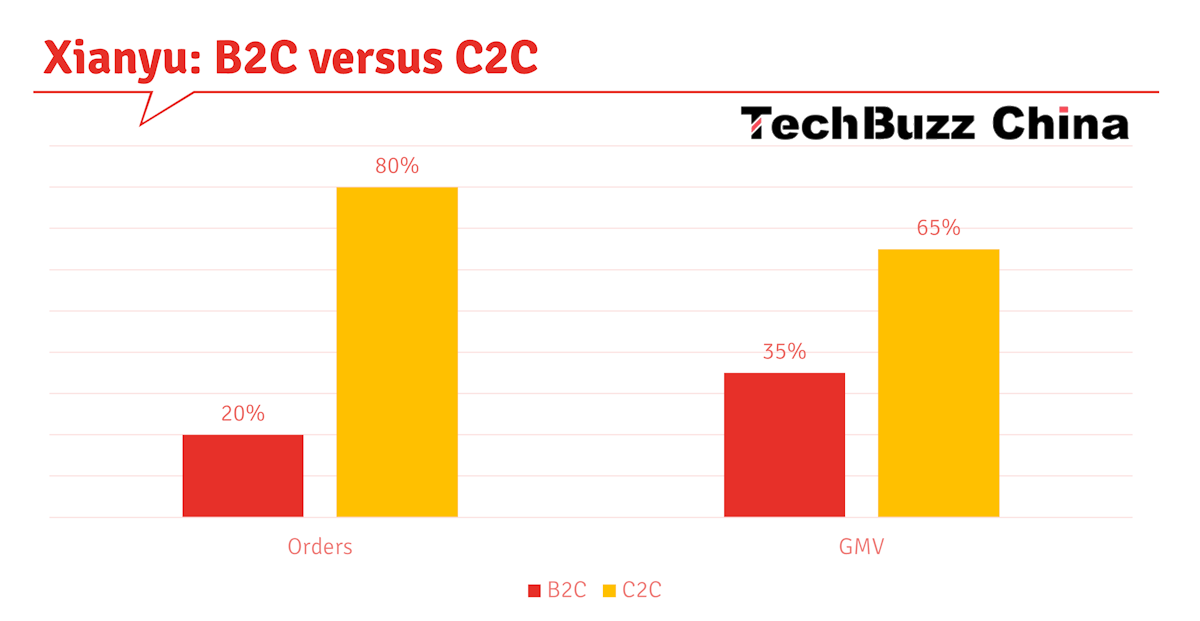
The items sold by individual users on the platform are usually of lower value, which may be because individual users prefer to sell second-hand items that they no longer need. In contrast, the items sold by merchants on Xianyu are of higher value because their main purpose is to make a profit, so they choose to sell higher-value goods.
Improving user experience
Strengthening B2C business wasn’t the only change Xianyu made.
After Xianyu was upgraded to a first-tier business, Alibaba Group Chairman Joseph Tsai pointed out some problems that the group had previously encountered. He mentioned that Alibaba had previously neglected user experience, and now the group needed to adopt a user-centric strategy. Alibaba would adjust its strategic positioning and organisational structure to support this strategic direction. Tsai emphasised that as a new first-tier business unit, Xianyu's future changes and development should focus mainly on improving user experience.
When it comes to improving user experience, Xianyu has taken a series of specific improvement measures.
Search logic experience: Xianyu has adjusted the algorithm to recommend the best, lowest-priced and highest-quality products to users. In addition, Xianyu has launched strategies such as ‘Xiao’er's Selection’ (小二精选, Xiao'er Jingxuan) and ‘10 Billion Subsidies’ (百亿补贴, Baiyi Butie), the purpose of which is to subsidise traffic rather than directly subsidise money. Xiao’er's Selection highlights high-quality listings and exceptional user-generated content, selected by the platform's community managers, referred to as ‘Xiao'er’. The 10 Billion Subsidies program is an Alibaba cross-platform program, not unlike Pinduoduo’s 10 Billion Subsidies, aimed at offering consumers significant discounts on a wide range of products.
Transaction experience: Xianyu has simplified transaction steps, reducing the process that may have required 7 to 8 steps to only 2, including product confirmation, delivery address confirmation, coupon use and postage payment.
User service experience: Since 2022, Xianyu has replaced machine customer service with human customer service to provide more humane support. At the same time, to deal with those issues where it is difficult to clarify responsibilities, Xianyu will also arrange a large amount of compensation fees.
To better serve the well-performing merchants, Xianyu has established a key account merchant operation centre to provide exclusive customer service.
Improved user experience has directly led to increased average order value. For example, Xianyu launched a product inspection service, Yanhuobao (验货宝), which greatly enhanced users' trust in high-priced goods. In addition, it also provides manual customer service to solve problems encountered by users during transactions, which further improves the user's transaction experience.
Adding income sources
When the domestic second-hand e-commerce battle first started, Xianyu founder Chen Weiye could promise ‘no commission’ that his opponents could not respond to. [22] In 2018, he said: "It is inconvenient to disclose Xianyu's specific profit model, but we will definitely not charge transaction commissions." [15]
Still, in June 2023, Xianyu decided to monetise by charging commissions on the platform and announced it would implement a charging policy for specific merchants. While professional sellers have remained an essential supplement to the Xianyu ecosystem, Xianyu has implemented more stringent requirements for them. However, distinguishing the types of sellers on Xianyu isn’t easy because the boundary between the C2C (i.e. individual consumers) and B2C (i.e. commercial sellers) is unclear.
To define B2C users, Xianyu therefore relies on their transaction frequency. This is reflected in the commission rules it launched in 2023. If a user completes more than 10 orders in a month and the cumulative transaction amount exceeds 10,000 yuan, the excess amount will be charged a service fee of 1% of the actual transaction amount of each order. [15]
When Xianyu was made a strategic innovative business, it also needed to take further responsibility for traffic monetisation. Maybe charging professional sellers was insufficient, or Xianyu wanted to avoid the situation where merchants evaded service fees through individual accounts. Whatever the reason, on July 26 2024, Xianyu announced that it would officially implement charges for all sellers starting in September 2024. The charging standard is based on the actual transaction amount (including shipping costs), with a ratio of 0.6% (with a maximum of 60 yuan per transaction), and the service fee is not refundable after an order is refunded. Xianyu wasn’t the first to implement such charges; competitors like Zhuanzhuan and Paipai had already been charging a fee to sellers or buyers. [15] [22] [26]
In April 2025, Xianyu further adjusted the commission rules for mobile phones. Anyone selling more than 6 mobile phones on the platform within one year will reach a ‘category threshold’ and be charged accordingly: a service fee of 1% instead of 0.6%. These rules are meant to have professional sellers pay a higher commission than occasional C2C sellers. By adjusting the seller service fee for high-frequency transactions, the platform aims to filter out professional sellers, return to the original intention of ‘real idle goods transactions’, and improve the transaction experience of individual users. [19]
According to data released by Xianyu in March 2024, Xianyu's average daily transaction volume has exceeded 1 billion. If calculated at a rate of at least 0.6%, Xianyu can theoretically receive no less than RMB 6 million in technical service fees every day. [15]
Despite charges aimed at professional merchants, Xianyu is still the best choice for small B2C sellers. The technical service fee that Xianyu introduced was already launched by Xiaohongshu, JD.com, Douyin, and Pinduoduo in 2018, 2023, 2023, and 2020, respectively, and the proportions are basically the same. However, on those platforms, besides the technical fee, sellers also need to meet many requirements and pay commissions of varying proportions. For small B2C merchants, Xianyu is still one of the platforms with the lowest threshold. [15]
An insider at Xianyu said that Xianyu is currently testing a new product for paid promotion. Xianyu will also cooperate with official brands in the collectables community to launch trendy new products. [15]
According to a Xianyu staff member, Xianyu's profitability is relatively good at present, but it doesn’t know the specific revenue data because it does not conduct independent financial accounting. Xianyu's primary source of income is still from advertising commissions, which Alimama collects. Transaction fees are Xianyu's second-largest source of income.
Xianyu’s additional sources of income include Tmall and Taobao coupons issued through old clothes recycling activities. In addition, it also provides appraisal services, which include free and paid items, and the paid appraisal services are charged on a per-transaction basis.
The authentication services and product inspection are two different services provided to users. Specifically, product inspection is a service that can be selected during the transaction process, and its cost needs to be borne by the seller or buyer. The authentication service has a separate platform entrance; users can find it in the categories on the homepage. This service is independent of the transaction.
When Xianyu handles second-hand goods transactions, its specific charges include recycling services, consignment service fees, and inspection fees for Yanhuobao. For recycling services, it usually charges a 2 to 5% commission from recyclers. As for consignment services, there will be a specific consignment service fee. In addition, the Yanhuobao service will charge a fixed inspection fee, while the Xianyu platform charges per transaction.
Offline stores
Since 2016, Xianyu has been extending its online business to the offline world through various concepts:
Xianyu Markets were actual, physical flea markets that Xianyu organised in cities including Shanghai, Hangzhou, Nanjing, Kunming and Wuhan since 2016. They were more like a large-scale marketing event, mainly providing a social and trading scenario for offline interactions between Xianyu sellers and buyers. At the time, Xianyu planned to invest RMB 100 million to develop new communities and host 1,000 offline fairs in 100 cities in 2017. [2]
In 2020, under Jin Ke's leadership, Xianyu discontinued certain offline activities, including the original ‘Xianyu Markets, ’ as part of a strategic shift towards enhancing trust in transactions and focusing on verified goods.
Xianyu Treasure Box: According to a Technode report, Xianyu already set up brick-and-mortar stores in eight, mainly top-tier, cities, including Beijing, Shanghai, and Guangzhou, in early 2019. [24] These were probably the Xianyu Treasure Box (闲鱼宝盒, Xianyu Baohe) stores that started popping up in high-traffic locations like shopping malls and metro stations a few years ago. These stores, often more like stands than full-blown stores, focus primarily on facilitating the resale, recycling, and consignment of digital products such as smartphones and laptops. The product range has also been expanded to watches, luxury goods, etc.
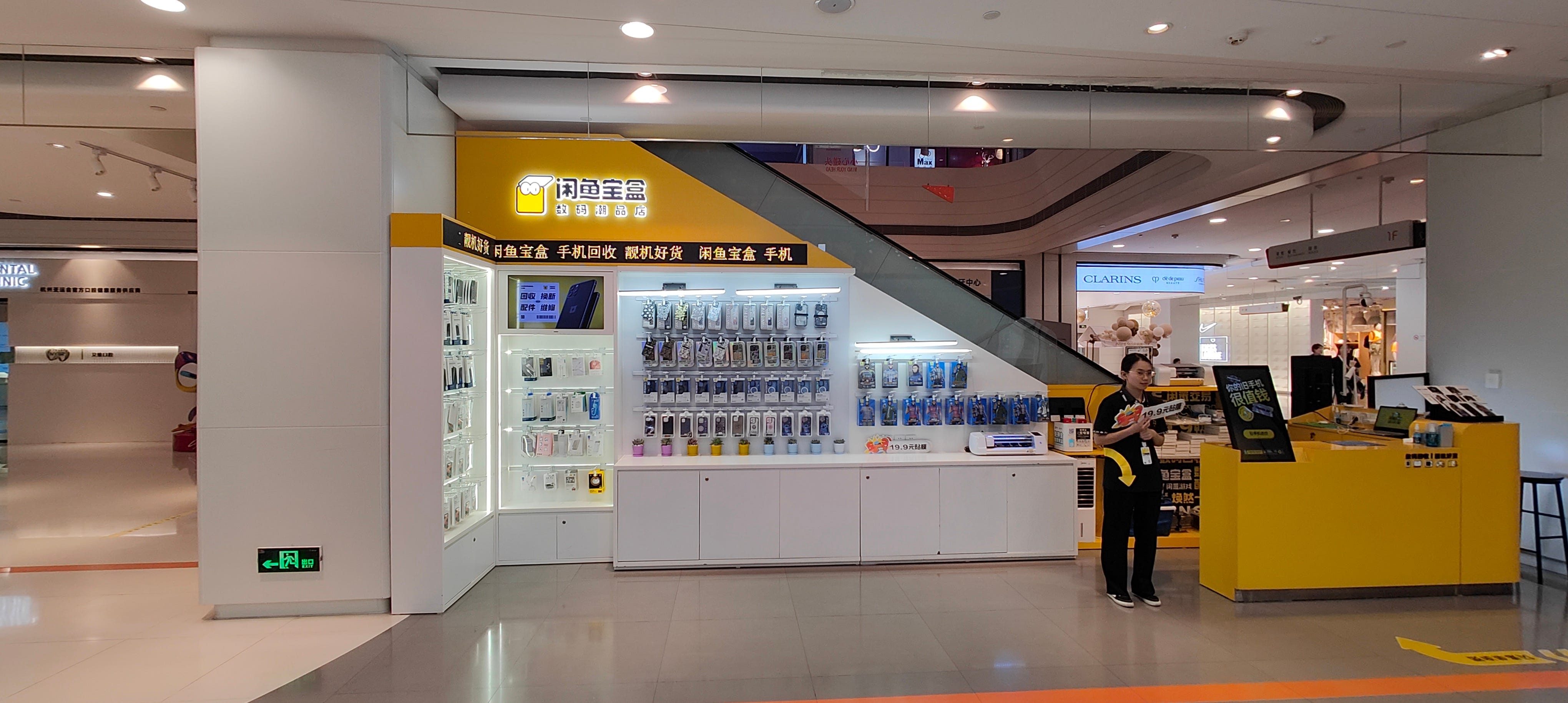
A Xianyu Baohe store in Alibaba’s Qinchengli shopping mall, June 2023.
Xianyu Station: Xianyu Station (闲鱼小站, Xianyu Xiao Zhan) is a cooperative outlet between Xianyu and merchants. The franchisees mainly sell 3C products such as mobile phones and computers and luxury goods, watches, cameras and other products. It is comparable to offline recycling stores and pawnshops. It mainly aims to solve the pain point of insufficient trust between the two parties in online transactions, and provide inspection services through offline stores to attract traffic for online transactions.
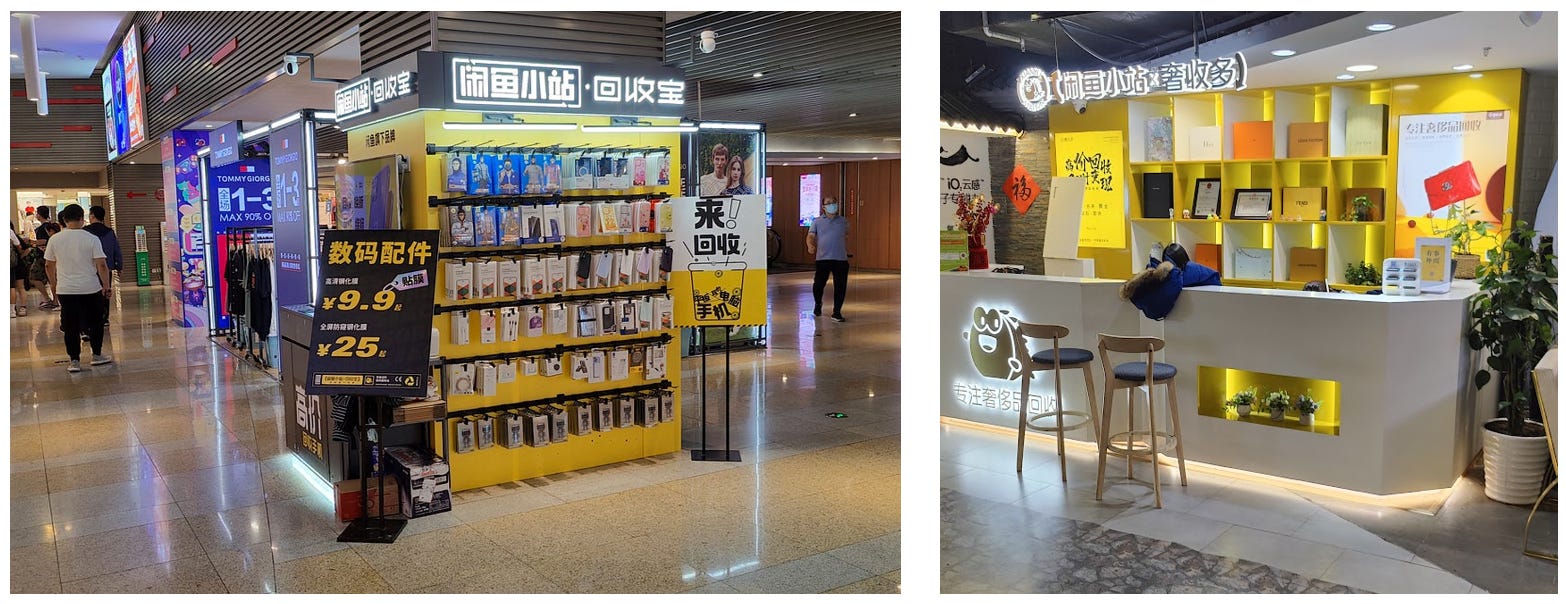
Left: a Xianyu Station in Shanghai, June 2023. Right: a Xianyu Station Luxury Collection, Beijing, April 2025.
When Xianyu was forced to face the inevitable question of profitability, there were not many options available except to monetise the service fees of the existing user base. In this context, Xianyu has turned its attention to offline again. [22]
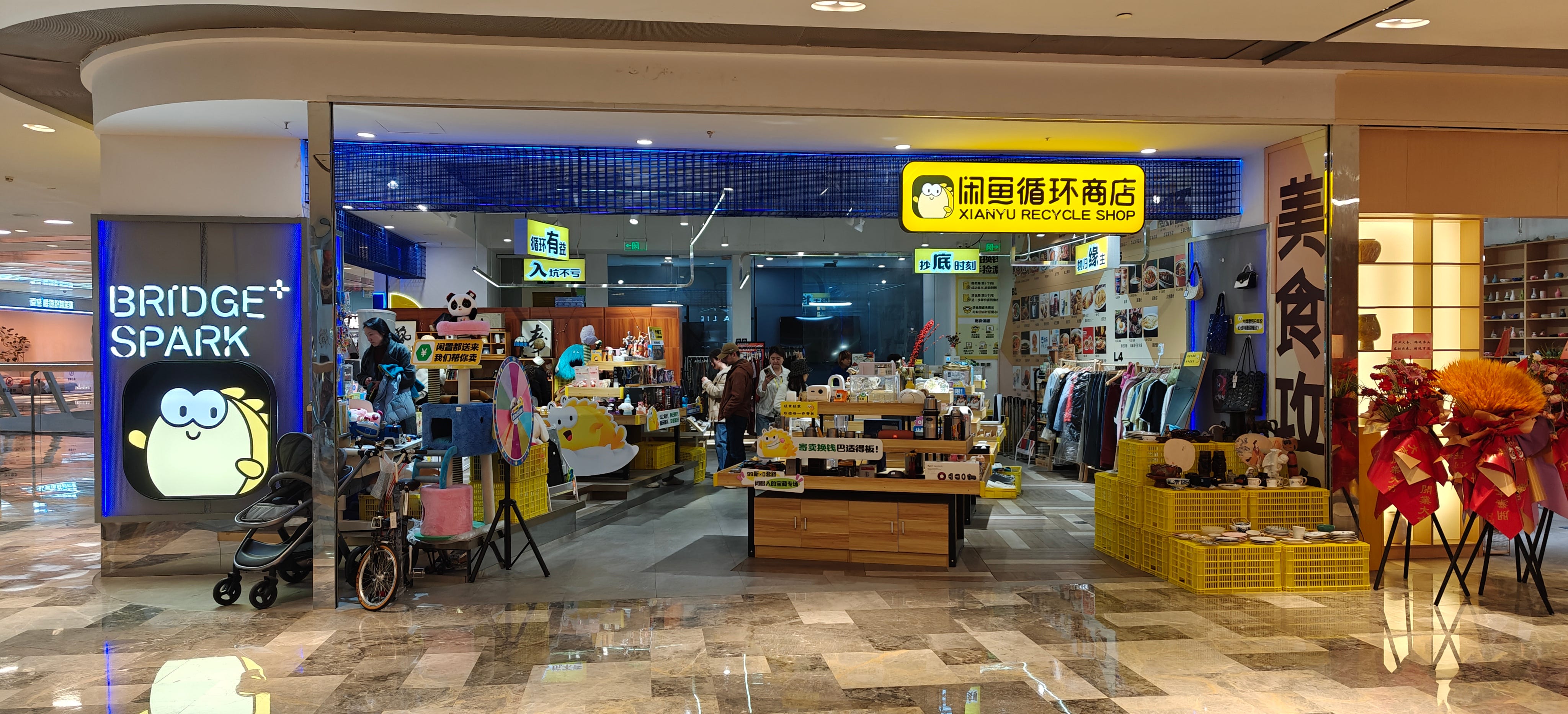
In 2024, Xianyu suddenly changed its direction and launched an offline offensive, quickly setting up ‘Xianyu Recycling Stores’ (闲鱼循环商店, Xianyu Xunhuan Shangdian) in Hangzhou, Shanghai, Chengdu, Nanjing and other places, trying to replicate the idle goods recycling logic built online to offline. In January 2024, news broke that Xianyu was opening its first “all-category” bricks-and-mortar store in the Gongshu district of Hangzhou. The store, which uses a consignment model, would accept a wide range of goods including shoes, apparel, fashion accessories, outdoor sporting goods, 3C, watches, toys, kitchenware, home decor items, home appliances, musical instruments, books and certain luxury goods. However, trading gold and jewellery, food, health products, pets and plants is strictly prohibited. [7] [21] [22]
By March 2025, Xianyu opened its 8th recycling store in Nanjing. It was the largest to date, with a surface of 800 square meters across three floors. In its first month, it sold over 80% of its products and had a transaction volume of over RMB 600,000, making it the best-performing store. [10]
In a time when Alibaba Group is trying to rid itself of offline retail initiatives and has sold its Intime and Sun Art (RT Mart) investments, it’s remarkable that Xianyu is making a major offline move. There are several reasons for this strategy.
First, as mentioned, Alibaba has given Xianyu three years to prove its value and operate as an independent subsidiary. This attempt at a physical store can be seen as the first significant step. The store opening aims to simplify communication between buyers and sellers, with sellers able to receive immediate payments via Alipay once their items are sold, unlike online, the process relies on a buyer clicking the “Received Goods” button for payment to proceed. [21]
Second, as discussed, second-hand transactions face a trust challenge in China. Especially on Xianyu, which focuses on C2C transactions, users question whether the price is reliable, whether the description is true, and whether the seller will run off after being paid. From the ‘Xianyu Small Court’ to the seven-day no-reason return policy, Xianyu has tried to protect buyers' and sellers' rights and interests. However, merchants can always find loopholes in the platform rules. This is why Xianyu started opening offline recycling stores on street corners, shopping malls and communities, trying to rebuild the ‘chain of trust’ in a tangible way. [22]
Third, with the rising cost of online traffic and limited growth, it was only a matter of time before Xianyu would open offline physical stores. At present, the primary function of Xianyu's offline stores is brand display, providing online users with an offline social and service scenario, and attracting some offline users who have not yet been converted. Profit is not the primary goal. This has indeed brought a lot of new traffic to Xianyu that could not be converted online. Li Shijie, vice president of Xianyu and head of the recycling stores, revealed that through nearly a year of exploration, more than 60% of users who come to experience the consignment service are inactive users of Xianyu, and 76% of users are over 30 years old. The proportion of people with high net worth is also higher than that of the app. [10]
There are many players in the second-hand consumption market, and offline stores have been popping up everywhere. Zhuanzhuan (转转二手), Aihuishou (爱回收), Zhier, Duozhuayu, etc., have opened offline stores before Xianyu. Among them, Zhuanzhuan and Aihuishou, which focus on 3C products, have already achieved impressive offline scales, with the former having 800 stores and the latter close to 2,000 stores. [10]
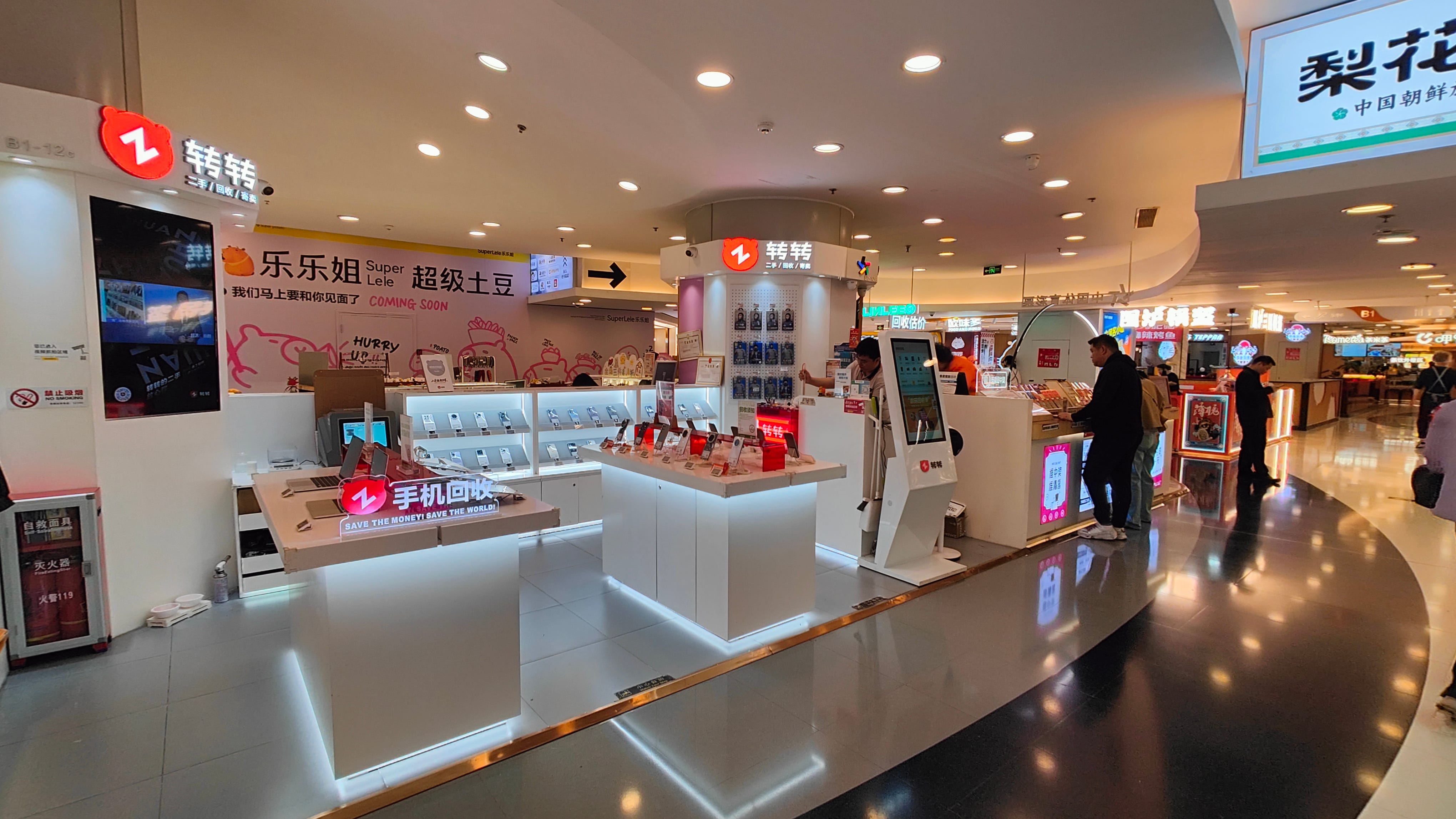
Zhuanzhuan store, Beijing, April 2025.
In 2021, Equal Ocean calculated offline store profitability for Xianyu’s competitor Aihuishou. This might give us an idea about the feasibility of Xianyu’s offline stores. The early decoration cost of an Aihuishou offline store was estimated to be RMB 70,000 to 100,000, and the rent and salary expenses were about RMB 30,000 per month. Considering the average monthly sales revenue was about RMB 600,000, and the gross profit rate was about 20%, the payback period of investing in such a store was less than three months. More than 98% of its stores had made a profit. [28] But Aihuishou mainly focuses on 3C products with high margins…
Xianyu Recycling Store is the only player that sells second-hand goods of all categories offline. When you visit a Xianyu store, it really feels like a more organised flea market. Other second-hand players who have been working offline for a long time are almost all focused on vertical categories. Only two are mainly luxury goods, which have the highest profit. Duozhuayu focuses on clothing and books; clothing has high gross profit, and books can attract traffic. Zhuanzhuan and Aihuishou chose the most standard and easiest to scale 3C categories. [10]
Based on the most complete product supply and a huge number of users in Alibaba's e-commerce system, Xianyu has an advantage in the richness of products. On the other hand, one of the difficulties of full-category second-hand e-commerce is the pricing of products. Currently, the pricing of products in Xianyu offline stores adopts an AI pricing system using the massive products and data accumulated by the Taobao system. [10]
Store types
Besides the aforementioned older Xianyu Treasure Box stores, Xianyu Markets and Xianyu Stations, the platform has launched several types of Recycling Stores:
Community stores: The former (more on this later) Silk Union store in Gongshu District, Hangzhou, was a community store. This type of store mainly serves consumers within 3 kilometres. There are many mid- to high-end residential areas around the store. Although it still sells all kinds of products, the products sold are mainly ‘practical’, and 3C and small appliances occupy most shelves. In addition to commodity transactions, there are non-commodity community convenience services, such as running errands and walking the dog. [10]
Xianyu Vice President Li Shijie explained the community stores: "With their convenience, they have attracted many residents within a 5-kilometre radius of the store to consign goods. On average, thousands of items enter the community stores every month.”
City centre stores: City centre stores, relying on the stable flow of people in the business district, have brought more efficient recycling of idle items. The Raffles City store in Hangzhou (see video below), the Asian Games Park store and the Xuhui Humin Road store near Shanghai South Railway Station are typical city centre stores. The Raffles City store has set up special shelves for audio-visual products.
City centre stores have higher sales capacity than community stores. Taking the Shanghai store as an example, the store has an average of 40,000 to 45,000 visitors per month, and more consignment goods than the community model stores. In addition, the city centre stores have higher matching efficiency, and the sales rate is around 80%. [10] [19]
Vertical circle stores: Currently, there is an outdoor sports store in Shanghai 8th Bridge Creative Industry Park. The store sells outdoor clothing/accessories/equipment. There are a large number of new outdoor products with the lowest price being 10% off. [10]
The product cycle of the recycling stores is very short. Since consignment products are received every day, the products in Xianyu's recycling store are updated almost every day, and almost all of them are replaced every week. Even the cooperative products of brands are updated every month, which can constantly create freshness for buyers and have them make repeated visits. [10]
Xianyu recycling store, as a consignment store, does not need to stock up, does not hold inventory, and does not bear the risk of unsalable products. The money is shared as soon as the products are sold. The business model seems both ‘refreshing’ and profitable. It is not a replacement for the online platform, but an attempt to build a distribution channel with a shorter path, stronger product control, and higher value density. [22]
On paper, the Xianyu recycling store is indeed the type of model that is the ‘optimal solution’. It can not only bring in natural offline customer traffic but also serve as a trust anchor to alleviate the natural information asymmetry in second-hand transactions. It can also take over low-residual-value goods that users are unwilling to process online due to express delivery and communication costs. To sum it up in one sentence: ‘More people come, the links become shorter, and the brand image is established.’ [22]
Selling process
Selling idle goods through an offline store sounds easier than it is. Taking clothing as an example, the products that can actually be put on the shelves often have to go through layers of screening. According to one store manager, since the clothing category is relatively saturated, the store only accepts outdoor brands from Tmall flagship stores. The condition of the products must be above 95% new, and it is best if all the tags are complete, and purchase records must be provided. [22]
Compared with the strict screening of shoes, clothing, beauty products, and trendy toys, which are often "rejected", the requirements of Xianyu Recycling Stores for 3C products are quite relaxed. According to the store staff, most 3C digital products, whether mobile phones, tablets, PC hardware, or game consoles, can enter the store as long as they can still operate normally and the appearance is not too damaged. [22]
Although the recycling store process is called consignment, the price is not determined by the users, but by the staff who refer to the transaction records of the same item on the Xianyu platform and then add a discount to set the price. The staff revealed that it is precisely because of the ‘tough’ pricing that the 3C products in the store are almost all ‘sold out within a few days’, and the recycling efficiency is relatively high. [22]
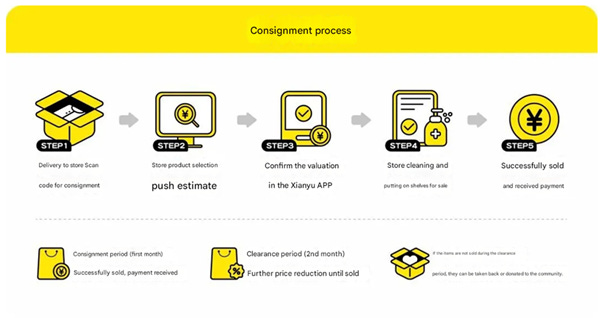
Consignment flow chart source: Xianyu official microblog (machine translated). [19]
The store's consignment price of shoes and clothing is generally about half the regular price. If they won’t sell, sellers will be asked to lower the price to clear the stock. Once they accept the valuation, it means that they default to the platform pricing and charge a tiered service fee - 30% for less than RMB 50, 30% for RMB 50 to RMB 500, 20% for RMB 500 to RMB 1,000, and 10% for more than RMB 1,000. [22] [10]
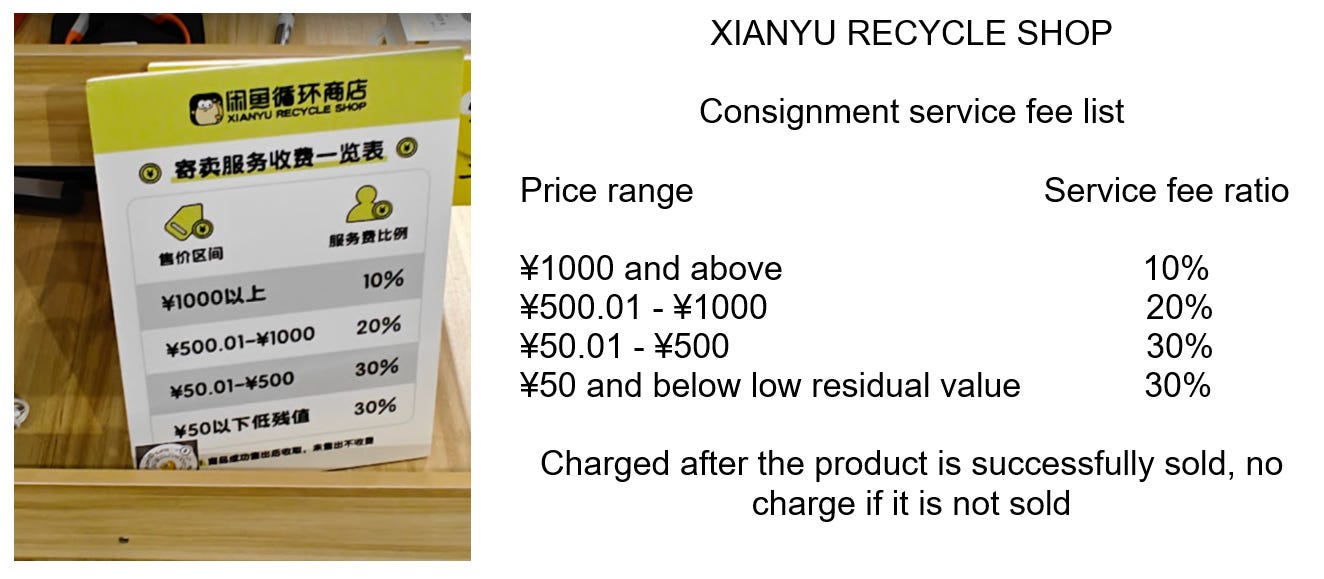
The higher the price of the goods, the lower the proportion of the service fee, which means that Xianyu encourages users to consign higher-value goods offline to reduce losses on both sides. Judging from the goods displayed in the offline store, the goods below RMB 100 are almost all blind boxes of various trendy toy brands. [10]
Xianyu stores also display a remarkable amount of new goods. They are used as an extension of B2C - there is the Xianyu outlet channel online, and there are physical stores offline for brands to clear their inventory. [22]
Reality on the ground
During the New Retail craze of the late 2010s, I learned an important thing: never blindly trust the press releases of Alibaba about new initiatives. In those days, I found its ground-breaking projects to be seriously lacking in reality. ‘Cloud shelves’ and ‘magic mirrors’ often weren’t even turned on by the store staff, and many online-to-offline functionalities left most shoppers cold. The first time I returned to China after the COVID border closures, I found most of the ‘innovations’ to have already disappeared, as I described in an extensive report for Tech Buzz China in the summer of 2023.
So, when reading about Xianyu’s offline stores, I was sceptical. Previously, I had seen offline stores of Xiaohongshu, Secoo, Kaola, Taobao Xinxuan and other online platforms all disappear from the shopping streets. If those initiatives did not survive when selling new goods, how difficult would it be for a store that sells second-hand goods?
In April 2025, I was in China for three weeks, visiting Beijing, Shanghai, Hangzhou and Xi'an. While this was partially for preparations and location scouting for our October ChinaTechTrip tours, much of my time was also spent on field research, gaining on-the-ground insights that I share in my writings for Tech Buzz China and keynotes for ChinaTalk.nl. From the many articles I read in the Chinese tech media, I keep records of retail initiatives, especially in the 'online goes offline' sphere. The Recycle Stores that Xianyu had launched in 2024 had been on my wishlist for some time. Since I found myself in Hangzhou with some free time, I decided to check out Xianyu's offline stores.
According to review site Dianping, there were about 20 Xianyu locations in Hangzhou, Alibaba's hometown. Most of these are small 'Xianyu Treasure Box' stores; small phone recycling stands, often located in high-traffic areas like the Sanba metro station next to my hotel.
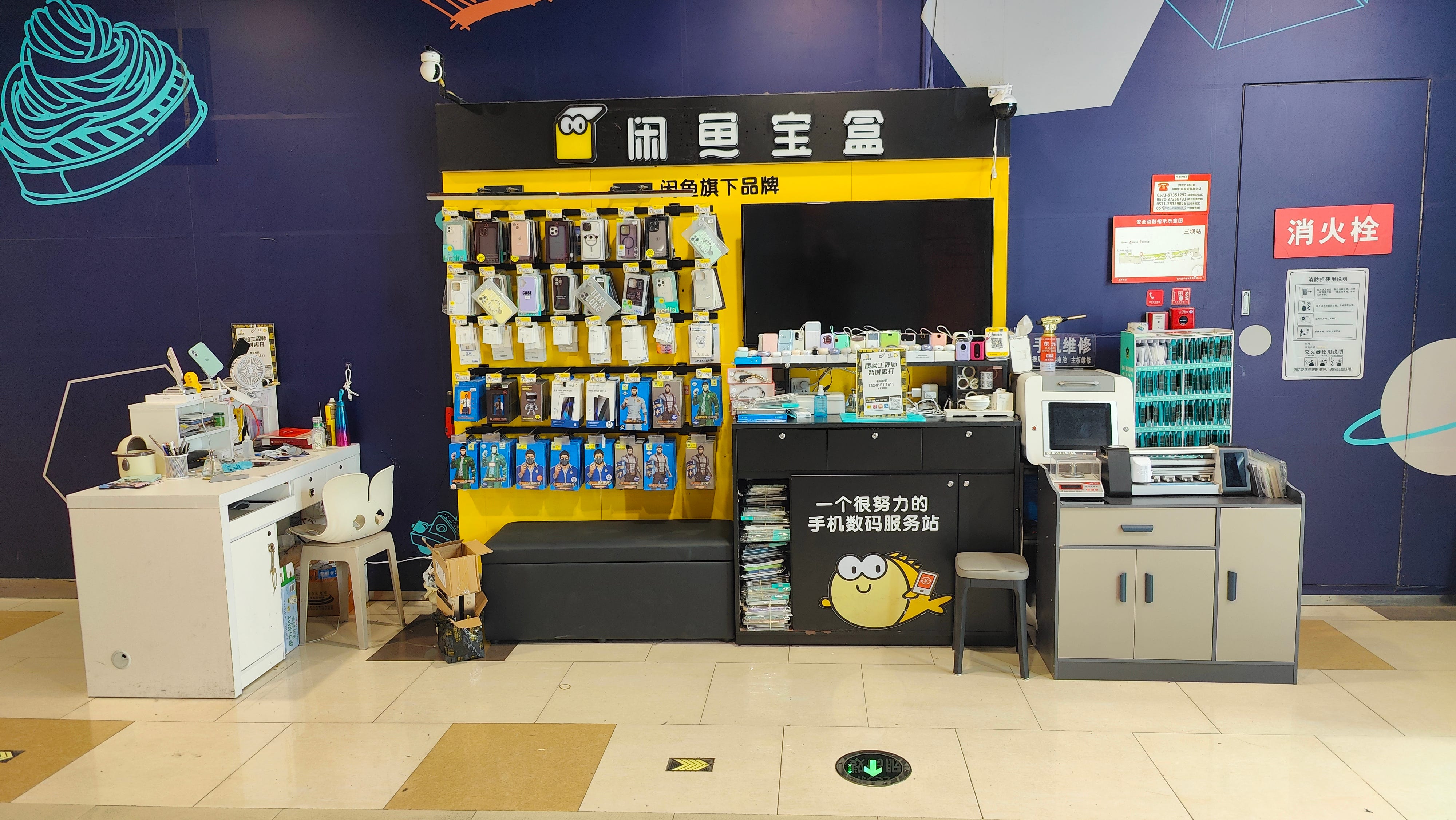
Xianyu Treasure Box Store, Sanba Station, April 2025.
A few other stores were small community stores and larger city centre stores. I made a selection of stores, topped up my Hangzhou metro card and started zipping and walking around town. Here are the results.
The first-ever offline Xianyu Recycle store, opened in Gongshu District in January 2024, had recently closed.
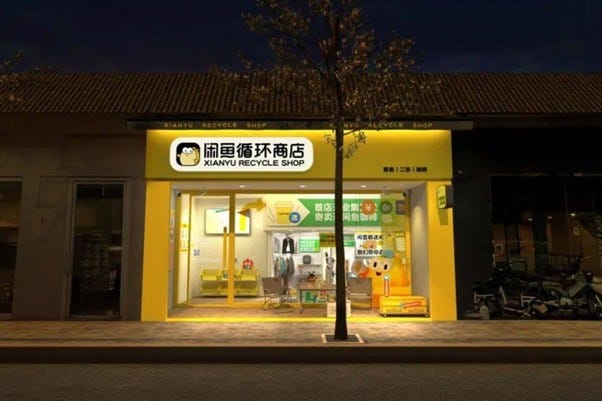
Xianyu’s first Recycle Shop in Hangzhou’s Gonshu District, January 2024. Image: SCMP.
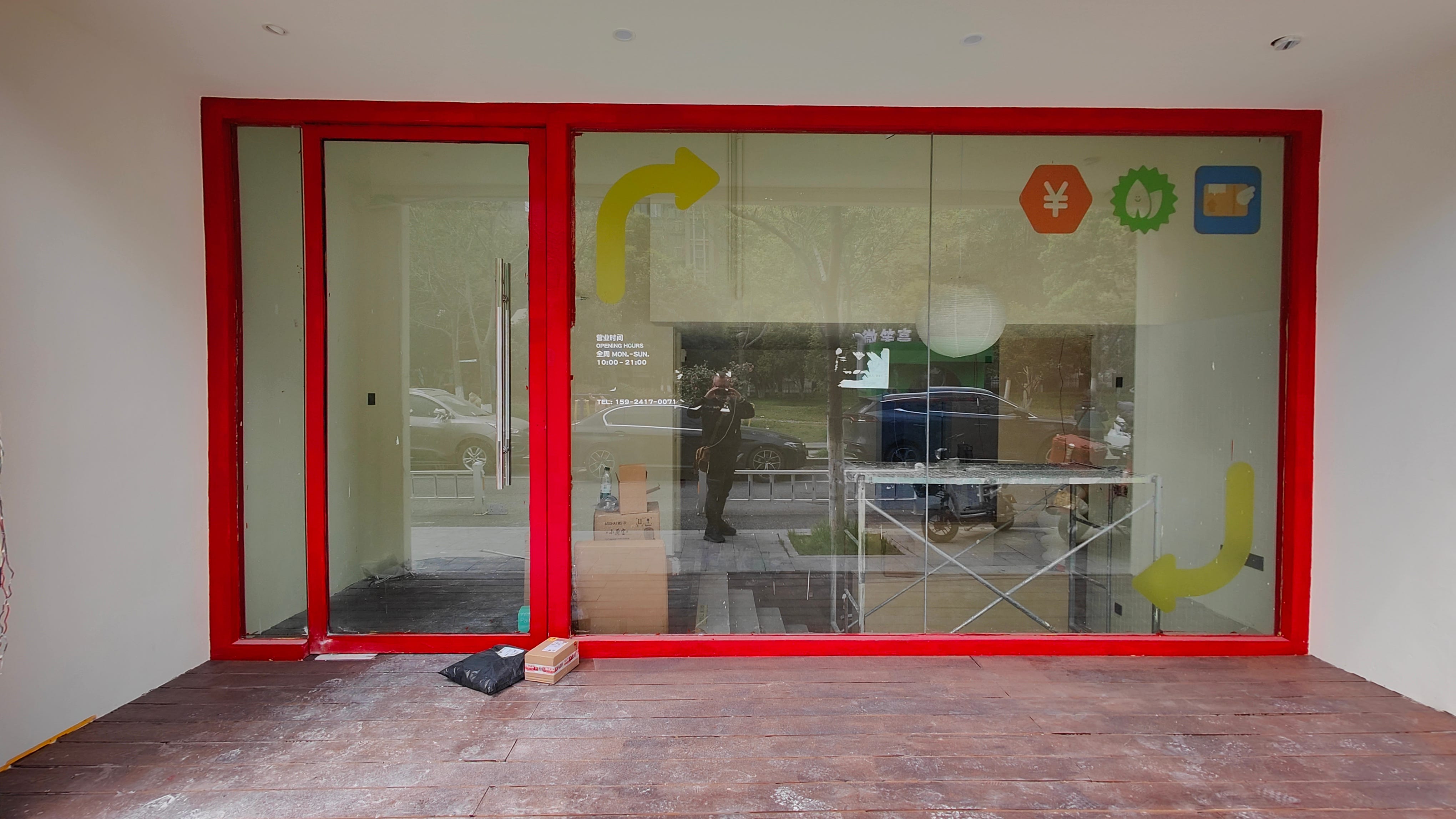
The location of the former Xianyu store in Gonshu District, empty and with all branding removed, April 2025.
Another store, in the Tianmuli mall, had disappeared, and there was a different store in its location now. Judging from that new store, it might have been a temporary pop-up store.
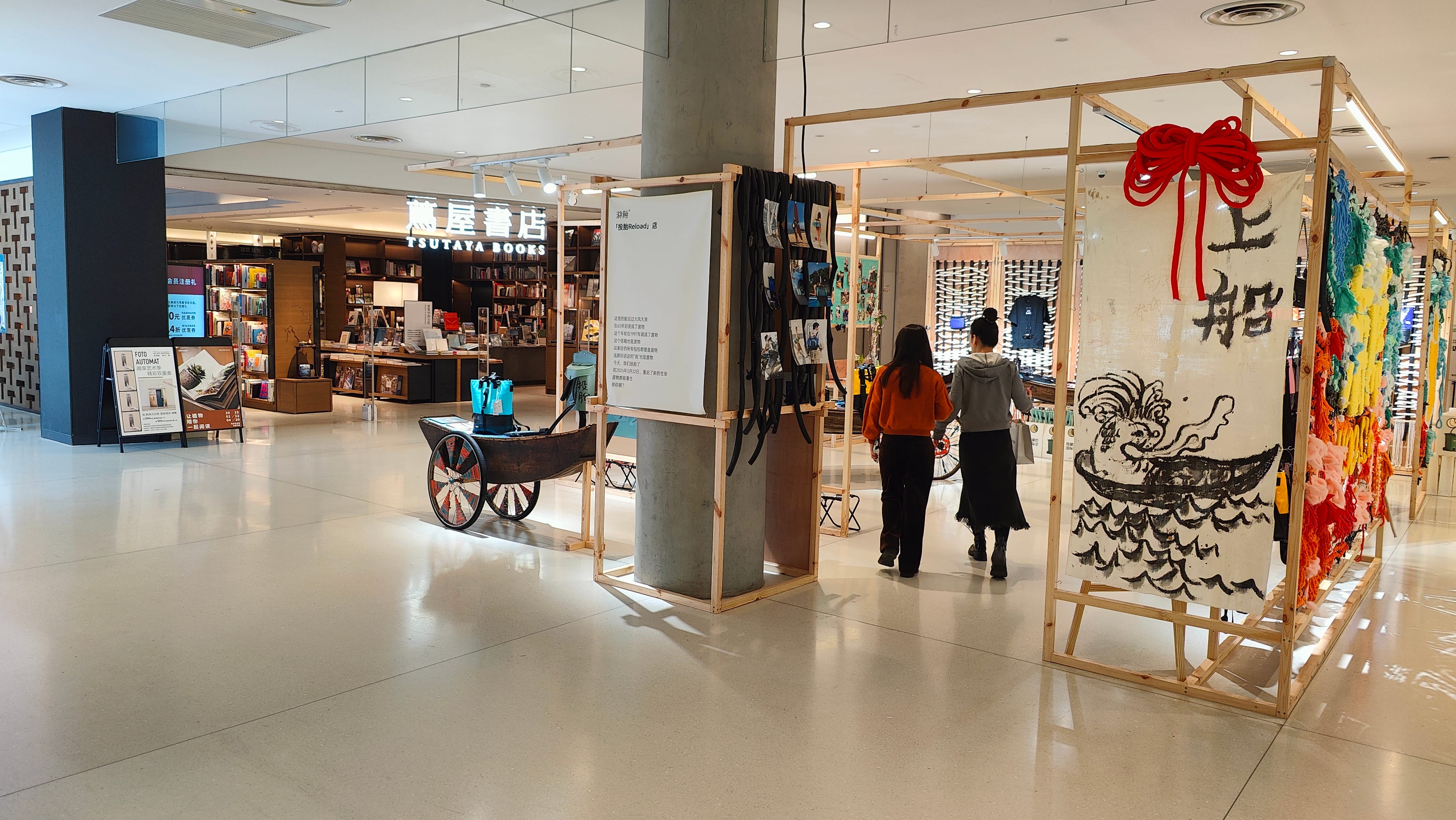
The former location of a Xianyu store, across from the Tsutaya bookstore in Tianmuli Mall, Hangzhou, April 2025.
Two stores, in the Sky Tengji building and Asian Games Park, still had goods inside but were not open despite it being their regular business hours.
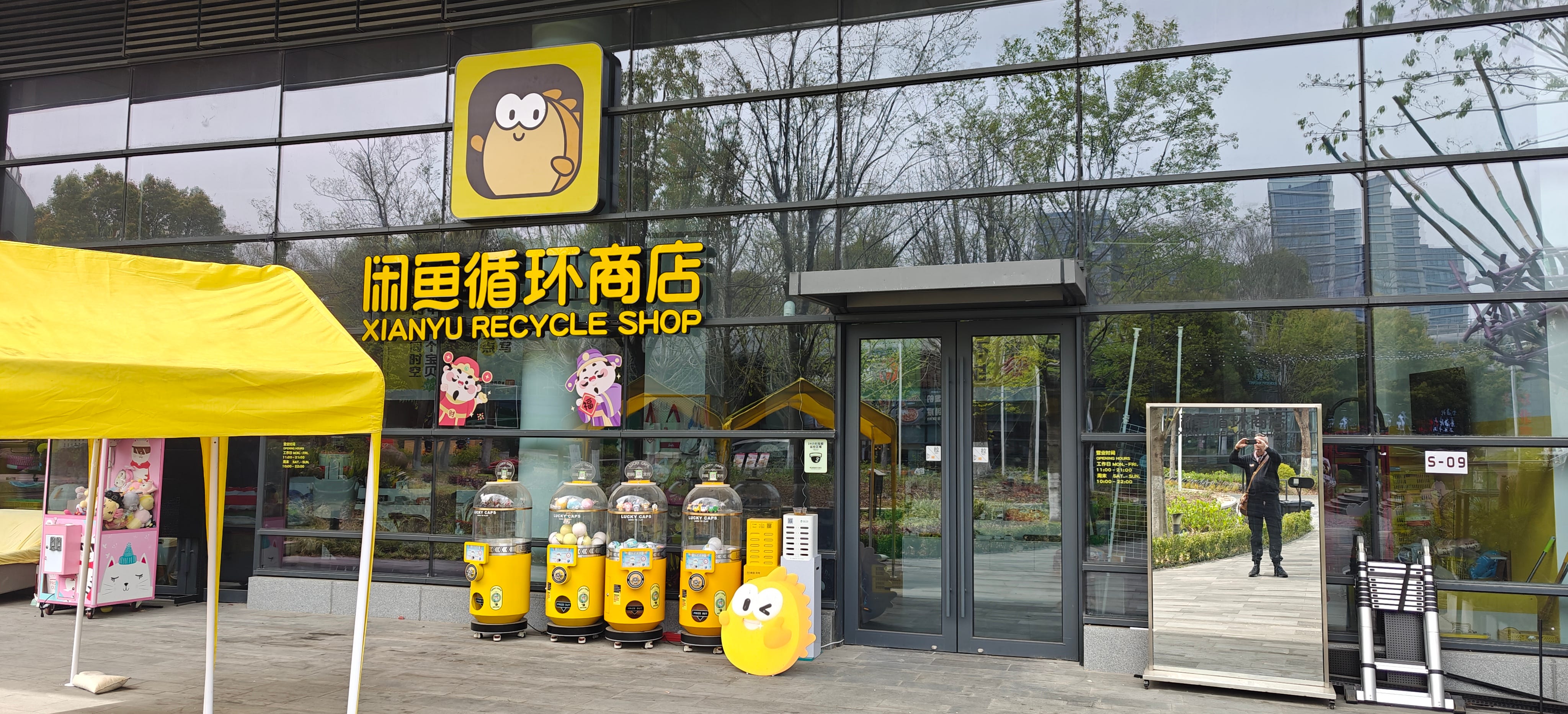
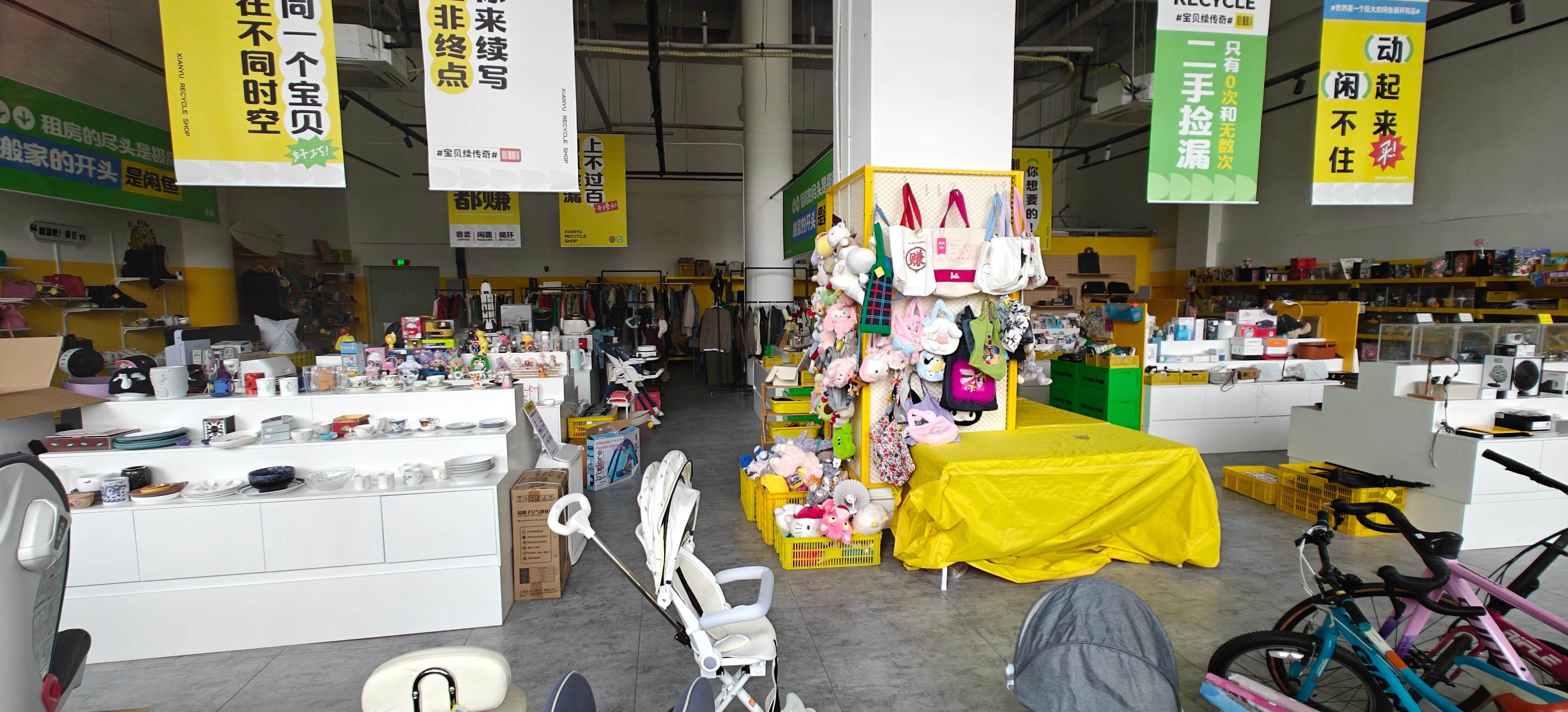
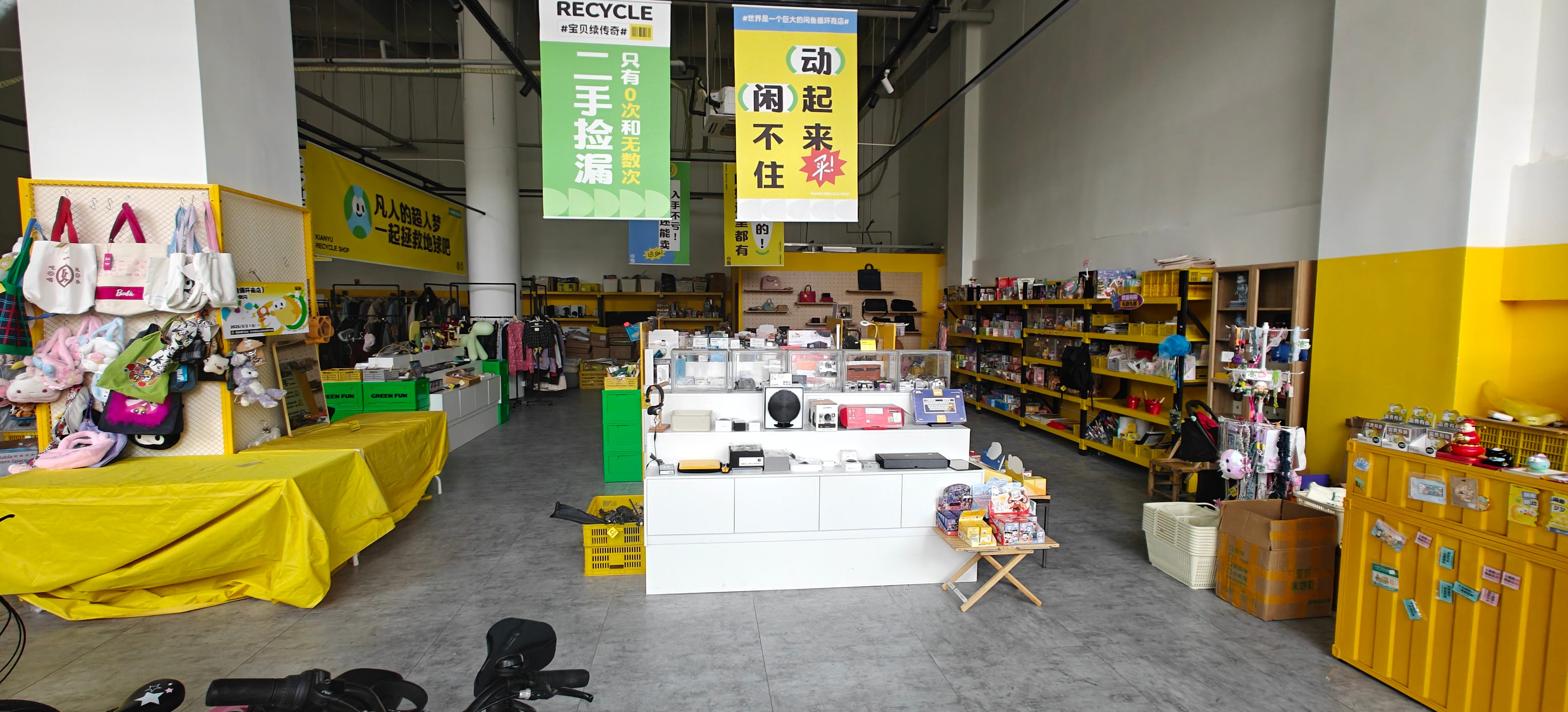
Xianyu Recycle Shop city centre store, Asian Games Park, Hangzhou, April 2025. Closed during regular opening hours.
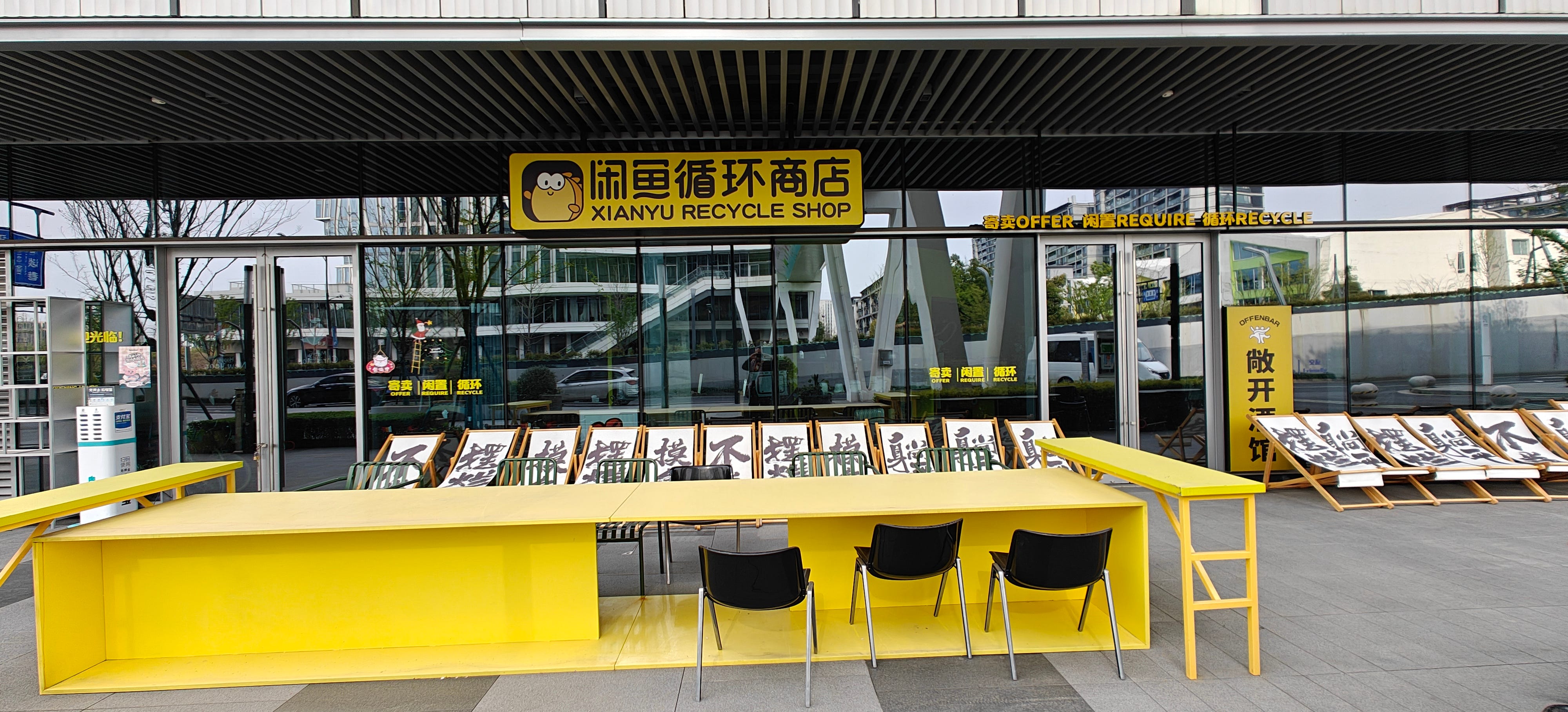
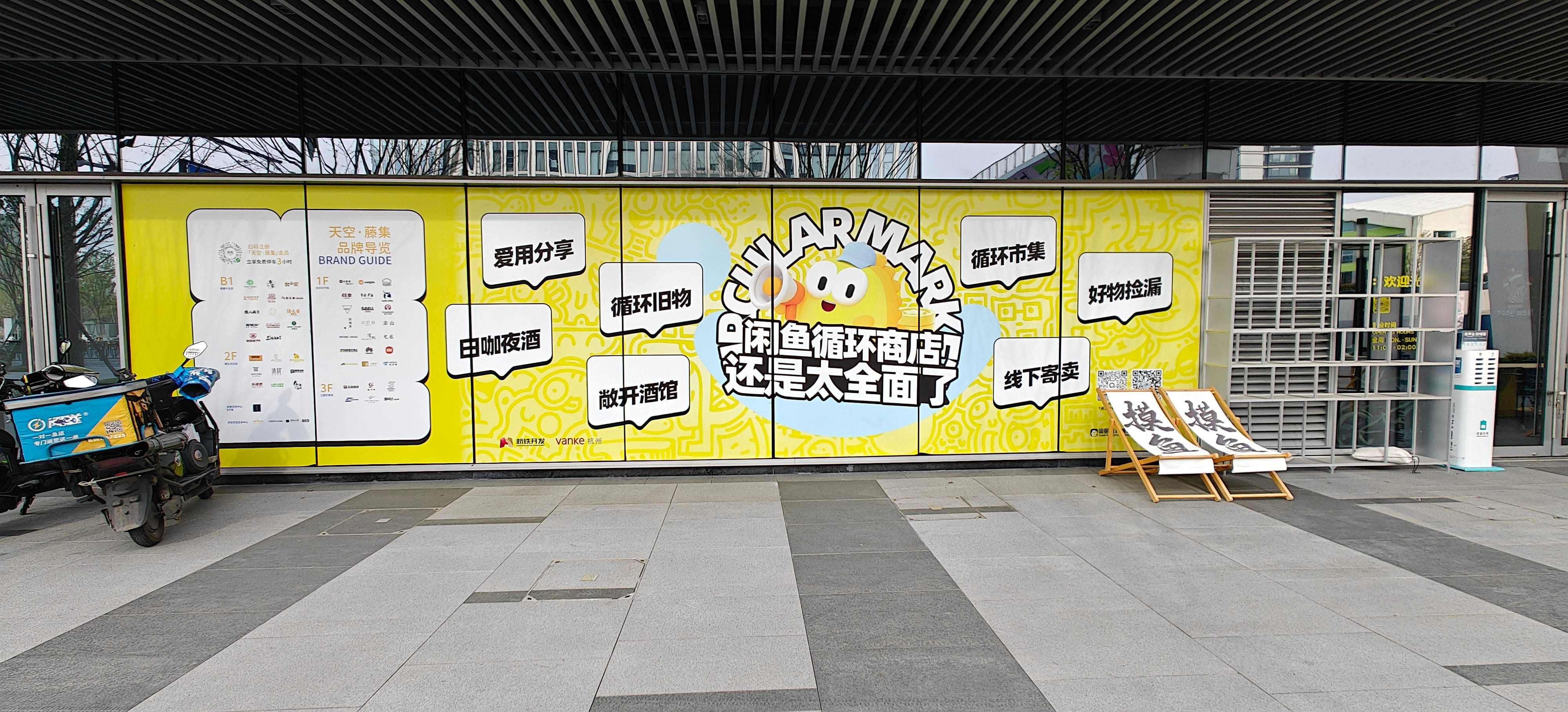
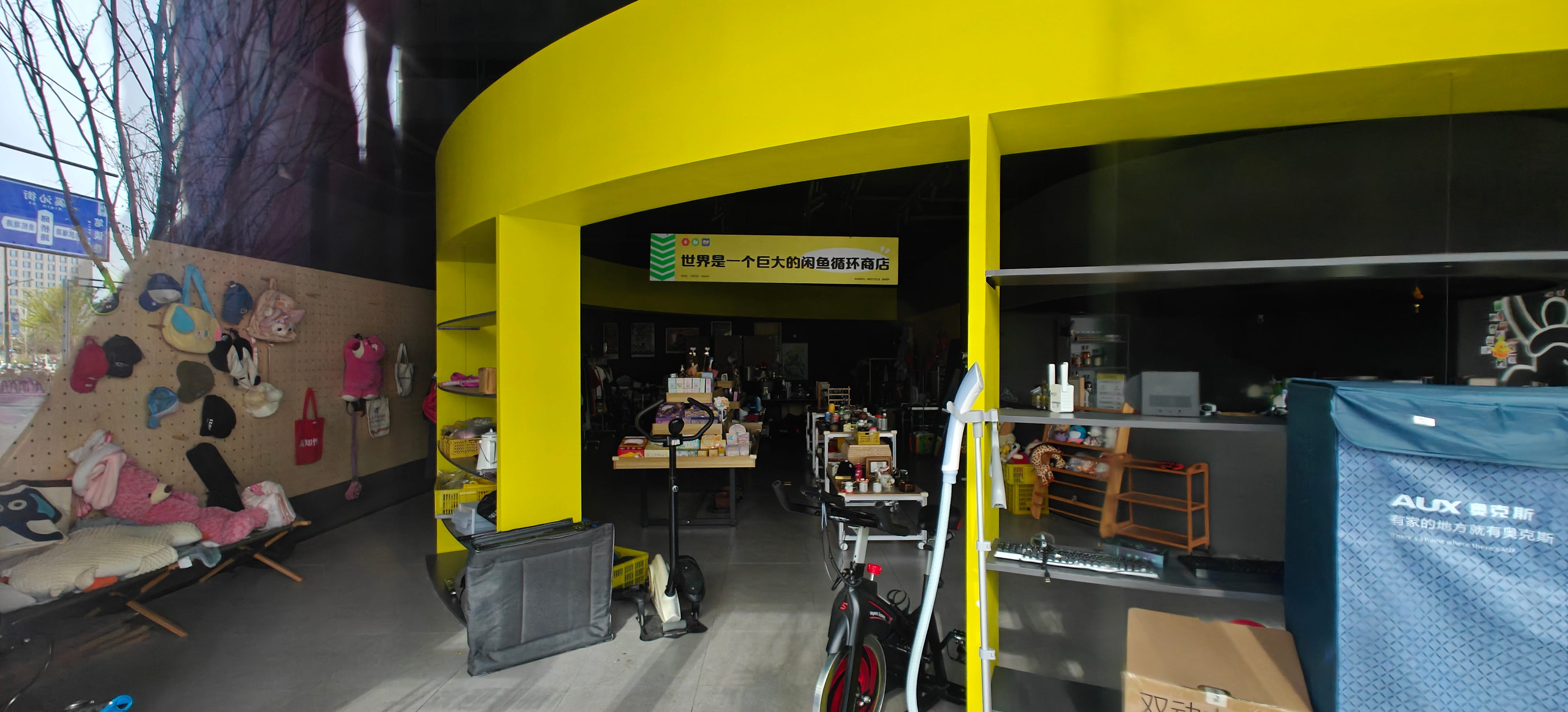
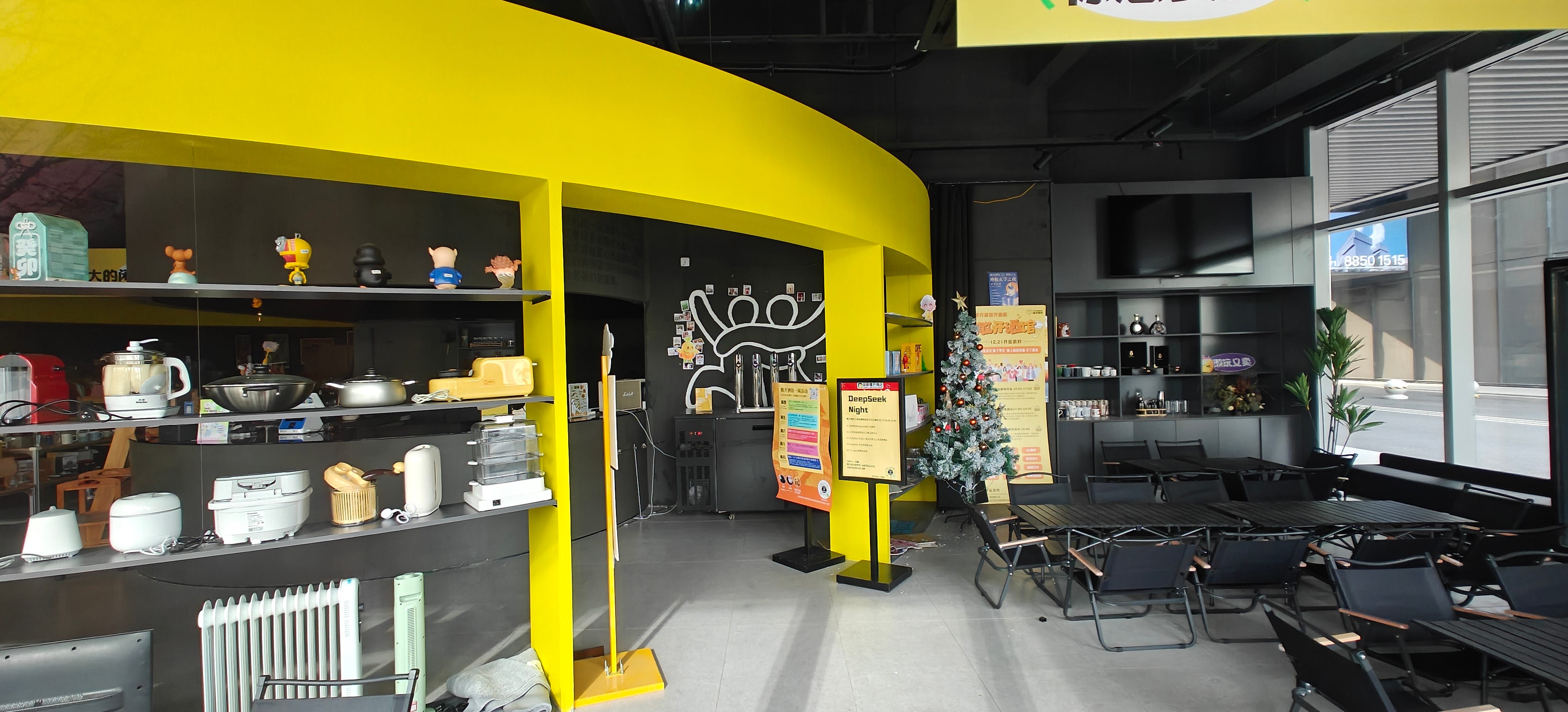
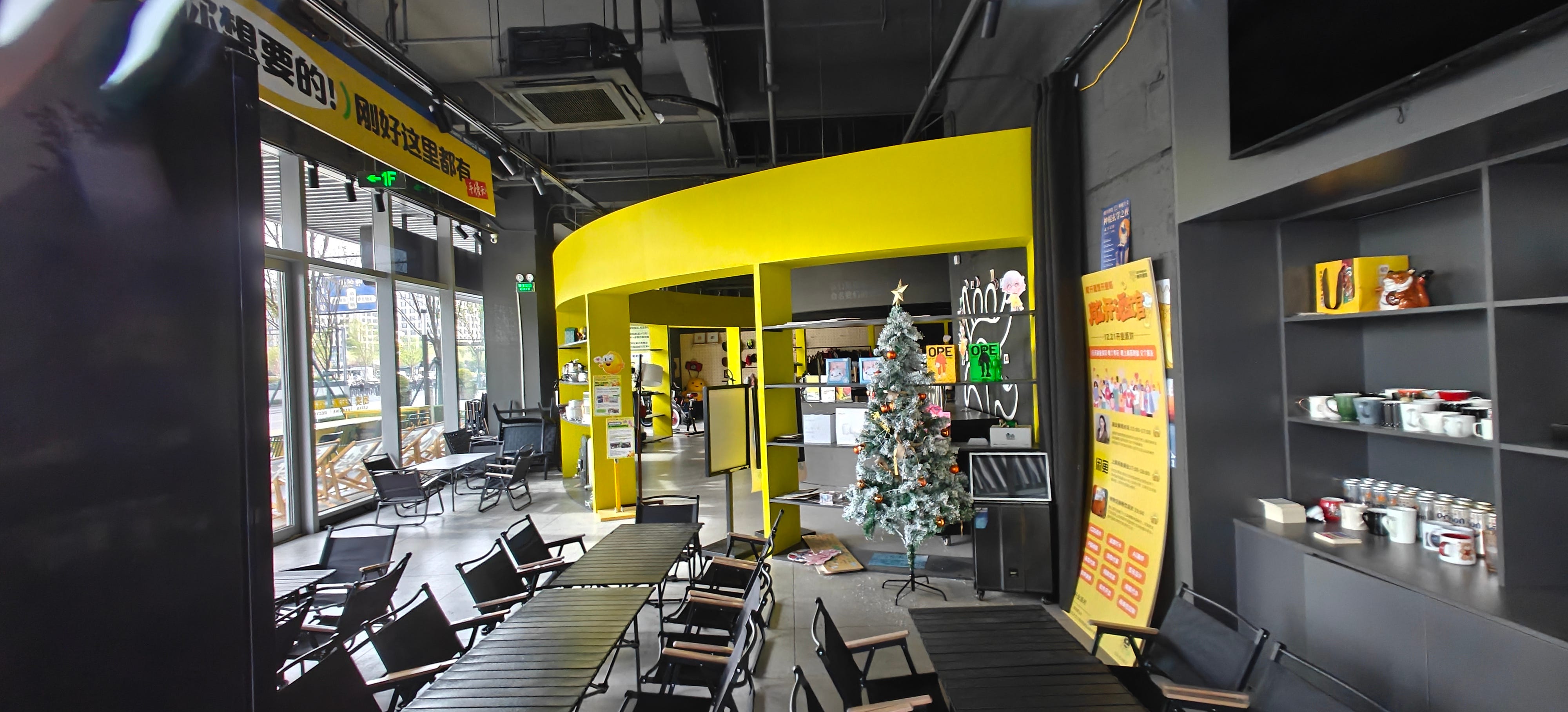
Xianyu Sky Tengji Store, Hangzhou, April 2025. Closed during regular opening hours.
One store, in the improbable location of the fancy Raffles City Mall, was open and got some foot traffic, although in the 10 minutes I spent in the store, I don’t think anybody else but me bought anything. I purchased a ‘Xianyu blind box’ containing one of four collectable Xianyu badges, and two Xianyu fridge magnets. Yes, I’m a bit of a sucker for Alibaba Zoo merch …
Being underwhelmed and disappointed by the shops that had disappeared and closed, I decided to try my luck again in Shanghai later that week. Watch the slideshow below to get an impression of these two stores in Hangzhou and Shanghai.
My impression of the stores was that they felt like a less chaotic flea market, and the products seemed somewhat randomly selected and placed at times. I didn’t have a strong urge to buy anything (besides the Xianyu merch), but then again, I have never been fond of flea markets.
There were a few things I noticed that are worth mentioning. First, besides the Xianyu merchandise, the Shanghai store sold a selection of phone screen protectors, which were, of course, brand new. I can imagine that these are also sold at the Xianyu Treasure Box stores. Expecting a low price at a Xianyu store (RMB 48) I was disappointed to find that they were actually cheaper online on Taobao (RMB 37.8).
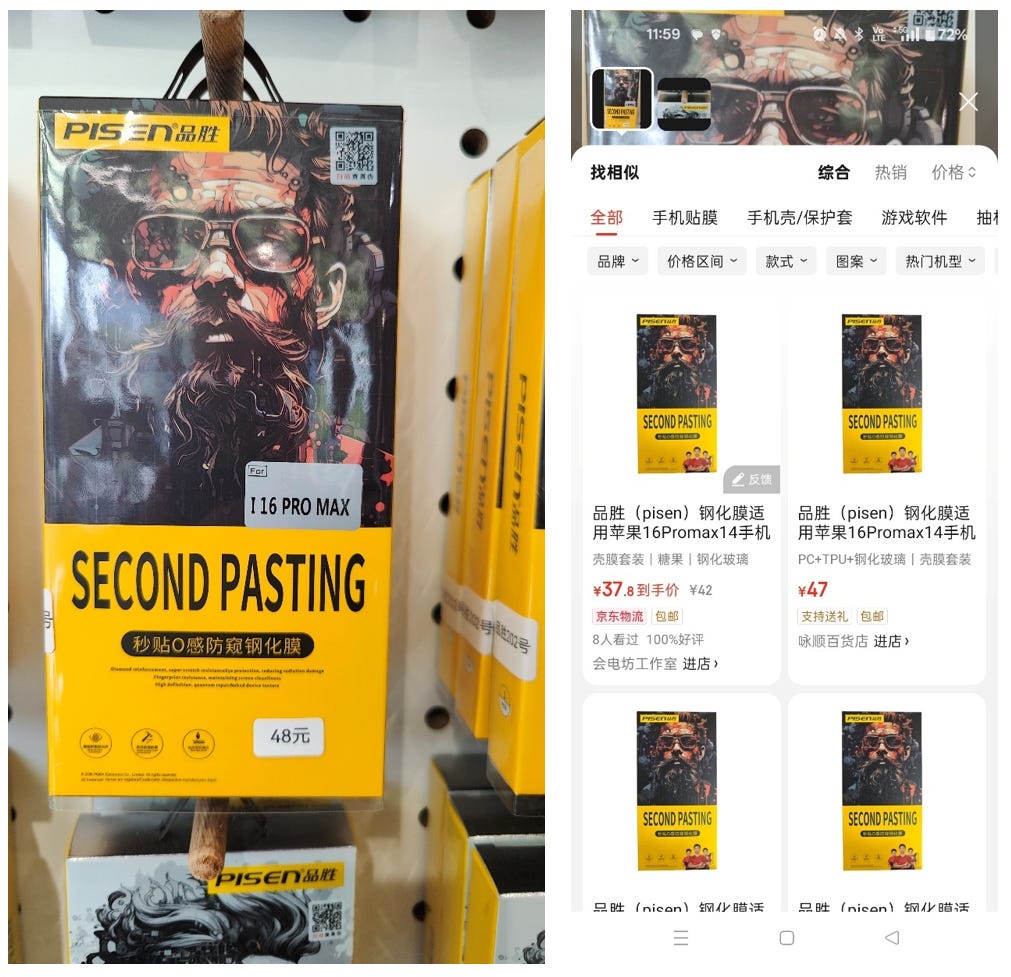
Meanwhile, a pair of second-hand Reebok Kamikaze shoes sold for RMB 300. A quick photo search of the product showed a new pair was available online for almost half the price on Tmall, which has a reputation for authentic goods.
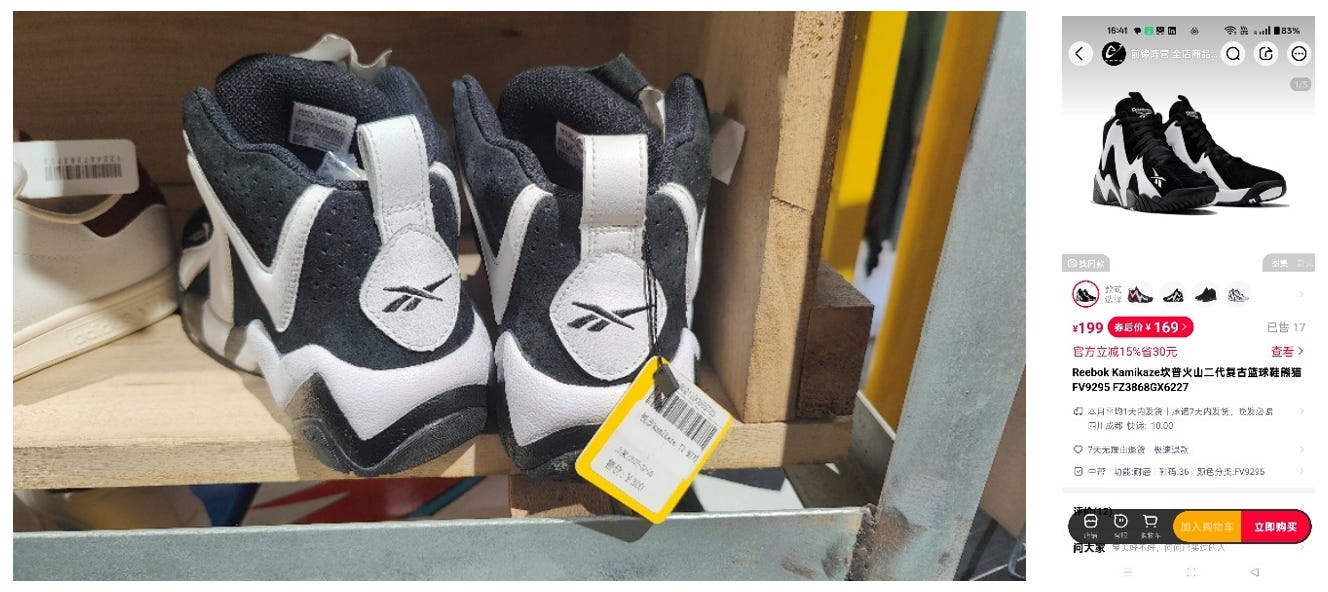
All in all, the Xianyu stores did not impress me all that much, although the two stores in the slideshow did receive some curious people checking out the goods.
Challenges
Considering how Xianyu was told to double its GMV in three years, and we’re almost one year down, it seems the platform will face challenges in the next two years. Exact details about its finances are scarce since they are deeply buried in the results of Alibaba’s domestic e-commerce division.
Even if the RMB 400 million GMV in 2024 is to be believed, it’s just a tiny fragment of the total GMV of Tmall and Taobao, which has been estimated to be around RMB 8 trillion in 2023. As such, Xianyu might have been a designated strategic initiative, but its importance is currently still very limited in both the e-commerce market and Alibaba Group.
Although Xianyu has accumulated a certain amount of popularity in many niche categories and subcultures, the size of its categories means that it has inherent disadvantages in terms of user scale and non-standard conversion to standard, and long-tail demand is ultimately difficult to scale. Therefore, Xianyu has never been able to completely transform the domestic second-hand trading ecosystem through its online community. [22]
From the ‘Xianyu Small Court’ to the seven-day no-reason return policy, Xianyu has tried to protect buyers' and sellers' rights and interests. However, merchants can always find loopholes in the platform rules, which has become a structural contradiction that is difficult to resolve.
From the perspective of efficiency, the essence of second-hand transactions is to reduce transaction costs. Standardisation can effectively reduce information gaps and pricing costs, while non-standard products rely more on community trust and circle culture to establish a transaction basis. When Xianyu uses the same platform logic to coordinate these two types of goods, the result is often decreased efficiency. [22]
According to some industry experts, Xianyu eventually missed the window of opportunity because it tried to do both types of goods. It handed over high-value, easy-to-scale profitable categories such as 3C and luxury goods to competitors like Zhuanzhuan and Dewu. When it came to its senses and increased its investment in the ‘Yianhuobao’ authentication services and 3C recycling businesses, its competitors had already staked out their own territory. [22]
Increasing the share of B2C sales on Xianyu has proven to be a double-edged sword. Although the introduction of B2C supply chains such as Xianyu Outlet has improved supply stability, Xianyu has alienated the platform's role and turned it into a channel for brands to clear inventory, and users' trust in the platform's neutrality has suffered. [22]
e-Commerce industry insiders believe that the contradiction of Xianyu lies in that it cannot do without professional sellers to expand its GMV scale. Still, at the same time, it is worried that the influx of professional sellers will damage the experience of individual sellers. When increasing GMV depends on professional sellers, while creating a community atmosphere depends on individual sellers, and the two become contradictory, Xianyu needs to be more cautious in its next moves. [15]
On the one hand, it is much more challenging to maintain the SKU density through individual supply than expected: the supply is unstable, the goods are non-standard, and the turnover rhythm is uncontrollable; on the other hand, the requirements of store operations on floor efficiency and gross profit margin force the platform to introduce B2C supply with greater certainty to maintain the quality of product selection and customer unit price. On the surface, it talks about ‘circular economy’, but underneath it becomes about ‘destocking’. [22]
Amidst Trump’s trade war, Xianyu even unveiled a support scheme for small and medium Chinese exporting firms and merchants, including measures to help them quickly open accounts, reach new sales channels, and explore the domestic market. [29]
While the group has enhanced its strategic position, it has also brought greater commercial pressure. Xianyu's multi-format business model is aimed at increasing revenue and profitability. Xianyu's recycling stores adopt a consignment model, so the pressure of advance payment and inventory is relatively small. However, offline stores increase costs such as rent, manpower and operating expenses, which means that Xianyu will face higher investments. [10]
Outlook
From the former ‘fishpond’ online to the content community, and then to the offline recycling store, Xianyu's ambition seems to have long surpassed second-hand trading, and is trying to build a ‘circular economic closed loop’ of redistribution and re-monetization of idle goods - leaping from a transaction matchmaker to a recycling controller. [22]
Now, Xianyu’s two main focuses are increasing the number of users on the platform and their activity, and exploring a business model suitable for the platform. As for the profit target, no clear indicator had been set by early 2024, but overall, Xianyu may have achieved profitability. However, considering the financial relationship with Alimama, if Alimama's income is stripped away, Xianyu may actually be unprofitable.
From the perspective of the Alibaba Group, Xianyu consumes the group's traffic, but this is regarded as a traffic investment. The group hopes that Xianyu can generate more traffic and advertising fees, which is also an expected direction for its future development.
In early March, Xianyu President Ding Jian revealed that in 2025, Xianyu's strategic goal will be to seek growth based on the two dimensions of users and revenue, and revenue will become one of the focuses of the Xianyu team in 2025. At the same time, in Ding Jian's view, AI sales assistance service will be a strategic project of Xianyu in 2025. [19] At the 29th United Nations Climate Change Conference, Xianyu said that the company accelerated its exploration of AI technology this year, launching multiple AI products to enhance user experience and transaction efficiency. [9]
Despite all challenges and Xianyu’s limited impact on the domestic e-commerce GMV, it continues to be seen as an essential part of the Alibaba ecosystem. The importance of Xianyu for Alibaba Group was once again emphasised by a visit by Jack Ma to the company in February 2025. [30]
It might take more years for the consumer’s mindset to shift and make them willing to sell goods they previously bought on Taobao and Tmall and buy idle goods on Xianyu. If this becomes a new circular process, the importance of Xianyu will make perfect sense. After all, Alibaba will think: ‘That’s nice … we can sell it twice!’
Found this article interesting? We will return to the topic of second-hand e-commerce in the near future and take a look at the broader market.
Key Takeaways and summary video
Xianyu boasts a large and growing user base, making it one of Alibaba's largest apps by user count. Registered users surpassed 600 million.
The platform is particularly popular among younger users, with those born after 1995 accounting for a significant portion of users (around 43% according to QuestMobile, but over 60% of service orders).
Xianyu has expanded its offerings beyond just selling physical second-hand goods2. It functions as a social network with interest-based 'Fishpond' communities and channels for celebrities.
Xianyu has become a strategic priority for Alibaba Group, designated as one of the company's most promising businesses by CEO Eddie Wu in November 20231. There is significant pressure to deliver results, including a target to double its Gross Merchandise Value (GMV) in three years as set at a July 2024 meeting of Alibaba's core executives.
The platform is undergoing a significant shift from its original pure C2C (consumer-to-consumer) model to incorporate B2C (business-to-consumer).
Xianyu is making significant efforts to build trust and improve the user experience, which has historically been a challenge in second-hand transactions in China.
The platform is actively seeking to increase its income sources, moving away from the initial promise of 'no commission'. While advertising commissions collected by Alimama were the primary source, Xianyu began charging commissions for specific merchants in June 2023. From September 2024, a service fee of 0.6% on the actual transaction amount (with a maximum cap) was implemented for all sellers.
A notable strategic move is Xianyu's recent push into opening offline Recycling Stores. Based on store visits, Tech Buzz China questions the success of these offline initiatives.
Despite growth and strategic shifts, Xianyu faces significant challenges. These include the difficulty of maintaining the original C2C community feel while introducing professional B2C sellers for GMV growth, resolving trust issues and transaction disputes inherently more complex in second-hand goods, and the operational difficulties of handling a wide range of non-standard product categories both online and offline.
Looking ahead, Xianyu's strategic goals for 2025 focus on seeking growth in users and revenue, with revenue becoming a key focus. The platform intends to accelerate exploration and application of AI technology to enhance user experience and transaction efficiency.
The summary video below was created with Google Notebook.
Sources
This article has been compiled from an analysis of exclusive expert interviews of the Six Degrees Intelligence network, augmented insights from the articles below.
Images by Tech Buzz China’s Ed Sander unless stated otherwise. These images may not be reproduced without Tech Buzz China's prior consent.
[1] The Bamboo Works 2024-03-19 [2] Alizila 2016-04-28 [3] Technode 2017-11-28 [4] Alizila 2021-07-08 [5] Technode 2019-06-04 [6] Latepost 2023-11-02 [7] SMCP 2024-01-22 [8] Linkshop 2023-05-24 [9] Hkust Li & Fung Supply Chain Institute 2024-11-21 [10] 36Kr 2025-03-19 [11] 澎湃新闻 2025-03-10 [12] Technode 2017-12-25 [13] Yijian Finance 2024-08-02 [14] Pandaily (link no longer available) [15] Tech Planet 2024-08-06 [16] Alizila 2021-09-21 [17] Alizila 2024-09-06 [18] Alizila 2024-07-10 [19] 电商派Pro 2025-03-29 [20] FBCI Group 2024-03-14 [21] Technode 2024-01-23 [22] Photon Planet 2025-03-26 [23] Alizila 2023-06-05 [24] Technode 2019-12-19 [25] Alizila 2019-05-21 [26] Tech星球 2025-04-09 [27] Latepost 2024-07-18 [28] EqualOcean 2021-07-12 [29] Yicai 2025-04-22 [30] Yicai Global 2025-02-11