
TikTok Shop Watch #2: Out of Asia, into US & Europe
How is TikTok Shop doing in the US, UK and Europe?


Contents
Things that caught our attention
German subscribers might be interested in the Deutschlandfunk radio report E-Shops aus China krempeln den Onlinemarkt um in which Tech Buzz China’s Ed Sander is one of the interviewed.
A WeChat account sharing news about instant retail revealed details about the payment of delivery couriers and how much extra they can earn when continuing work during Spring Festical. We summarized the article in a note.
Introduction
Last week, we examined the state of TikTok Shop in Southeast Asia. This week, we move west to see how Bytedance’s cross-border e-commerce platform has progressed in the US, Europe, and the Middle East.
Please note that some of the data in this report can be conflicting since they come from different sources that can use different definitions for metrics. Still, when sharing a few details of this report on LinkedIn, an e-Commerce Leader at TikTok commented: “This is surprisingly spot on for someone who hasn't worked at Tiktok. Most people don't understand how it's working.” Well, there you have it.
The two chapters, which include GMV statistics and a look at the various regions, are free for all subscribers to read; the rest of the report is available to paid subscribers only.
We hope you enjoy this report. Next week, in the final part of this series, we will investigate the sales models of TikTok and how live commerce has been doing in all of its markets.
Cheers,
Ed Sander – Research Editor

Gross Merchandise Value
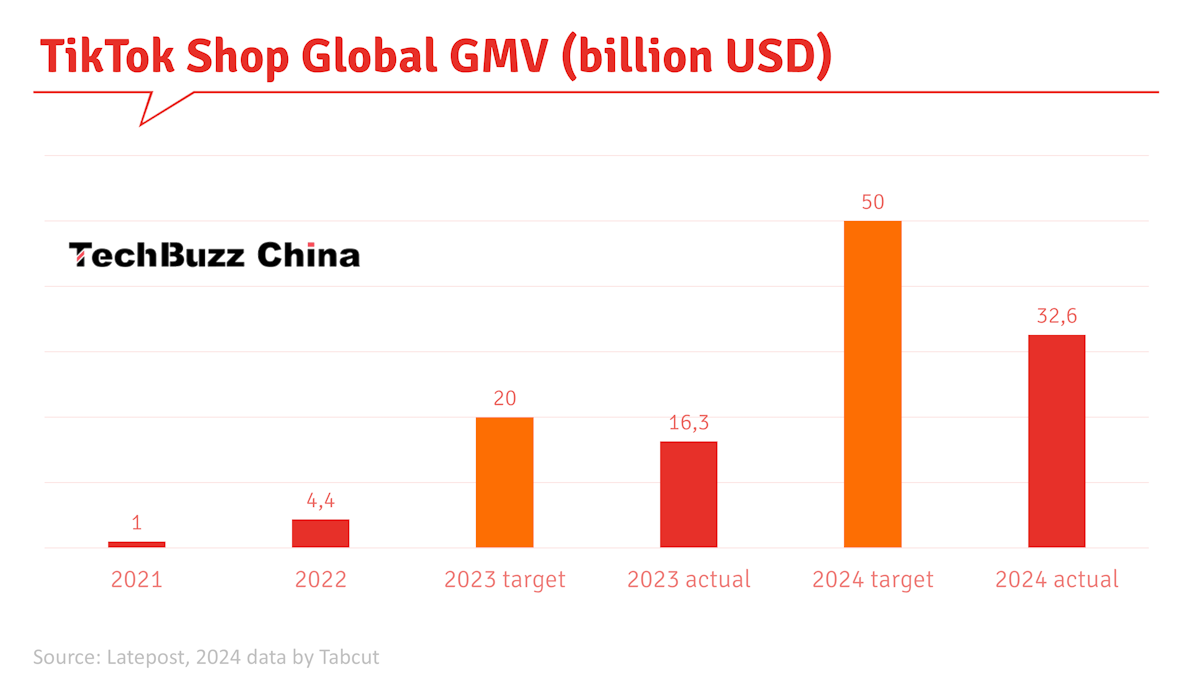
Halfway through 2024, TikTok revealed that the global GMV in 2024 was expected to be around $50 billion, growing from $19.5 billion in 2023. The US market would contribute about $14-17 billion, and the Southeast Asian market accounts for most of the rest. However, internal estimates put it at more than $80 billion if all goes well.
Seemingly, it didn’t go well … Both the ‘realistic’ and ‘optimistic’ targets were not achieved due to the poor performance of the US market. Layoffs, political risks and a lack of understanding of the US market may make reaching the goal difficult.
Earlier in 2024, experts still expected TikTok Shop's total merchandise transaction volume to exceed US$40 billion in 2024 and its growth rate to exceed Shein and AliExpress's. But even that estimation turned out to be too high …
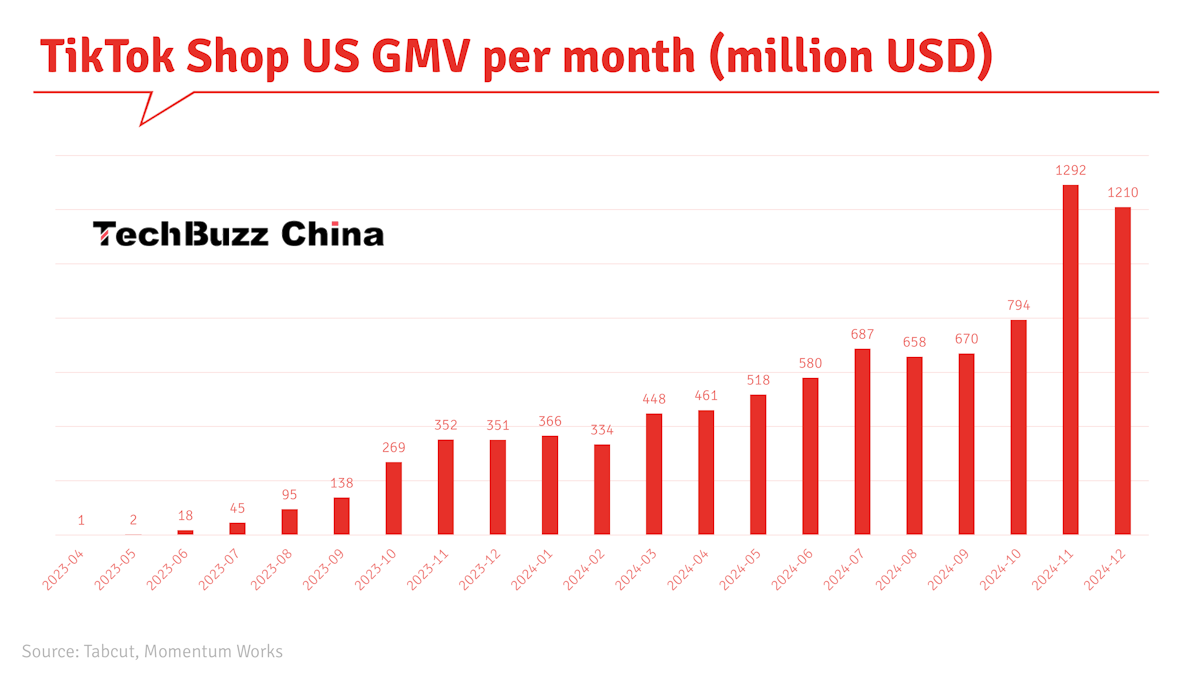
According to video commerce data analytics firm Tabcut.com, TikTok Shop’s global GMV reached $32.6 billion in 2024, with the US accounting for $9 billion. The AOV in the US and Singapore is about $20, while it is about $5 in Malaysia and Indonesia. [1]
Meanwhile, the Saudi Arabian market has developed slowly due to pricing and profit margin restrictions.

While the US shows impressive growth in the chart above it should be noted that in 2023, TikTok Shop was only active for one quarter in that market. TikTok also missed its target of $14-$17 billion. Considering the spending power of UK consumers compared to those in Southeast Asia, the size of the UK market also remains limited.
Markets
According to a former TikTok Shop Business Development Manager in Southeast Asia, TikTok's e-commerce division is strategically shifting, focusing its efforts on Europe and America. These regions are known for their higher average purchase values, which makes them particularly attractive for the company's expansion plans. The expected outcome of this restructuring is to boost TikTok Shop's profitability in these Western markets.
TikTok Shop is a relatively new entrant in these regions and sees significant potential for growth and expansion in both European and American markets. This approach demonstrates a cross-market subsidisation model, where TikTok uses profits from one area (Southeast Asia) to support its expansion efforts in other markets.
After having already launched TikTok Shop in the United Kingdom (2021), TikTok Shop suspended plans to launch in Brazil, Ireland, Spain and other countries to focus on its US launch in 2023. A year later, it suspended entry into eight countries, including Japan, South Korea, and Germany, to continue focusing its resources on the US market. [2]
In early January 2025, news broke that TikTok Shop had picked up its plans for Mexico, which would launch on January 13th. The platform would work with local merchants, among which are top sellers on Mercado Libre. TikTok had reserved $2-3 billion for product subsidies and promotions to kickstart the market. It would offer customers three 50% off orders. TikTok would also waive commission and shipping costs for merchants for two months. A playbook that has also been used elsewhere, as we will see. Influencer sales would start in February. [3][4]
Let’s first look at the other non-Asian markets TikTok has been active in or gearing up for…
USA
After Trump's original plans to ban TikTok, Bytedance was cautious about launching TikTok Shop in the US. The user growth of TikTok also slowed down, and launching in-app e-commerce could result in TikTok losing Amazon as a significant advertising client. So, instead, it opted to launch in Southeast Asia and the UK in 2021. It considered the UK a comparable market in terms of language, culture and consumption habits. However, that year, the commercialisation department’s target of $12 billion was not achieved. [5] Our December 2023 report described the many issues TikTok Shop ran into in the UK market.
In internal meetings in Seattle, TikTok e-commerce director Kang Zeyu repeatedly urged the team to launch US business ahead of schedule. This resulted in the postponement of plans to enter Brazil, Spain, Ireland and other countries that had been preparing for several months by completing formalities, renting offices and recruiting employees in these markets. [5] When TikTok Shop failed to launch in July 2023, the manager in charge of the technical team was replaced. [6]
Before officially launching in the US in September 2023, TikTok has already been testing the market for a few months. In May, the single-day sales in the US were $300,000, which increased to more than $5 million in August and $10 million in October. According to data from FastMoss, during the Black Friday period on November 24th, the single-day GMV reached $33 million. [7]
TikTok Shop launched a price war on Black Friday, benchmarking Temu's hot-selling list. The top 500 hot-selling products had to be at least 15% cheaper, the top 500-3000 products at least 5% cheaper, and the products after that had to be simply cheaper than Temu. [5] Over 5 million new customers bought something on TikTok Shop during Black Friday in 2023. [8]
In 2023, TikTok’s global GMV was approximately $20 billion, with the US market accounting for 6.5% ($1.26 billion). For 2024, TikTok Shop set a global GMV target of $50 billion, including $14-$17 billion in the US market.
In 2024, TikTok Shop’s average daily sales have reached about $20 million, almost catching up with those in Indonesia. The average order value in the US is close to $30 US dollars, much higher than the $5 in Indonesia. [5]
In Q4 2023, TikTok optimised the algorithm and doubled the ad load for e-commerce traffic from 5% to 10%. However, users quickly complained when 150,000 creators and merchants posted shoppable content. Some users shared instructions on how to block posts with the #tiktokshopping hashtag. [9]
TikTok is now careful not to destroy the user experience of its short video app with an abundance of commercialisation. It currently allocates about 2% of its feed content to e-commerce, much less than the 10% in Southeast Asia. [5]
All the signs seemed optimistic, judging from various reports that were published throughout 2024:
In February 2024, 202,000 stores were active on TikTok Shop US, comparable to the number in Indonesia by the end of 2023. It had taken Indonesia two years and the US half a year to reach this number. [10]
In June 2024, e-commerce marketing company Omnisend claimed that 33% of American users have already purchased on the platform. 56% of Gen Z respondents had shopped at TikTok Shop in the previous 12 months —almost two times more than other generations. Thirty-six per cent of Gen Z shopped there at least once a month. [11]
Canvas Beauty, a beauty brand by entrepreneur Stormi Steele, set a TikTok U.S. record on June 8th with a 6-hour live stream that achieved $1 million in sales. [12]
Earnest Analytics found that about 27% of TikTok Shop shoppers will buy again five months after their first purchase. In this indicator, while being behind Amazon’s 36%, TikTok Shop outperformed other e-commerce platforms, including Walmart, Temu, Shein and Etsy, as well as other social commerce channels Whatnot, Flip and Instagram Checkout. [13]
In August 2024, Salesforce shared that since the last survey in April 2024, there had been a 24% increase in the number of shoppers who report making a purchase through the TikTok app. [14]
A report released by TikTok Shop shows that on November 29, the sprint day of Black Friday, TikTok Shop's sales in the United States exceeded $100 million, three times that of last year's Black Friday. In addition, the overall GMV of cross-border merchants in the self-operated (POP) model on Black Friday increased by 191%, and the overall GMV of the fully managed model on Black Friday soared by 187%. [15] Note that the channel of its single-day revenue of over 100 million is unknown and may include malls, live broadcasts or merchant advertisements.
In 2024, among all the countries, the US revenue accounted for 24%, ranking first, and the growth rate was also the steepest. [16] According to Tabcut data, the US had a 27,6% share in global GMV in 2024.
According to Baijing Chuhai, by September 2024, one year after the launch of TikTok Shop, the GMV of content e-commerce had increased more than fivefold, daily paying users had tripled, and the number of content creators increased by 10 times. The number of influencers with active sales grew by 70% each quarter. [17]
In November 2024, during the Black Friday season, TikTok Shop set a new GMV record of $1.2 billion in the US, a 51% month-on-month increase. Daily sales reached almost $40 million. The bestselling categories were Beaty & Personal Care, Women’s Apparel and Phones & Electronics, according to Kalodata. [18]
According to Earnest Analytics, TikTok Shop was the fastest-growing e-commerce platform during the November 1st -13th holiday season, growing 213% YoY, faster than Temu (18%) and Shein (16%). [19]
TikTok Shop has 398,000 stores (of which 216,000 have active sales) and 11 million influencers in the US. In 2024, 1033 stores achieved over $1 million in GMV and 77 stores achieved over $10 million. The top store, Micro Ingredients, which sells health products, achieved $63.4 million in GMV. [45]
These are all impressive figures, but we need to realise three things. First, TikTok Shop started from a very low base, having only been active since September 2023. Second, these figures can’t hide the fact that TikTok Shop did not make its internal targets. Third, it’s unclear how much TikTok Shop had to invest to achieve these widely publicised results.
For instance, during Black Friday, TikTok Shop launched a package of traffic bonus policies, including but not limited to cooperating with mainstream media and top celebrities in the United States for publicity and promotion, setting up special promotion area landing pages, flash sale channels, and Black Friday exclusive low-price tags and other modules; and promoting live streaming. [20]
By June 2024, it was reported that to make its $17.5 billion target in the US, TikTok still had to sell $12 billion in the year's second half. From January to May, TikTok Shop had only generated $2 billion, according to Tabcut data, only reaching 11.4% of its annual goal. [21] By August, TikTok Shop US had generated $4 billion, less than one quarter of its goal. [22]
In August 2024, Latepost reported that TikTok Shop had not reached its goals since its US trial run in May 2023. In the first half of 2024, daily US GMV exceeded $20 million, doubling from the end of 2023, but still far from the target of $45 million. By comparison, Temu’s daily GMV in May was around $90 million, with the US accounting for 35%. TikTok Shop set a target for the daily US GMV to peak at $75 million in the second half of 2024. [2]
At the start of 2024, according to Bloomberg, the US TikTok Shop had set a full-year GMV target of $17.5 billion. According to 36Kr’s exclusive report, only about $8 billion of this target was achieved, less than half the expected amount. [23] Tabcut had the US GMV number as $9 billion. [1] This is partly due to the difficulty of live e-commerce to develop in the local market and partly due to the impact of the potential ban.

As it had in the UK, TikTok found that US users had no habit of live shopping, and there was a shortage of livestream hosts. It also dealt with a market where, unlike in many Asian countries, offline business was already very developed, and the competition was intense. [2]

UK
TikTok picked the UK as its first Western market because the US planned a TikTok ban then. The country has well-developed offline retail, and influencers have already established monetisation on platforms like Facebook and Instagram. [24]
When it entered the UK, TikTok Shop had to decide if it would focus on live commerce, which had made Douyin so successful in e-commerce, or the more accepted search-based ‘shelf commerce’. It decided to go for live commerce, thinking the domestic model was the right approach. This turned out to be the wrong bet, as we described in December 2023. [6]
In 2023, some small TikTok Shop stores in the British market experienced negative growth in February, with some merchants leaving the British market. Still, it remained stable and grew slightly in the following months. Throughout the year, the number of stores remained roughly the same, rising from about 21,000 in January to about 25,00 in December 2023. The growth trend of monthly GMV in the British market was more pronounced. [25]
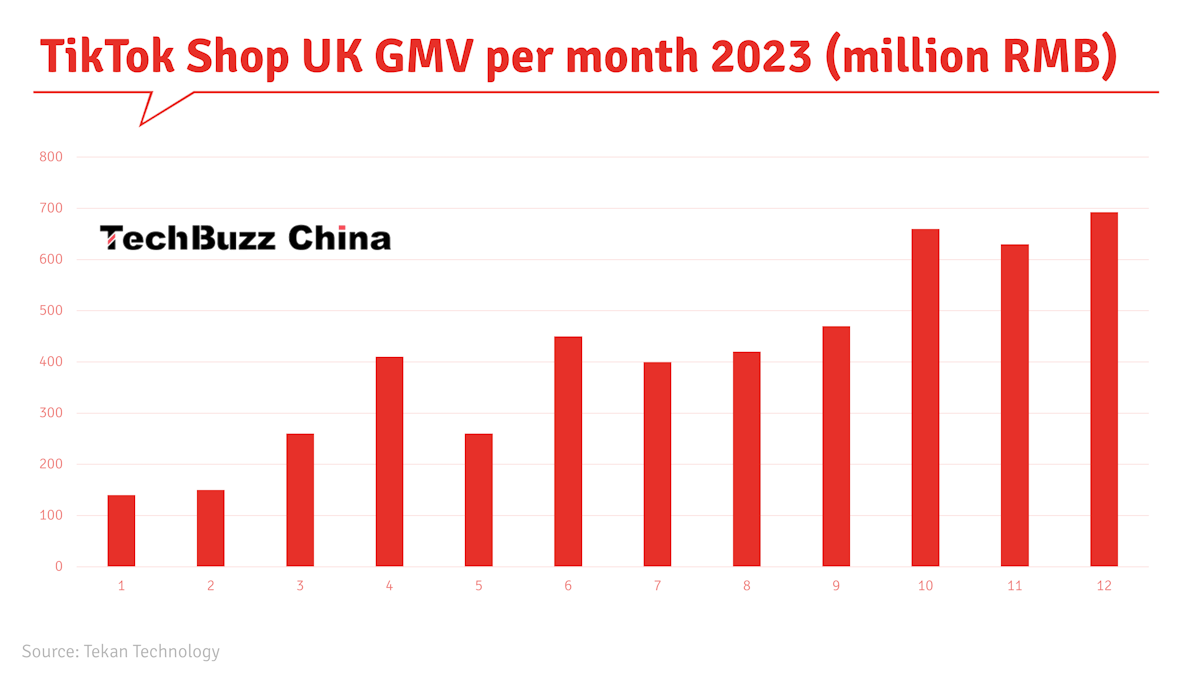
Still, after three years, the UK contributes less than 10% to TikTok’s overall e-commerce business. [24]
After a difficult start in the UK, TikTok Shop hit a record high during Black Friday 2024. An average of 6,000 livestreams were held daily, and 1.6 shoppable videos were created during the promotion period. Cross-border live commerce grew 257% YoY and TikTok Mall 170%. [26]
Some think Europeans are warming up to the ‘interactivity and fun’ of live shopping. In research by Retail Economics, 29% of UK respondents said they had purchased on TikTok in the previous 12 months. TikTok UK claims that 80% of DAU make purchases after watching short videos or livestreams, and there are 5,000 livestreams every day, twice as many as in 2023. The average daily GMV increased by 90%. [26]
But again, note that the base for all this growth was minimal ($600 million GMV in 2023). While PR messages are full of the results of specific brands and streamers, especially those related to beauty care, it is unknown what investments TikTok Shop had to make to get these results and their ROI is…
According to Retail Economics, the content e-commerce market in the UK will more than double from GBP 7.4 billion to GBP 16 billion in the coming four years and its share of the e-commerce market will increase from 6% to 10%. [26] Considering how live commerce already had a share of 25% - 30% of e-commerce in China in 2023, the UK still has a long way to go. However, compared to shelf e-commerce (traditional, search-based e-commerce), which has slowed down to single-digit growth, it at least shows potentially significant growth.
Mainland Europa
In 2023, European social e-commerce revenue was $26.7 billion, and it is expected to grow to $48.3 billion by 2028. Spain is expected to overtake the UK in the number of social commerce users by 2027. [26] If true, TikTok Shop will be in a prime position to grab this business as it is the leading social media app by time spent in many countries.
However, TikTok has the most stringent compliance requirements. Compared with its rivals, TikTok has adopted a more cautious approach to dealing with political risks. For example, while Temu shifted its primary focus to the European market, TikTok slowed its expansion overall, avoided entering high-risk emerging markets, and focused on improving the user experience in existing markets.
At the beginning of 2024, TikTok Shop hoped to open in 40 countries in the year's second half, including Brazil and 10 European countries. Soon, however, the goal became conservative and was adjusted to prioritise the ten core European countries. [27]
In April, TikTik posted several e-commerce-related jobs on its website, such as a Senior Fulfillment Solutions Manager (Amsterdam): ‘We are looking for highly qualified and experienced Senior Fulfillment Solutions Managers to strengthen our logistics team. (..) This role includes strategic planning, optimising logistics and fulfilment solutions, and ensuring efficient and effective delivery of products from suppliers or retailers to end consumers. (..) responsible for planning and designing logistics solutions for Great Britain and the entire EU”. [28]
Another example was an “E-Commerce, ESG and Trade Policy Analyst” in Brussels. "Observe the political trends and debates that impact Tiktok's current and future eCommerce business strategies in EMEA." [28]
In May, news broke that TikTok was inviting merchants in France, Spain, Germany, Ireland, Italy and Mexico for a beta version of TikTok Shop. [29] But although even one service provider claimed TikTok Shop would launch in Germany in Q2 2024 [28], by the end of May, it was reported that the July launch of TikTok Shop in the EU was once again postponed, as well as those in Brazil and Mexico, to focus on the US market. [30] In July, rumours of a launch in Spain and Ireland as early as October returned. The rollout would be limited to these two countries, but more would follow in 2025. TikTok Shop had already recruited a team of 40 in Spain. [31]
After all the delays, TikTok Shop was finally launched in Spain, where it has to compete with Amazon and AliExpress, and Ireland in December 2024. [24] More recently, TikTok Shop was said to be testing in Germany and Italy and preparing for a launch in The Netherlands in 2025. [32]

TikTok has started recruiment of staff for the German market. “We are looking for a talented account manager to join the Germany team for the Fulfilled by TikTok (FBT) division.” Other e-commerce related job openings are available in Brussels, Berlin, Copenhagen. Dublin, Hamburg, Luxembourg, Madrid, Milan, Paris, Stockholm and Warsaw. [46]
Europe is challenging for TikTok Shop. The EU’s Digital Services Act (DSA) officially came into effect in August 2023. Online platforms with more than 45 million monthly active users must strengthen censorship and promptly delete illegal and harmful online content. TikTok’s internal assessment of the European market is that it will take at least half a year to get volume gradually. This also meant the European market's contribution to 2024’s $50 billion target would be limited. [27]
TikTok felt the power of the DSA in April 2024, when the EU ordered TikTok to deliver a risk assessment for its rewards program, in which users of TikTok Lite in Spain and France could receive points for watching content. Points could be exchanged for Amazon vouchers, gift cards or TikTok’s coins currency. Failure to deliver the assessment in time could result in fines of up to 1% of its total annual worldwide turnover or periodic penalties of up to 5% of its average daily income. Even though TikTok claimed it was not available for users under 18, the EU was worried about the potential addictive effect of the rewards program, especially for minors. [33]
In February 2024, EU regulators had already announced a formal investigation into TikTok over the app’s addictive design and screen-time limits, its privacy settings, and the social media platform’s age verification procedures. [33]
Middle East
In April 2024, there were rumours that TikTok Shop would pull out of Saudi Arabia. TikTok denied the rumours. However, livestreaming, for both e-commerce and entertainment, had been suspended since December 2023. As a result, TikTok Shop’s daily order volume dropped from 30,000 to 1,000. At the time, a Bytedance staff member claimed the company was about to expand to Brazil and Australia, neither of which have materialised. TikTok Shop was operating a fully managed model for cross-border e-commerce in Saudi Arabia and would have to wait until at least 2025 for local shops. [34]
An MCN claimed that TikTok was considering relocating many employees from the US to Saudi Arabia to build a live commerce base. TikTok had also requested MCNs to recruit more livestream hosts. [34]
Currently, participants in the Middle East e-commerce market mainly include three types of companies: global e-commerce giants like Amazon, local e-commerce platforms such as Noon and Trendyol, and challengers from China such as the ‘four little dragons’ TikTok, AliExpress, Temu and SHEIN. In early 2024, Shein saw 100,000 daily orders in Saudi Arabia, Temu 30,000 and TikTokShop 30,000 before the suspension of live commerce. Amazon is dais to have approximately 300,00 daily orders. [34]
The per capita GDP in Saudi Arabia is as high as $32,000. It has a high proportion of young people and high Internet penetration, but the current e-commerce coverage is only 5%, but it is growing rapidly. However, consumers still prefer to buy from offline stores and brand websites. According to data from Serui Insights, 65% of respondents in Saudi Arabia are accustomed to shopping from brand websites. [34]
Consumers in the Middle East are used to paying by cash or cash on delivery instead of (online) payment in advance, which is common among e-commerce companies. As many consumers refuse to accept and pay for the goods on arrival, shipments must be returned at merchants' cost. Customers are critical about delivery times, and each day’s delay significantly reduces the acceptance rate. Even successful deliveries may take multiple attempts to contact the customer. Bytedance invested $10 million in iMile, which focuses on logistics and distribution in the Middle East and is said to have a high acceptance rate. [34]
The rest of this report, including information on merchant recruitment and profitability, products and pricing, organisation, logistics and the challenges and outlook for TikTok Shop is available for paid subscribers only.
Merchants
Merchant recruitment (and bans)
Being the centre of negative attention, TikTok has been more cautious about the merchants and products it would allow on the platform.
Before the official launch in September 2023, the management and control of store groups and virtual warehouses were relatively loose. However, starting in October 2023, the platform ushered in a wave of store closures. Stores that had problems with the information submitted before opening a store, had shown irregular operations (e.g. duplicate content) or had a bad reputation were banned, and this kind of review has continued to this day. [10] [20]
When TikTok Shop launched in the United States, Shein and Temu were trying to lower the merchants' entry threshold. TikTok Shop initially limited itself to local merchants. When it started testing in the US in May 2023, it required merchants to provide US company licenses, passports or driver's licenses of responsible persons and other information to verify their identities and to have a US warehouse and be able to ship locally.
Two months later, it opened TikTok Shop for Chinese-funded US companies. It was difficult for non-US merchants to sell goods. When it was first launched, more than 90% of the sellers were from the United States.
While TikTok Shop initially only allowed merchants that had already sold in the US, it launched a fully managed business in August 2023 under the pressure of Temu and Shein, shipping goods to US consumers from warehouses in China. When it opened up to cross-border merchants, TikTok adopted a targeted invitation model with some restrictions on product categories. [2] [5] TikTok has done large scale recruitment of suppliers of small commodities and hardware products in Yiwu, Shenzhen and other places. There is a high resemblance with Temu’s fully-managed model.
While in Southeast Asia, sales are more diversified and cover local businesses and cross-border sellers, in the US, TikTok tends to focus on large brand sellers. TikTok Shop currently has a daily transaction volume of over $20 million US dollars in the United States, 80% of which comes from local stores in the United States. The approval threshold for local stores in the United States is still very high. Merchants need to have a U.S. social security account or have an annual transaction volume of more than $2 million on Amazon, a favourable review rate of more than 95% (on Temu’s semi-managed services, merchants only need a business license). Recently, TikTok has also slowed down the review speed of local stores. [5]
There have even been reports of merchants having to provide US tax records of their company, water and electricity payment bills, and warehouse lease contracts in the United States. TikTok has also formulated strict regulations on product sales and delivery. For example, once a product is sold out, the link must be removed immediately to avoid orders that cannot be delivered. Points will be deducted if the store does not ship within 72 hours after the user places an order. To ensure the store's activity, it is best to start selling immediately after opening the online store. The store will be closed if it is idle for more than two months. [37]
TikTok’s high threshold is mainly set to protect the brand image and ensure the quality of user experience and that merchants who enter can provide high-quality products and services through such standards. In addition, TikTok's strategy of requiring merchants to stock up in the United States also makes for a better consumer experience. TikTok has, however, loosened its merchant requirements over time. The previous requirement of $2 million in sales on Amazon has been lowered.
Last November, TikTok Shop relaxed the entry system to facilitate Black Friday sales, and the US cross-border store updated its entry policy. Merchants could apply to open a store if they have local stocking conditions and a business license and are no longer required to provide operating certificates from third-party e-commerce platforms. [23]
Many Chinese consumer brands were interested in joining the platform because … [37]
Continued involution and weakness of the domestic market forced everyone to accelerate their overseas plans;
TikTok Shop updated its user database population package after September last year, and the test data of a large number of brand products was relatively ideal, forming a clear monetisation path;
TikTok had set a GMV target of $50 billion in 2024. North America would expand 10 times to $17.5 billion, which will inevitably release more significant dividends, and merchants would reap rewards if they follow the trend.
As we’ve seen, TikTok Shop only made about half its target …
TikTok Shop is performing relatively well in merchant recruitment, mainly due to the attractiveness of its platform store policy to the merchant's gross profit margin and its vast traffic. Merchant settlement rewards include 90 days of commission exemption, specific influencer marketing support, influencer commission reduction and advertising investment. TikTok will continue to attract local merchants. Although the goal of covering 80% of Amazon's Top 500 merchants in 2024 was not achieved, the goal for 2025 is to exceed 90%.
In 2023, merchants could get a shipping subsidy of up to $12 per order. However, after many merchants abused this by setting shipping costs at $11,99, TikTok responded by introducing more store closures and lowering the maximum to $8. [10]
In early 2024, TikTok also changed its shipping subsidies policy: a store had to be opened for 30 days and had at least 100 orders. This means no subsidies were available in the first month of opening a store. If a new store wanted to quickly enter the market with a low-price strategy, but there is no shipping subsidy in the first month, making it difficult to make a profit. [10]
After a period of training and channel expansion by MCN agencies, merchants have learned how to find suitable influencers for promotion. Over time, this business model has been expanded overseas, and consumers have gradually accepted how influencers recommend products (although probably not as fast as TikTok expected, as we will see in part 3 of this series).
Still, as we’ve seen, while TikTok Shop is growing in the US, it is nowhere near its targets. Its poor performance weakened the enthusiasm of merchants to join the platform. In the first half of 2024, the progress of brand acquisition and general merchants' listing encountered obstacles. Still, the policy environment improved in the year's second half and merchants' willingness to develop increased.
Recruiting more brand merchants should help TikTok e-commerce accumulate users with high average order value. Such brand merchants will also be more willing to advertise, which will help TikTok’s advertising revenue in the long run. [7]
Last summer, TikTok Shop launched the TikTok App Centre to help support small and medium-sized businesses on the platform. The centre offers third-party tools to streamline advertising from ideation to reporting. It provides solutions for campaign management, creative production, and more, integrating into TikTok’s ecosystem. The apps are lightweight, designed for ease of use, scalability, and accessibility, with a flexible pricing structure including free trials. [38]
When TikTok Shop launched in Spain in December, merchants, who could only join by invite, had to meet requirements resembling those in the US. Individual sellers must provide proof of address and identification documents such as identity card, passport, or driver's license. Local companies must have a local warehouse, DNI or passport, financial statements, and also provide company registration documents and VAT number. Local companies need a local warehouse for inventory and fast delivery, financial statements showing the company’s operational strength, and company registration and VAT documents to ensure legal and compliant operations. [39]
Merchant profitability
TikTok’s e-commerce platform has several significant advantages over traditional e-commerce platforms. First, the traffic that comes with the TikTok platform is its most significant advantage, and merchants can get exposure without investing a lot in marketing. However, the certainty of traffic is poor, and for out-of-stock handling, TikTok chooses to mention warnings or impose fines for overselling.
Second, the commission rate of the TikTok e-commerce platform is relatively low. In January 2024, TikTok notified sellers that it would increase commissions. In most product categories, the old commission of 2% plus $0.30 for each transaction would be raised to 6% in April and 8% in July. TikTok would also reduce subsidies. [40] Still, this commission is significantly lower than the commission rate of more than 15% of traditional e-commerce platforms like Amazon, which reduces merchants' operating costs. [8] Merchants across various segments, from large corporations to small businesses and individual sellers, have voiced concerns about high commission fees on e-commerce platforms. Despite this widespread dissatisfaction, there hasn't been significant pushback against these fee increases yet. In this landscape, TikTok Shop has emerged as a more cost-effective alternative for merchants. Still, don’t forget how quickly TikTok Shop followed Shopee when the latter increased its fees in Southeast Asia (as described in part 1 of this series).
When comparing Amazon and TikTok, there are significant differences in their commissions, gross margins, and net profits. Amazon's commission and logistics costs are significantly higher than the TikTok platform's. Meanwhile, prices and gross margins of goods on the TikTok platform are relatively low. From a product perspective, Amazon's gross margin is slightly lower than that of the TikTok store.
Compared with Temu, TikTok stores have higher profit margins. Temu has strict control over prices, with minimal room for price increases and severe penalties for violations. After considering costs and fines, TikTok's profitability is not as good as that of TikTok Shop.
Amazon's profitability is stronger than Temu's. Among the three platforms, Temu has the lowest profit margin, Amazon is in the middle, and TikTok has the highest profit margin. Finally, Shein's profit margin is similar to TikTok, both high-profit platforms. Under the fully managed model, the profit margin of merchants is usually more than 20%.
All in all, TikTok Shop looks like the best of the lot. However, there is a catch … Running a store on TikTok Shop comes with additional responsibilities not typically associated with traditional e-commerce platforms.
TikTok Shop offers unique features like live video sales, short video creation tools, and an extensive affiliate marketing network. There's growing interest among merchants in the idea of transitioning to self-managed sales platforms. The appeal lies in gaining better access to customer data and direct consumer interaction. However, merchants have found that establishing and maintaining their own sales platforms can be both costly and challenging. Since selling on TikTok often requires a dedicated team that makes content and pays influencers, the net margin isn’t all that different from other platforms.
Sales strategies on TikTok mainly revolve around internet celebrities promoting products in livestreams. Before calculating the profit, these hosts' commissions must be deducted first. It is usually around 15%-20%, the same as in the domestic Chinese market. After deducting marketing, transportation, and platform expenses, TikTok's net profit is 2-3 percentage points higher than Amazon’s. Specifically, TikTok's net profit margin is usually between 3% and 5%.
Products and Pricing
After its US launch, TikTok “offered to subsidize discounts of as much as 50% to entice sellers’ participation in its Black Friday program,” according to Bloomberg. [35]
After selling in the US for one year, no major brands have significant sales. Brands with millions of monthly sales are mostly small health, wellness and beauty brands that figured out how to go viral. TikTok Shop also still lacks the broad and deep assortment consumers seek. The platform mainly sells unbranded, low-price items. [36]
Despite TikTok’s store closures, the product selection during the 2023 shopping season failed to impress many. Bloomberg described TikTok Shop’s product offering as “a spate of random and sometimes dodgy products” and said TikTok needed to “start aggressively enforcing its existing shop rules and establish new standards for sellers and advertisers to elevate the quality of goods on the platform.” Compared to the accurately curated video feed, the marketplace failed to impress.
Among the products that Bloomberg found on the platform were “psychedelic mushroom capsules loaded with recreational drug terms”, and a “$50 plastic fork” (which could have been a fake cover for other illegal products). The unruly nature of TikTok Shop discouraged established brands from selling on the platform, according to Buttermilk, a global influencer marketing agency. Name-brand companies are waiting to see whether TikTok would clean up its act. [44]
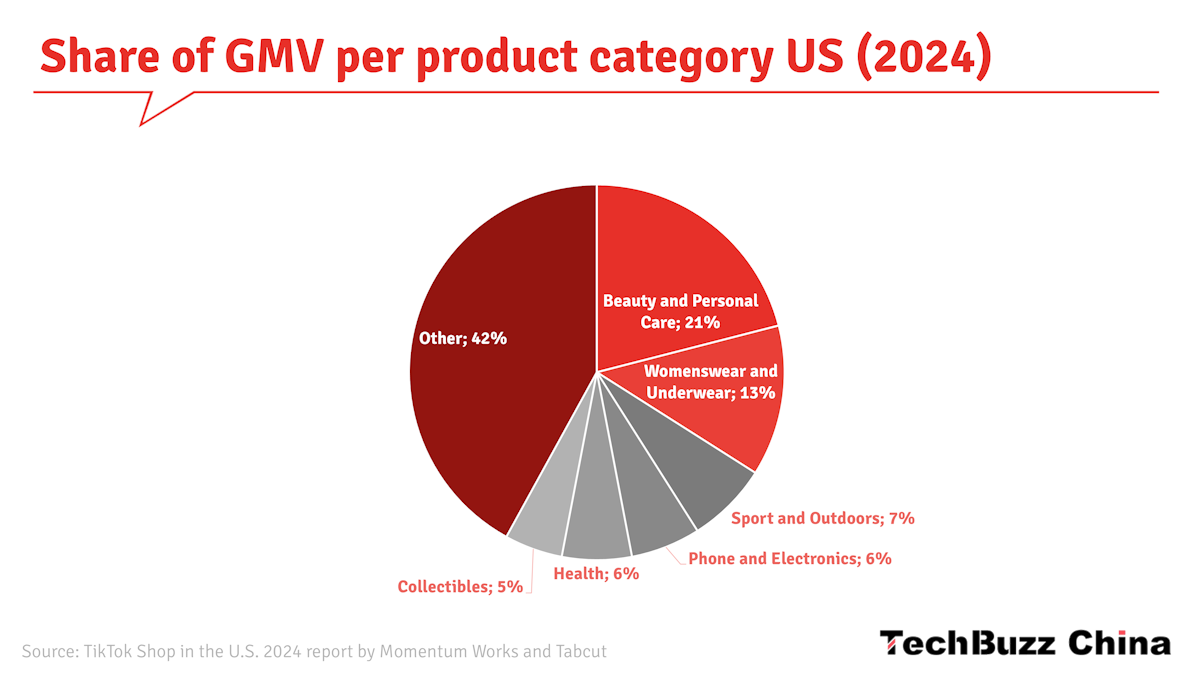
Beauty and Personal Care product categories are the most significant categories in all of TikTok Shop’s markets. [1] In the US market, TikTok Shop's outstanding categories also include shoes and bags, digital products, and outdoor sports, which is related to the platform's characteristics. The user profile of TikTok Shop consists mainly of young women aged 27 to 35, and in some countries, the range is expanded to 40 years old. TikTok Shop's sales performance in home and pet products is average.
According to a recent report by social media management company Dash Hudson and global consumer data analysis company NielsenIQ, TikTok Shop has quickly become a major sales platform for the beauty industry, the ninth-largest online beauty and health sales platform in the United States and the second largest in the United Kingdom. Its performance in the beauty and health sector has surpassed many traditional retailers. [13]
FastMoss analysed the share of sales per product category of the top 20 products in the US and UK.
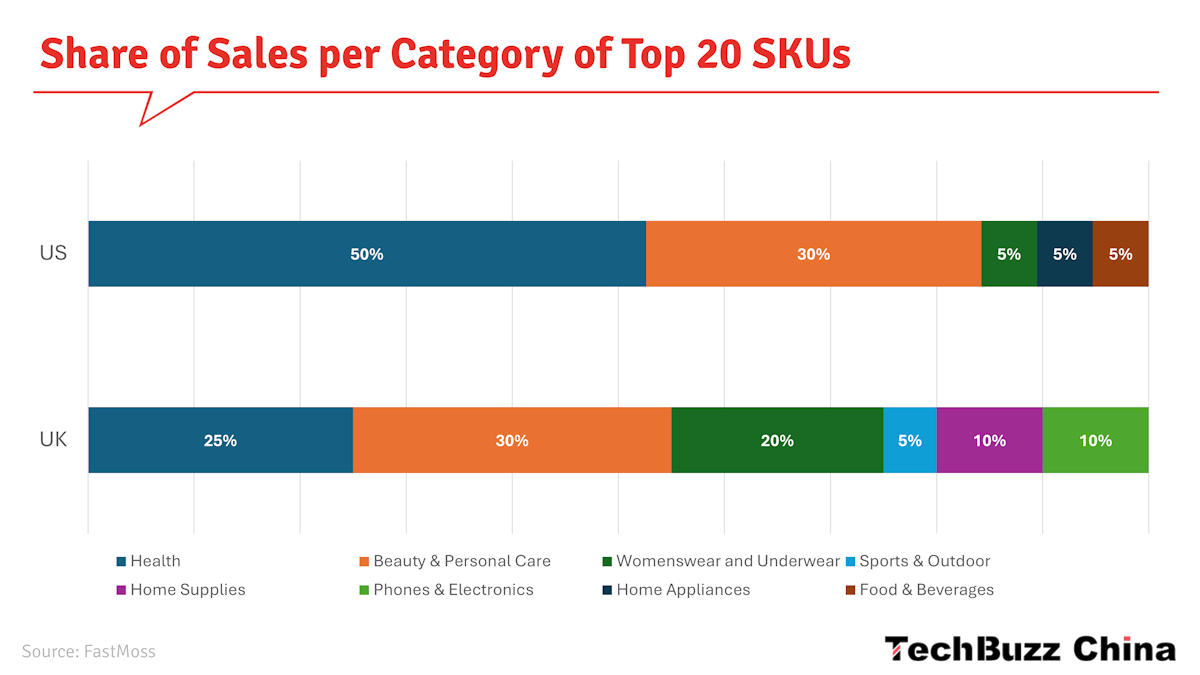
One possible reason for the high share of Health products in the Top 20 in the US is given in the TikTok Shop in the U.S. 2024 report by Momentum Works and Tabcut: influencers get the highest commissions (16.38%) for selling Health products (compared to 13.21$ for the popular beauty and personal care category). Furniture has the lowest commission at 9.64%, but considering the higher prices in this category, it could still make an influencer a nice absolute amount. [45]
The same report shows the share of GMV per product category as follows:
Like Temu, the TikTok platform uses an algorithmic mechanism to obtain price data from wholesale websites such as 1688 for comparison to ensure that the merchant price is reasonable.
TikTok adopts a strategy different from that of many other cross-border platforms. It does not participate in price setting but allows merchants to decide the price themselves. In the semi-managed model, the cost composition includes the merchant price plus 20% profit, 18-20% for marketing and customer acquisition, and 3-4% for payment, finance and management.
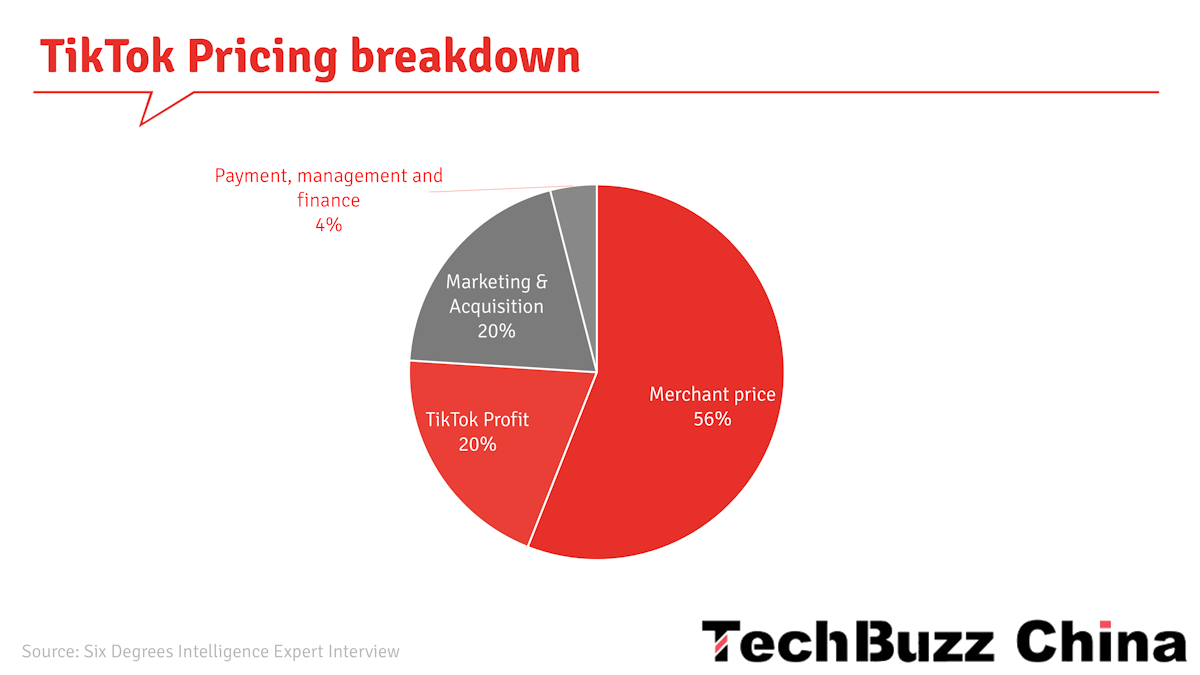
When comparing TikTok Shop and Amazon, the former has several advantages. First, the price of goods on TikTok Shop is usually lower than on Amazon, which is a big attraction for consumers. Second, regarding platform fees, TikTok Shop only charges a 2% commission in the early stages, much lower than Amazon's 15%. Regarding marketing fees, TikTok Shop's early influencer commissions or advertising fees are between 10% and 15% and will not exceed 20%, which reduces a lot of burden for merchants. Finally, TikTok Shop also provides generous subsidies for consumers and merchants, which increases the attractiveness of the platform and helps attract and retain these groups.
In almost all product categories, the prices on TikTok Shop US have been trending down, by 14% on average, showing that TikTok has prioritised GMV over AOV. [45]
Organisation
By the end of 2023, TikTok had over 20,000 employees, including over 4,000 e-commerce employees, accounting for about 20%. By comparison, 33% of Pinduoduo’s 12,000 full-time employees at the time served Temu. [6]
TikTok set up shop in Amazon’s backyard, basing most of its e-commerce operations in the Seattle suburb of Bellevue, and has recruited hundreds of former Amazon employees, according to a Bloomberg review of LinkedIn profiles. [9]
In 2024, TikTok employed about 1,000 in the US who were mainly responsible for e-commerce content, operations, and a small amount of IT and business support. The Chinese team has about 500 - 700 people dedicated to serving the US market and spends about 30% of its time supporting US businesses. Another source reported that in terms of team size, TikTok's cross-border e-commerce team had 500 people by the end of 2023, mainly based in China, while in Indonesia, the team size was between 1,000 and 2,000.
In May 2024, due to the increase in global policy risks, TikTok decided to reduce the size of its team worldwide, mainly affecting the customer development, content operation and content strategy departments. The primary responsibilities of these teams include recruiting and managing influencers and handling daily content publishing. The layoffs did not mean a complete stop to recruiting new influencers but rather a slowdown in expansion and a greater focus on existing markets. In addition, TikTok decided to withdraw from emerging markets such as Brazil and Mexico, mainly because of political risks.
The United States is one of the regions that has been the worst affected by this. Although the scale of e-commerce in the United States is not the largest, from the perspective of overall monthly active users, it occupies an important position, becoming the hardest-hit area of this layoff. The unaffected departments include international e-commerce, e-commerce operations, e-commerce IT, logistics operations and research and development.
The job cuts were part of TikTok’s ongoing strategy to streamline its business. Such initiatives align with parent ByteDance’s campaign to “cut the fat and get fit” and align with efforts since late 2022 to restructure its businesses. [41]
Logistics
Merchants can choose three fulfilment methods when using TikTok for e-commerce activities.
1. In August 2023, TikTok launched Fulfillment by TikTok (FBT) to better serve merchants. This service allows merchants to ship goods using TikTok's official warehouses. In early 2024, this service was limited to some leading merchants.
2. Merchants also have the option of shipping goods by themselves.
3. Merchants can also use Amazon's multi-channel delivery service, which is particularly suitable for those who need to clear tail goods or do not want to invest too much money. However, Amazon's service fees are relatively high.
TikTok's expense rate is high, mainly due to the lack of scale procurement effects, as well as the reasons for the merchant’s own fulfilment. In contrast, Amazon has nearly 400 storage facilities in the United States, which can provide fast and efficient fulfilment services.
TikTok initially forced merchants to use FBT services. Still, now merchants can use third-party overseas warehouses for shipment, and its WMS inventory data can be directly connected to the merchant's ERP system.
Although TikTok, unlike Temu, does not require certified warehouses, it uses strict online monitoring rules to supervise the real shipments of third-party sellers in the semi-managed model. However, sometimes this does not match the actual situation. Even if merchants use real express accounts, do not have virtual shipments or ship from China to the United States, and the online time is reasonable, they may still be judged as false orders by TikTok.
In early 2024, TikTok also updated its logistics policies. Merchants had to deliver in 6 days or less and have an order loss rate (goods not delivered to customer) of less than 1%. [10]
TikTok has been making up for its shortcomings in fulfilment capabilities. TikTok logistics services mainly achieve order fulfilment through third-party logistics service providers. The company has also recruited executives from Amazon to promote and establish its US logistics network. [7] To meet the peak season in the US, TikTok Shop upgraded its logistics and overseas warehouses to cover five major regions in the US by September. From there, it could provide three-day delivery. [17]
Challenges
TikTok Shop is facing severe challenges.
Unlike other cross-border e-commerce platforms, TikTok Shop applies content e-commerce. The popularity of short videos and live broadcasts has given it substantial traffic advantages. However, converting that traffic into sales remains a challenge. Many short video platforms face the problem of enormous traffic but low conversion rates, which leads to a waste of traffic resources. In contrast, although Amazon's growth rate has slowed, it still relies on its early advantages and solid market position to remain competitive.
As a global traffic platform, TikTok provides a broad market for merchants, but its cross-border operation model also presents many challenges. Regarding warehouse management and logistics distribution, there are problems with timeliness and return processing, especially in cross-border transactions. Although TikTok is exploring managed services, the quality and effectiveness of these services must be improved because the relevant teams are mostly temporarily formed and lack experience.
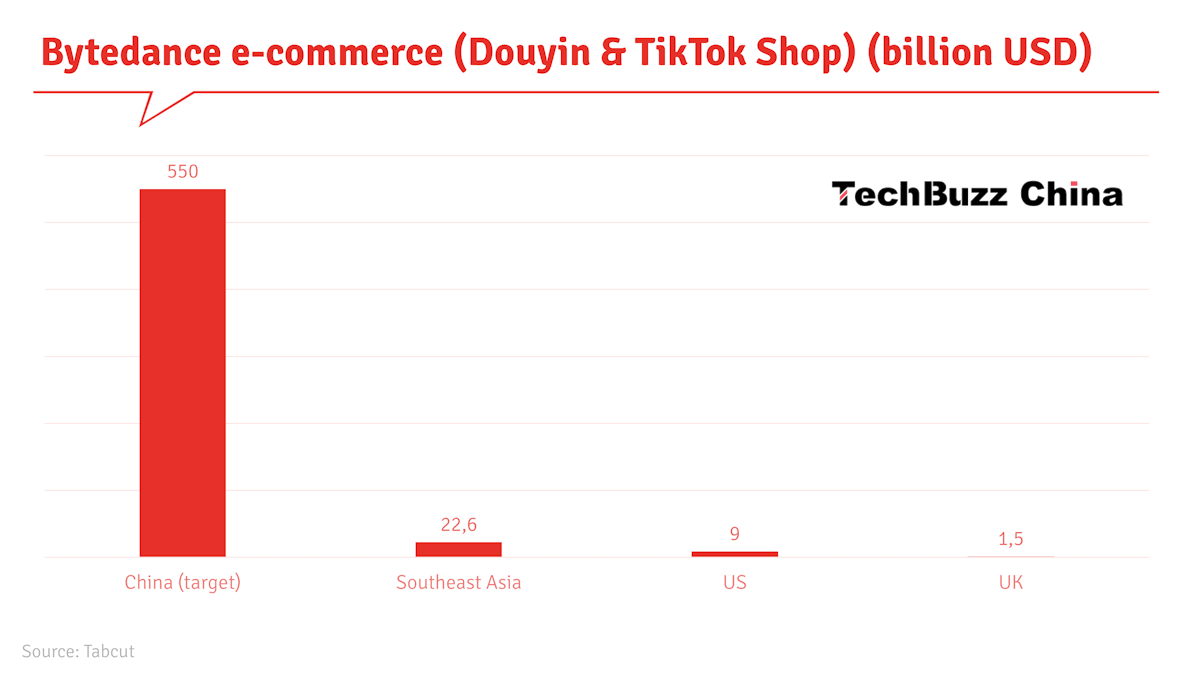
In China, Bytedance set a target of RMB 4 trillion for Douyin e-commerce. Seven years after Bytedance launched e-commerce in the app, that's roughly $550 billion. Compared to this, TikTok’s e-commerce remains laughable at $32.6 billion, about 6% of Douyin’s target and four years of development.
With last month’s shenanigans surrounding the TikTok ban, there remains great uncertainty about the prospects of TikTok Shop in the United States. Whatever the final outcome, the company's e-commerce business in the United States is likely to be substantially affected.
Furthermore, if tariffs are raised in the future, the e-commerce business will be seriously affected. Currently, the tariff rate for most goods is 20%. If the tax rate rises to 60% across the board, product prices will double, and the business will be challenging to maintain. Also, let’s not forget that the e-commerce function of TikTok is not an independent program but is operated as an internal function and mainly relies on internal traffic.
Compared with other independent e-commerce applications, the platform invests less in external promotion, specifically for e-commerce. However, to this day, TikTok is almost the only mature Internet product in the United States that is still buying general traffic to its app at a high cost. They are willing to spend three times the value of current users to acquire new users because they are optimistic that as TikTok's ecosystem continues to improve, these users will eventually contribute more revenue to TikTok. [5]
An executive of an overseas live broadcast platform estimated in 2023 that TikTok spends $10 billion every year to purchase traffic, cloud services, content copyrights, etc., and this money flows into the pockets of major companies such as Microsoft, Oracle, Google, Meta, Sony, etc. [6]
Due to the instability of Sino-US relations, TikTok’s advertising business has also been affected because most advertisers are Chinese companies that pay for traffic to their content.
The United States is strengthening de minimus customs clearance regulations and is more inclined to support overseas warehousing and local delivery. TikTok is introducing more products that meet certification standards by setting up overseas warehouses to ensure compliance with relevant regulations. At present, about 25% of cross-border POP merchants can set up warehouses overseas, and they carry out logistics through large package shipments, so changes in tariffs have little impact on them.
As platform fees continue to rise, sellers may find more motivation to explore creating their own e-commerce sites. While operating a proprietary e-commerce platform involves substantial costs and requires independent efforts to attract customers, the financial incentive to create a dedicated brand website becomes more compelling as platform fees increase.
In the US market, the development potential of content e-commerce mainly depends on the acceptance of local consumers. In contrast, the popularity of Chinese content e-commerce stems from its lower operating costs and lower trial and error costs for consumers. However, in the United States, the e-commerce industry is strictly regulated and selling inferior or counterfeit goods may be subject to high fines. Therefore, special attention must be paid to compliance issues when promoting content e-commerce in Europe and the United States. These factors have had an essential impact on TikTok's development strategy and business model in different markets.
Kang Zeyu, head of TikTok’s e-commerce business, said in 2023: “Because users in European and American countries have very high requirements for product quality, after-sales policies, and customer service, and they have high requirements for manpower. Costs and logistics costs are higher than in Southeast Asia, so the business strategy is very different from Southeast Asia, and we have to invest a lot of energy in exploring and making breakthroughs.”
"Last year, sellers in TikTok e-commerce in various countries were mainly white-label sellers, but this had certain legal risks, and Indonesia is a lesson. And in a country like the UK that pays more attention to quality, it cannot bring a good user experience. A cross-border seller told 36Kr that the same product can drive sales at low prices in other countries, but in the UK, low prices are not so attractive, and polishing quality is crucial.” [7]
TikTok's global cross-border e-commerce business is experiencing a slight loss. The company relies mainly on advertising revenue to maintain its overall profitability. Its current strategy is to reduce costs by expanding its user base rather than achieving immediate profitability.
Several key concerns and uncertainties surround TikTok Shop's financial performance and growth strategy. Questions have been raised about the sustainability of TikTok Shop's current rapid expansion rate. The financial results of TikTok Shop are not clearly disclosed, which adds to the uncertainty. One particularly ambiguous element is the cost of acquiring users for TikTok Shop. Interestingly, most of these user acquisition expenses come from within the TikTok platform. This leads to another area of ambiguity: the distribution of costs between TikTok's primary advertising operations and its shopping segment is not clearly delineated. As a result, the future sustainability of TikTok Shop's business strategy remains uncertain.
Outlook
Due to possible political interference, TikTok 2024 may focus more on selecting controllable markets rather than just pursuing growth. Faced with the challenges in the US, TikTok Shop may shift its business focus to other markets with great potential, such as Southeast Asia, Europe, and Latin America. However, due to the instability of major markets, TikTok Shop's overall growth trajectory may experience some fluctuations. Although this strategic adjustment can help the company maintain its growth momentum, it also brings new challenges.
A successful case of the company's cooperation with other e-commerce platforms to achieve traffic sharing and maximise revenue is the cooperation with Indonesia's Tokopedia. The company plans to achieve the same goal in the European and American markets by enriching its product range by introducing goods from other e-commerce platforms.
This cooperation model is similar to the relationship between Douyin and Taobao. Taobao places external link advertisements on Douyin, but this does not affect Douyin's overall commercial scale. Although Douyin may limit the commercialisation method of direct links, Taobao can still promote it through soft articles or non-strong marketing methods. TikTok is open to cooperation with other e-commerce platforms, and such cooperation will not significantly impact TikTok Shop. Ultimately, the transaction is still carried out within the TikTok platform.
Amazon has already been using similar cooperation with Pinterest, Meta and Snapchat, letting users of those platforms buy products via Amazon ads without leaving the apps. [9] In 2023, Amazon suggested the same cooperation to TikTok, which initially seemed uninterested. [35] Still, in August 2024, it cut a similar deal with TikTok. Users can buy goods from ads in their ‘For You’ feed after they link their TikTok accounts to those on Amazon. “Users who link their accounts in the US will see real-time pricing, Prime eligibility, delivery estimates, and product details on select Amazon product ads in TikTok as part of the experience.” [42]
According to a Temu employee, TikTok has no advantage in terms of price and category and relies on limited conversion through content. Unless it builds shelf e-commerce (search-based), it would be challenging to replicate Temu’s success. [2] As we will see in part 3 of this series, a large part of TikTok Shop’s GMV already originates in its Mall section.
A potential ban or forced sale of TikTok would significantly impact online marketplaces and their sellers, primarily because it would eliminate a key marketing channel. This would disrupt their strategy of utilising multiple platforms for customer acquisition and sales growth. Sellers currently manage their inventory levels in response to demand across various platforms, including TikTok, so losing this channel would require adjustments to their strategies. However, these adjustments wouldn't necessarily wholly overhaul their existing approaches.
TikTok's absence could considerably challenge advertisers' ability to attract customers and generate revenue. In response, businesses must redirect their marketing budgets previously allocated to TikTok to other platforms. This shift likely involves exploring alternative channels and refining their marketing and sales strategies to compensate for TikTok's loss of influence in the digital marketplace ecosystem.
Regarding advertising income, TikTok has grown to 20% market share in social media ad spending (up from 2% in 2020). According to WARC Media, more than $11 billion in annual US ad investment (as reported for 2022) would be up for grabs If a ban does occur. [43]
All in all, Chinese e-commerce merchants face significant uncertainty regarding TikTok's future in the United States. To address this ambiguity, these suppliers are adopting a dual strategy. On one hand, numerous vendors are broadening their digital footprint by joining more US e-commerce platforms such as Amazon and eBay. Simultaneously, these vendors are intensifying their TikTok efforts to increase sales while the platform is still available. Overall, these merchants employ a mix of diversification and intensification strategies to mitigate potential risks and maximise their sales opportunities in this uncertain environment.
The user penetration rate of TikTok Shop (TikTok users buying in the app) is expected to grow from 50% to 70%. The average order value in early 2024 was about $35 (significantly higher than Tabcut’s estimated $20), and there is still room for growth. The annual order frequency could remain at a neutral level, about 10 times a year.
While TikTok Shop has not reached its targets in the US, the e-commerce potential in the US market has very broad development prospects. According to expert analysis, the potential market size of TikTok Shop in the US could reach 100 billion to 200 billion US dollars, which means that it may occupy 7% to 15% market share. TikTok Shop has the potential to become the second-largest e-commerce platform in the United States. Such an assessment is based on a broad consideration of multiple factors, including the number of users, the amount of fees, the unit price of goods, and the frequency of purchases.
TikTok agrees with this assessment and thinks the outlook for the US market is very optimistic (not counting a possible ban). It expects GMV to grow 3 to 4 times in 2025 and maintain about 3 times the growth the year after. Looking ahead, TikTok's global total merchandise transaction volume target for 2025 is tentatively set at $80 billion. In the next five years, the GMV of the US market is expected to reach US$200 billion, becoming the largest single market. The Southeast Asian market follows closely in second place, while the European market ranks third. The future growth of the US market will mainly rely on local brands, white-label products and a sound e-commerce system.
Currently, Amazon's share of the US e-commerce market is 40%, Temu accounts for about 5%, and TikTok's share is between 1% and 2%. Looking ahead, Amazon's market share may drop to 30% to 40%, while Temu and TikTok's share may reach about 10% each.
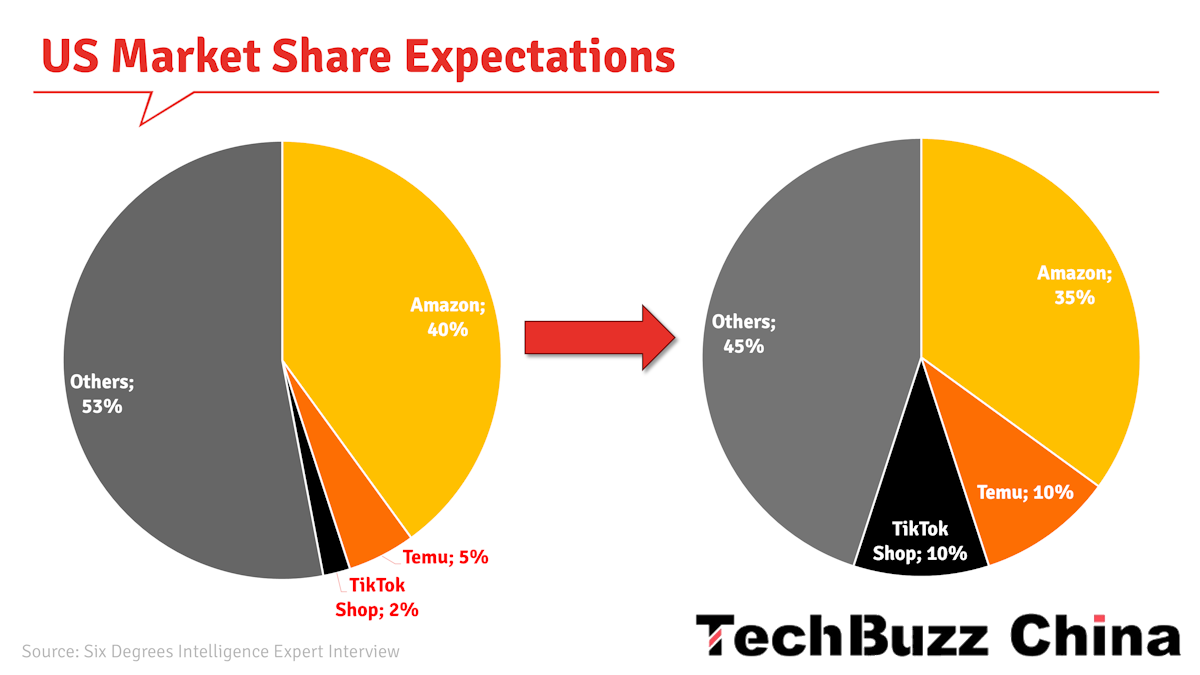
But if these predictions will come true remains to be seen. TikTok Shop has not been one to meet expectations.
In 2020, a team within Bytedance claimed that Douyin’s e-commerce would make RMB 1 trillion in GMV and overseas e-commerce RMB 2 trillion in 3 years. While Douyin exceeded its goal, TikTok Shop only reached $16.3 in GMV in 2023, just 5.7% of its target. [6]
In 2022, TikTok Shop set a goal to reach RMB 3 trillion (more than $470 billion at the time) in GMV in 5 years. [7] After 3 years, it has reached less than 8% of that goal.
Based on $14 million GMV per day at the end of 2023, a TikTok US service provider once estimated that the platform's daily GMV could reach $100-200 million in 2024, and the US would contribute $30 to global GMV. [7] However, it hasn’t even reached one-third of that estimation.
TikTok’s overestimation partially stems from the expectation that independent websites that have a 20-30% market share in developed markets like the US would want to sell on TikTok Shop. It also counted on riding the wave of increasing internet penetration in Southeast Asia. [6]
There are several reasons TikTok Shop kept missing its targets: [6]
1. Bytedance’s lacked a global supply chain and logistics capabilities. In China, the private logistics system has accompanied the development of e-commerce for nearly 30 years, while Alipay and WeChat Pay have greatly simplified the payment process for consumer transactions. These ready-made service supplies guaranteed that Douyin's e-commerce could increase its volume quickly. Douyin e-commerce runs at an unprecedented speed on the road paved by Alibaba and Tencent. However, TikTok does not have these infrastructures overseas.
2. Douyin e-commerce relies heavily on impulse consumption of live broadcasts, and its competitiveness may be the weakest among several platforms. The success of Douyin e-commerce in China is based on its unique live broadcast format that stimulates consumers' trivial but monumental shopping needs. However, overseas commodity power and logistics capabilities must be built from scratch, including the trust of supply and demand in the brand.
3. TikTok carries the heaviest compliance burden, directly affecting its business decision-making logic. TikTok’s every move is scrutinised by the public, the media and the U.S. government. This makes the team want to develop steadily at this stage and cannot become an instant success like Temu. Initially, TikTok Shop only recruited local merchants in the United States, and the threshold for opening a store was very high. After 4 months of opening the e-commerce website in the United States, less than 100 American merchants actually sold on it; in the United States, it mainly operates brand merchants because internally, it was concerned about the impact of e-commerce on the main TikTok app in the United States. Too many white-label and counterfeit goods could pose regulatory risks and affect users’ experience of watching short videos.
4. Unlike others like Temu and Shein, TikTok’s management must constantly balance e-commerce development and its impact on advertising revenue. Amazon is TikTok's biggest advertiser. If the e-commerce conflict is too direct, it may affect TikTok's advertising revenue.
There is a silver lining, though. If TikTok survives the ban in the US, there might be a lot of brands that are no longer reluctant to sell through the app, which could boost its GMV. However, the Bytedance team’s vision of more than $400 billion in global GMV will remain a pie in the sky.
Sources
This series of TikTok updates has been compiled from an analysis of more than 20 exclusive interviews with experts from the Six Degrees Intelligence network, augmented with the articles below.
Images by Tech Buzz China’s Ed Sander unless stated otherwise. These images may not be reproduced without Tech Buzz China's prior consent.
[1] Momentum Works 2025-01-06 [2] Latepost 2024-08-28 [3]Chinesesellers 2025-01-06 [4] Latepost 2025-01-11 [5] Latepost 2025-01-19 [6] Latepost 2023-12-21 [7] 36氪未来消费 2023-12-19 [8] Bloomberg 2024-01-03 [9] Bloomberg 2023-12-13 [10] 白鲸出海 2024-03-13 [11] Omnisend 2024-06 [12] Marketplace Pulse 2024-06-13 [13] 白鲸出海 2024-06-16 [14] Salesforce 2024-08-29 [15] TechPlanet 2024-12-17 [16] 白鲸出海 2024-10-16 [17] 白鲸出海 2024-09-25 [18] Chinasellers 2024-12-11 [19] Earnest Analytics 2024-11-18 [20] 36氪未来消费 2024-12-05 [21] Technode 2024-06-05 [22] Chinesellers 2024-09-19 [23] 36氪未来消费 2025-01-19 [24] Latepost 2024-10-09 [25] 白鲸出海 2024-02-06 [26] 白鲸出海2025-01-02 [27] Latepost 2024-04-28 [28] OMR 2024-04-12 [29] Twinkle 2024-05-21 [30] Bloomberg 2024-05-31 [31] Bloomberg 2024-07-23 [32] Chinasellers 2025-01-06 [33] Bloomberg 2024-04-22 [34] 白鲸出海 2024-04-02 [35] Marketplace Pulse 2023 [36] Marketplace Pulse 2024-06-26 [37] 白鲸出海 2024-02-28 [38] FBIC Group 2024-08-01 [39] Chinesesellers 2024-09-17 [40] Latepost 2024-01-06 [41] SCMP 2024-05-24 [42] Technode 2024-08-12 [43] Reuters 2025-01-17 [44] Bloomberg 2023-12-22 [45] Momentum Works & Tabcut TikTok Shop in the U.S. 2024 Report [46] TikTok