
China’s Internet Companies Get Cooking (Part 2) – JD's 7Fresh Kitchen
Will robots take over the kitchen?

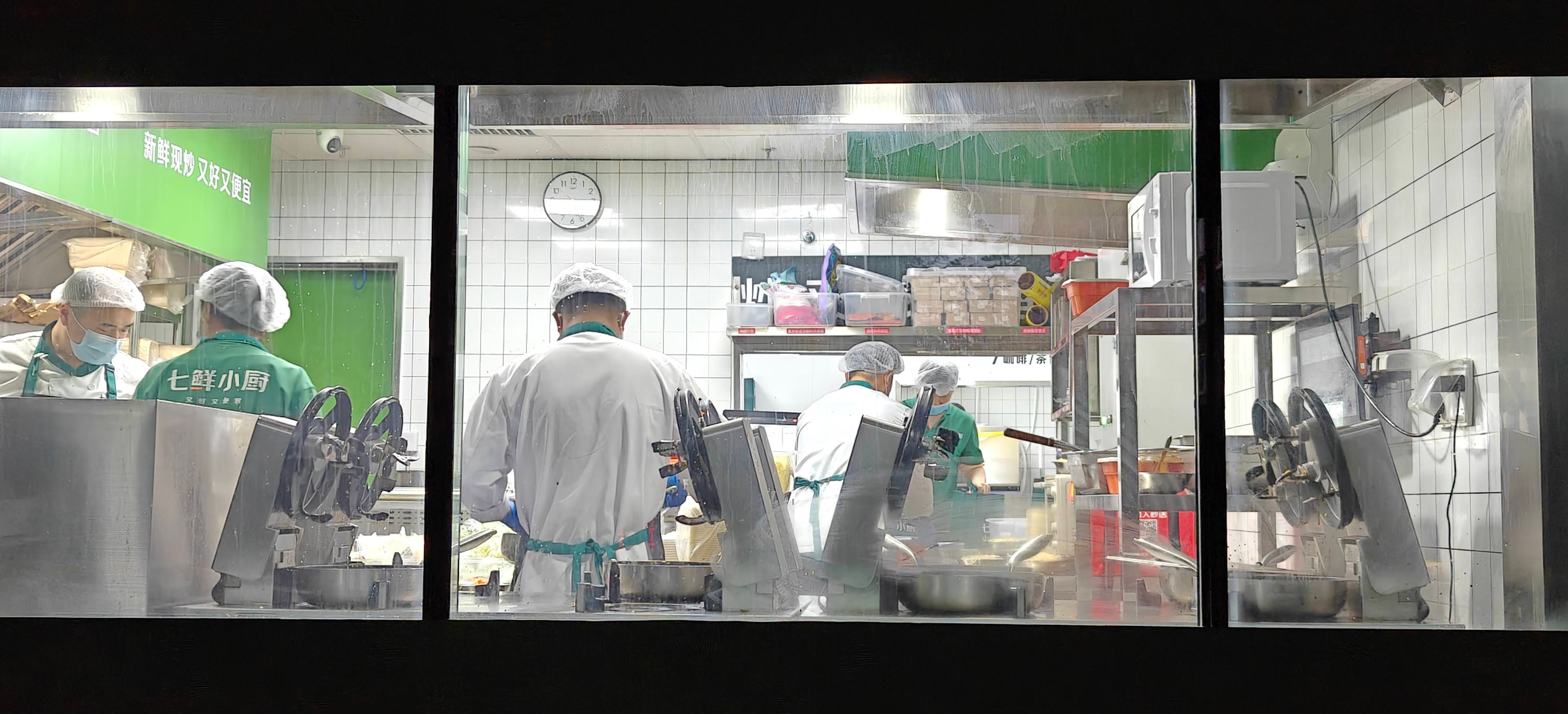
Content
Paid section:
Things that caught our attention
Meituan’s acquisition of Dingdong Maicai
Instant retail market consolidation: Meituan acquires Dingdong, a deeper analysis by Ed Sander on his new Substack ‘China Digital Retail Report’.
“Chinese robotics companies only (or mostly) do dancing robots.” Or do they?
Introduction
Last week, we started the exploration of a new trend in food delivery: China’s internet companies setting up centralised kitchens, either self-operated or by various third parties. We learned how Meituan started brand satellite stores, food-collection stores, business-district takeaway aggregation, and, most importantly, ‘Raccoon Canteen’. Meanwhile, in the south of China, front-end warehouse grocery company Pupu Supermarket opened its first Pupu Kitchen.
It’s part of a trend in which food-delivery and instant-retail companies move up the supply chain. On the one hand, this is seen as a new growth path; on the other, it aims to address a pain point in a sector where ‘dark kitchens’ have eroded trust in the quality and safety of delivered meals.
In this second and last part of this report, we will continue with a thorough explanation and assessment of JD’s 7Fresh Kitchen and how it compares to Raccoon Kitchen. The information in these reports is drawn from more than 10 expert interviews and more than 20 articles from Chinese tech and business media.
The first part of this report, which describes the concept of 7Fresh Kitchen and includes video footage I captured, is available to all subscribers. The second half, which includes an assessment of 7Fresh and a comparison with last week’s Raccoon Kitchen, is available to paid subscribers only.
For those who are celebrating it, have a wonderful Spring Festival!
Ed Sander, Tech Research Analyst

P.S. This is my penultimate report for Tech Buzz China. In the future, you can follow me at ‘China Digital Retail Report’. Tech Buzz China will continue to report on China’s internet companies, but I will focus exclusively on retail-related topics and post more frequently and in different formats on China Digital Retail Report.

On with the report …
JD.com’s 7Fresh
In the instant retail sector, JD.com’s focus is on its 7Fresh brand, aiming to compete with Hema (Freshippo). Ironically, Hema was founded by a former JD manager, the now-resigned CEO Hou Yi, after his idea was initially rejected by JD. 7Fresh was later established as JD’s answer to Alibaba’s Hema. But it has never really been able to keep pace with Hema.
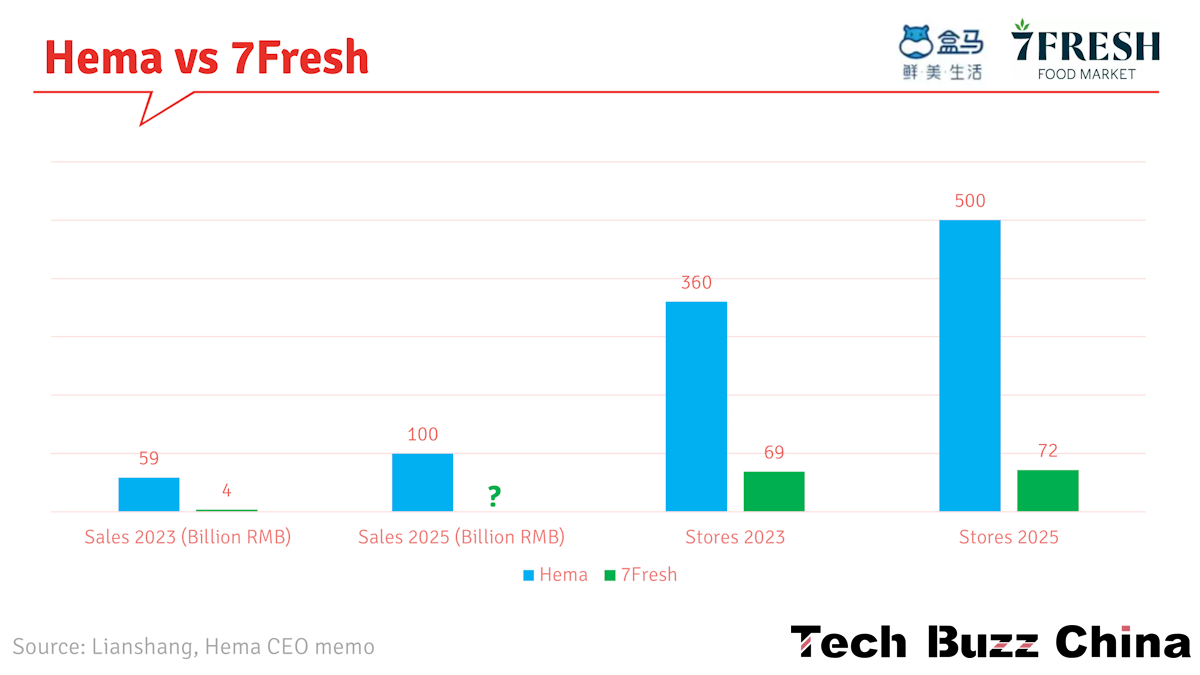
Currently, there are 72 7Fresh stores nationwide, including 55 supermarkets and 17 lifestyle stores. 7Fresh opens one to two new stores every three months, with a maximum of eight stores per year. However, of these 72 stores, relatively few are profitable, even without equipment depreciation and R&D expenses. The main purpose of opening new stores is to adjust business strategies and increase the proportion of categories such as catering and alcohol.
7Fresh’s business model comprises self-operated fresh-food supermarkets and, more recently, front-end warehouses. But that’s a topic for another day …
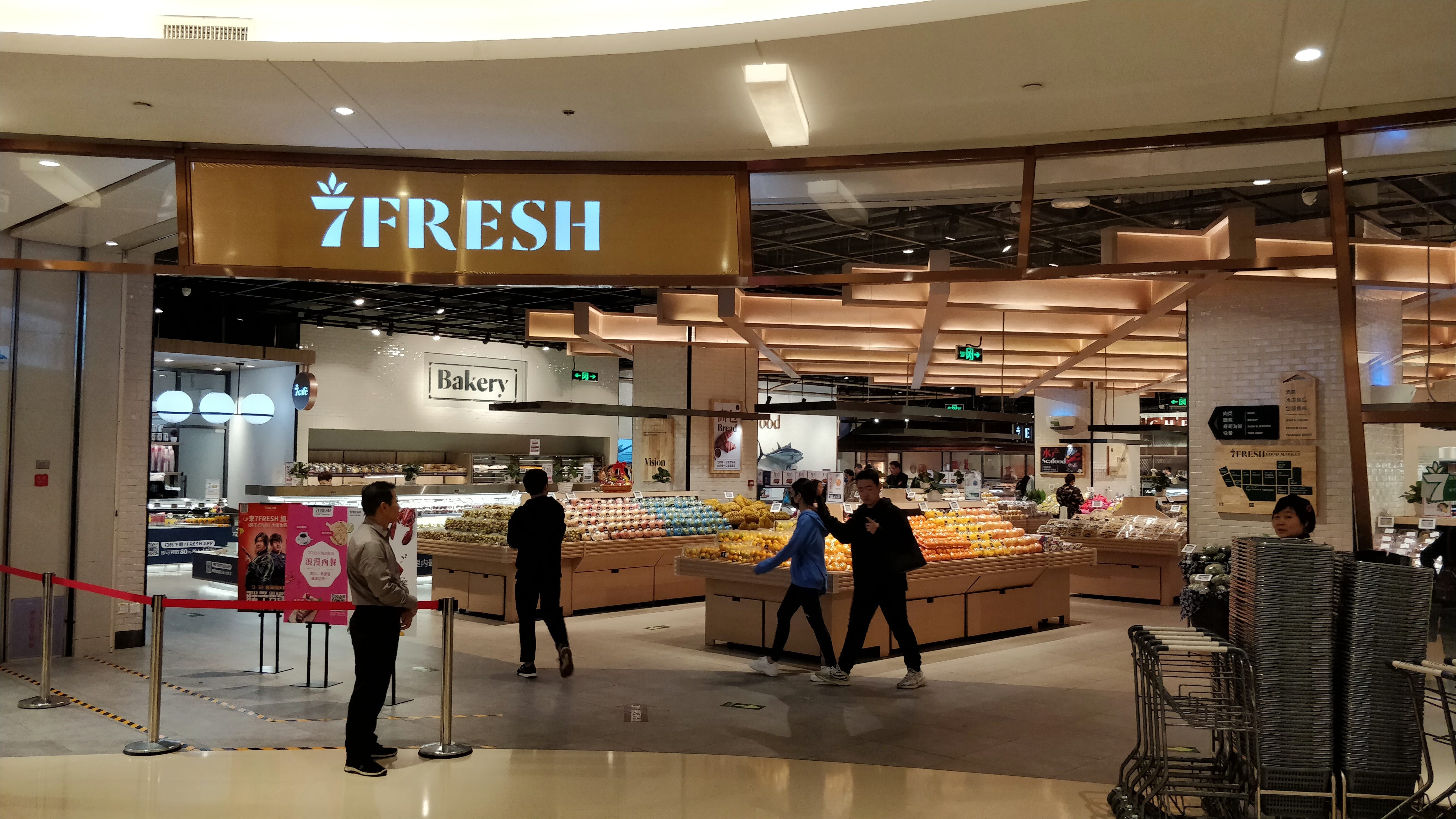
A 7Fresh Supermarket in Wucai Shopping Centre, Beijing (2018)
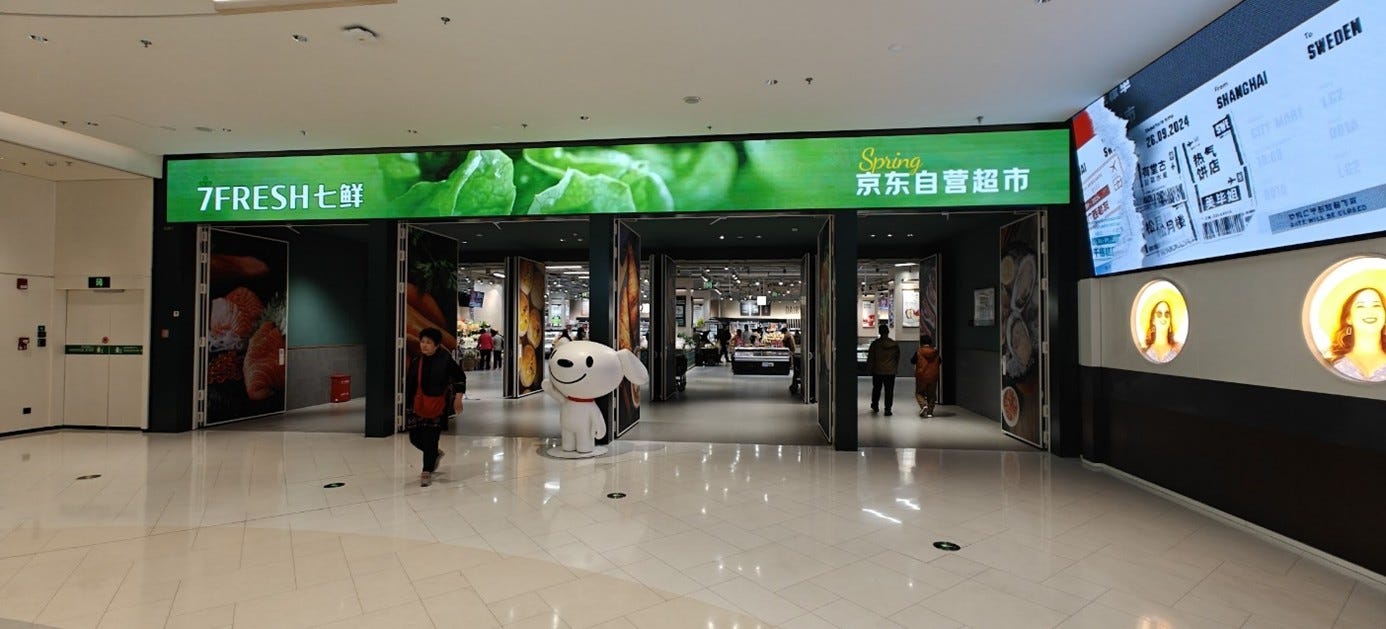
A new 7Fresh in Shanghai (2024).
7Fresh Kitchen
At a media conference on the evening of June 17 2025, Liu Qiangdong (Richard Liu), founder and chairman of JD, said that JD’s foray into meal delivery was meant to lay the groundwork for its underlying supply chain. “JD.com does all its business around the supply chain. If we can achieve a three-way split in the food delivery market, where restaurants don’t need to choose sides, and no platform has the ability to force them to choose one or the other, then the final competition will still come down to who has better costs, lower prices, and better service quality.”
“Today, what everyone sees is our competition with Meituan in the food delivery market, but the underlying logic is actually the fresh food supply chain. That’s what I truly want. Selling food directly to customers will never make money; I want to make money through the supply chain. (..) In a month, as everyone here today will see, our food delivery service will adopt a completely different business model from Meituan's. I’ll keep you in suspense for now; we’ll meet in a month.” [1]
It soon became clear what he was referring to…
In early 2025, JD entered the food delivery business, which we extensively covered. In July 2025, when a fierce war broke out between Meituan and Taobao/Ele.me, JD.com’s food delivery business faced intensified competition, primarily due to Alibaba’s advantages in capital and market share. To address this challenge, JD adopted a strategy of establishing its own kitchens to attract market attention and provide consumers with new options.
In the early days of its entry into the food delivery market, JD.com attempted to attract high-quality merchants through a conventional platform model but encountered challenges. On the one hand, Meituan’s first-mover advantage made it difficult for high-quality merchants to easily abandon their existing interests on the Meituan platform and switch to JD.com’s food delivery platform. On the other hand, JD.com’s relatively low initial user traffic and market awareness limited its appeal to high-quality merchants. [2]
To address this dilemma, JD.com adopted a different approach and entered the high-quality food delivery market. On 20th July 2025, it opened its first 7Fresh Kitchen (七鲜小厨Qixian Xiaochu) in Beijing. The leader of the 7Fresh Kitchen project, Liu Bin, called it “the biggest supply chain model innovation in the catering takeaway industry in the past 15 years.”
Through the innovative 7Fresh Kitchen model, JD sought to circumvent direct competition with Meituan among existing high-quality merchants on the traditional platform model and instead establish its own high-quality food delivery system. JD hoped to leverage its strong supply chain integration capabilities, financial strength, and strict quality control to create a differentiated, high-quality food delivery service, thereby carving out its own niche in the high-quality food delivery market. [2]
Facing quality issues in the food delivery industry, JD.com is seeking to replicate its product quality-control experience and expertise in this sector. By creating its own high-quality food delivery services, JD.com attempts to reshape the industry’s quality standards. This new approach aims to re-establish a quality benchmark, strengthen JD’s brand recognition among consumers, expand its brand influence, and drive its transformation from an e-commerce giant into a comprehensive lifestyle services platform. [2]
7Fresh Kitchen said it aims to be not only a trustworthy, affordable takeout store but also a community pickup canteen that can withstand the test of time in offline traffic. It aims to solve two problems: [4]
Help consumers solve the food safety problems caused by ‘dark kitchens’ and make them delicious, cheap, clean and hygienic through supply chain innovation, so that low-quality restaurants are completely eliminated from the market.
Help merchants who stick to the quality of their restaurants make money, and work with them to sell their signature dishes across the country to obtain sustained good returns.
The first store's average daily orders exceeded 1,000 within a week of launch, and its three-day repurchase rate was 220% higher than the industry average. [5]
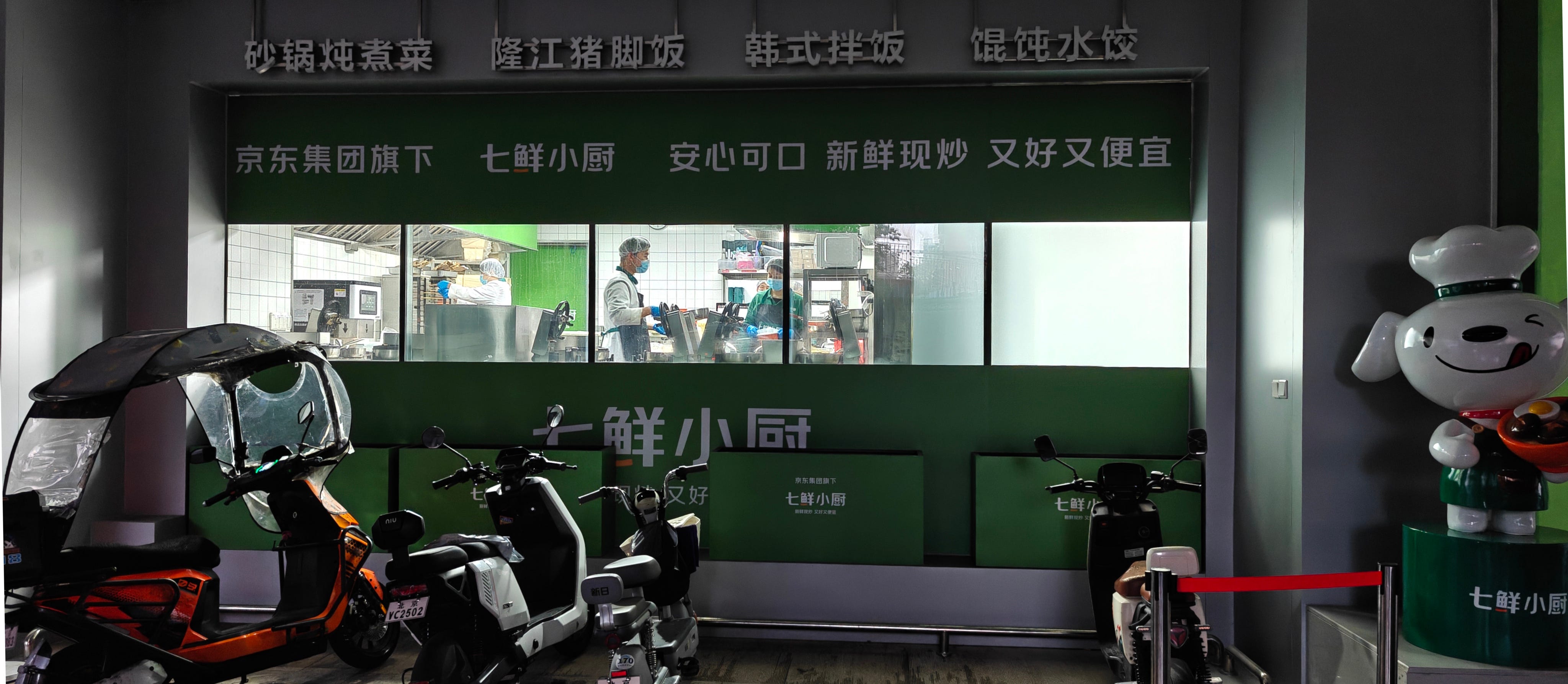
JD’s first 7Fresh Kitchen in Changbao Building (Dongcheng District, Beijing), October 2025.
Dish Partners
On July 22nd, JD.com officially launched its ‘Dish Partner’ recruitment program, announcing a plan to invest over RMB 10 billion over the next three years to build 10,000 7Fresh Kitchens. Furthermore, JD.com said it would invest RMB 1 billion in cash to recruit 1,000 ‘signature dish partners’. [3]
7Fresh Kitchen isn’t a collection of merchant kitchens like Meituan’s Racoon Canteen, which we discussed last week. Instead, it is a self-operated kitchen that prepares dishes in the (subsidised) RMB 10-20 range, developed by third parties. [4] JD positions this new model as a ‘joint quality catering production platform’. JD recruits recipes from catering merchants and brands, and the latter participate in dish development as ‘dish partners’. Chefs and catering chains can provide JD with ‘innovative recipes’, and JD will do the rest. JD is responsible for all aspects of the store’s raw materials, rent, manpower, and other business operations, and both parties share the sales results.
7Fresh Kitchen claims its pioneering ‘dish partnership’ model holds unique appeal. For restaurant brands and chefs, simply providing recipes and participating in R&D, without the burden of operating costs such as opening a restaurant or hiring staff, allows them to share in dish sales. Each dish partner receives a guaranteed minimum share of RMB 1 million, significantly lowering the barrier to entry and encouraging participation from high-quality restaurant operators. This model also enables 7Fresh Kitchen to bring together a wide range of high-quality dishes, enriching its product offerings and satisfying consumers’ diverse tastes. [2]
JD primarily considers influence when selecting chefs or influencers for collaboration. They are willing to provide financial support to influential individuals, such as state-level chefs or well-known internet celebrities. JD may even seek to collaborate with iconic figures such as Huang Laohan from the immensely popular TV Series ‘A Bite of China’. The company doesn’t provide financial support to ordinary or unknown chefs. Funding is primarily used for brand promotion and endorsement partnerships. In this way, JD assesses the potential impact of these collaborations on brand promotion.
While JD claimed that on July 22nd, 7.000 chefs had already signed up to be a partner, the media were sceptical. They questioned if JD wouldn’t run off with the IP of these recipes. However, JD said its goal was to work with outstanding restaurant businesses to regain business from ‘dark kitchens’ that should belong to them. Subsequent dish sales will continue to be shared above the guaranteed RMB 1 million, with no upper limit. [4] Still, with 7,000 applicants, one has to wonder how many dishes 7Fresh Kitchen would offer…
When choosing a location for a store, JD would fully consider the supply situation and locations of their partners nearby and choose more places where ‘dark kitchens’ orders account for a higher proportion instead of partners’ stores and help partners to increase their business instead of snatching existing business. JD also said that, since a meal costs less than RMB 20, the market it was competing in was not the full-service restaurant market with average customer orders of RMB 30-50. [4] This sounded like 7Fresh Kitchen was setting itself up as an alternative to Meituan’s Pinhaofan ‘meal deals’, which would go against JD’s claim of offering ‘high-quality dishes’.
Robot Frying
7Fresh Kitchen uses machine frying to improve efficiency and achieve standardised production, ensuring consistency while preserving each dish’s unique flavours. However, machine frying may have limitations in simulating the cooking techniques and seasoning precision of human chefs. If the flavours of dishes fail to gain widespread consumer acceptance, their market competitiveness will be impacted. Meeting consumers’ demand for diverse, personalised culinary experiences remains a challenge that requires continuous exploration and resolution. [2]
I took the following footage at a 7Fresh Kitchen in Beijing in October 2025.
As all 7Fresh Kitchens have livestreams of their operations, it’s relatively easy to have a look at their operations. I spent some time virtually visiting stores, reviewing different cameras, and came back more concerned than before. A few thoughts:
All the cameras I reviewed, including a store with multiple cameras, are pointed at the cooking robots. But what I’m actually most worried about is the behaviour of the humans, away from the robots.
Some locations I livestreamed did not have the robot cooking anything, even though it was close to lunchtime.
I watched 3 dishes being made, including what appeared to be a relatively simple egg & tomato stir-fry. In the video below, you can see the following:
0:00 – 1:53 – location 1, cleaning after previous dish
1:53 – 6:35 – location 1, preparing dish
6:35 – 7:40 – location 1, cleaning
7:40 – 12:51 – location 2, preparing dish
12:51 – 14:49 – location 2, cleaning
14:49 – 21:52 - location 3, preparing dish
On average, preparing these three stir-fried dishes and a cleaning cycle took more than 7 minutes. This does not include packing for delivery. While one person can operate multiple robots, I wonder how much more efficient this process is, especially when accounting for the robots' costs and maintenance. Based on these estimates, a single robot can complete fewer than 9 dishes per hour. I wonder how many robots one human can operate at a time.
There’s still significant human labour involved, especially during the cleaning cycle.
The cleaning process was the most concerning part. You can see how there is still residue of previous dishes on the robot’s spatulas and how there is spilt food in the area where the trays are put. While a significant amount of water is used to rinse the woks, I wonder how much residue stays behind. I have no doubt that the robots are cleaned more thoroughly during less busy times of the day, but imagine having a serious allergy to an ingredient in the previous dish…
Supply Chain & Quality Control
JD claims to offer all the essential aspects for food delivery: affordability, quality, and safety. The core of 7Fresh Kitchen lies in supply chain restructuring. While restaurant brands or chefs merely provide recipes and participate in R&D, JD manages the entire chain, including site selection, store development, supply chain, and operations. The entire process, from direct sourcing to store pre-processing, is standardized. Combined with transparent kitchens and robotic cooking technology, 7Fresh emphasises live cooking, eliminating pre-prepared dishes. [3]
JD aims to establish a pre-processed vegetable supply chain to address food safety issues and to collaborate with partners to develop standardised dishes better suited to takeout. It aims to reduce the number of times fresh ingredients are handled from farm to restaurant and minimise spoilage through centralised procurement and processing in the central kitchen. [6]
JD.com reports it has a significant advantage in the supply chain. From procurement and transportation to delivery, it will be able to reduce costs across every link in the future. Even if it invests in dish development, food procurement, and hygiene management, it can still offer users very affordable prices. JD claims to have supply-chain scale advantages, and it can provide better food safety. From a user-experience perspective, JD can leverage its supply chain advantages to price its products at very low levels. A high-quality, large-portion rice bowl is priced below RMB 20.
7Fresh Kitchen’s food supply chain is strictly screened, and it selects only major brands and guaranteed suppliers. For condiments, rice, flour, grains, and oil, it leverages JD.com’s existing advantages by partnering with major brands, including COFCO, China Salt, and Wilmar.
JD closely monitors five aspects: supply chain, processing procedures, personnel hygiene, environmental management, and food standards. All supplier information is made public; food ingredients are maintained in a cold chain throughout the process; operators strictly adhere to handwashing and disinfection procedures; and only raw materials that have passed inspection are selected. [7]
For meat and vegetables, supplying factories perform washing, cutting, centralised production, and sealed packaging of ingredients. Compared with the traditional model, 7Fresh Kitchen’s model eliminates in-store washing, cutting, and preparation, reducing the hygiene issues common in traditional restaurants. [4]
JD says its rigorous quality control is embedded in every aspect of 7Fresh Kitchen’s operations. From ingredient sourcing to standardised production processes, 40 high-standard inspections and quarantines throughout the entire process, and regular disinfection inspections in collaboration with professional health management agencies, 7Fresh Kitchen guarantees the quality and safety of its dishes. Furthermore, 7Fresh Kitchen utilises an open kitchen and livestreams from it, allowing consumers to observe the food preparation process (as seen in the video above), strengthening their trust in the quality. [2]
JD chose the open location for the first 7Fresh store intentionally, rather than ‘hiding’ it in a closed residential building. JD was very confident in opening it to everyone for review and inspection. [4] I went there and took some of the photos and videos shared in this report.
In an interview, Liu Bin, head of JD.com’s 7FRESH Kitchen, said, “Innovation is never easy, and this kind of disruptive innovation must have many shortcomings when it first comes out. We are also very willing to accept supervision and suggestions from all walks of life and sincerely hope to work with everyone to do a good job in this matter, so that users can eat better and merchants can earn more.” [4]
Fulfillment
Orders can be placed online for delivery or pickup. Delivery within a 3-kilometre radius will be handled through JD Takeaway, but at launch, JD said it hadn’t ruled out making its service available on competitors’ platforms in the future. [4] This already occurred on October 14th 2025, when 7Fresh Kitchen became available on Meituan Waimai and Taobao Instant Commerce. [8] Indeed, when I visited one of the 7Fresh Kitchen locations in October, there were pickup shelves for all major delivery platforms (red = JD, blue = Ele.me, yellow = Meituan).
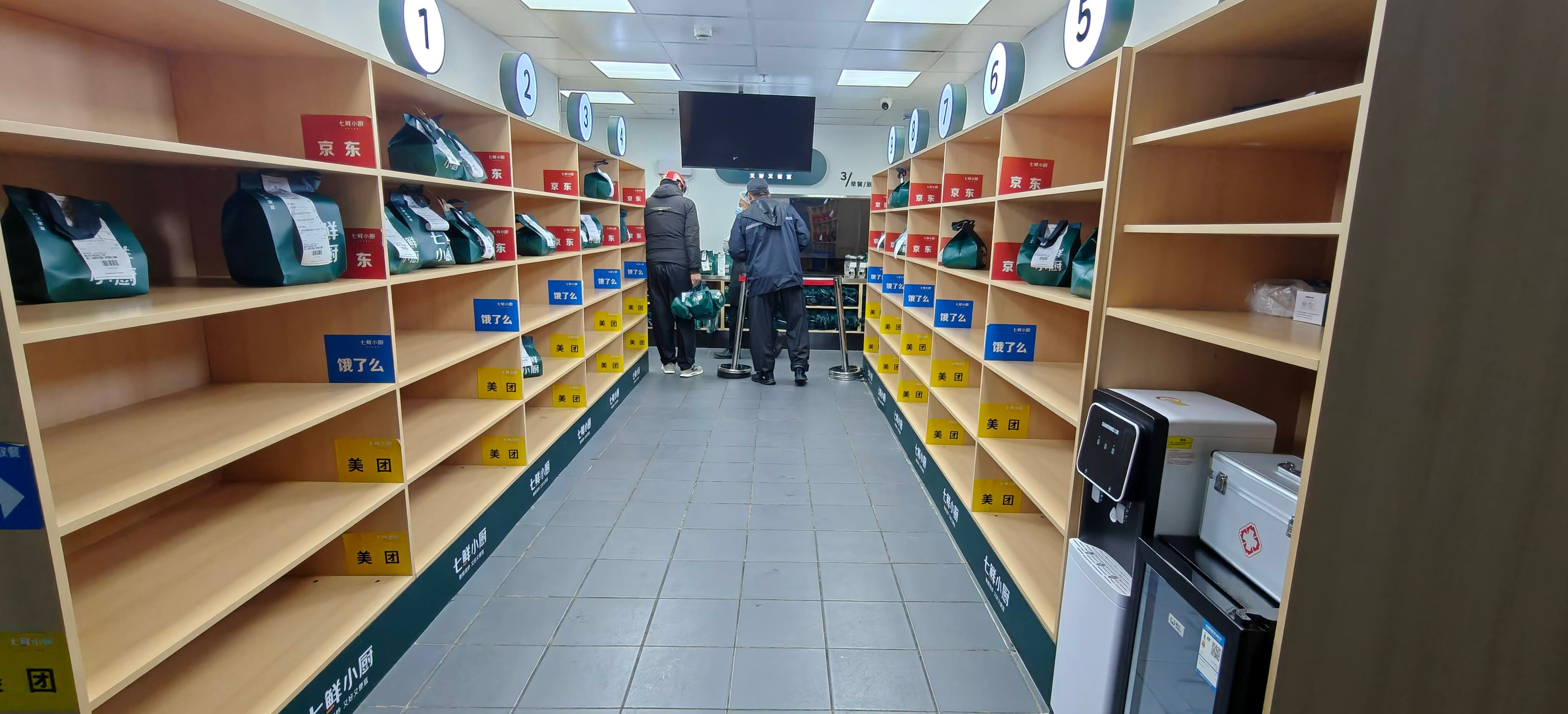
Pick-up orders for various delivery platforms (JD, Eleme and Meituan). Note how most orders are for JD Takeout. (October 2025, Beijing)
By October, 7Fresh Kitchen’s Changbao Building store in Beijing had already exceeded 2,000 monthly orders on Taobao Instant Commerce and surpassed 400 monthly orders on Meituan Waimai. Each player has their own reasons for this cooperation. 7Fresh Kitchen needs user traffic; Meituan needs to improve the service quality offered by its merchants; and Taobao Instant Commerce can capitalise on the opportunity to expand its business ecosystem. [8]
7Fresh Kitchen has also become a key entry point for JD’s hotel and tourism business in its ‘AI/Robot + Food + Accommodation’ initiative. Hotel dining areas often experience low space utilisation and limited revenue. JD hopes to improve efficiency and increase revenue by introducing 7Fresh Kitchen into hotels. On September 9th 2025, JD and Jinjiang Hotels reached a strategic partnership, with 7Fresh Kitchen launching in October at select Jinjiang Inn, Magnolia, and 7 Days Inn hotels in Beijing. [9]
In December 2025, it was reported that 7Fresh Kitchen, in conjunction with Longtan Street in Dongcheng District, Beijing, had built a full-chain service of ‘online ordering - offline delivery - financial payment’. Together, they have created a ‘15-minute elderly meal assistance service circle’ to deliver meals to homes or to service nodes such as elderly care stations and smart meal lockers in the street. [10]
Assessment of 7Fresh Kitchen
The assessment of 7Fresh Kitchen below was conducted in July 2025, shortly after its launch, by a former JD 7Fresh Supply Chain Efficiency Operations Expert.
Become a paid subscriber to read the full article.
Products
7Fresh Kitchen currently primarily offers beef, sirloin, and chicken rice dishes, with its product selection driven by popular items on food delivery platforms. Future plans include introducing more stir-fries, premium dishes, and local specialities. In addition to standard items such as beverages, each restaurant offers approximately nine dishes; if each dish is offered in two variations, the total could reach 20.
The dishes are primarily prepared using automated equipment rather than by on-site chefs. Pricing: stir-fries range from RMB 30 to 34, and rice bowls from RMB 18 to 24. According to the latest payment data, the average purchase price is between RMB 21 and 22 (including delivery costs). Food delivery platforms are also offering promotions, such as 5% off meal card top-ups, along with other supportive measures.
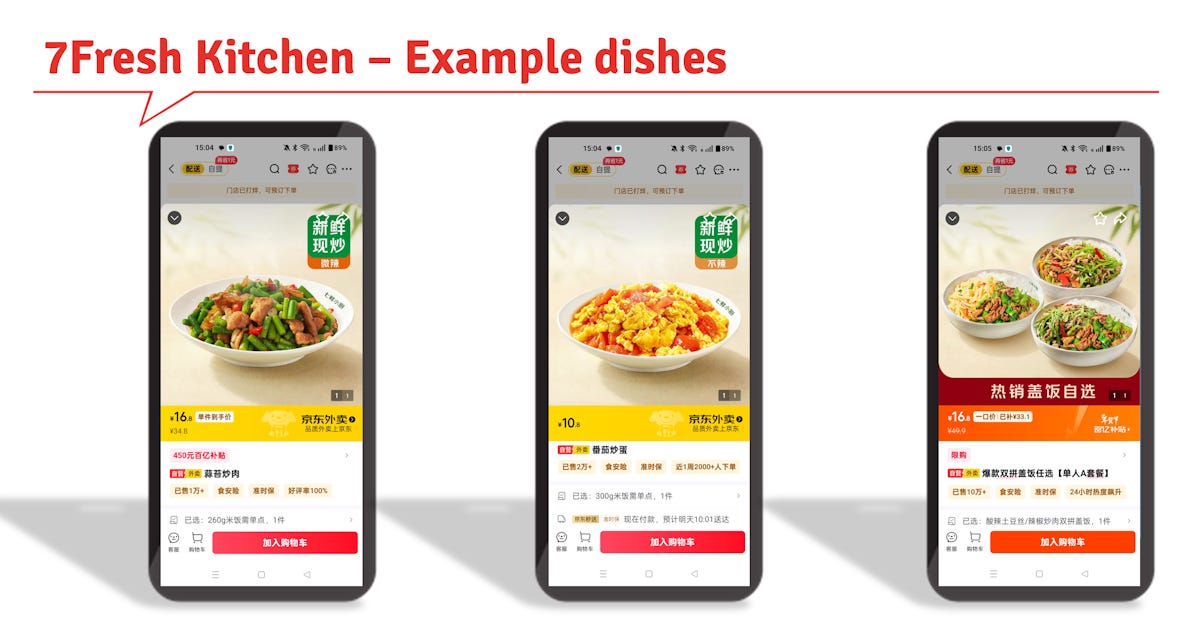
[Note: at the time of writing, the number of SKUs had grown significantly. From a location near Dongsi, Beijing, I found 140 food SKUs across 19 categories in the JD Miao Song app, though a significant number were combos. The nearest 7Fresh Kitchen was 2.1 km away, and delivery would take up to 23 minutes. While there were several discounted dishes in the RMB 10-20 range, there were also various dishes above RMB 30.]
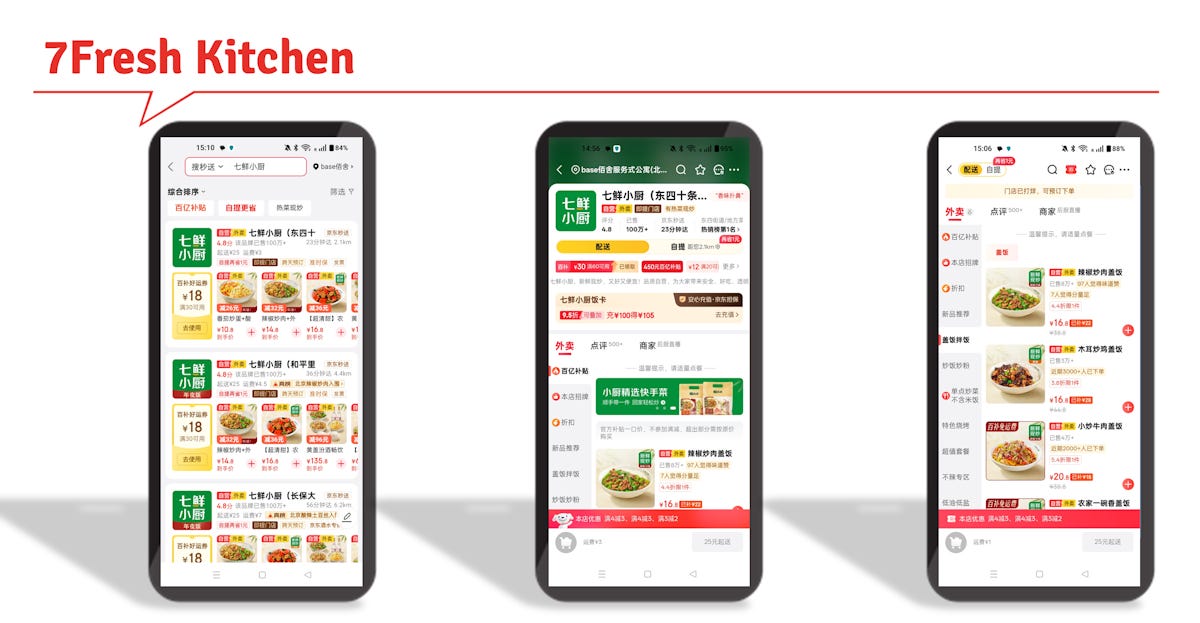
Left: selecting a 7Fresh Kitchen Location. Right: selecting categories and dishes.
Supply Chain & Zhangguibao
7Fresh Kitchen currently has a supply chain partnership with 7Fresh Supermarket, but plans to establish its own independent supply chain system in the future. Currently, 7Fresh Kitchen serves more like a testing ground for JD’s supply chain operations. In the future, if more restaurants choose JD’s supply chain, 7Fresh Kitchen’s model could play a catalytic role.
JD Takeout partners with approximately 2 million restaurants, allowing users to place orders through its Zhangguibao (掌柜宝, literally ‘Shopkeepers Treasure’), a B2B ordering platform and merchant service tool launched by JD, mainly for offline small and medium-sized retailers. The Zhangguibao program launched around 2018 or 2019. Initially, it employed a high-cost strategy, deploying specialists to visit customers daily and provide guidance, even in smaller cities. Zhangguibao’s primary customer base is small supermarkets and convenience stores, typically purchasing beverages and snacks for a few hundred yuan each time.
Zhangguibao primarily provides rice, noodles, oil, and various condiments, while fresh produce is sourced from local suppliers. JD provides logistics services, while suppliers are responsible for the goods, enabling same-day delivery. Due to lower profit margins, JD has chosen not to enter the primary agricultural products sector directly. Currently, JD.com engages local suppliers and wholesalers to supply through Zhangguibao, and once the business reaches a certain scale, JD handles distribution.
If Zhangguibao expands into the restaurant industry, the large number of stores will require greater reliance on service providers for initial training. The service provider base will be responsible for instructing merchants on how to use Zhangguibao and providing them with relevant promotional information. In the future, merchants can obtain certification or receive commission discounts by purchasing through JD.com’s designated channels. However, limited profit margins make it difficult for Zhangguibao to offer additional incentives.
In contrast, 7Fresh Kitchen’s model is different. 7Fresh stores handle all food preparation, including fish processing. Each store has a limited menu, catering to the daily needs of four to five small kitchens. 7Fresh uses high-quality ingredients that differ from those used by typical restaurants. Currently, 7Fresh primarily recruits suppliers of fresh agricultural products from wholesalers and large wet market vendors. These different models have impacted the development of their respective businesses. JD.com’s Zhangguibao model allows it to expand rapidly and offer a variety of products, while 7Fresh Kitchen’s model focuses more on ingredient quality and localised operations.
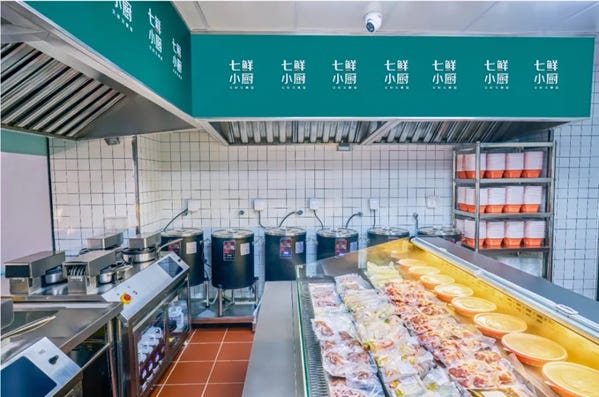
Picture source: JD.com
Expansion
JD.com operates 7Fresh Kitchen entirely in-house, a departure from Meituan’s ‘Raccoon Canteen’ model. This fully in-house approach has improved JD.com’s store opening efficiency. However, JD.com remains cautious about its expansion plans. In the second half of 2025, JD.com will not undertake large-scale expansion, instead focusing on improving the online order-processing capabilities of its existing stores. This strategy reflects JD’s emphasis on quality and efficiency rather than sheer volume in its expansion.
In July 2025, three 7Fresh Kitchen stores were expected to be operational in Beijing: Guangqumen, Yizhuang (near JD.com headquarters), and the Haidian Shangdi Science and Technology Park. While the initial model stores were located within 7Fresh supermarkets, JD.com has increasingly opted for standalone commercial properties, allowing for greater location flexibility.
Model stores for this new restaurant model require significant investment, especially in city centres, where rents are very high. JD.com plans to initially utilise existing resources to open stores and will gradually open franchise opportunities, with implementation expected to begin in the fourth quarter of 2025. Incentives, such as deposit waivers, will be offered.
JD.com has made some adjustments to its expansion plans for 7Fresh Kitchen. While the original plan was to open 500 stores by the end of 2025, achieving this goal is unlikely as it was not included in the key performance indicators. Based on current progress [in July 2025], the number of stores expected to open by the end of 2025 is projected to be close to 200, which is a strong achievement.
[Note: the actual number of stores in Beijing by the end of 2025 was only 30, but JD announced plans for expansion to three core regions: the Beijing- Tianjin-Hebei region, the Yangtze River Delta, and the Pearl River Delta, covering key cities such as Beijing, Tianjin, Shanghai, Suzhou, Hangzhou, Guangzhou, Shenzhen, Foshan, Dongguan, Zhuhai, and Zhongshan.] [14]
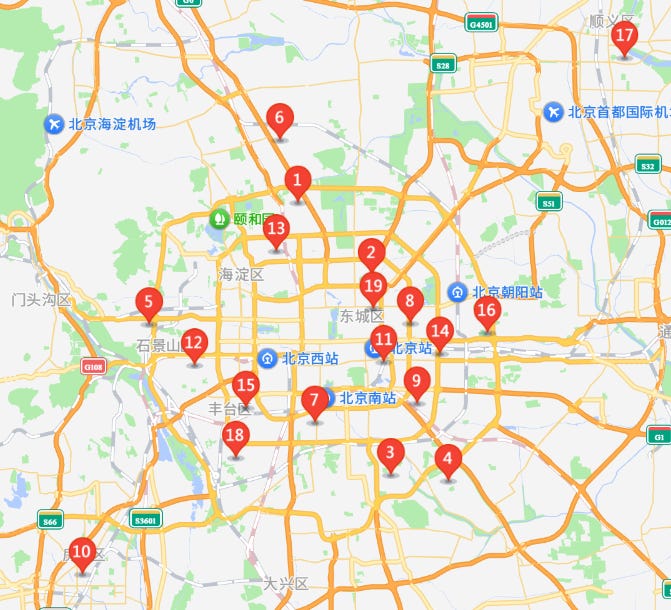
At the time of writing, Amap showed 26 7Fresh Kitchen locations in Beijing, some of which are shown on this map.
JD.com is actively expanding its food delivery business, with 7Fresh Kitchen being a key project. According to the analysis, 7Fresh Kitchen’s orders may account for one-tenth of JD.com’s total food delivery orders. In terms of investment, 7Fresh Kitchen may invest up to RMB 2 billion annually, which is less than 10% of JD.com’s total food delivery investment. To reach this RMB 2 billion investment cap, 7Fresh Kitchen would need to open at least 3,000 stores.
7Fresh Kitchen is not currently open to franchising. Regarding resource management, 7Fresh Kitchen currently shares marketing resources with JD.com and does not yet have an independent resource management system. Furthermore, 7Fresh Kitchen does not currently receive any special financial support.
JD is considering adjusting its investment strategy to improve capital efficiency. If the franchise model is successfully introduced and the supply chain becomes profitable, annual investment is expected to be reduced by half, to approximately RMB 1 billion. Of this RMB 1 billion investment, approximately 60% will be allocated to logistics, primarily to subsidise delivery costs. The specific investment amount and support policies will not be fixed but will be adjusted dynamically based on actual store development progress and supply chain profitability. This flexible strategy will help the company continuously optimise capital efficiency while ensuring business growth.
While 7Fresh Kitchen currently focuses primarily on delivery, it may expand into dine-in services in the future, particularly in second- and third-tier cities.
Economics
The demo stores place strong emphasis on data analysis, including daily order volume. Each store will initially employ five employees, with total salary costs of RMB 30,000. In addition, each store will be equipped with four cooking robots, with a total cost of RMB 60,000 and a lifespan of three to four years. Operating costs are approximately RMB 25,000 per month, with stores under 100 square meters. The headquarters will cover renovation costs of RMB 60,000-70,000. The initial investment is approximately RMB 200,000, covering hardware, salaries, equipment, and renovations. Future expenses will primarily include rent and salaries. This model presents significant operational and cost differences compared to traditional restaurants, particularly in automation and data analytics.
In July, 7Fresh Kitchen’s single-store gross profit margin was slightly below the industry average of 30%. Specifically, the gross profit margin on merchandise is 28%, while the net profit margin is approximately 8%. However, once daily orders reach 700-800, the profit margin can be increased to 10%.
7Fresh Kitchen is expected to account for up to 10% of orders on JD Takeout. Assuming JD Takeout receives 20 million orders per day, this percentage could be reached when 10,000 7Fresh Kitchen stores are opened nationwide. While achieving the short-term goal of 10,000 stores requires further verification, opening 2,000 to 5,000 stores within three years is feasible. The average daily revenue per store is approximately RMB 10,000, based on an order value of RMB 20 and 600 orders per day. Supply chain costs range from approximately RMB 5,000 to 6,000, making large-scale expansion difficult.
Challenges
The profitability of this model relies heavily on rapid store expansion. JD.com announced an ambitious plan to open 10,000 new stores over the next three years, but this goal is fraught with challenges. Even a brand like KFC, with over a decade of experience in the Chinese market, only has approximately 12,000 stores. This ambitious plan reflects more of a vision from top management than a practical strategy.
The asset-heavy model is unlikely to fundamentally address the problems JD faces in the food delivery business. For example, in Beijing, 7Fresh Kitchen stores can handle up to 800 orders per day, averaging 600. If 10,000 stores were established nationwide, this would generate 6 million orders per day, representing approximately 30% of JD.com’s existing food delivery business. However, given the potential for lower efficiency at some stores, this asset-heavy model will only increase order volume in the short term and will not fundamentally address the long-term challenges.
JD.com launched a program to recruit food delivery partners, but it was primarily for marketing and had limited success. While JD.com is interested in acquiring signature dishes from renowned restaurants, these brands are unlikely to share their core recipes. Furthermore, the recipes offered by newly hired chefs often lack originality, potentially leading to celebrity chef endorsements. Overall, the challenges JD Takeout continues to face remain, and the strategies it has adopted have limited effectiveness.
In the Chinese fast-food sector, JD Takeout’s average order value is approximately RMB 20, making it difficult to introduce high-end dishes. 7Fresh Kitchen doesn’t offer dine-in service, making it difficult to increase the average order value. Furthermore, high-spending groups have limited acceptance of the takeout model. This model, like earlier market players such as Joule Canteen and Panda Star Kitchen, lacks innovation. While JD provides supply chain support, the restaurant industry remains highly risky, and food safety incidents can significantly impact a brand.
Regarding food safety, 7Fresh Kitchen is currently managed by an external company, which may pose certain risks. To address these issues, JD.com has implemented several strategies. First, they prioritise opening 7Fresh Kitchens in areas with existing 7Fresh supermarkets. Second, after the franchise system launches, JD.com will designate certified food suppliers. However, JD had no plans to establish a central kitchen supply chain for 7Fresh Kitchen in 2025.
JD also faces several supply chain challenges in developing its 7Fresh Kitchen business. In cities without physical stores, it needs to build its own supply chain. 7Fresh Kitchen initially relied on supplies from 7Fresh stores, but the needs of these stores differ. Currently, 7Fresh supermarkets do not offer lower-priced produce. JD.com also faces a shortage of suitable suppliers, with existing partners primarily focused on sales.
7Fresh Kitchen has a traffic advantage on food delivery platforms, but there is still room to improve quality control and menu variety. Currently, its product offering is limited to fewer than 10 items, and its robots can prepare only about a dozen dishes, significantly lagging behind traditional human cooking. 7Fresh Kitchen’s future expansion strategy will continue to rely on robots for food preparation.
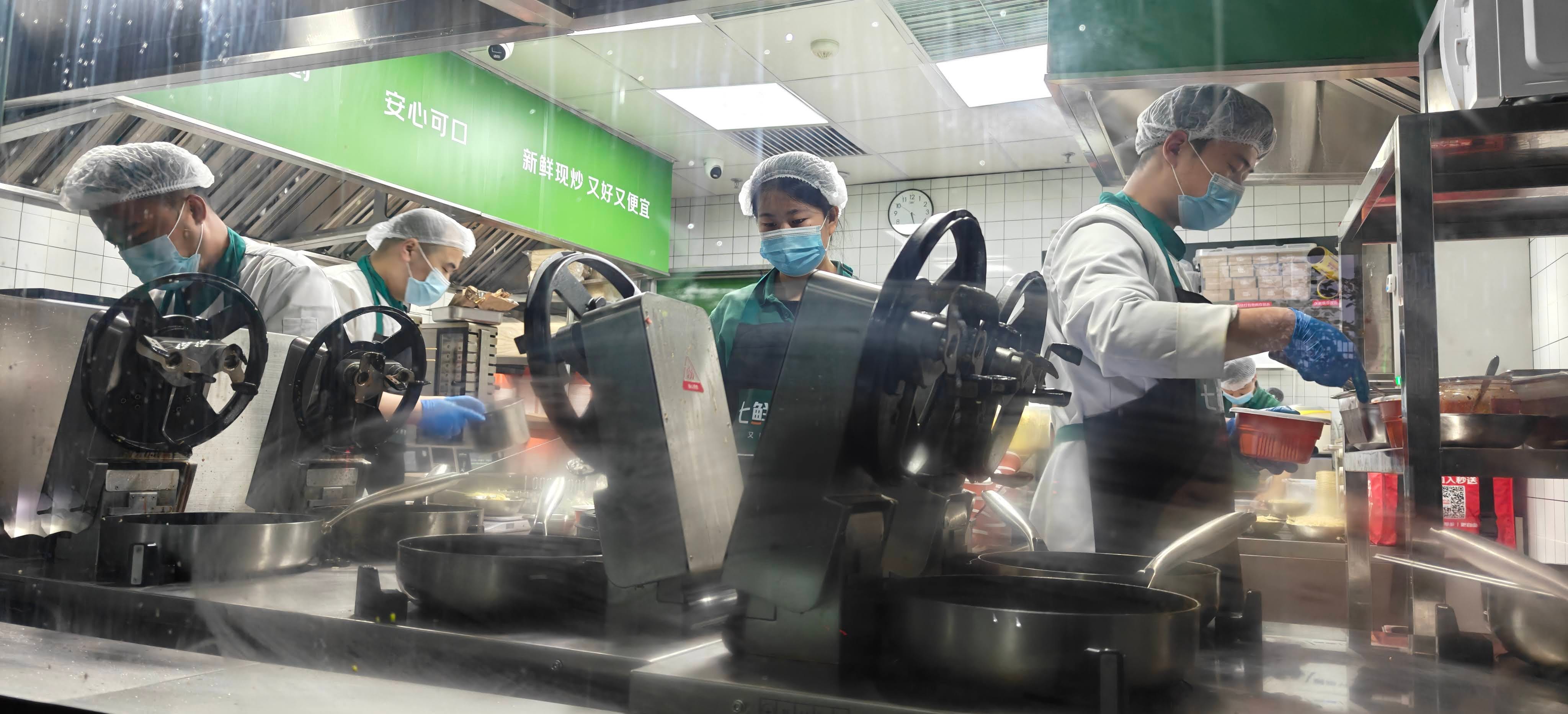
‘Machine Frying’ at a 7Fresh Kitchen.
7Fresk Kitchen’s food partner program focuses on standardising traditional cooking processes. Even if a franchise model is adopted in the future, key dishes will still be produced by machines, and the use of cooking robots is a long-term trend. Despite being prepared by robots, 7Fresh Kitchen’s dishes generally receive low reviews, with a noticeable gap compared to human-cooked dishes, which has become a significant shortcoming. Although JD.com has stated that it does not offer pre-made meals, 7Fresh Kitchen’s reliance on robots may affect consumer perceptions of its quality.
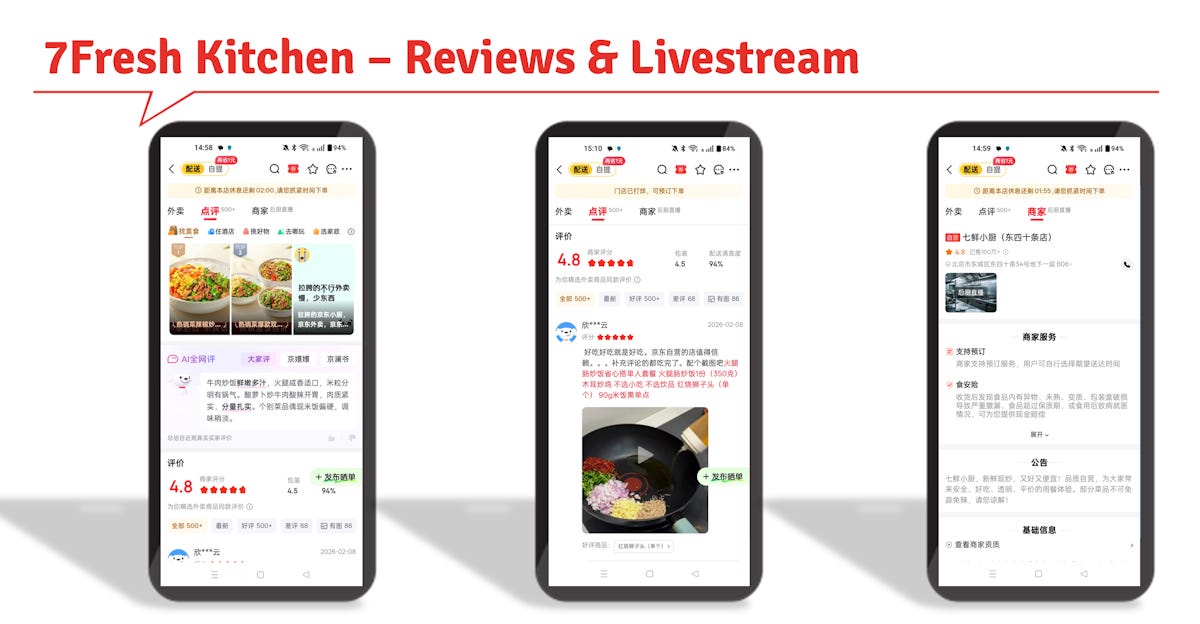
[Note: Just like 7Fresh Kitchen had improved its number of SKUs since July, the reviews also seemed to be much better at the time of writing. The 7Fresh Kitchen nearest Dongsi, Beijing, received an average rating of 4.8 out of 5 stars and had 500+ positive and 68 negative reviews on the JD Miao Song app. The app also allowed me to check into the livestream from the kitchen, but the cameras at all stores were just pointing at a machine.]
7Fresh Kitchen utilises its own kitchen and prioritises its own products, a model first among international food delivery platforms. However, a major challenge facing the restaurant industry is that customers quickly tire of the same dishes; for example, eating the same dish for 30 consecutive days can lead to customer churn. Furthermore, 7Fresh Kitchen’s automated cooking equipment struggles to keep up with the frequent, around-the-clock menu updates, which have weakened its competitive position.
If JD.com allows 7Fresh Kitchen franchises in the future, quality management will become a major challenge. Currently, there’s no fully effective quality assurance method in the industry. JD.com can manage the situation post hoc through user ratings and negative review tracking, but preemptive control relies primarily on supply chain management. JD.com can mitigate food safety risks by integrating supply chain management, including management of raw materials, condiments, equipment, and processing times for semi-finished products.
Some lower-priced restaurant brands often face food safety issues related to raw materials, such as the use of substandard ingredients. If JD.com can implement closed-loop management of 7Fresh Kitchen’s store purchase and sales data, data monitoring can identify anomalies and further mitigate food safety risks. However, while high deposits and strict supply chain management can mitigate franchise risks to some extent, they cannot fully prevent food safety issues.
The assessment by the former JD 7Fresh Supply Chain Efficiency Operations Expert ends here.
7Fresh Kitchen and 7Fresh Food Mall
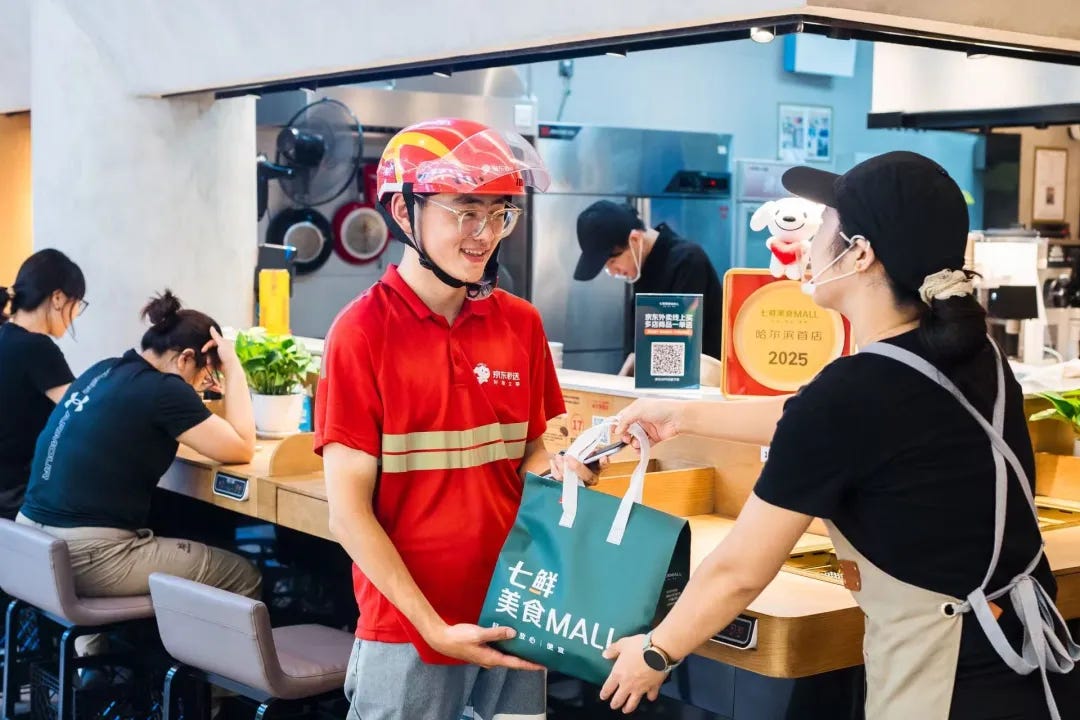
Picture source: JD.com
In June 2025, JD.com opened its first 7Fresh Food Mall (七鲜美食MALL, Qixian Meishi Mall) in Harbin. This was JD’s first major venture into the physical restaurant sector, supporting more than 30 catering brands. The food mall launched an innovative dual-mode operation, allowing consumers to dine in at the store or order online for delivery. 7Fresh Food Mall claims to offer high-quality dining that withstands the test of offline customers, thanks to a strict quality control system. The latter includes:
strict screening of ‘quality food and beverages’ offered by merchants
creating a transparent kitchen and requiring all merchants to configure ‘back kitchen live broadcast’
assisting in product research and development, providing traffic support and supply chain innovation and integration, helping settled merchants to achieve a healthy operation that ‘saves effort and makes money’, so that they can focus more on improving food quality and service experience. [11]
A 7Fresh Food Mall manager said: “We hope to offer a variety of catering formats in the ratio of merchants, including time-honoured brands, intangible cultural heritage foods, and special snacks that locals have been eating since childhood, as well as ‘Internet celebrity brands’ that are sought after by young people, to meet the diverse needs of different groups of people.”
“7Fresh Food Mall is the first food mall in China to implement 100% live broadcast of back-kitchen operations. It requires every merchant to configure ‘back-kitchen live broadcast’ so that consumers can view the back-kitchen situation in real time, making food processing, cooking process, and hygiene control transparent, giving consumers peace of mind.”
“The 7Fresh Food Mall focuses on improving the efficiency of the supply chain, mainly in terms of digital technology empowerment, and improves the efficiency of merchants in serving and picking food through investments in hardware and systems. Subsequently, improvements in supply chain efficiency will extend to areas such as food traceability and rural revitalisation. We hope to completely solve food safety problems and improve the growth difficulties of merchants through supply chain innovation and efficiency improvement.” [11]
As Raccoon Canteen does, 7Fresh Food Mall prioritises first-tier, emerging first-tier, and strong second-tier cities for location selection, favouring core business districts with convenient transportation. The mall promises to conduct market research, analyse user profiles, and identify potential areas to avoid direct competition with similar food malls, instead creating differentiated advantages. [11]
The innovative ‘select one order across stores’ aggregation function that Raccoon Canteen also applies is very popular among consumers. More than half of 7Fresh Food Mall's takeout customers use this feature, which improves the ordering experience and increases collaborative orders for merchants. [11]
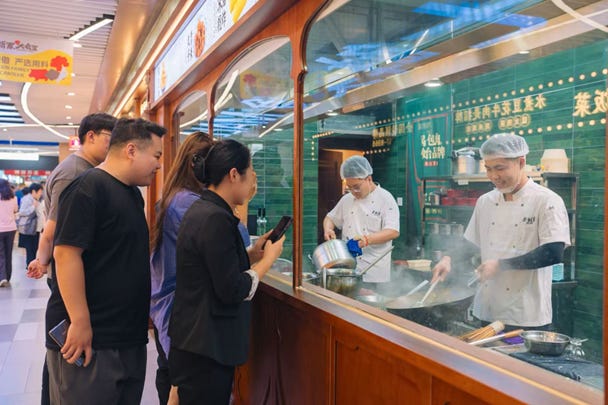
Picture source: Linkshop [11]
To efficiently integrate more than 30 brands and achieve smooth cross-store selection and instant delivery, 7Fresh Food Mall has built a systematic solution from three dimensions: [11]
Menu optimisation. Each merchant and each product has different delivery times, which can lead to waiting times. 7Fresh Food Mall has partnered with catering providers to develop takeout-friendly menu items. This shortens delivery times, improves delivery efficiency, and enables better coordination with other products across stores, thereby enhancing fulfilment efficiency. In the future, 7Fresh Food Mall plans to launch customised packages for different scenarios, encouraging consumers to use this feature more often by setting high starting prices and low average order values.
Optimising transportation capacity. With steady growth in takeout orders, transportation capacity (number of riders) has increased by 30% since the mall first opened. To provide consumers with a more stable fulfilment experience, 7Fresh Food Mall is willing to incur additional costs, such as increasing rider fees during peak periods, to lock in transportation capacity. It also flexibly dispatches surrounding transportation support based on order volume, especially during peak periods.
Order picking is optimised. To improve order collection and delivery efficiency, 7Fresh Food Mall has dedicated full-time order pickers and a dedicated area to assist merchants with order collection, without occupying their business premises. This enables cost reduction and efficiency gains through resource sharing.
7Fresh Food Mall expands its reach by attracting diverse customer groups, including middle-aged and elderly consumers and tourists. The customer base has also gradually expanded beyond the initial base of mainly 40- to 50-year-old residents in the surrounding area to include young people aged 20-40 and even people from the far suburbs. [11]
7Fresh Food Mall planned to expand its business nationwide and, by August 2025, was in discussions with more than 10 cities, including Beijing, Xi’an, Changchun, and Hohhot, to implement a ‘multiple stores per city’ strategy. Starting from the second phase of the project, 7Fresh Kitchen will also join 7Fresh Food Malls to boost JD’s premium food delivery services. [12]
A 7Fresh Food Mall manager said, “The arrival of 7Fresh Kitchen will significantly increase takeout orders. We are currently recruiting ‘dish partners’, introducing chef recipes, and continuously optimising our menu to provide consumers with more and better choices. The combination of 7Fresh Food Mall and 7Fresh Kitchen is not only a complementary business model, but also a key component of JD.com’s local lifestyle ecosystem.” [11]
Linkshop saw three advantages of the presence of a 7Fresh Kitchen in a 7Fresh Food Mall: [11]
Combined scenarios of dine-in and home delivery. After the in-store experience, consumers will repurchase through takeout, and the takeout crowd will also be attracted to offline dining.
Rich product range. The price range for 7Fresh Food Mall is RMB 30-50, and for 7Fresh Kitchen, it is 10-20 yuan, providing users with more daily dining options. In addition, the offerings of 7Fresh Food Mall can be introduced to 7Fresh Kitchen. The quality catering brands and chef recipes of 7Fresh Kitchen can also be offered in offline stores, benefiting more in-store consumers.
Cost optimisation. By opening up the supply chain, 7Fresh can reduce costs and increase efficiency through resource sharing across food procurement, kitchen reuse, and delivery fulfilment.
Racoon Canteen vs 7Fresh Kitchen
While 7Fresh Food Mall shows many similarities with Meituan’s Raccoon Kitchen format (see last week’s part 1), JD.com’s 7Fresh Kitchen differs significantly from Raccoon Kitchen. 7Fresh Kitchen takes a ‘production + platform’ approach: deepening its involvement in food production and redefining product standards by controlling the means of production (kitchens, ingredients). Raccoon Canteen and 7Fresh Food Mall have a ‘platform + service’ approach: strengthening their infrastructure role and empowering merchants with tool-based solutions, shifting the industry’s focus from speed to quality. [2]
At the end of the day, 7Fresh Kitchen and Raccoon Canteen represent two completely different business models. 7Fresh Kitchen combines offline stores and kiosk operations, becoming a key part of JD.com’s 2025-2027 online-offline channel integration strategy, aiming to drive the development of JD’s large-scale retail sector by improving user experience. 7Fresh Kitchen’s advantages lie mainly in its robust product supply chain, strong brand reputation, and effective integration of online and offline channels. This model is similar to the early operating philosophy of Alibaba’s Hema Fresh (Freshippo), which used fresh produce to drive overall retail growth. Raccoon Canteen enables individual consumers to place multi-category orders, allowing them to select items such as hamburgers, milk tea, and fries in a single order, thereby significantly improving shopping satisfaction.
7Fresh Kitchen emphasises the integration of online and offline customer traffic, using physical stores and food stalls to meet customers’ in-store needs and enhance omnichannel sales. Meituan and JD.com have different strategic priorities: Raccoon Canteen prioritises improving merchant efficiency, while 7Fresh Kitchen focuses on improving the consumer experience. 7Fresh Kitchen is one of JD’s many offline experiential consumption projects; similar explorations include JD Health’s physical stores, beauty salons, appliance stores and JD Malls. JD.com is known for its strong in-house capabilities and is exploring various development paths that combine online and offline channels; 7Fresh Kitchen is an experiment in expanding its offline retail presence.
Compared to 7Fresh Kitchen and 7Fresh Food Mall, Meituan’s synergy is relatively weak, mainly because Meituan’s business model is not entirely self-operated. Supply chain procurement through Kuailü, Meituan’s B2B delivery service, is not mandatory; merchants only choose to use it when Kuailü’s prices are not higher than those of other suppliers. Whether this non-mandatory cooperation model can sustain sufficient synergistic advantages over the long term remains uncertain.
Still, there is some synergy between Meituan’s self-operated businesses and Raccoon Canteen, for example, by using categories like Xiaoxiang Chef (Meituan’s private label for its Xiaoxiang business) to meet modular needs. Meituan has already invested in pre-prepared meals through its self-operated businesses, including brands such as Xiaoxiang (Little Elephant) and Kuaile Hou (Happy Monkey) supermarkets. Xiaoxiang Chef’s pre-prepared meal products are already being used in Raccoon Canteen. However, synergy is not as strong as JD.com’s self-operated model, and Meituan has no plans to massively expand its self-operated pre-prepared meals before 2027.
Another key difference lies in the dishes and the stores. The dishes on 7Fresh Kitchen are from partners, not individual stalls or stores. It isn’t a collection of takeaway stores, but a joint catering production platform with two modes: takeaway and self-pickup. 7Fresh Kitchen isn’t a ‘landlord’; it does not rent space and instead recruits franchisees directly, allowing the brand to operate and bear its own profits and losses. Instead, it participates in the food supply chain and opens stores in partnership. [4]
JD.com and Meituan appear to be on different paths, both starting with supply chain, food hygiene, and safety. The former wants to be involved across the entire chain, from supply through production to operations, while the latter aims to serve as ‘infrastructure’. The former aims to build 10,000 7Fresh Kitchens nationwide within three years, while the latter plans to build 1,200 Raccoon Canteens over the same period. [15]
In July 2025, Linkshop analysed the advantages, disadvantages and market opportunities of both initiatives. I have summarised them in the table below. [2]
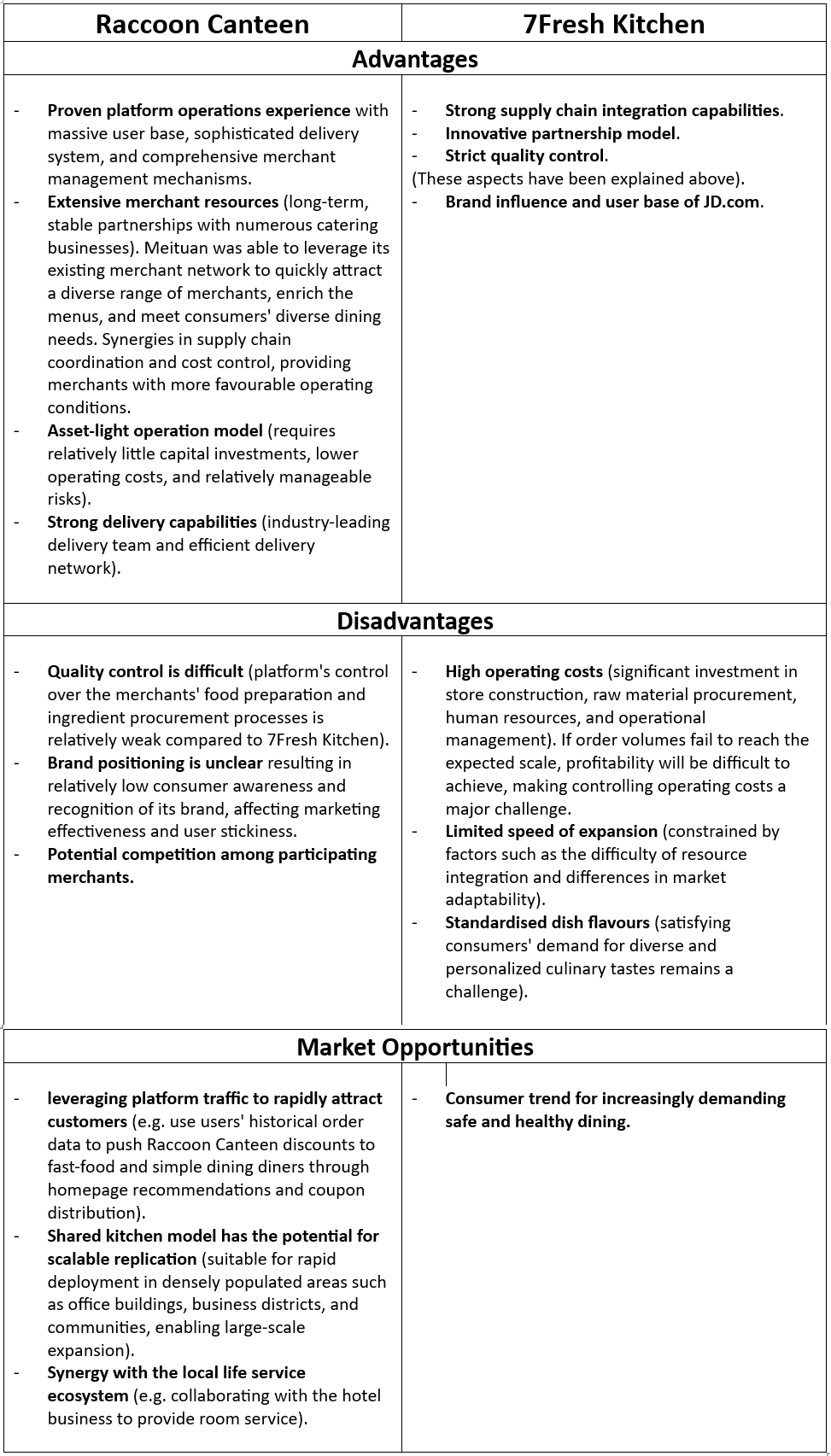
7Fresh Kitchen’s asset-heavy model may constrain its expansion. High initial investments, such as store construction and labour costs, could put profitability under pressure if order volumes fall short of expectations. Furthermore, as it expands into lower-tier markets, it will need to overcome bottlenecks in supply chain coverage and brand awareness. Overall, 7Fresh Kitchen has opportunities in the premium food delivery market segment and is expected to capture a significant share in first-tier cities and some developed second-tier cities. However, it will be difficult to challenge Meituan’s overall market position in the short term. [2]
From a long-term perspective, a Linkshop analyst was more optimistic about JD.com’s 7Fresh Kitchen. While Meituan’s Raccoon Canteen has advantages in traffic and expansion speed, 7Fresh Kitchen’s innovative model is more aligned with industry upgrades. Through supply chain integration and quality control, it addresses the core challenges of the food delivery industry and establishes a competitive advantage. Raccoon Canteen’s asset-light model struggles to address quality-control issues and may face a long-term crisis of consumer trust. As consumers’ emphasis on quality continues to grow, 7Fresh Kitchen’s model is expected to gain greater market acceptance, but this presupposes its survival. [2]
Compared with JD.com, 7Fresh Kitchen’s core strengths lie in its supply chain integration and quality control, while its weakness is the pressure of expansion under an asset-heavy model. Meituan’s Raccoon Canteen’s strengths lie in its traffic volume and asset-light expansion model, while its weakness lies in the difficulty of quality control. Regarding market opportunities, 7Fresh Kitchen has significant potential in the high-quality food delivery market, while Raccoon Canteen can leverage its platform traffic to quickly penetrate the market. [2]
Overall, 7Fresh Kitchen’s model is more innovative and sustainable, and could dominate the high-quality food delivery market in the long term. However, Meituan’s Raccoon Canteen, with its first-mover advantage and traffic base, will maintain strong competitiveness in the short term. In the future, competition in the food delivery industry will focus on comprehensively improving quality, efficiency, and user experience. The collision of these two models will propel the industry into a new stage of development. [2]
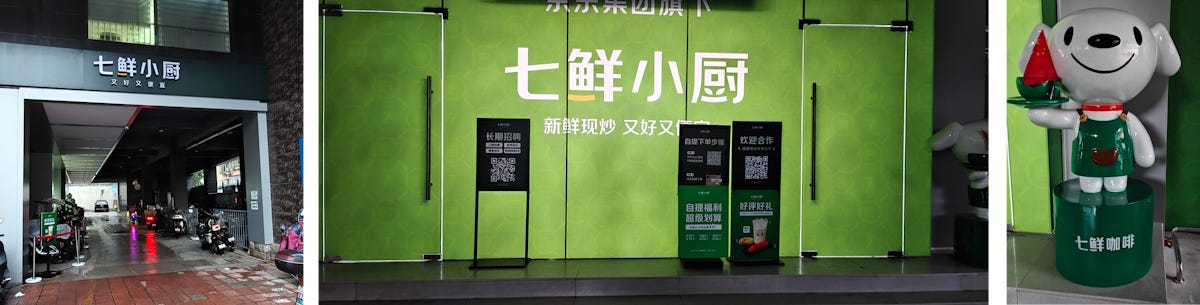
Conclusion
JD.com’s entry into the high-quality food delivery market is both a countermeasure to Meituan’s dominance over quality merchants and a necessary move given its supply chain advantages and ecosystem. In terms of its impact on the industry, 7Fresh Kitchen’s joint-venture model provides small- and medium-sized catering brands with opportunities to overcome geographic constraints, while its strict supply chain management helps improve food safety standards across the industry. Meanwhile, Meituan’s Raccoon Canteen’s shared kitchen model reduces operating costs for businesses and promotes diversification in the catering industry. Together, these two approaches are driving the food delivery industry toward greater efficiency and regulatory compliance. [2]
This exploration of a self-operated food delivery model reflects the urgent need for instant retail platforms to increase the value of each customer. As industry competition intensifies, simply selling goods is no longer enough to sustain growth. Expanding service scenarios and increasing user stickiness have become inevitable options. [13]
JD.com positions 7Fresh Kitchen as a self-operated restaurant, primarily to optimise its supply chain rather than to source from other catering companies. At a media conference in June, JD founder Liu Qiangdong bluntly stated that selling food at the front end might never be profitable for JD; profitability from the supply chain is sufficient. “All of JD.com’s businesses today are 100% centered around the supply chain. Therefore, my entire life, and indeed, the entire JD.com Group, will always be centred around the supply chain. We’re not a so-called diversified company. We may appear to have many subsidiaries, but in reality, all of them serve the supply chain, including the food delivery we offer today, which is also designed to serve the fresh produce supply chain.” [11]
Merchants at 7Fresh Food Mall purchase raw materials on JD.com at source prices and have them delivered to stores via JD Logistics. Not unlike Mixue's business model, this is where JD plans to generate margin. After all, Liu Qiangdong himself said: “Selling food directly to customers will never make money; I want to make money through the supply chain.” Furthermore, if in-store consumers want to purchase related products, such as coffee machines, they can place orders on JD.com for home delivery. [11]
From the same perspective, it remains unclear whether 7Fresh Kitchen will succeed. After all, in that business model, JD is also the merchant. As such, it appears to play a more important role in building trust and traffic within the JD/7Fresh ecosystem and serves as a strong profit centre.
Today, competition in the instant retail space is no longer limited to a single category or region; it has expanded to encompass the construction of an entire consumer ecosystem. Platforms must build a comprehensive consumer ecosystem that encompasses “eating, drinking, entertainment, and shopping,” enabling consumers to seamlessly transition between diverse needs within the same ecosystem. Behind this ecosystem competition lies a comprehensive competition across core capabilities, including data, supply chain, and fulfilment networks. [5]
This is also evident in Pupu Kitchen's strategy (see last week’s part 1). Like 7Fresh Kitchen, Pupu Kitchen is a self-operated delivery catering business, focusing on ‘fresh ingredients, made and served fresh.’ Its pricing is affordable, with a Chinese rice meal typically priced between RMB 13 and 20. This differentiates it from the ‘quality-focused’ approach of 7Fresh Kitchen and the centralised takeout model of Meituan’s Raccoon Canteen and JD’s 7Fresh Food Mall. But despite their different business models, they share similar ambitions. Pupu strengthens regional user loyalty through its ‘supermarket + kitchen’ integration model; Meituan builds comprehensive instant retail capabilities through a three-tiered architecture comprised of a ‘Meituan Shangou (instant commerce) platform + Xiaoxiang self-operated front-end warehouses/stores + Raccoon Canteen’; and JD.com seeks differentiation through its ‘quality dining + zero commission’ strategy. [5]
Still, many questions remain. 7Fresh Kitchen not only delivers food itself but also prepares its own meals, truly entering the restaurant industry. However, catering categories vary greatly. One consumer may prefer stir-fry dishes, while another may prefer rice noodles or noodles. How can 7Fresh Kitchen address this differentiation issue? Furthermore, how can JD.com’s self-operated catering business achieve fair competition for traffic with established merchants? [3]
By the start of 2026, 7Fresh Kitchen was accelerating its nationwide expansion. Following the opening of 30 stores in Beijing in the second half of 2025, and the launch of its first store in Harbin, 7Fresh Kitchen has launched its first stores in Shenzhen, Shanghai, Guangzhou, and other cities. [15]
In August, an expert in the catering industry shared that it is uncertain whether 7Fresh Kitchen’s current operating model will survive. “Although 7Fresh Kitchen has a certain degree of brand recognition in the catering industry, its future development prospects are not optimistic. 7Fresh Kitchen’s development path may mirror JD.com’s convenience stores: securing a place in the market but unlikely to fully dominate it. The future direction and market positioning of 7Fresh Kitchen require further evaluation.”
7Fresh Kitchen has set a goal of ‘10,000 stores in three years’. However, JD has a poor track record of overpromising and underdelivering on its own store targets. Time will tell if its different this time around…
Key Takeaways & Summary Video
The following key takeaways (no pun intended) and summary video (focusing on the automation aspect) were created using Google Notebook LM.
Strategic Shift to Supply Chain: JD.com’s 7Fresh Kitchen is a self-operated model designed to leverage and strengthen JD’s fresh food supply chain rather than focusing solely on front-end meal-delivery profits. 7Fresh Kitchen currently serves as a strategic testing ground for JD’s fresh food supply chain operations, with the long-term goal of establishing an independent supply chain system separate from its supermarkets.
Innovative “Dish Partner” Model: JD recruits recipes from established chefs and brands, providing them a guaranteed minimum share of RMB 1 million while JD manages all operational costs, rent, and labour. However, a former JD manager said this was more of a marketing campaign than a true strategy.
Omnichannel Distribution: While operated by JD, the kitchens offer products through competitor platforms, including Meituan Waimai and Taobao Instant Commerce, to maximise user traffic.
Heavy Reliance on Automation: To ensure standardised production and consistency, the kitchens utilise cooking robots, while human labour remains a significant part of preparation and cleaning.
Asset-Heavy Expansion: Unlike Meituan’s asset-light “Raccoon Canteen” platform model, 7Fresh Kitchen is asset-heavy, requiring significant investment in physical store construction and equipment. Each store requires a significant upfront investment of approximately RMB 200,000, covering hardware, renovations, and the four cooking robots required for the automated setup.
Ecosystem Integration: The kitchens are being integrated into hotels (like Jinjiang Inn) and “7Fresh Food Malls” to improve space utilisation and provide a 15-minute meal service circle for communities.
Quality Control via Transparency: To build consumer trust, JD utilises open kitchens and 24/7 livestreams of their operations, allowing customers to monitor food safety and machine-frying processes.
Tight Profit Margins: The model operates on thin margins; as of July 2025, the gross profit margin was 28%, and the net profit margin was approximately 8%, rising to 10% only when a store reaches 700–800 daily orders.
Franchise Risks: While JD plans to eventually open franchise opportunities to accelerate growth, experts warn that quality control and food safety will become major challenges without a centralised kitchen system.
Ambitious Growth Targets: JD has set a goal of opening 10,000 stores within three years; however, progress in late 2025 indicated a slower pace than initially projected. Although JD announced a vision for 10,000 stores in three years, the assessment labels it “more of a vision than a practical strategy,” noting that actual store counts in Beijing (30) fell far short of the original year-end 500-store target.
Sources
The information in this report is compiled from exclusive expert interviews within the Six Degrees Intelligence network, augmented with insights from the articles below.
Images by Tech Buzz China’s Ed Sander, unless stated otherwise. These images may not be reproduced without Tech Buzz China’s prior consent.
[1] 2025-06-17 Latepost [2] 2025-07-31 Linkshop [3] 2025-08-19 Linkshop [4] 2025-07-22 36Kr [5] 2025-09-23 Linkshop [6] 2025-12-21 Latepost [7] 2026-01-31 老张聊零售 [8] 2025-10-14 Yicai [9] 2025-09-16 36Kr [10] 2025-12-13 中国连锁经营协会 [11] 2025-08-19 Linkshop [12] 2025-08-21 HKUST [13] 2025-09-28 Linkshop [14] 2025-12-29 Sina Finance [15] 2026-01-29 HKUST