


Content
Introduction
Since the end of 2022, Tech Buzz China has published nine reports on Temu. When reports became more frequent, we started the Temu Watch series. We planned to update you every quarter with one or more publications in consecutive weeks.
As the developments around Temu accelerate, the frequency and quality of the source material that becomes available to us through our partner, Six Degrees Intelligence, also increases. In the past few weeks, we have gained access to expert interviews that have revealed fascinating, maybe even explosive, new details about Temu’s operation.
Instead of postponing the publication of this information until the next Temu Watch, which we would typically have planned in February 2025, we have decided to publish an extra report on top of our regular two-week publication schedule as a ‘belated Christmas gift’ for our paid subscribers.
This report will share some stunning GMV targets that Temu has set itself (including for third-party platform business), an update on the progress of the semi-managed model, and information on how Temu is now even adjusting its original fully managed model. It will also give insights into how it plans to deal with potential US tariffs under the new Trump administration.
After having written about Temu for 2 years, I thought I’d seen it all. Still, some of this report’s revelations even left me speechless and showed the incredible agility of the Pinduoduo company. I was recently interviewed for a German business publication, and the journalist concluded that Temu’s best days might be behind it. This was based on old, incomplete data, and I think the details in this report show that the exact opposite might be true. Dismissing and underestimating Temu should be done at one’s own risk.
This report is only available to our paid subscribers. We appreciate your support over the years, which has helped us continue our work.
On behalf of the Tech Buzz China team, have a lovely New Year’s Eve and a happy and healthy 2025!
Cheers,
Ed Sander – Research Editor

GMV performance and other statistics
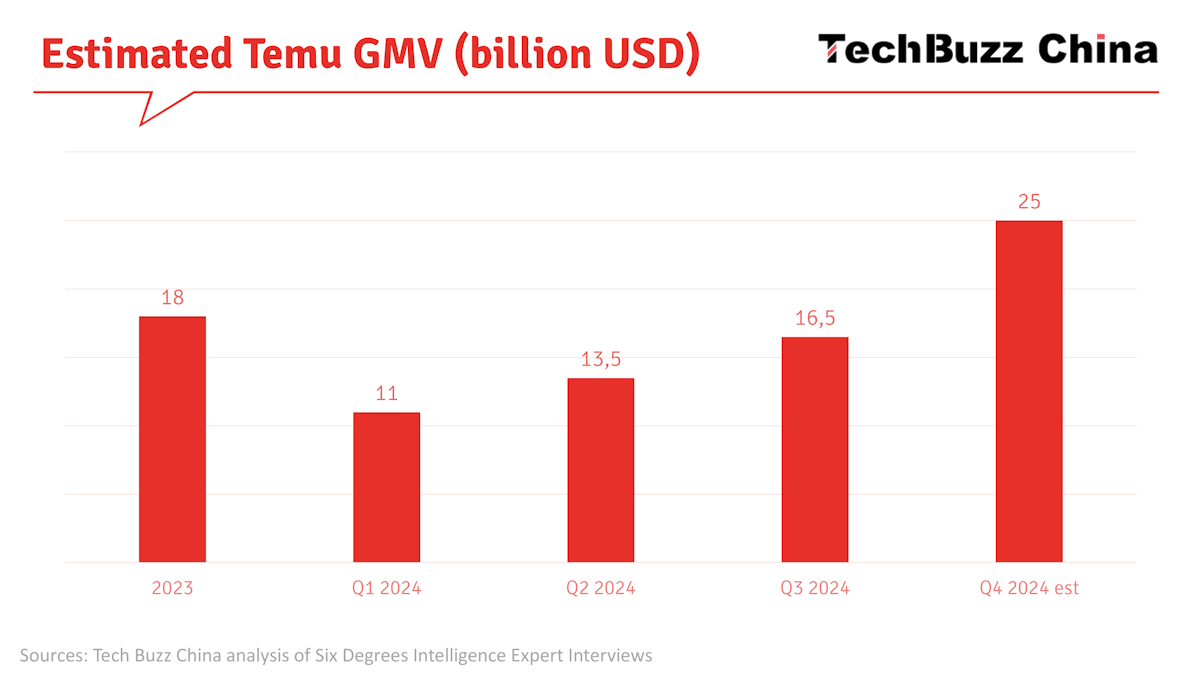
Temu’s GMV exceeded $20 billion ($24.5 billion, according to some estimates) in the first half of the year and about $17 billion in the third quarter.
The company focused on increasing transaction volume in the first half of the year. However, the target was difficult to achieve due to unsatisfactory customer acquisition in the first quarter and the impact of US policies. In the second half of the year, the focus shifted to reducing losses.
Despite continued growth, the third-quarter performance failed to meet expectations, mainly because the development of the semi-managed model encountered difficulties, and the fully managed model also faced serious capacity problems (more on this later). Although the overall performance in the third quarter was slightly lower than expected, Temu performed well in certain specific periods, especially during the Amazon Prime Day event. Business gradually stabilised in the second half of the third quarter, and Temu’s overall target was almost achieved.
The GMV of Q4 is estimated to reach $25 billion. Note, however, that estimations for Temu’s 2024 GMV differ among several sources, all close to Temu. Some experts estimate the total transaction volume to be $54 billion, while the totals above have the GMV at $66 billion. Still, it seems likely that Temu will reach or even surpass its target of $60 billion.
Temu’s average order amount worldwide is $34, which is the actual amount customers pay. Considering various offers of 30%-35%, including cash coupons and discounts, the actual commodity price per order is about $52.
The average monthly shopping frequency was 1.9 times in January 2024 and increased to 2.7 times in November.
Progress of the three sales models
In the fully managed model, merchants deliver goods to Temu warehouses in China, and Temu ships them to local logistics service providers by air freight. In the semi-managed model, launched in March 2024, merchants ship goods to overseas warehouses and are responsible for local last-mile delivery. Temu sets consumer prices in both models and is responsible for marketing and promotions.
In evaluating the effectiveness of different managed models, the current sales rate in the semi-managed model is less than 50%, while in the fully managed model, this ratio is 65%. Sales rate refers to the percentage of inventory you've sold throughout a specific period out of the total amount of product you had at the start of that time. This shows that the fully managed model is more effective in terms of merchandise sales.
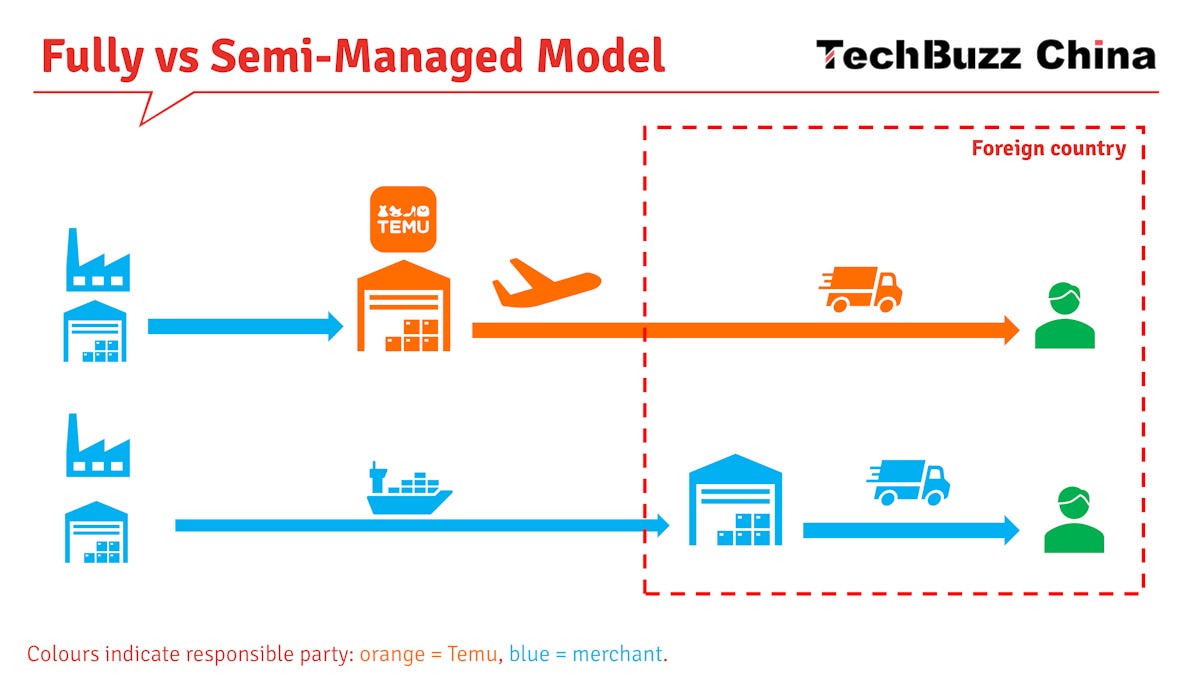
These two models have started to see new iterations.
Fully Managed Model
Regarding logistics, the fully managed platform is now accelerating the construction of a forward warehousing system (see also ‘Logistics’). This means sellers store goods in the main warehouse, and Temu transfers part of the inventory to the forward warehouse based on background data and historical sales.
Direct delivery of goods to overseas warehouses may improve compliance, cost and efficiency. These adjustments may have a multi-faceted impact on Temu’s business operations. First, it is necessary to re-evaluate whether the semi-managed model is suitable for specific national markets or consumer needs. Second, the new organisational structure and logistics system may improve operational efficiency, but it may also take some time to adapt and optimise.
Semi-Managed Model
Temu originally planned to have the semi-hosting model account for 30% of GMV throughout the year. In September, the semi-managed model accounted for 23% of Temu’s GMV.
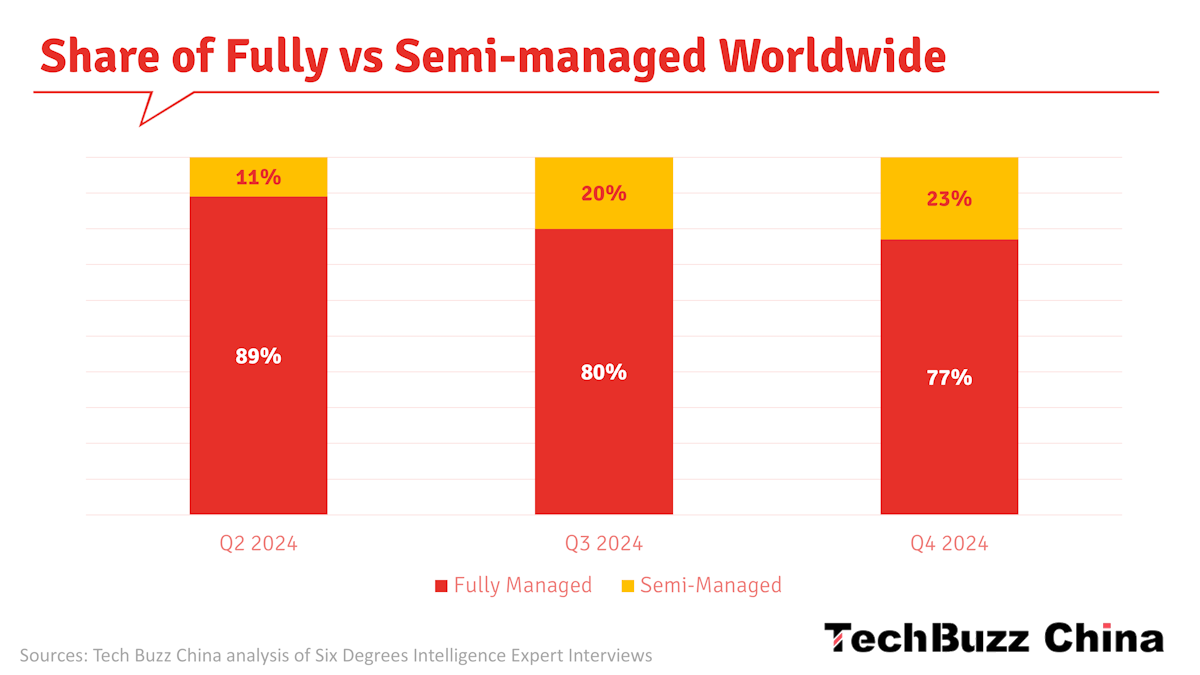
In the third quarter of 2024, the GMV of fully managed merchants was 80%, and that of semi-managed merchants accounted for 20%, while in the second quarter, these two proportions were 89% and 11%, respectively. By November 2024, the proportion of semi-managed rose to 23%. The proportion in December is expected to be similar to that in October and November.
Globally, the US market accounts for more than 60% of semi-managed business. As of September 2024, the semi-managed business in the US market accounted for 25% of its GMV, and this proportion has now risen to 30%. However, after adjusting the light and small item traffic allocation at the end of September, the growth rate of semi-managed merchants was affected. Although Temu originally planned to achieve the 45% target by the end of the year, achieving this goal is expected to be challenging due to traffic adjustments and other reasons. This situation may require Temu to re-evaluate and adjust its marketing strategy and resource allocation in different markets.
Generally, the GMV proportion of the semi-managed model in the US market is about 20% to 25%, while in the European market, this proportion is only 10% to 13%. Specifically, in European countries, the proportion of semi-managed GMV in the UK, France, Germany, Italy, and Spain is slightly higher than 10%. At the same time, Belgium, the Netherlands, and Sweden have not yet reached this level. These data reflect the differences in the acceptance and development of fully and semi-managed models in different markets.
The number of fully managed merchants is currently between 350,000 and 400,000, while the total number of semi-managed merchants is 45,000, of which about 30,000 are in the United States. The effect of the semi-managed model in attracting new merchants and motivating existing merchants to invest has not met expectations. As discussed in Temu Watch 4, the growth rate has slowed as merchants are reluctant to take the risks associated with this model (putting inventory in overseas warehouses).
In the initial stage of implementing the semi-managed service model, Temu mainly targets existing large merchants, including major sellers on the Amazon platform and independent websites. In just six months, it contacted all existing merchants. However, it found some challenges:
some merchants joined only to clear inventory in the first half of 2024 or July-August and then left;
some sellers on the Amazon platform lacked the motivation to supply Temu due to their lucrative profits;
Some sellers were worried about the risk of the semi-managed model (as described in Temu Watch #1).
The platform currently operates four to five major categories of products, including home furnishings, beauty, clothing and electronics. In the platform's semi-managed model, about 70-80% of sellers are Amazon merchants, but some high-quality Amazon merchants have not been invited to join.
Indeed, many large sellers operating on Amazon prefer Temu's semi-managed model. However, due to inventory and capital pressure, small and medium-sized sellers are less willing to participate in semi-managed business. Temu focussed on attracting large sellers and major US companies in the second half of 2024. In fact, from August to September 2024, the top Amazon sellers in North America have settled in the platform and performed well during Black Friday. These top merchants will get priority display opportunities when they have sufficient inventory.
While the semi-managed model opened up opportunities for selling bulky goods unsuitable for the fully managed model, it has failed to quickly seize Amazon's market share in the large commodity market. This model's foremost challenges include high return rates, large commodity inventory backlogs, inefficiency and high costs of third-party warehouses, and product assimilation.
The semi-managed service model faces many operational challenges. Its performance failed to meet expectations, directly affecting the business's overall performance. Due to their lack of experience, new merchants had difficulty selecting products and managing inventory. In addition, the uneven service levels of service providers further exacerbated these problems.
There were issues with the connection from transportation, customs clearance, warehousing, and packaging to last-mile delivery, which led to inefficiency in the entire supply chain. Due to the unsatisfactory performance of service providers, many new merchants were fined, which undoubtedly dampened their enthusiasm. Merchants also worried about the unsalable external inventory and faced the risk of inventory backlog.
Another noteworthy issue was that the quotation given by Temu in the early stage was inconsistent with the actual price at the time of warehousing, which led some merchants to find that there was no profit in supplying goods. This situation further affected their confidence.
In general, the performance of semi-managed business did not meet expectations, which challenged the sustainability of the entire business model. To cope with these challenges, Temu has taken a series of measures. It adjusted its traffic allocation strategy, reducing the traffic proportion of light and small items from 70% to 50% to promote the balanced development of fully and semi-managed.
Temu also intervened with many certified third-party official service providers during July-August and made significant adjustments to the semi-managed business structure at the end of October. Specifically, the business development and procurement teams were integrated (see ‘Organisation’). The responsibilities of the business development team have also changed from the original cross-category management to focusing on single-category management, such as electrical appliances, clothing, household goods and daily necessities. This reform makes the organisational structure closer to the operating model of major domestic websites or fresh food delivery platforms.
Temu is actively expanding its semi-managed model. It plans to expand its coverage to 20 countries by the end of 2024, and the goal for 2025 is to further expand to 30 to 40 countries.
Temu is trying to balance fully managed and semi-managed businesses and does not require all regions to use semi-managed as the primary operating model. Given the characteristics of different regional markets, it has adopted flexible strategic adjustments. For example, in the European market, it realises that it is unrealistic for the semi-managed business to account for 30-40% because Amazon's business in Europe only accounts for about 25% of its global share. Due to the lack of sufficient Amazon sellers in Europe for Temu to absorb, the region is still dominated by the fully managed model.
Temu will determine the ratio of fully and semi-managed services based on the characteristics of each country's market and consumer demand to ensure that its service model can best adapt to the unique needs of each market.
Third-Party Model
This year's Black Friday was not as popular as last year, so Temu launched the third-party platform around this time. Due to the increase in inventory costs, this year's Black Friday promotion intensity is almost the same as usual, and no significant discounts were provided.
The platform is now open to third-party settlement, and the review process is relatively fast. The platform plans to gradually open price control to attract more brands and overseas merchants to settle in. The semi-managed and third-party models may be integrated next year, and a commission system similar to Amazon's may be adopted. These strategic adjustments are aimed at optimising the platform's operating model to balance different types of merchants better and enhance the overall attractiveness of the platform.
The 3P model will only be open to specific brands and not all merchants. This is mainly because of the fierce price competition, and it is difficult for unbranded merchants to survive under this model. In the presence of similar low-priced goods, it is difficult for unbranded goods to operate effectively through the 3P model.
Temu hopes to establish a new way of cooperating with brand owners through the 3P model, covering the entire process from product development and pricing to operation, not unlike how Pinduoduo applies C2M in China. The 3P model is not intended to replace the existing business models but to serve as a supplement. Therefore, the key to successfully implementing the 3P model is to emphasise the uniqueness of the product.
Logistics
During the 2024 Black Friday promotion, many e-commerce platforms and logistics networks experienced delivery delays. Temu's delivery time was extended to 168 to 192 or even 216 hours. Domestic transportation routes, sea transportation, and Temu's self-operated logistics channels have all experienced inventory backlogs.
Transportation costs
In the third quarter of 2024, the average package weight was between 1.3 and 1.5 kg, and the delivery costs of a single order increased. In the fourth quarter of 2024, the proportion of sea transportation was 10%, while air transportation accounted for 90%. In contrast, the proportion of sea transportation in the second and third quarters was between 6% and 8%.
Fulfilment costs increased in the fourth quarter mainly due to the increased cost of air and sea trunk lines during the peak season and the selection of faster delivery services for some orders.
According to current market conditions and forecasts, transportation costs are expected to remain high. The reasons for the high transportation costs this year are complex, including the impact of war and other factors. Looking ahead to 2025, transportation costs are not expected to rise significantly, but they will not drop significantly either. This is mainly because market demand and the number of new containers have not increased significantly, and supply will not decrease significantly. Considering this trend, the logistics strategy of enterprises in the future may focus more on stockpiling goods in advance, and the proportion of air transportation may decrease.
The inventory and transportation strategy concentrates most of the inventory in the United States and other foreign markets while allocating a portion to domestic warehouses such as Guangdong. A significant advantage of this approach is that Temu can reduce LCL (Less than Container Load) fees by shipping large cargo by sea in advance, effectively decreasing transportation costs.
In addition, it has adopted some methods to ship goods directly from Yiwu, so there is no need to transit through Guangdong. This transportation mode not only helps it save costs but also simplifies customs clearance procedures, thereby improving the efficiency of the entire supply chain. Overall, this strategy has brought significant benefits in terms of reducing costs and improving efficiency.
Temu has adopted a strategy of combining self-operated warehouses with third-party warehouses. The company has some self-operated warehouses, which are mainly used for self-delivery. At the same time, the company cooperates with third-party storage service providers such as Wanyitongyi Warehouse, which have strong adaptability. Temu has established three self-owned warehouses in the US market, located in Detroit, Los Angeles and Long Beach, California. The primary purpose of these warehouses is to support the operation of the fully managed model.
Forward warehouses
The fully managed model faced serious capacity problems as challenges have arisen in the supply chain and customs clearance process. Temu previously used market bidding to select the supplier with the lowest bid. During the peak season, especially in the Pearl River Delta region, the demand for warehousing increased significantly, resulting in insufficient fulfilment capacity. In addition, air transportation costs have also increased sharply. These problems are not isolated phenomena. Platforms such as Amazon Haul have also encountered similar difficulties. These challenges have significantly impacted Temu’s growth and operations, resulting in lower overall performance than expected.
To cope with these challenges, the forward warehouse model is considered to reduce the burden on the supply chain and logistics. The company has set up warehouses overseas to alleviate the impact of customs clearance delays. Specifically, in the first quarter of 2025, it plans to build 5 to 7 large warehouses in the United States to promote the development of the fully managed business. The model speeds up delivery and improves logistics efficiency by stockpiling some goods in overseas warehouses in advance. Temu has established forward warehouses in Europe and the United States, and its organisational structure has also changed. Temu had a similar attempt in 2022 but failed at the time.
The logistics process is as follows: the goods are first transported to Guangdong or other domestic hubs in a centralised manner and then shipped by sea freight to overseas markets such as the United States, where it has set up multiple large warehouses to store spare goods. When a customer completes the order, it can be shipped directly from the nearby forward warehouse, thereby shortening the time required for delivery. The company will adjust the inventory of the forward warehouse promptly according to changes in sales data to prevent out-of-stock or excess inventory.
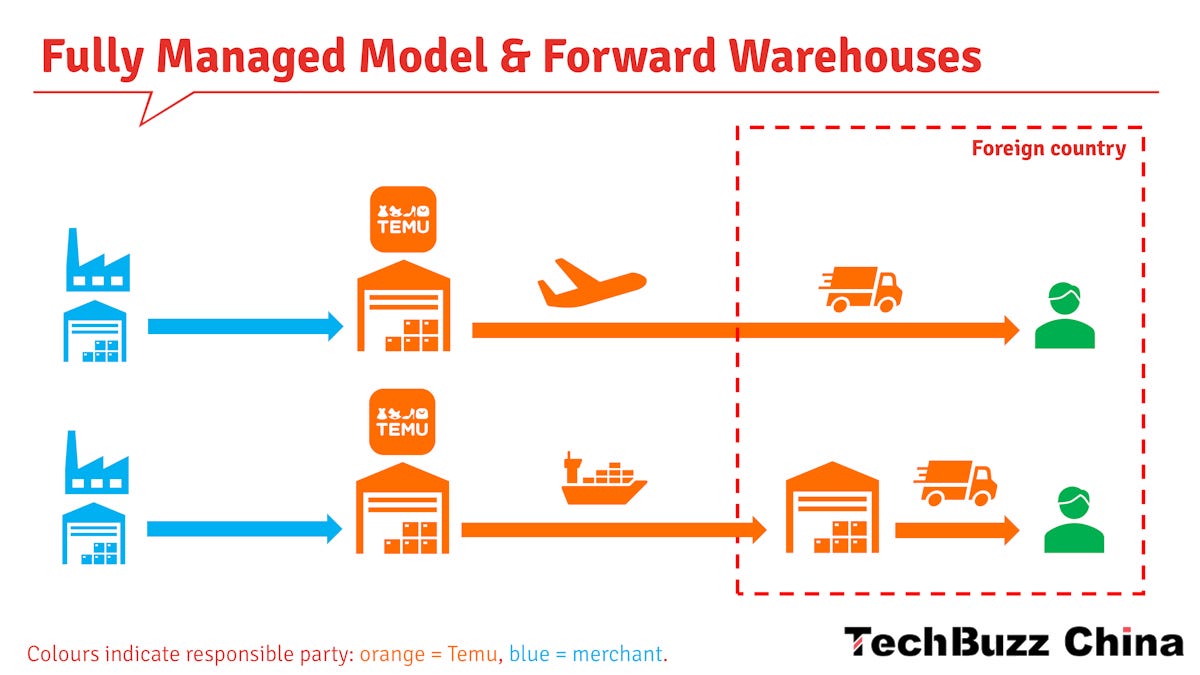
The fully managed forward warehouse model is intended to cope with possible future growth slowdowns and optimise product selection and inventory management. It also reduces logistics costs and enables Temu to plan longer-term inventory, improving management efficiency. The goal is to increase the proportion of sea transportation from the current 10% to more than 20% to reduce air transportation costs and accelerate profitability.
Organisation
Temu currently has more than 6,000 employees. Salaries are not included in operating expenses, while the rent of office space is borne by Pinduoduo. In the Temu project, PDD did not set up separate cross-departmental human resources but transferred supply chain personnel from other projects to specialize in related work. The latest data shows that PDD’s total number of employees has grown to about 18,000, an increase from the previous 15,000. This growth has brought some changes, and the overall workload has been reduced, but the situation is not balanced. Some projects are still very busy, while other projects are relatively easy.
Temu has recently made a series of organizational restructuring and business focus shifts. Specifically, the company has shifted human resources to new key areas and reallocated business priorities. The most obvious change is that the evaluation criteria have shifted from focusing on the number of merchants in the past to focusing more on operational quality. The company now pays more attention to the long-term operation of merchants and special attention to the performance improvement of a single merchant.
Temu changed the management model by subdivided categories and regions after the end of the second quarter 2024.
Regional organisation
Specifically, the home category in North America will be subdivided into several major subcategories, each of which will be managed by a team of 3 to 5 people. At the same time, the business development team has been reorganised and divided into regions such as Europe, North America and Southeast Asia.
To cope with global business expansion, the management team has implemented a division of responsibilities in developing domestic and foreign markets, with different leaders responsible for different regions. Especially during critical promotional activities, the senior management team will focus on ensuring coordinated development of the global business. Temu has adopted a strategy of flexible resource allocation and clear responsibilities, which helps to simultaneously promote the development of domestic and foreign markets. This approach not only improves operational efficiency but also enhances the company's competitiveness in the global market.
Category organisation
Regarding category management, Temu will focus on household goods, industrial and commercial products, MRO-level goods, seasonal items, and pet-related products. These adjustments are intended to lay a solid foundation for growth in 2025. Through these organisational structure and category management adjustments, Temu hopes to better cope with investment challenges, improve operational efficiency, and achieve long-term sustainable development.
Temu has changed from full-category operations to single-category operations, with each group responsible for managing specific product categories. At the same time, Temu merged the responsibilities of business development (merchant recruitment) and buyer teams to improve efficiency and avoid introducing inappropriate products.
Forward warehouse organisation
In addition, Temu has formed a fully managed forward warehouse team of about 600 to 700 people, of which 100 are stationed abroad. This team is responsible for merchant development, user growth, and overseas warehouse construction, and it is part of Temu's international expansion strategy.
Temu plans to expand the fully managed forward warehouse team to 1,000 people by the end of 2024. This team will be selected from the existing 4,000 business development and operation personnel, two-thirds of whom will come from the fully managed business department and one-third from the semi-managed business department.
Merchant management
Temu faces some challenges and opportunities regarding merchant management and recruitment strategies. In the second quarter, the number of fully managed merchants exceeded 350,000 and is still maintained at this level. The semi-managed model began recruiting merchants in March and attracted nearly 50,000 in the second quarter, but merchants were lost in the third quarter. However, before Black Friday in October, it recruited again urgently and has recovered to more than 45,000.
In the platform's early stages, a subsidy policy attracted many new merchants and promoted sales growth. However, after the subsidy was cancelled, some merchants who relied on subsidies decided to exit the market in May. In the third quarter, some early merchants also left the platform after clearing their inventory, resulting in further merchant losses.
Since the beginning of 2024, the merchant churn rate of large products has been high, while the merchant churn rate of small commodities has been relatively low. Some merchants of light and small commodities lost business during July and August, mainly due to unsatisfactory sales performance.
Temu plans to attract more than 80,000 new merchants to join through the semi-managed model in 2025. In 2024, the recruitment target was 65,000 to 70,000, but only about two-thirds of the total was completed. This reflects that the platform still faces certain challenges in merchant recruitment and needs to continue to work hard to achieve its goals.
To avoid potential risks because of tariff increases, it has become more urgent for the platform to accelerate the localisation process. Starting in November, Temu has lowered the threshold for American merchants to register and sell on Temu. [1]
The regulations and policies of the Temu platform change frequently, requiring sellers to pay close attention to customer complaint rates and user reviews after the order is completed. These changes significantly impact merchants' businesses and profitability. For example, if merchants face high fines, their profit margins will be severely compressed (see Temu Watch #2 and Temu Watch #4). Only by keeping the fine rate below 10% can merchants achieve profitability.
In the second half of 2024, the platform allowed merchants to participate in the consumer refund review process, especially the semi-managed part. This is supposed to give merchants more control and flexibility. In addition, it may be more cost-effective to use Temu's electronic waybill for heavier packages, another factor that merchants need to consider. Through these policy adjustments, Temu is realising the diversion and grading of merchants. High-quality merchants will receive more traffic and support, while poorly performing merchants may be eliminated (see Temu Watch #4). This strategy aims to improve the overall quality and competitiveness of the platform, but it also means that different types of merchants will face different opportunities and challenges.
Temu's focus has shifted from the number of merchants to being GMV-oriented. It has visited old merchants in person, hoping they could help incubate new merchants’ introductions. Middlemen and merchants without supply that have flooded Temu in the past will gradually be eliminated. [1]
Markets
The share of the US market in global sales reached 45% in the third quarter of this year, which exceeded Temu’s expectations. Although the number of newly signed merchants in the US market exceeded the number of lost merchants, the overall sales performance was poor, and the proportion of dynamic sales was low. Although the US market is large, the competition is fierce. In contrast, the Japanese, Korean and European markets face problems of insufficient traffic and complex regulations, increasing merchant operations' difficulty.
In the European market, Temu’s performance has not met expectations, mainly due to the insufficient number of new merchants recruited and the loss of existing merchants. Merchant recruitment and product availability have only achieved two-thirds of the target. To address these challenges, Temu plans to implement a fully managed forward warehouse model in the five European countries where it has already carried out semi-managed business. This strategic move aims to solve the supply chain and customs clearance issues it faces, thereby improving overall operational efficiency and market performance.
The e-commerce market in Latin America has great potential for development and more room for future growth than in other regions. Despite the presence of large platforms such as Mercado Libre, the penetration rate of e-commerce in the region is still growing rapidly. Latin America's large young population has created huge demand for electronic devices, especially portable 3C products. However, entering the Latin American market also faces challenges, notably the high tax rate.
Taking Brazil as an example, its total tax rate is as high as 37%, of which 20% is national tax and 17% is state tax. This tax policy significantly impacts the price of imported goods, and consumers need to bear this 37% additional tax. To meet this challenge, companies can consider choosing different product categories from major platforms such as Mercado Libre to mitigate the impact of high tariffs to a certain extent. In addition, cross-border e-commerce also needs to pay close attention to and respond to political risks and policy changes in various countries, all of which may significantly impact business development.
The performance of the Southeast Asian market is not as expected. Although the share is slightly higher than last year, it is still less than 2%. The region faces fierce competition, especially since TikTok is very active. In addition, the low-price strategy is not very effective in Southeast Asia. In response to these challenges, Temu plans to adopt a semi-managed approach to expand its Southeast Asian business, such as setting up a base in Vietnam. However, the resources invested in Southeast Asia this year are insufficient, and investment will be increased next year to improve market performance in the region.
The supply chain in Southeast Asian countries is developing rapidly, especially in Vietnam and India. Many large foreign trade industries in China have set up factories in these regions or moved some production lines here. Temu is considering transferring some of the 3C product inventory to Malaysia in this context. Malaysia's investment incentives have attracted many businesses, and many companies have set up factories there. This migration trend is mainly due to the tariff increase policy implemented by the United States. However, although some businesses have moved to Southeast Asia, the overall proportion is still low. The US market has found Southeast Asia is gradually replacing China as an export region for many goods.
Temu's global market share distribution is changing significantly. The United States' share of Temu's total sales is expected to drop from 40% to about 30% (according to some experts, it still was 37-40% at the end of November). At the same time, Europe will become the largest market, accounting for between 35-40%. The total of Southeast Asia, Latin America and the East will reach 30-35%. The Japanese and Korean markets account for about 10%, and the total share of the Southeast Asian and South American markets is also about 10%. The combined market share of Australia, New Zealand and the Middle East accounts for about 10%.
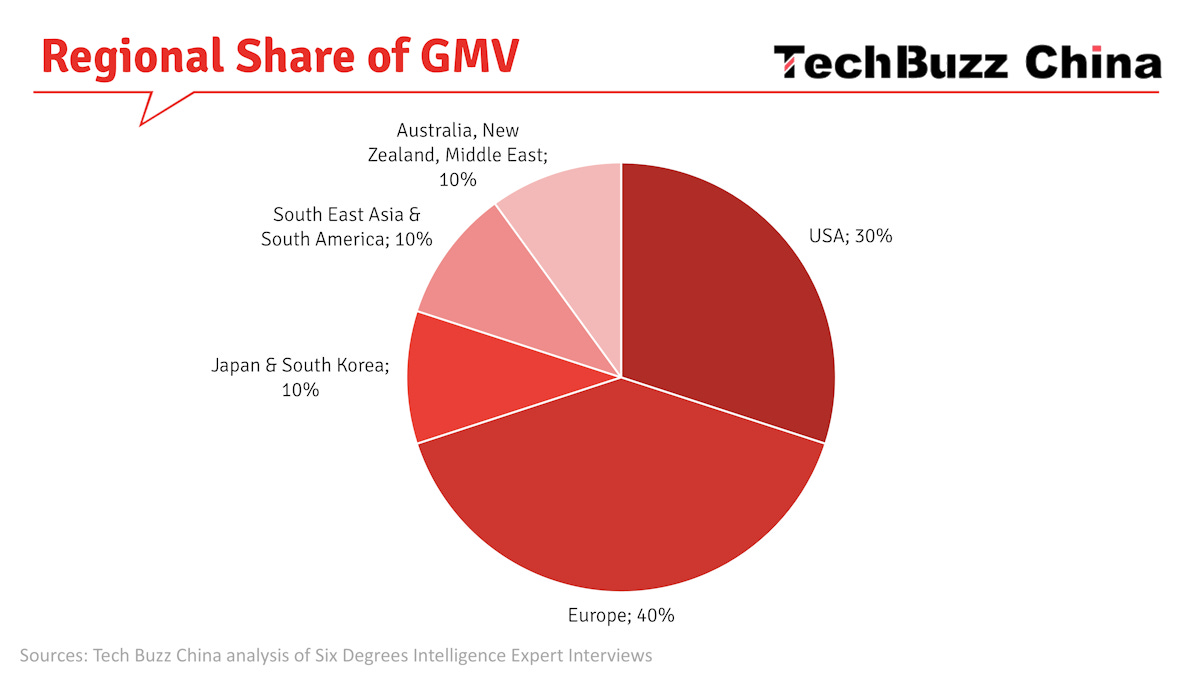
Note: Another source close to Pinduoduo claimed that while Temu aims to reduce its US share to 30% and grow its European share to 40%, the current shares are still almost 40% and 30%, respectively.
Looking ahead, Temu expects the European market share to exceed that of the United States in 2025, the importance of Latin America and the Middle East to increase, and Asia and Southeast Asia to be relatively secondary. Temu intends to increase investment in emerging markets to pursue higher growth rates based on these market expectations.
Products
On the Temu platform, home furnishings account for the largest share, about 20% to 25%, and most products come from Yiwu. Close behind are clothing and textiles, which account for about 15%.
Temu is actively expanding its product line. The company currently has about 1 million semi-managed SKUs and about 2.2-2.3 million fully managed SKUs. Looking ahead, Temu has set a clear goal to increase the number of semi-managed SKUs to 2 million in the coming year.
Regarding new product categories, Temu is introducing high-value goods such as home appliances and sub-products through semi-managed. In addition, it plans to add perishable foods and products related to intellectual property rights, such as books and co-branded goods. Temu will adjust the strategy of large items according to local laws and regulations. Some large B2B items, such as excavators and pianos, are already on sale. Industrial electromechanical products are mainly aimed at corporate customers, although their market share is small.
A Temu public relations staff member recently even shared container houses that were sold on Temu. These large items are usually shipped by sea or provided by local merchants. However, due to the restrictions on supply and tariffs, the promotion of large items still faces some difficulties.
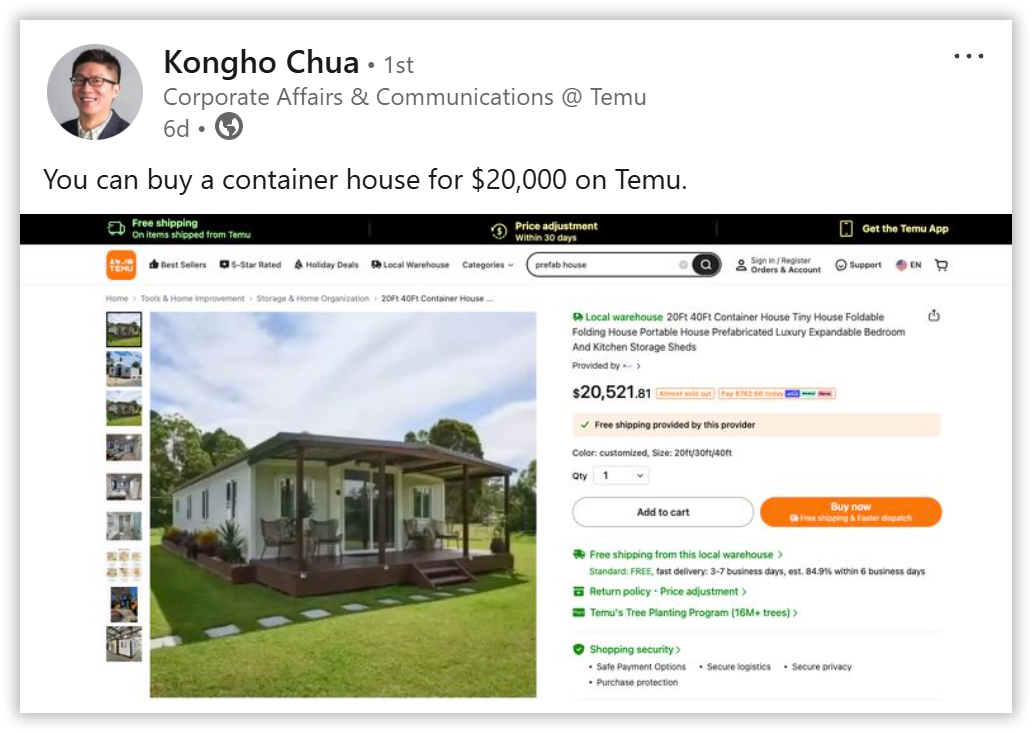
Temu will adjust resource allocation according to changes in demand. Products with high tariffs will not be prioritised.
Marketing
In 2024, Temu made a series of adjustments to its promotion strategy. Compared with 2023, it lowered the participation threshold and changed the main product categories promoted. Last year, Temu mainly promoted heavily discounted items through preset time and category strategies, such as reducing high-priced items to $1.99, $2.99 or $3.99. However, this year, the number of ultra-low-discounted items has significantly been reduced, and consumers often find their favourite items sold out. The platform will recommend that they buy other products.
In 2024, Temu's Black Friday promotion lasted 47 days, using a cyclical model to change the promotional items every 1-2 weeks. Some out-of-stock items required 10-15 days of replenishment before they could participate in the promotion again. The promotion period for household goods (excluding home appliances) is particularly long, and the platform regularly notifies merchants to prepare inventory for the next round of promotions.
Temu's business strategy gradually moves closer to Pinduoduo's model but is relatively milder. It supports merchants through subsidies and bears the promotion costs rather than asking them to reduce prices, making it more popular with merchants.
In the fourth quarter, the company's advertising expenditure reached 1.2 billion US dollars, which includes the cost of purchasing traffic. Looking at the whole year, Temu’s advertising budget was initially planned to be 4.3 billion US dollars, but the actual expenditure was about 4 billion US dollars. The advertising strategy was primarily concentrated in the September to October period. At the end of the fourth quarter, Temu appropriately reduced advertising intensity to avoid fierce competition with other companies.
Pricing
In 2024, the prices of goods on the Temu platform have been rising, especially for ferrous metal products, with an increase of about 50%. Goods originally priced at $1 to $2 have generally become more expensive. Although Temu continues to use discount strategies to attract customers, price increases make it challenging to maintain its position in the low-price market. Due to the emergence of Amazon Haul, Temu has reduced the frequency of product price adjustments to retain merchants.
In the semi-hosting model, pricing strategies are divided into regular and promotional. For regular pricing, merchants will quote at a ratio of 75%, 85% and 95% based on Amazon's average price, and the platform will add a 20% markup on this basis. During the promotion period, the situation is different. Some products will drop to less than 70% of the original price. During promotions, the platform will only increase the price by 1%.
The profit margin of merchants adopting the fully managed model is about 5%, while the profit margin of the semi-trust model is slightly higher.
Competition
Temu vs Shein
Compared to Temu, Shein did not perform well in non-apparel categories during Black Friday 2024. In particular, sales of home products were poor. This is because Shein's positioning is mainly fashion-oriented, similar to the online version of Zara, so it is difficult to compete with Temu regarding price or market share in other categories.
In the first half of 2023, Shein invested a lot of subsidies to expand new product categories, and the investment in some areas was even no less than that of Temu. Despite this, Shein has not been able to gain a dominant position in categories other than clothing. Although Shein has a certain market share in the home category, its marketing team is not as strong as Temu. In addition, Shein is also inferior to Temu in terms of cost-effectiveness and customer willingness to buy. These factors combined have had a certain impact on Shein's overall market strategy, indicating that the company still faces challenges in expanding non-apparel categories.
In the current e-commerce competition landscape, Temu and Shein each have their own advantages and disadvantages. According to consumer feedback and cost-effectiveness analysis of web page categories, Temu has a clear advantage in terms of price. If Shein's price is not the lowest and its platform status is not as good as Amazon's, consumers are more inclined to choose Temu with a lower price. This price advantage directly affects consumers' choices. Interestingly, Shein's has brought indirect traffic to Temu to some extent. This is because consumers find that Temu's price is lower after comparing the two platforms, and finally choose to buy at Temu.
In terms of marketing strategy in 2024, Temu outperformed Shein, especially in mobile advertising. Temu's cooperation with AppLovin (see Temu Watch #5) has achieved remarkable results in mobile advertising, and various indicators such as click-through rate, download volume, and order conversion rate are far higher than those of other competitors.
Although Temu reduced its advertising budget in 2024, its promotion effect is still significant, mainly due to the rich experience accumulated by Pinduoduo over the years. In contrast, Shein's advertising creativity and methods are mediocre, and user response is poor, especially in promoting non-clothing categories such as home products. These differences directly affect the two companies' market performance and user response, making Temu significantly ahead of Shein in marketing effectiveness during the year.
Looking ahead to the e-commerce market landscape in 2024, Shein expects that the total merchandise transaction volume of all categories will increase by 30% to 40% in the fourth quarter compared with the previous quarter. However, its scale is still not comparable to Temu's.
Meanwhile, AliExpress's performance on Black Friday in 2024 was unsatisfactory, and Temu and Shein conquered some of its market share. Merchants reported that sales fell by 60% to 70% year-on-year.
Temu vs Amazon Haul
Temu is closely watching Amazon Haul, which we reported on last week. The target customer unit price of this Haul was initially set at $15-20, but many products are priced below $10, which is cheaper than Temu’s products. At present, the number of visits to Haul is still relatively low, and the impact on Temu in the short term is not significant.
Although there is a lack of specific sales data and merchant feedback, the impact of Amazon Haul on Temu has begun to emerge. Temu's business faces direct competitive pressure from Amazon Haul, although sellers say the platform's sales performance is still satisfactory. However, the emergence of Amazon Haul has undoubtedly had a certain impact on Temu. However, the effect of Haul on the supply chain is not significant.
The proportion of merchants in Temu’s semi-managed model participating in Haul is only about 2%, and the overall impact is also small. However, Temu has noticed that the competition in the mid-and low-end brand market is heating up, and it is expected that more than 80% of merchants will operate on both platforms in the future.
Tariffs & Tax Inspections
As cross-border e-commerce enters a new stage, it must improve product quality and refine operations. Major platforms adjust their strategies to maintain their competitive advantage based on compliance requirements, market competition, and potential tariff changes.
United States
After Trump takes office, new tariffs and compliance measures are expected to be introduced, which may significantly impact cross-border e-commerce. The new policy is mainly divided into two aspects: first, the preferential country status of small parcel businesses and related enterprises is expected to be cancelled, and the tax exemption policy below $800 is revoked or lowered; second, tariffs on large-scale seaborne export businesses are expected to increase by 10%.
Tariffs on goods
Between July and August 2024, the potential impact of Trump's policies began to emerge, especially in the home and electronic product categories, with a price of more than $60 and a delivery time of more than 40 days. During the Sino-US trade dispute in 2018, tariffs on some 3C products were as high as 50% to 60%. The US government has proposed that tariffs may be increased, but this needs to be achieved through legislative procedures. The volatility of US policies has increased uncertainty and may mainly affect the clothing and textile industries.
Tariffs on certain specific categories of goods may increase by between 50% and 60%. Although the increase mentioned in media reports is 50%, the actual increase may be higher. These new policies greatly impact small parcel business platforms and may significantly increase their operating costs.
The specific situation will not be clear until January 2025. If tariffs increase to 30%-50%, Temu's business will face serious challenges. The new tariff policy is expected to affect about 40% of the goods on the Temu platform, mainly textiles, clothing and some electronic products. It is not yet certain whether additional tariffs will be imposed for the remaining 60% of products, such as household goods. Although the Trump administration has proposed a 25% tariff, it expects that the actual tariff may drop to between 2% and 10%, and most are not expected to exceed 10%.
In the current cross-border e-commerce environment, even if overseas goods are marked up by 30%, they still have a clear price advantage over local goods because their basic cost is only one-third of that of local goods. Since most of the goods come from China, the goods on Amazon are also facing pressure from rising tariffs, which may challenge its pricing system.
De minimus
In addition, the cancellation or reduction of the duty-free quota (de minimus), could mean that more goods will be subject to tariffs of 3% to 5%.
If the threshold is lowered to an amount higher than $50, the impact will not be too significant because Temu expects the average order value to be close to $50 next year. As such, most small packages are not subject to tax, and Temu usually keeps the order amount below US$800 to simplify logistics processing.
There is another point of view on the situation, though. If the tax-free amount is reduced from $800 to $300 or $200, logistics costs will rise, and the speed of order consolidation will slow down. More seriously, if the price drops to $150, logistics costs may increase by 40% to 50%, and the cost of each package will increase by about $0.5. It should be emphasised that these additional costs mainly come from domestic order consolidation and package splitting rather than an increase in overall logistics fulfilment costs.
Declared value versus actual value
It is important to note that tariffs are levied based on the declared export value, not the retail price. The main challenge facing cross-border e-commerce platforms is that the actual sales price is usually higher than the declared price, which increases the risk of tax inspection. The supervision of ‘de minimus’ is relatively strict.
Whether Amazon AGL or other logistics services are selected in the current customs clearance process, the declared value is usually 30%-50% of the actual price. A nominal 25% tariff may only increase the value by 10%-15%. If the tariff increases by 10 percentage points, for example, the original $50 tax becomes $55, the overall cost's impact is insignificant. Since most companies do not declare the full amount, the change in tariff policy has less of a direct effect on them. However, some companies that strictly declare according to the actual value may face a more significant impact.
In April of this year, Temu was investigated for declaring a price that was too low, and now their declared price is usually kept between 50% and 80% of the actual price. Specifically, in the third quarter, Temu's average declared price was about 67% of the actual price.
Temu’s measures
Temu has taken a series of measures in response to these potential changes. As mentioned, it implemented the semi-managed model and a forward warehousing strategy to store goods in overseas warehouses in advance to reduce customs clearance time and related costs. At the same time, it is also strengthening compliance management in the European and American markets to ensure that products strictly comply with local regulations.
Temu also took precautionary measures before Trump took office, raising prices of all categories of goods by 5% to 15%. This range may exceed the actual tax cost increase caused by the cancellation of the $800 tax-free policy because the tax is calculated based on the declared value of the goods. This price change is an early response to possible policy changes.
The impact of tariffs on fully managed and semi-managed merchants is different. Fully managed goods are still competitive in price, while semi-managed goods are more susceptible to audits and tax increases. However, if high tariffs are implemented, merchants in the fully managed model will face higher cost pressure, and Chinese sellers will also have to deal with the pressure of rising prices.
In response, Temu is actively attracting local merchants in the United States to enhance its market competitiveness. However, no matter what strategy is adopted, the increased costs may eventually be borne by consumers.
Temu expects that some goods may enjoy preferential treatment through third countries. Setting up a factory in Vietnam or using Vietnam as a place of shipment can circumvent high tariffs to a certain extent. Still, this approach will also increase logistics costs and complicate Temu's process. Currently, Vietnam accounts for less than 5% of the existing supply chain. Temu has two ways to use Vietnam's supply chain: one is for Chinese companies to set up factories there and then transport products to Vietnam through Guangxi and then to the United States by air; the other is to cooperate with local Vietnamese brands for shipment.
In general, Temu faces multiple challenges and needs to balance maintaining competitiveness and achieving business growth. Considering that it is difficult for the US manufacturing industry to return in the short term, the impact on the platform's business might not be too great in the next two years. This gives Temu a buffer time to adjust its strategy to cope with potential tariff changes.
Industry experts think that changes in tariffs will not directly affect the transaction volume of enterprises with e-commerce platforms, nor will they significantly reduce profits. In the long run, enterprises can adapt to policy changes by improving operations.
Europe
The EU's current tax-free policy stipulates that the amount is below 150 euros and is not expected to change significantly in the short term. The EU may follow the US in lowering the tariff threshold, but currently, it is discussing implementing this in 2028.
Compliance is not limited to taxation but covers multiple areas, such as product certification. When entering the European market, cross-border e-commerce companies need to pay attention to other policy risks, regulatory compliance issues, and tariffs. The EU requires sellers on e-commerce platforms to provide their VAT numbers. In addition, companies must follow the relevant provisions of the General Product Safety Regulation (GPSR) and apply for the Extended Producer Responsibility (EPR) registration number for electronic products in France.
In Europe, consumers tend to choose products that comply with regulations, and such goods usually sell well. On the contrary, uncertified goods are difficult to sell in the European market. It is worth noting that cross-border e-commerce platforms are also facing high assessment standards, such as ESG and low-price dumping. For example, Temu's suppliers are not as compliant as Shein, and many factories are not certified. Meeting these compliance requirements may increase the company's operating expenses and reduce the number of suppliers to choose from. However, these measures are essential to establishing a long-term and stable business in the European market.
In terms of advertising, Temu faces restrictions in Europe, and some countries have banned Temu's advertising. To cope with these challenges, Temu has adopted several strategies. They use external platforms to recruit merchants, drive user growth through physical activities and partnerships, and rent warehousing facilities to reduce logistics costs. In addition, after sending more than 100 employees to the United States, Temu plans to expand in five European countries: the United Kingdom, France, Germany, Italy and Spain.
Profitability
Temu has focussed on comprehensive cost management and loss reduction to ensure that limited budgets can effectively support user growth. It has taken several measures to improve its market competitiveness and operational efficiency and has strengthened cooperation with local brands to enhance the competitiveness of its products in the market.
In the US market, the average order value (AOV) is about US$40 and remains basically unchanged. The semi-managed model once increased the AOV, but stocking hot-selling products in the fully managed model has led to a decrease in the AOV. At the same time, due to the increase in transportation costs, the profitability of the fully managed model has declined. Specifically, since the beginning of this year, transportation costs have risen by about 30%, and order costs have increased from US$10 to more than US$12. These changes have had a significant impact on the market. Due to the smaller price reduction space in the fully managed model,
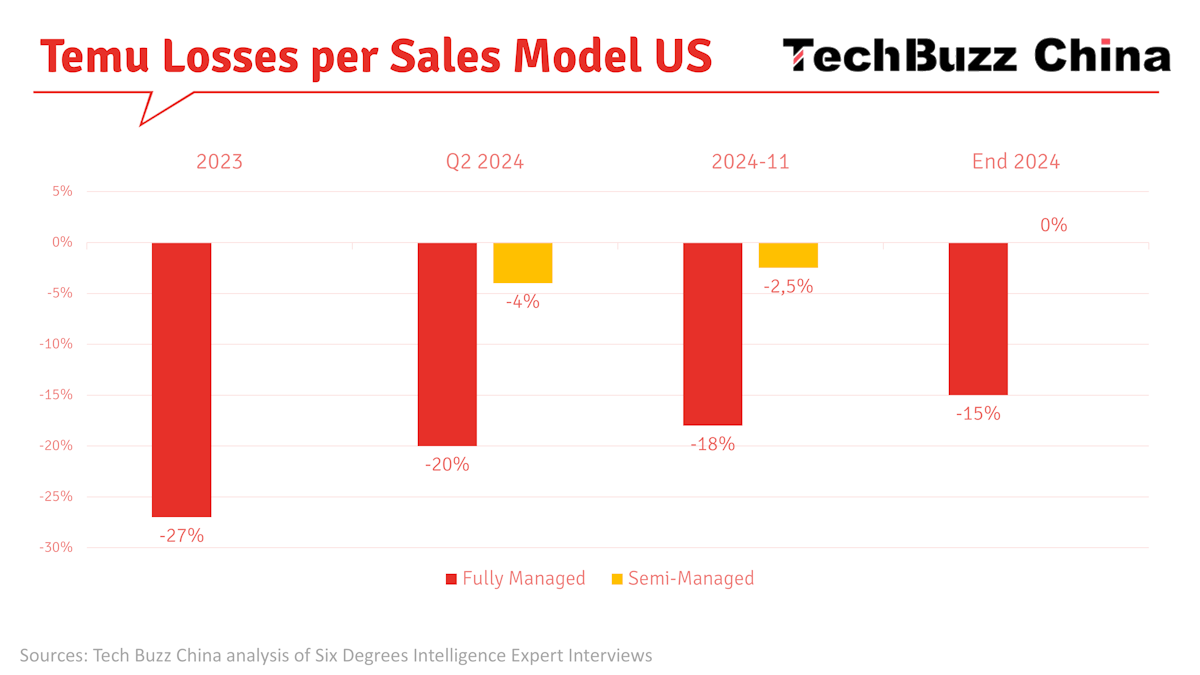
Temu has not yet achieved profitability with the fully managed model globally but has achieved (near) break-even with the semi-hosting model in the U.S. market. The semi-managed model in Europe and other regions still has a loss of 5%-8%.
By the end of November, the fully managed model had a loss rate of 18% in the US market, while the semi-managed model had a loss rate of 2.5%. Specifically, in the second quarter, the loss rate of the fully managed model was 20%, and that of the semi-managed model was 4%. The advertising budget is uniformly allocated between the two models, but the fully managed model covers more categories and, therefore, consumes more advertising resources.
Looking ahead, Temu expects losses to be controlled within 15% under the fully managed model. At the same time, under the semi-managed model, it is working hard to break even.
The prices of fully managed services will increase several times in the second half of 2024. The overall gross profit margin is close to 60%, and the actual selling price is 2.4 to 2.5 times the cost. However, logistics costs account for one-third of the gross profit, while marketing and discounts reduce the gross profit by 20%. In addition, there are constant management expenses and domestic taxes.
The company is taking a series of measures to improve the profitability of the full-hosting model. First, the organisational structure is being reconfigured to merge the business development and procurement teams (see ‘Organisation’) to improve product selection efficiency. Secondly, the company plans to establish 5 to 7 large warehouses in the United States in the first quarter of next year to support the expansion of the fully managed business (see ‘forward warehouses’).
Globally, there are regional differences in cross-border logistics costs and fulfilment costs. Under the fully managed model, fulfilment costs in Asia (including Japan and South Korea) account for about 10%, while domestic warehousing costs remain at around 5%. In contrast, fulfilment costs in Europe are slightly lower than in the United States. There is no significant difference in marketing and promotional activities costs between countries, accounting for 20% and 30% of total costs, respectively. However, there are regional differences in profit margins. The profit margin of semi-managed business in the United States and Asian markets is higher, not less than 20%.
The profit model of semi-managed services has several key features. First, the gross profit margin is usually around 20%. Second, unlike fully managed services, it does not bear the transportation costs, which can significantly reduce costs. However, semi-managed services still need to bear some management expenses, including employee salaries and related costs such as domestic warehouses.
Net profit margin of merchants is about 5%.
Expectations for 2025 and beyond
Although the fully managed model is still losing money, Temu is working hard to break even by improving logistics methods. It plans to break even in all countries where it conducts semi-managed business in the first half of 2025 and to control the loss of the fully managed business to less than 10%. In addition, it will expand the third-party platform business, but it will not be implemented in every country; it will open selectively. This strategic expansion will help Temu optimise the operating model in different markets, improving overall profitability.
In the second half of 2025, the fully managed business may still have a certain loss. Still, Temu hopes to achieve a break-even for the overall business through profitable semi-managed and third-party platform businesses.
The company has set ambitious sales targets. Temu expects the total merchandise transaction volume to reach $100 billion in 2025, of which the semi-managed model accounts for 20 billion, the third-party platform accounts for 30 billion, and the full-custodial model accounts for 50 billion. Even without additional taxes, achieving the $100 billion target (2025) requires a 50% increase, which is a considerable challenge in itself.
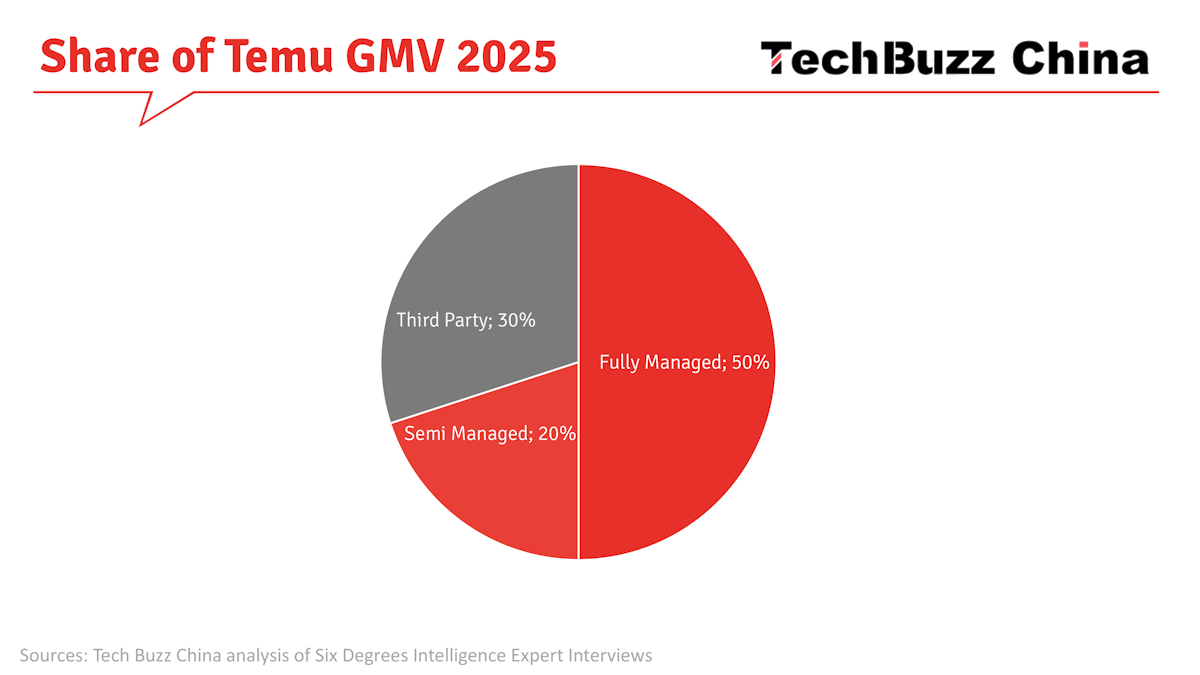
The goal for 2026 is to reach $200 billion in sales, and in 2027, it will go a step further, with plans to achieve $300 billion in revenue.
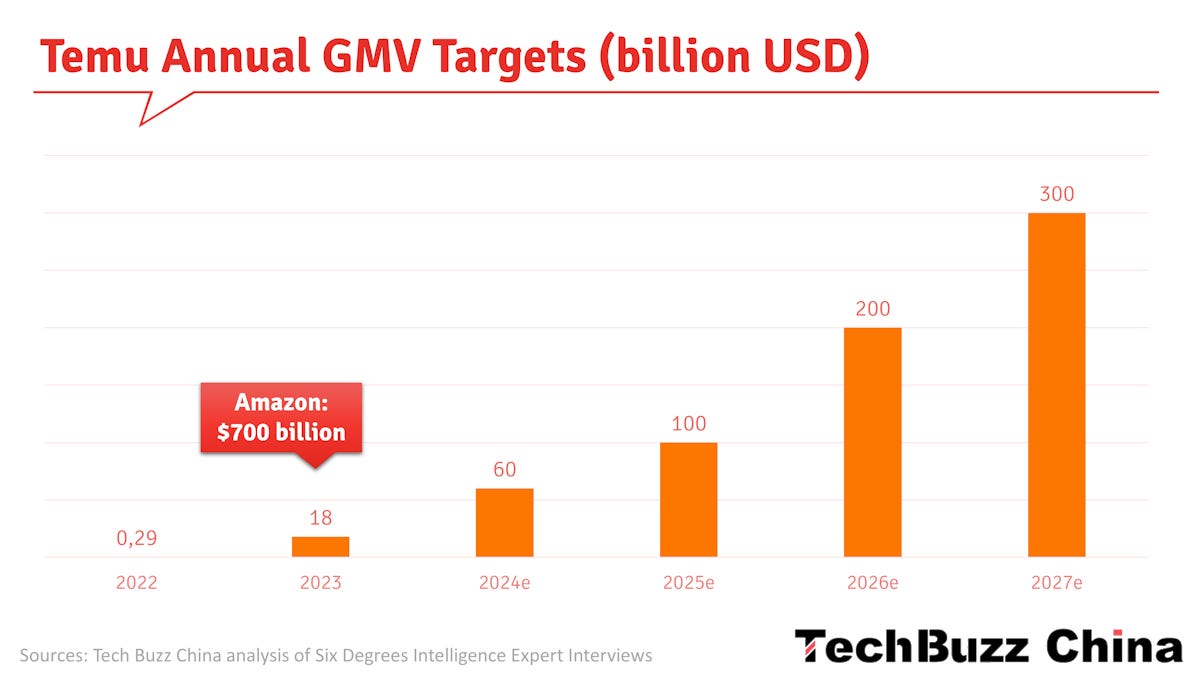
To support this rapid growth, Temu expects to significantly expand its SKU count, with a goal of more than 6 million. At the same time, the number of merchants must also increase significantly, reaching at least 1 million. These 1 million merchants will be distributed in fully managed, semi-managed, and third-party platform models. Among them, the number of merchants in the fully managed and semi-managed models is expected to be between 500,000 and 600,000, with an additional 300,000 to 400,000 merchants coming from other platforms. The company aims to build a strong ecosystem through these specific expansion plans to achieve its ambitious sales targets.
According to forecasts, the average transaction amount in the US market in 2025 will reach about $50, while the average annual shopping frequency is expected to be at least 35 times and may reach 40 times at most, slightly higher than the overall market level.
And that’s it for 2024. We hope you enjoyed our Temu-related publications and other reports this year, and we appreciate your continued support. We’ll be back next week with our predictions for 2025.+
Key takeaways
Estimations for Temu’s 2024 GMV range from $55 billion to $66 billion, more than tripling its 2023 GMV.
In 2024, in the US, monthly shopping frequency has increased from 1.9 to 2.7. The average annual shopping frequency is expected to grow from 30 to 35-40 in 2025.
Temu has been setting up ‘forward warehouses’ in the US to stock inventory for the fully managed model. In the first half of 2025, it plans to build 5 to 7 warehouses in the US. About 1,000 staff members support forward warehouses, of which at least 100 are stationed abroad.
Temu wants to increase the share of sea freight from 10% to 20%, thereby decreasing logistics costs.
The semi-managed model is not meeting its targets yet. The share of GMV is 20%-25% in the US and 10%-13% in Europe. Many merchants left the platform after clearing surplus inventory. Temu aims to add 80,000 semi-managed merchants in 2025.
Temu now has 6,000 employees, and PDD Holdings has grown to 18,000. Temu merged business development and procurement and reorganised itself into regions and product categories.
Temu is considering sourcing and warehouses in Southeast Asia to reduce tariff risks.
Through the semi-managed model, Temu plans to sell perishable foods and products related to intellectual property rights, such as books and co-branded goods.
The number of ultra-low discounted items has significantly reduced, and prices have increased by about 50%.
Temu’s gross margin in fully managed is 60%, and 20% in semi-managed. Profit margins for merchants are about 5%.
During customs clearance, 30%-50% of the actual value has been declared. Temu raised this to 50%-80% after investigations in April.
If de minimus is lowered, Temu expects higher logistical costs because it will split higher-value orders into multiple packages.
By the end of the year in the US, Temu expects a 15% loss in fully managed and break-even for semi-managed.
In 2025, Temu hopes to break even when profits from semi-managed and third-party businesses compensate for any remaining losses in fully managed. Third-party business is expected to grow to a 30% share of GMV.
Temu has set a growth target of $300 billion for 2027. It needs 6 million SKUs and 1 million merchants to achieve this.
Sources
This article has been compiled from an analysis of exclusive expert interviews of the Six Degrees Intelligence network, augmented with the article below.
[1] Tech星球2024-12-17
Images by Tech Buzz China’s Ed Sander unless stated otherwise. These images may not be reproduced without Tech Buzz China's prior consent.