Building hardware with China? We are starting an experimental English-language WeChat group for hardware founders and operators learning from or sourcing through China’s supply chain. Apply here →
Things you might have missed
A few items since our October 1 issue are worth keeping on your radar.
From our recent coverage
Three Chinese commercial-space IPO reviews paused on the same day. LandSpace, CAS Space and MinoSpace all had to update expired financial statements, a procedural delay that also shows how awkwardly fast-moving aerospace companies fit into a document-heavy listing process. Read more →
Chinese carmakers reached 10% of Argentina’s passenger and light-commercial vehicle sales in August. That was up from about 2% at the end of 2025, helped by a policy allowing as many as 50,000 electric and hybrid vehicles to enter duty-free in 2026. Read more →
Robot learning is moving closer to “show, then try.” Tsinghua researcher Xu Mengdi described a goal of teaching robots through one or two interactions; Generalist’s GEN-1.5 later reported roughly 59% average success across ten tasks after receiving short action demonstrations as physical prompts. Read more →
Why Plenty of Power Still Isn’t Enough
Ulanqab, in China’s Inner Mongolia region, has almost everything an AI data-center developer could want: abundant wind and solar resources, a cool climate and relatively inexpensive electricity. The city has become a showcase for China’s strategy of building computing infrastructure where energy is plentiful, with the local government reporting that 66 large computing-center projects had been signed or landed by June 2025. Not all were operating, but the number illustrates how quickly Ulanqab has emerged as a center for China’s AI infrastructure ambitions.
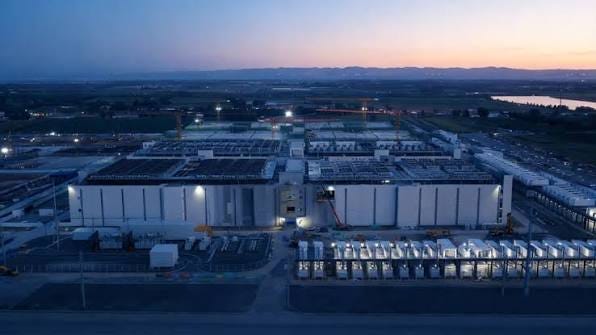
Yet even here, where electricity is relatively cheap and renewable resources are abundant, developers are investing in batteries. VNET’s Ulanqab cloud-computing base, recognized by an industry program led by the China Academy of Information and Communications Technology for coordinating computing and electricity supply, combines 200 megawatts of wind generation and 100 megawatts of solar with 45 megawatts of batteries capable of discharging for four hours, equivalent to 180 megawatt-hours of storage. The system is designed to coordinate renewable generation, grid electricity, computing demand and stored energy, allowing the facility to make better use of electricity whose availability varies throughout the day.
The problem is not necessarily how much electricity a region can generate, but whether that electricity is available when the computers need it. Wind and solar output fluctuate throughout the day, while data centers require dependable power regardless of weather conditions or the time of day. Batteries can store electricity for later use, reduce peak demand from the grid and help maintain stable power delivery, while smaller systems positioned closer to computing equipment protect expensive workloads through brief disturbances or interruptions. Even in a region with abundant generation, building more power plants does not necessarily solve the problem of delivering reliable electricity to the servers.
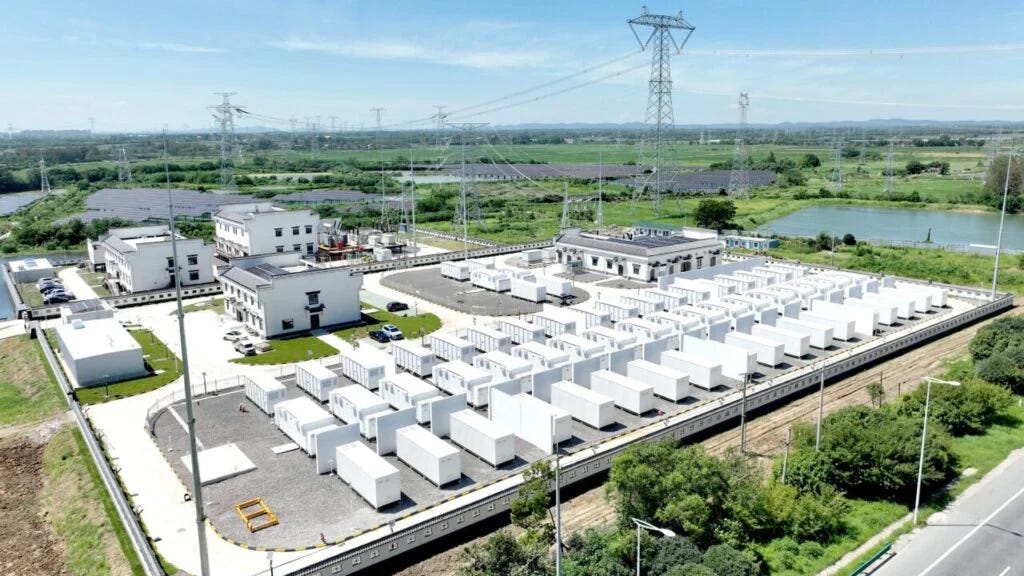
Across the Pacific, American developers are confronting similar technical challenges, often made more difficult by constraints on grid connections and the time required to expand electricity infrastructure. One example is Meadow Park, a 12.9-megawatt, 25.8-megawatt-hour battery microgrid outside Plano, Texas, commissioned in March 2026 as a live test bed for power architectures intended for AI data centers. CleanAmps designed and operates the installation, Delta supplies the power-conversion equipment and China’s CATL supplies the EnerC+ batteries. The system can operate both with and independently of the grid, demonstrating how Chinese battery hardware can be incorporated into an American power-system design. Meadow Park is not itself an operating AI data center, but it offers a practical example of the equipment and integration approaches being tested for future deployments.
China already dominates much of the global battery supply chain, but translating that industrial advantage into sales to American AI data centers is becoming increasingly complicated. In the second quarter of 2026, China accounted for 66.5% of US lithium-ion battery imports, a figure spanning all applications rather than data centers specifically. At the same time, US tariffs on Chinese non-EV lithium-ion batteries rose to 25% in 2026, while prohibited-foreign-entity rules can restrict eligibility for federal energy-storage tax credits. Chinese manufacturers have the production capacity and technical expertise to compete, but access to the American market increasingly depends on how their products are manufactured, integrated and sold.
Chinese suppliers are already pursuing this opportunity. In June, Sungrow’s US business published a detailed pitch for AI data-center storage, while HiTHIUM introduced a dedicated system at the RE+ trade show in Las Vegas. These efforts reflect a broader push by Chinese battery companies to expand beyond their established electric-vehicle and renewable-energy markets into the infrastructure supporting AI computing. We expect Chinese cells and technical expertise to remain difficult to exclude from American supply chains in the near term, although tariffs, tax-credit restrictions and efforts to expand domestic manufacturing will influence which companies ultimately capture the business. Local production, licensing arrangements and partnerships with non-Chinese integrators may become increasingly important routes into the market.
The opportunity, however, is more complicated than the growing demand for batteries might suggest. Not every supplier is competing for the same customer, or even solving the same problem. The technology may share a common foundation, but the businesses built around it can look remarkably different.
Three Batteries, Three Different Businesses
An AI data center might need batteries for three very different reasons: to protect the computers, to keep the facility running, and to manage its electricity supply. These functions operate on different timescales, from the split-second response needed to prevent a server interruption to the hours of storage that can help a facility manage its relationship with the grid. And although all three involve batteries, the companies supplying them are competing in businesses with very different economics.
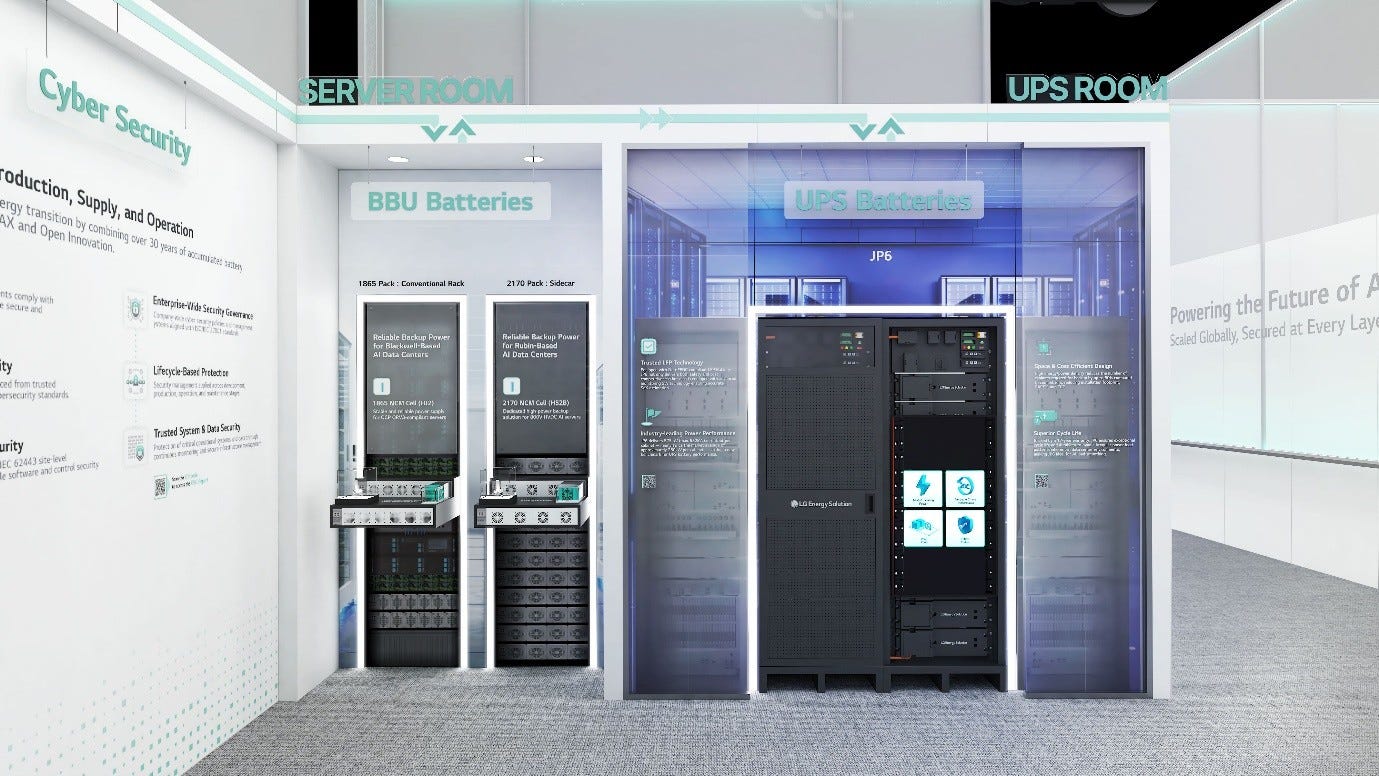
The first job is protecting the computers themselves. Modern AI servers contain expensive chips that can be running complex calculations for hours or even days, and an unexpected interruption can disrupt that work. Battery backup units, or BBUs, sit close to the servers, often inside the racks that house them, and provide immediate power when the normal supply falters. They can also help absorb sudden changes in electricity demand. These batteries don’t need to keep an entire data center running for hours, but they do need to respond almost instantly and work seamlessly with the computing equipment. That makes reliability, compatibility and approval by server manufacturers just as important as the price of the battery itself.
The second job is keeping the facility’s electrical infrastructure running. This is where uninterruptible power supplies, or UPS systems, come in. Rather than protecting an individual rack, they maintain electricity across larger portions of the data center when the normal supply is disrupted, buying time for generators or another source to take over. They also help maintain the quality of electricity delivered to sensitive equipment, including smoothing rapid fluctuations in demand. In 2025 vendor testing, Vertiv demonstrated how a lithium-ion UPS with active controls could buffer the kinds of power swings associated with AI workloads in a simulated generator environment. The test illustrates why established electrical-equipment manufacturers have an important role in this market, even as battery technology evolves.
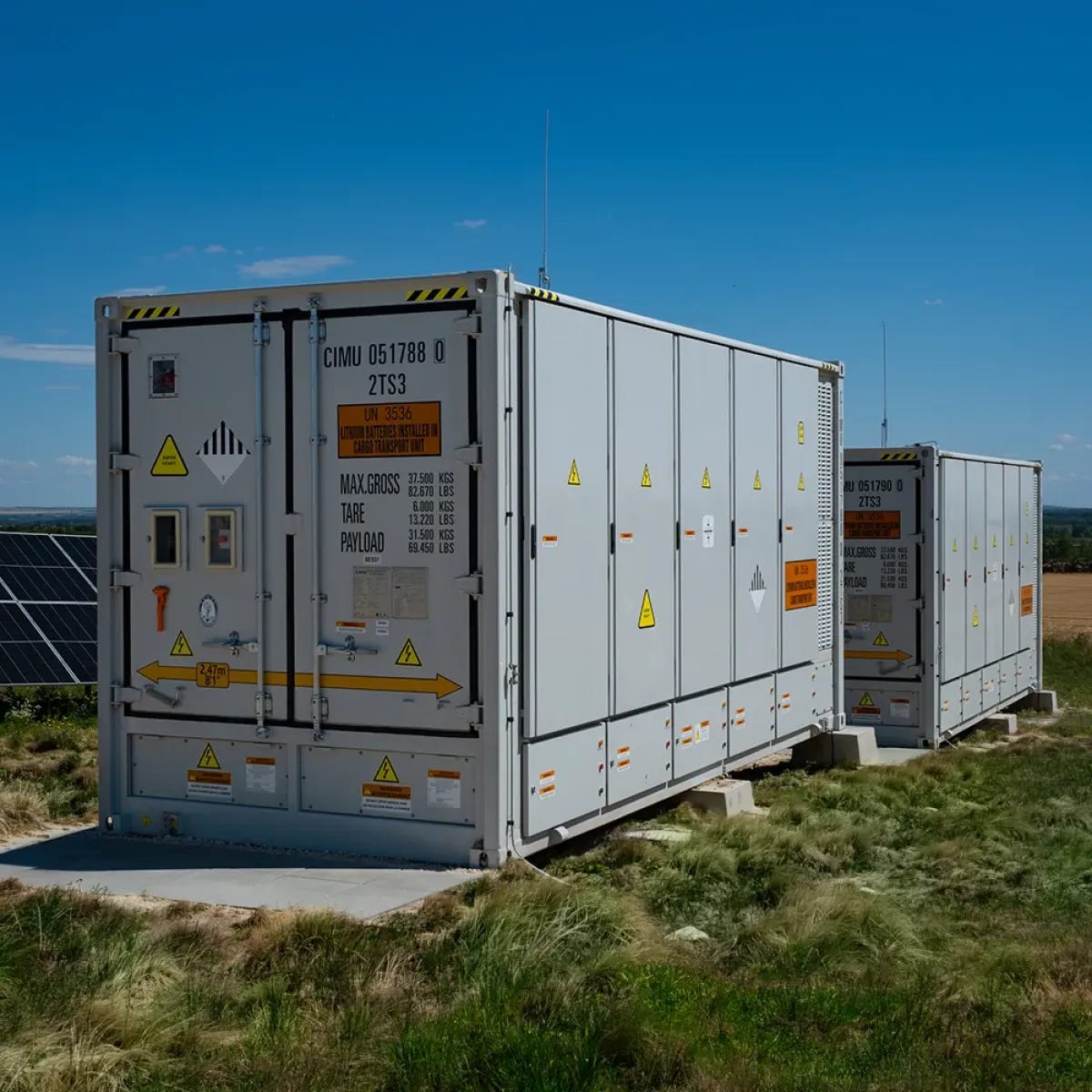
The third job is managing electricity across the entire site. These are the large battery installations that most people associate with energy storage, capable of holding substantial amounts of electricity and releasing it over several hours. A data-center operator might use them to store renewable electricity when generation is plentiful, reduce purchases from the grid during periods of peak demand, or operate within limits imposed by the local utility. Unlike the smaller batteries protecting servers or electrical equipment, these systems must coordinate with the grid, power-conversion equipment, cooling infrastructure and software that manages electricity flows. Their economics depend not just on the batteries themselves, but on how effectively the entire installation helps the customer manage electricity costs and availability.
The distinction becomes especially important when evaluating suppliers. A company that makes excellent battery cells is not necessarily equipped to compete in all three markets. Rack-level products must pass demanding qualification processes with computing-equipment manufacturers. Facility-level systems require expertise in electrical infrastructure and reliability, while site-level storage involves larger engineering projects, utility requirements and potentially years of operating obligations. There is overlap in the underlying technology, but the customers, purchasing decisions and competitive advantages can be very different.
Nor does every AI data center require the same combination of batteries. Large training clusters can experience sudden changes in electricity demand when thousands of chips ramp up or down together, while facilities serving a diverse mix of inference requests may have smoother overall consumption. Operators can also use software to adjust when computing jobs run, reducing some of the fluctuations that batteries might otherwise need to handle. More AI computing does not automatically translate into a fixed amount of battery demand, because the answer depends on the workload, the electrical architecture and the alternatives available to the operator.
The Grid Can’t Keep Up. Can Batteries?
For AI data-center developers, access to electricity can determine when billions of dollars in computing infrastructure begin generating revenue. Grid connections can take years, but some utilities may allow facilities to operate earlier under conditional service, which limits how much electricity they can draw during constrained periods. Batteries, on-site generation and software that adjusts computing workloads can help developers operate within those restrictions rather than waiting for unrestricted grid access.
A Google-funded study by Camus Energy, encoord and Princeton University’s ZERO Lab modeled this approach at six US locations, using a reference data center with 500 megawatts of nameplate capacity and peak demand of 435 megawatts. Researchers evaluated combinations of four-hour batteries, generation, power-purchase agreements and flexible computing, assuming up to 25% of computing demand could be adjusted. Their models suggested that data centers could begin operating three to five years earlier than if they waited for unrestricted grid service.
At the most transmission-constrained location, the modeled solution included 143 megawatts of batteries and a 50-megawatt generator, alongside flexible computing demand. The findings are projections rather than results from operating facilities, and earlier revenue would have to justify the additional infrastructure costs. But the potential economics are compelling: batteries could help developers put expensive computing capacity to work years sooner, making storage valuable for reasons that go well beyond backup power or electricity savings.
Four Routes Into the AI Power Business
China has spent more than a decade building the world’s most formidable battery manufacturing industry, initially to serve electric vehicles and renewable-energy storage rather than artificial intelligence. That investment is now giving Chinese companies an advantage in a market that barely existed when much of the capacity was built. According to the International Energy Agency, China manufactured well over 80% of the world’s batteries in 2025, while more than 90% of battery-storage deployments use lithium iron phosphate, or LFP, a chemistry in which Chinese companies supply almost all the cells and much of the technical expertise.
The advantages extend beyond manufacturing scale. Electric vehicles pushed Chinese companies to improve battery consistency, safety, thermal management and cost, while renewable-energy projects gave them experience integrating storage with power electronics, cooling and grid controls. Telecom networks and conventional data centers created another market for reliable backup power, where equipment compatibility and long-term customer relationships matter as much as price. China’s strength is therefore not simply that it can make batteries cheaply, but that it has developed an extensive industrial ecosystem around them. How much of that advantage transfers to AI infrastructure depends on where a supplier operates in the power system.
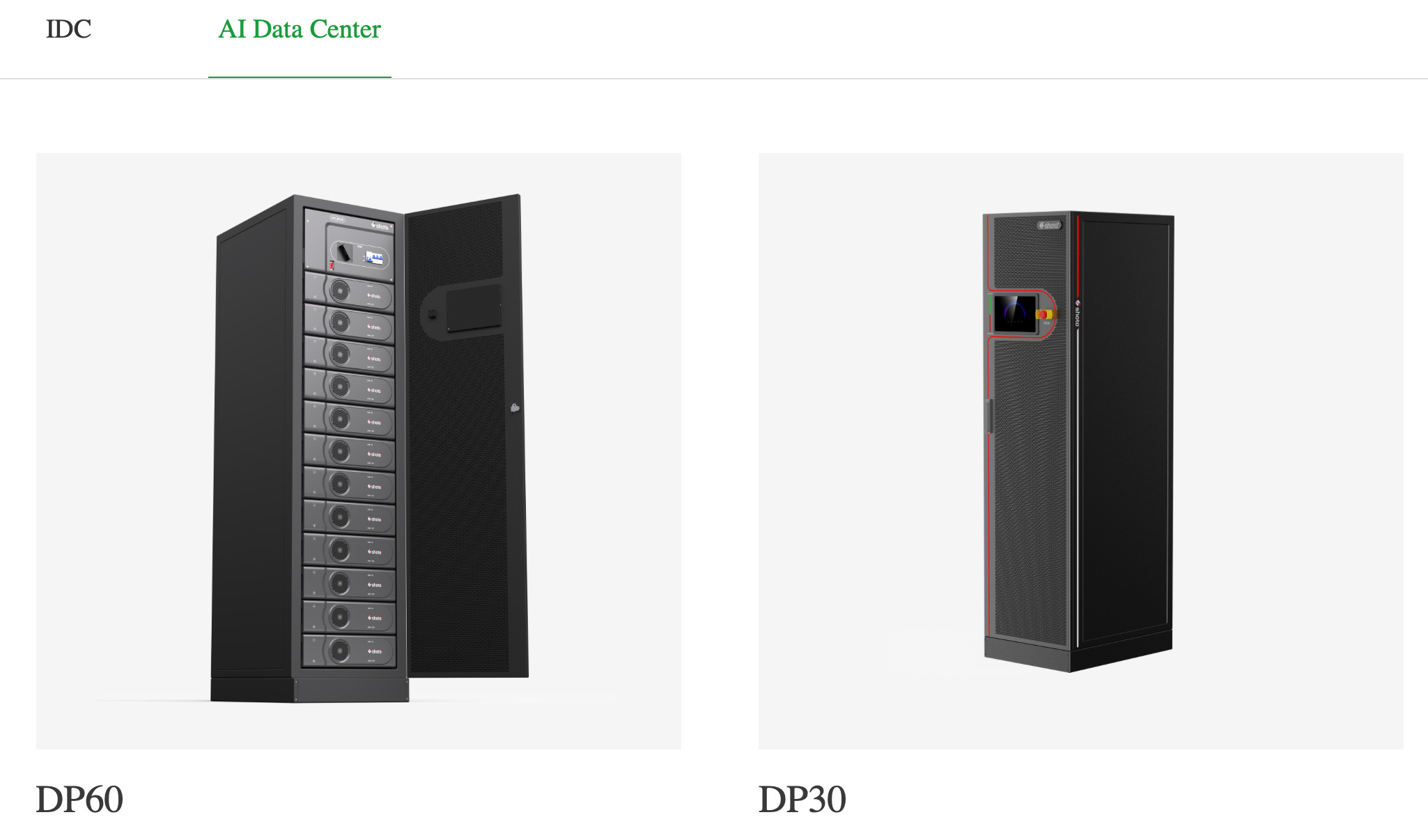
Shuangdeng (Shoto): An Established Business Gets an AI Upgrade
Founded in 1990, with its current corporate entity established in 2011, Shuangdeng is a veteran of China’s backup-power industry. The Jiangsu-based manufacturer spent decades supplying batteries to telecommunications networks and conventional data centers, building a business that generated RMB5.08 billion (approximately $754 million) in revenue in 2025. Listed in Hong Kong, Shuangdeng is particularly interesting because it offers some of the clearest evidence that AI data-center demand is already translating into substantial sales, rather than merely generating orders or attracting new product announcements.
According to its first-half 2026 disclosure, Shuangdeng generated RMB1.3853 billion (about $206 million) in AIDC energy-storage revenue, up 34.8% from a year earlier and representing 52.5% of total revenue. New AIDC orders increased by more than 80%, while new AIDC lithium orders exceeded RMB600 million (about $89 million), more than 20 times the prior-year level. The company also operates a dedicated 2.8 GWh production line for high-rate AIDC lithium systems.
These are substantial figures for a business that has historically served more conventional backup-power applications. But Shuangdeng does not disclose how much of its AIDC revenue comes from high-density AI computing rather than broader data-center infrastructure, nor does it provide margins or customer concentration for the category. Its advantage is an established commercial foothold, rather than demonstrated leadership in the most demanding next-generation AI applications.
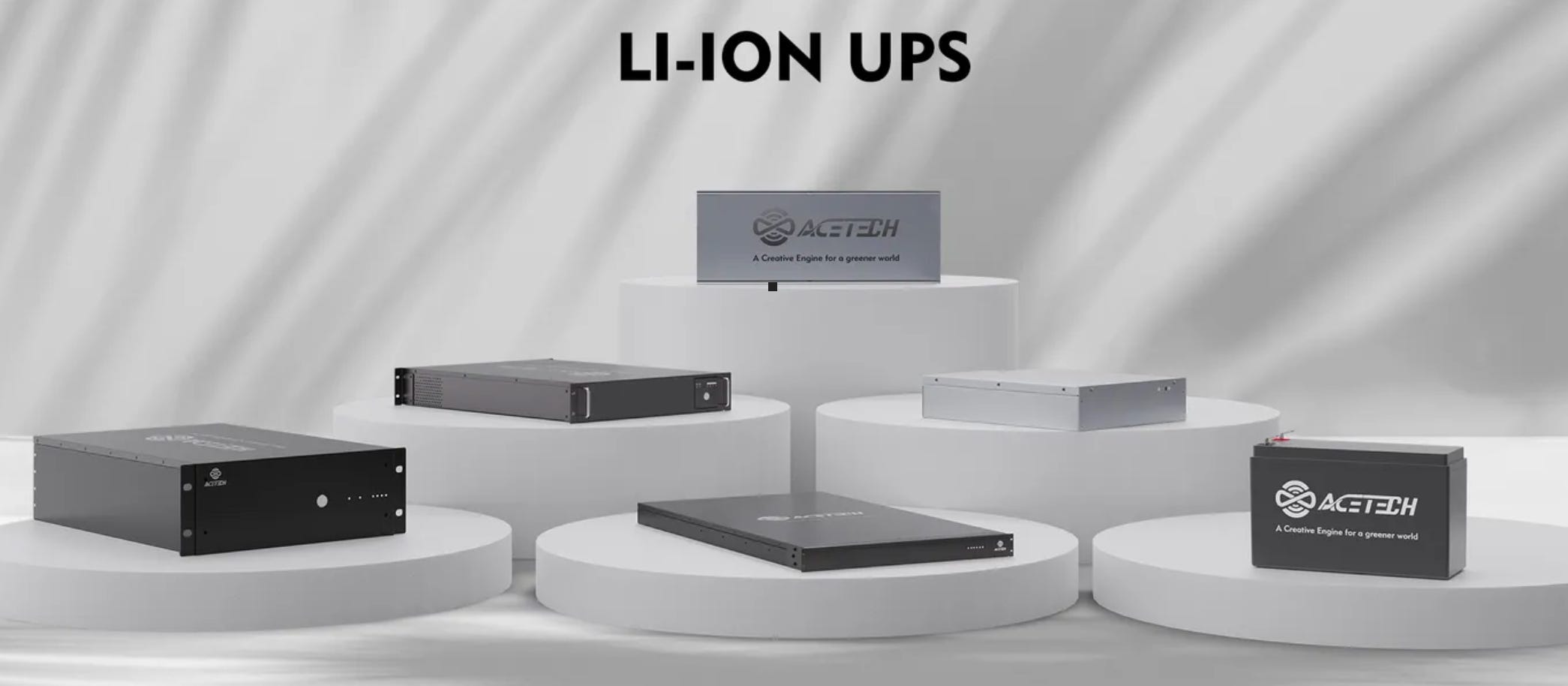
Anshi Technology (Shenzhen Ace Battery): Getting Closer to the Servers
Anshi Technology is a much smaller and younger player, founded in Shenzhen in 2014 and specializing in lithium-ion battery modules and systems for data-center backup, energy storage and industrial applications. The company generated RMB962 million (approximately $143 million) in revenue in 2025 and is pursuing a listing on China’s Shenzhen Stock Exchange. What makes Anshi worth watching is its position closer to the computing equipment itself, where relationships with established power-system manufacturers such as Vertiv and Schneider Electric could provide a route into the more demanding battery backup systems used in AI server racks. The prospectus also cites JPMorgan research describing Anshi as one of the few mainland Chinese battery backup unit suppliers to have entered hyperscaler supply chains, including Meta.
In 2025, Anshi generated RMB156 million (about $23 million) from data-center backup batteries, representing 16.5% of main-business revenue, against total company revenue of RMB962.3 million (about $143 million). Total revenue grew 13.1%, while net profit declined to RMB117.7 million (about $17.5 million). Its relationships with established electrical-equipment manufacturers give it a route into more specialized applications, but next-generation high-power battery backup units remain in development. The next test will be whether those relationships translate into repeat shipments of qualified products for AI computing racks.
Sungrow: Selling the Whole Power System
Founded in 1997 by university professor Cao Renxian, Sungrow is a global heavyweight in solar power electronics and energy storage, with RMB89.18 billion (approximately $13.2 billion) in revenue and around 19,000 employees in 2025. Headquartered in Hefei and listed in Shenzhen, the company built its business around the inverters that convert electricity from solar panels into usable power before expanding into large-scale storage systems. Unlike Shuangdeng and Anshi, which have established positions in backup batteries, Sungrow approaches AI infrastructure from the utility and power-management side, where its experience combining batteries, electrical equipment and controls could give it an advantage in supplying entire data-center power systems.
In August 2026, Sungrow disclosed approximately 2 GWh of AIDC-associated storage orders in hand, alongside more than 10 GWh of additional projects it was pursuing. Its 2026 half-year report also described a family of AIDC-oriented products built around high-voltage direct-current architecture, including its EnerNeo solid-state transformer.
The distinction between orders and prospective projects is important, particularly in a market where large announcements can precede actual construction by years. Nevertheless, its competitive proposition goes beyond supplying battery cells. By combining storage with power-conversion equipment and controls, Sungrow is positioning itself to manage how electricity moves between generation, the grid and the data center.