


Things you might have missed
A few developments since our August 18 issue are worth keeping on your radar.
FROM OUR RECENT COVERAGE
ByteDance’s Seedance supplied more than half of Volcano Engine’s model-as-a-service revenue by June. MiniMax’s open-weight H3 now offers similar multimodal input and editing capabilities, leaving distribution across Jimeng, Doubao, and Gauth as ByteDance’s clearer advantage. Read more →
Alibaba is selling gaming studio Lingxi Interactive Entertainment to Trustar Capital in a deal reportedly worth more than $1.5 billion. The disposal continues Alibaba’s retreat from peripheral consumer businesses as it directs more capital toward AI, cloud infrastructure, and core commerce. Read more →
Alibaba widened its push into device agents, while DeepSeek invested RMB141 million in Unitree. Our August 15–21 China AI recap also covers DeepSeek’s new multimodal model and Tencent’s increasingly AI-focused investor pitch. Read the recap →
FROM WEIJIN RESEARCH
Meta Repositions on Open AI Models as China’s 100,000-Card Cluster Goes Live. The article connects Meta’s new position in the US open-model debate with Claude’s progress on a Riemann hypothesis problem and the commissioning of China’s first fully domestic 100,000-accelerator AI cluster. Read it here →
WHERE WE HAVE BEEN FEATURED
BBC News (August 20, 2026): We joined Business Today to discuss TikTok’s move into payments through direct messages.
AFP (August 19, 2026): We discussed why Chinese humanoid-robot companies remain more focused on technical progress and commercially scalable uses than on overseas sales. Read the article →
BBC News (August 18, 2026): We appeared on Business Today to discuss Alibaba’s Qwen and the global open-model ecosystem.
Fortune (August 18, 2026): We discussed Alibaba’s sale of Lingxi Games as part of the company’s effort to dispose of non-core assets and concentrate capital on AI and cloud infrastructure. Read the article →
China’s hard-tech startups are beginning to hit the public markets in force after years in which many of the country’s most strategically important technology companies remained private, sustained by venture capital, local-government funds and state-backed investors as they spent heavily on technologies Beijing wanted to localize. Now several are reaching the market at once, giving public investors a chance to put a price on businesses built during that push.
The past month alone has been unusually busy, with ChangXin Memory Technologies (CXMT) completing mainland China’s biggest IPO in years, humanoid-robot maker Unitree closing 460% above its offer price on its first trading day, and Shanghai accepting Yangtze Memory Technologies’ (YMTC) application to raise RMB33 billion ($4.9 billion). The companies sell very different things, but they share a basic characteristic: each required enormous amounts of capital to develop strategically important technology long before the underlying business could support that spending. LandSpace now offers another version of the same proposition, this time in commercial space.
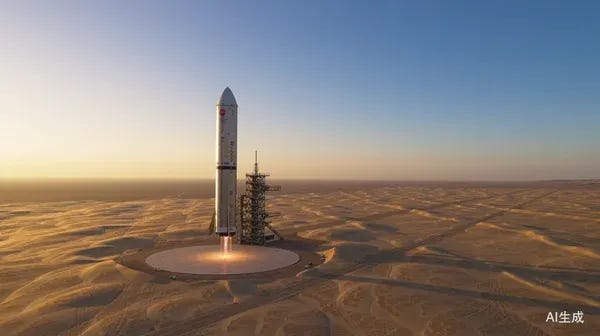
The company entered the spotlight on August 19, when its Zhuque-3 rocket placed a satellite into orbit and returned its first stage to a landing pad in Gansu, making LandSpace the first Chinese private company to complete an orbital mission and land its booster. The milestone comes as LandSpace is going through the IPO process on Shanghai’s STAR Market, where it hopes to raise RMB7.5 billion ($1.1 billion) after more than RMB7 billion ($1 billion) of financing to date, with almost all the new capital earmarked for reusable-rocket technology and production capacity.
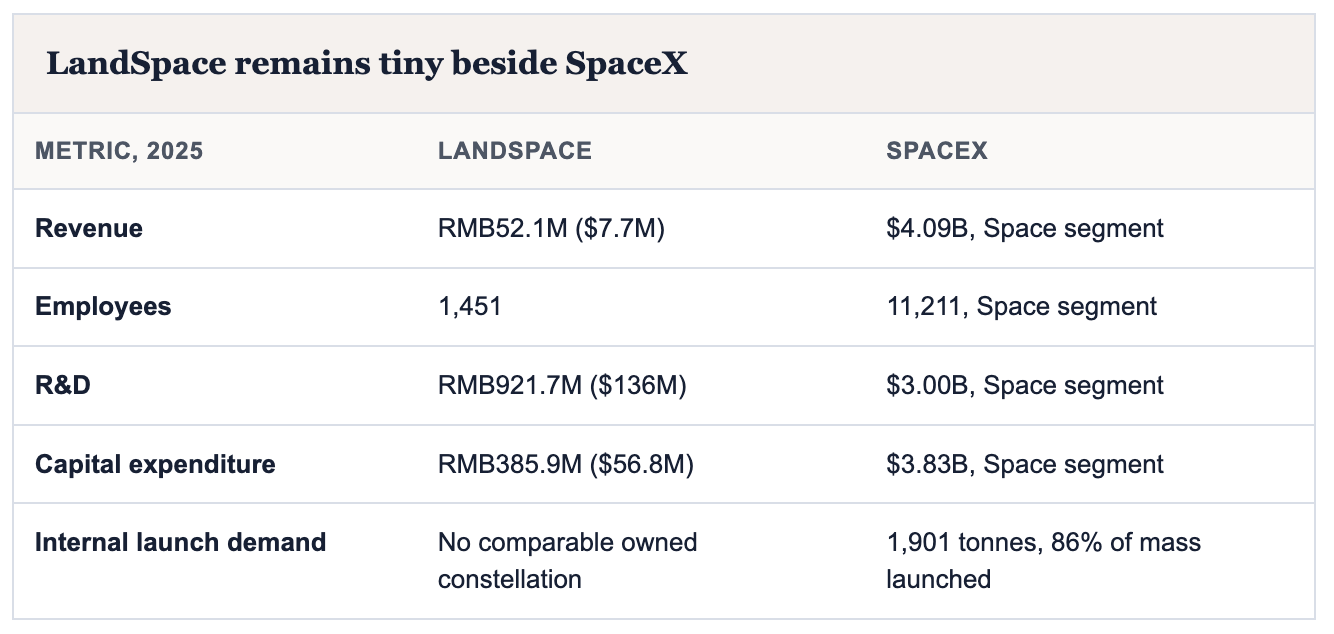
LandSpace belongs to the same hard-tech story, albeit at a much earlier commercial stage: it generated just RMB52.1 million ($7.7 million) of revenue last year while spending RMB921.7 million ($136 million) on R&D and recording an attributable net loss of RMB1.71 billion ($252 million), leaving public investors to finance not a mature launch business but the next stage of an engineering effort that private and state-backed capital has already spent more than a decade building. That is also why we are paying attention despite space not being a core Tech Buzz China focus area in the way AI, semiconductors and robotics are, because those boundaries are becoming harder to maintain as cheaper launch enables enormous communications constellations, Chinese companies experiment with computing and other infrastructure in orbit, and commercial space increasingly intersects with the technology industries we already follow.
Attempts to measure China’s distance from SpaceX in years have not aged particularly well. In 2019, after LinkSpace landed a small reusable demonstrator similar to one SpaceX had flown six years earlier, The Motley Fool declared China “six years behind” and suggested it could have an orbital reusable rocket by 2021. Instead, China took another seven years to recover a booster from an orbital mission, widening the historical gap to almost eleven years. Yet even that comparison can mislead: Blue Origin had been landing its smaller, suborbital New Shepard since 2015, but needed another decade to recover an orbital-class New Glenn booster in November 2025. LandSpace followed only nine months later.
So saying China is now at “SpaceX 2015” describes the milestone, but tells us little about what comes next. We’re therefore pleased to repost the analysis below from Weijin Research, whose detailed, numbers-driven work on Chinese technology we have long enjoyed and highly recommend subscribing to. Before getting to their analysis of Zhuque-3, we provide some context on LandSpace itself, its financing, and China’s increasingly crowded reusable-rocket industry.
Three people, 70 square meters and no engine
LandSpace was founded in June 2015, just as SpaceX was closing in on the Falcon 9 milestone. Its origins were considerably less glamorous than its current factories suggest. Founder Zhang Changwu was a finance professional rather than an aerospace engineer, having worked at HSBC and Santander and earned an MBA from Tsinghua University before turning to commercial space as Beijing began opening an industry long dominated by state aerospace groups to private capital.
A 2022 profile describes Zhang and two aerospace veterans starting the company in a 70-square-meter office in Beijing’s Yizhuang district, with little of the technology they would eventually need under their own roof. The original plan was pragmatic: rather than build every critical component from scratch, LandSpace tried to buy a liquid-fuel rocket engine and integrate existing technology into its own vehicle. When it could not complete the purchase, the company was forced into the much harder task of developing its own propulsion.
What began as a constraint became central to LandSpace’s strategy. The company developed the Tianque family of methane engines and gradually brought more of the rocket in-house, gaining greater control over its technology at the cost of a longer and considerably more expensive development cycle. Progress came through repeated failure: Zhuque-1, its first and much smaller solid-fuel rocket, failed to reach orbit in 2018, while the first methane-fueled Zhuque-2 did the same in December 2022. Seven months later, the second Zhuque-2 became the world’s first methane-fueled rocket to reach orbit, clearing the way for the larger stainless-steel Zhuque-3 and its more ambitious goal of first-stage reuse. Its maiden flight reached orbit last December but lost the booster during the landing attempt; on August 19, the second one came home.
Investors funded the learning curve
As we point out above, with just RMB52.1 million ($7.7 million) of revenue against a RMB1.71 billion ($252 million) net loss in 2025, LandSpace remains heavily dependent on outside capital. Operations and capital spending consumed about RMB1.61 billion ($237 million) of cash during the year, funded largely through new equity and borrowing.
The proposed IPO would take that funding cycle to another scale, raising RMB7.5 billion ($1.1 billion) toward a RMB8.46 billion ($1.24 billion) investment program focused overwhelmingly on reusable rockets. Zhang has nevertheless retained tight control: despite holding a 23.47% economic interest, supervoting shares give him 75.20% of the votes.
LandSpace is only the current leader
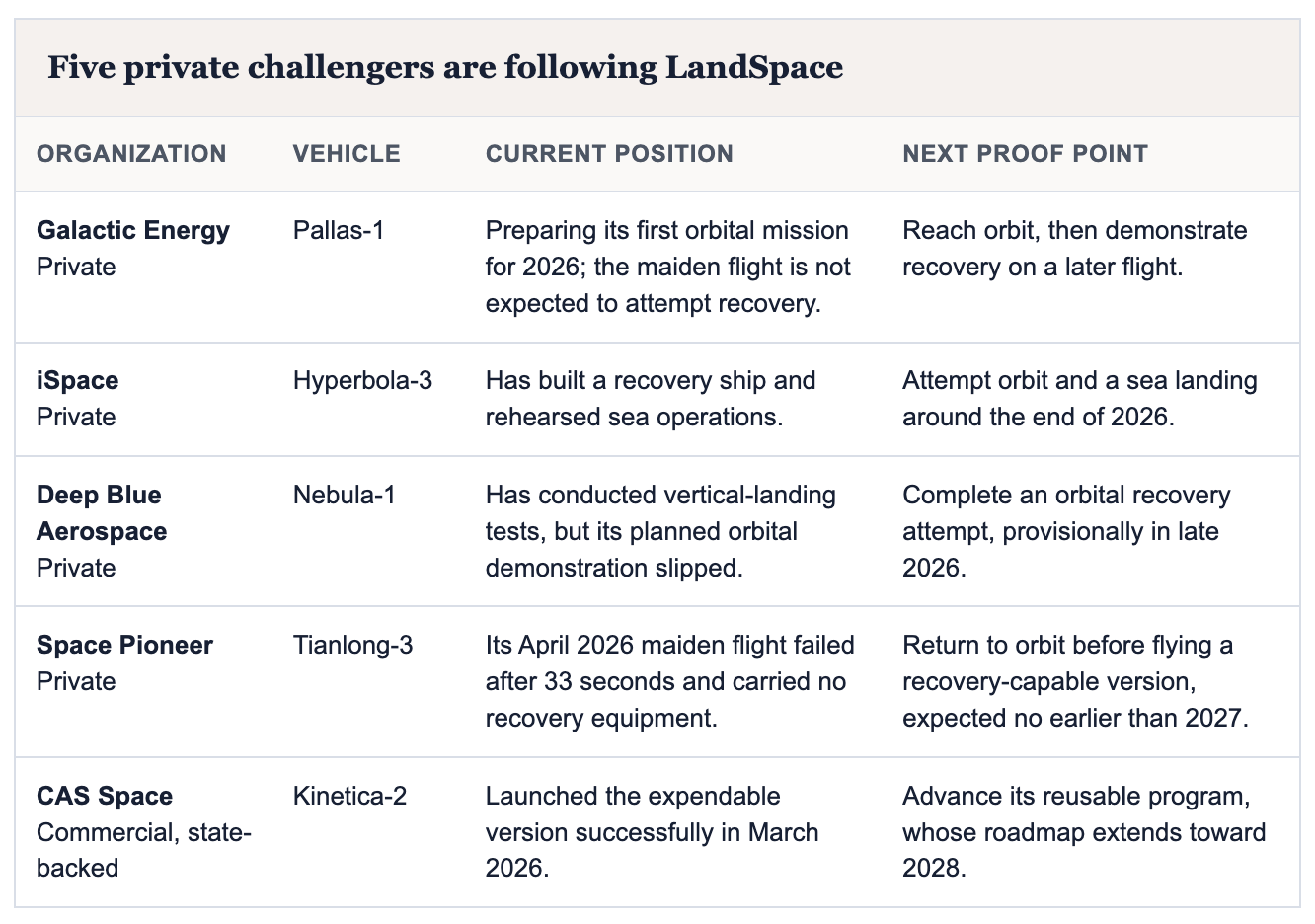
LandSpace is far from China’s only bet on reusable launch. Over the past decade, private and state-backed capital has financed a growing field of companies pursuing variations of the same objective: build larger liquid-fueled rockets, recover the expensive first stage rather than discard it, and eventually bring down the cost of putting infrastructure into orbit. LandSpace is ahead, but several competitors are now approaching different stages of the same technological path.
The state sector is moving in parallel. In July, Long March 10B recovered a stage at sea using a net-based system, a month before Zhuque-3 completed China’s first successful ground-based, landing-leg recovery of an orbital-class booster.
That is where Weijin Research’s analysis takes over.
REPOSTED FROM WEIJIN RESEARCH
Zhuque-3 Booster Lands Safely, but Will LandSpace’s IPO Blast Off?
With Zhuque-3 now the sixth orbital rocket to recover its booster, LandSpace’s listing faces both technical milestones and commercial scrutiny.
WEIJIN RESEARCH · AUGUST 20, 2026
This article originally appeared on Weijin Research on Huxiu on August 19, 2026. Original Chinese title: 「朱雀三号稳稳回收,蓝箭航天IPO会“炸”吗」. It has been translated and adapted for an English-speaking audience.
At a Glance
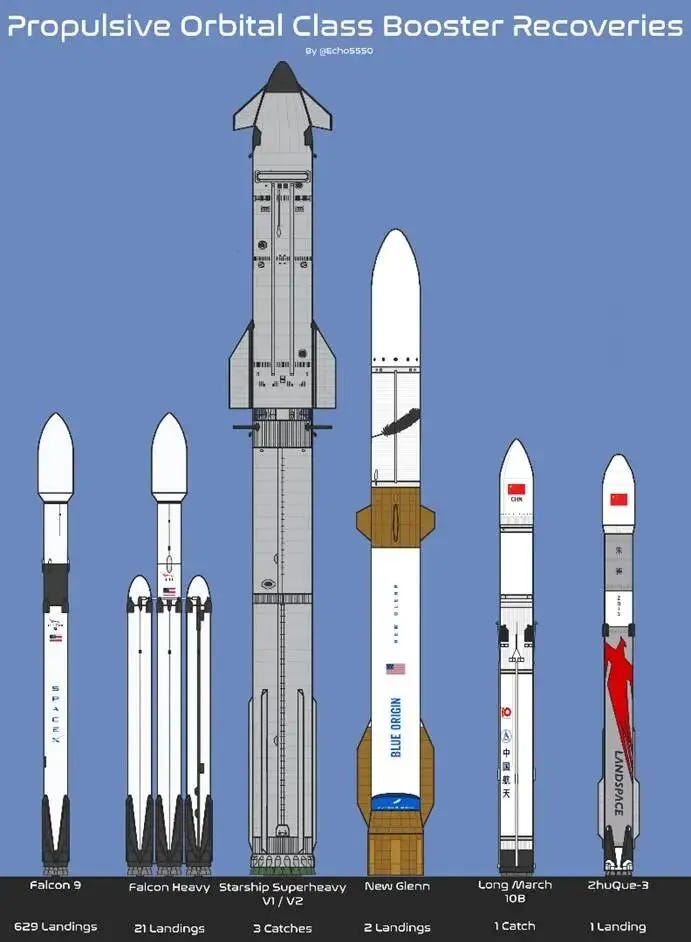
Zhuque-3 has become the world’s sixth medium-to-large launch vehicle to successfully recover its booster during an orbital launch mission. Ahead of it are SpaceX’s Falcon 9, Falcon Heavy, and Starship, Blue Origin’s New Glenn, and the Long March 10B from China Aerospace Science and Technology Corporation.
This has made LandSpace’s IPO journey considerably steadier. Earlier, ChangXin Technology and Unitree listed one after the other, allowing capital to begin genuinely chasing the core targets on the hard-tech main line. Now, beyond computing-power infrastructure and embodied-intelligence infrastructure, a market narrative around space infrastructure is also beginning to emerge. At present, LandSpace has entered the “inquiry” stage of the listing process, and this successful recovery of Zhuque-3 could further strengthen its valuation expectations.
But hold on. The capital market needs not just a good story, but a commercial path that can deliver on that story. We need to take stock first.
Recovery Does Not Close the Loop; Reflight Does
2026 is a critical inflection point for China’s commercial space industry. In July, the Long March 10B became China’s first reusable launch vehicle to be successfully recovered, and this was also the world’s first net-based recovery of a launch vehicle. In August, Zhuque-3 went a step further, becoming China’s first launch vehicle to successfully reach orbit and be recovered on land.
The two technical routes each have their own characteristics. The former avoids the dead weight of landing legs and shock-absorbing structures, which is conducive to lightening the vehicle and improving payload-delivery efficiency; the latter is more convenient for inspection, maintenance, and re-flight, and is expected to reduce full-lifecycle costs.
However, if “delivering payloads to orbit and recovering and reusing the first stage” is used as the commercialization metric, especially the ability to form stable, high-frequency, commercial operations, then at present only SpaceX has truly formed this capability loop anywhere in the world.
Late last year, Bezos’s Blue Origin achieved successful orbit insertion and first-stage recovery on the second launch of New Glenn. In April this year, Blue Origin went further and attempted to re-fly the previously recovered first stage. Although the first stage landed successfully again, a second-stage fault meant the payload could not enter the intended orbit, and the mission as a whole still failed to complete its set objectives. In May, New Glenn exploded during a static-fire test, severely damaging launch facilities and casting even greater uncertainty on its original plan to resume launches at the end of the year.
Meanwhile, Rocket Lab, which ranks second in launch frequency in the US market, also acknowledged at its latest earnings call that the first-flight window for its Neutron mid-size rocket, which is designed for recovery and reuse and was originally scheduled for the end of this year, is narrowing.
The Long March 10B plans to complete reuse of its recovered booster within the year, while Zhuque-3 plans to achieve its first re-flight of a recovered first stage within six months. This is still not the rhythm of true commercial launches. Last year, Falcon 9 launched about 165 times, averaging three times a week, and some first stages have already accumulated more than 30 flights.
The market’s valuation anchor for LandSpace will also lie in how quickly it can validate re-flight, continuously shorten re-flight intervals, and raise the number of re-flights. Only in this way can it further reduce the marginal cost of a single launch.
In fact, although Zhuque-3’s payload capacity is benchmarked against the Falcon 9, its technical route is aligned with Starship, aiming precisely to keep recovery costs as low as possible and increase reuse frequency.
The advantage of stainless steel is not just material cost. Its high-temperature performance and structural characteristics allow the vehicle to adopt simpler thermal protection and structural schemes, creating an opportunity to reduce maintenance complexity. The advantage of liquid-oxygen-methane is not just that it is cheaper than kerosene; kerosene leaves carbon deposits in the engine that take time to clean and affect the reuse cycle.
Only rapid inspection and rapid reuse can truly amplify the advantages of this technical route, and the process will produce more data, further accelerating rocket iteration.
Five Years to Overtake Falcon 9: Is It Enough?
According to the prospectus, by 2029 the number of reuses of the Zhuque-3 first stage will be able to support routine, high-frequency launch demand. But the prospectus does not disclose more specific figures.
Still, since Musk, the person in this industry most qualified to make a judgment, said last year that “if we’re lucky enough, Zhuque-3 could outperform the Falcon 9 within five years,” we may as well make a simple calculation based on the information currently known.
Recently, Dong Kai, deputy chief designer of Zhuque-3, revealed that LandSpace can currently build about 20 rockets a year; Dai Zheng, chief commander of Zhuque-3, said the first stage may initially be able to fly only two to three times, then gradually expand to four to five times, or even ten times or more.
This means that in the early years of the “five-year catch-up period,” even if LandSpace maintains full production, the launch count that newly built vehicles can contribute is still limited. What truly determines whether launch frequency can increase rapidly is the reuse count and turnaround efficiency of first stages already in service.
If we set aside launch pads and other factors for now, if a first stage can fly only three times on average, an annual production capacity of 20 vehicles corresponds to an annual launch capacity of about 60; if it flies eight times on average, that corresponds to 160. The latter means each first stage would need to complete a full launch, recovery, inspection, and re-flight cycle every 45 days on average.
Considering that in the later years of the “five-year catch-up period,” the in-service fleet will also include existing vehicles produced in the first two years or even earlier that have already completed their first flights, this goal, arithmetically speaking, does not seem entirely impossible. Historically, after validation with 12 Falcon 9 vehicles, SpaceX compressed the reuse cycle from more than six months to 45 days, a process that took three and a half years.
However, the number of launch pads and launch-related regulatory policies clearly cannot be ignored. Even in the United States, launch pads are now in short supply. The Space Industrial Base Annual Report (SSIB 2026), published for the seventh consecutive year, lists this as one of the key bottlenecks: coastal launch sites are approaching their physical and political limits, while the economics and policy feasibility of inland launches remain uncertain.
In China, according to Caixin, commercial satellites are entering the stage of industrial mass production, but constrained by bottlenecks such as launch sites and pad scheduling, they are almost in a mode of “production set by launches,” with manufacturing and launching each constraining the other.
Launch pads are not the only thing that matters; recovery sites are equally critical. On this mission, Zhuque-3 Yao-2 lifted off from the Dongfeng Commercial Aerospace Innovation Test Zone, and the first stage ultimately landed on the Zhuque-3 landing pad in Minqin, Gansu, with an actual recovery range of about 390 kilometers. By comparison, the design recovery ranges of both the Falcon 9 and the full-configuration Zhuque-3 are about 600 kilometers.
A shorter recovery distance means the first and second stages must separate earlier, sacrificing part of the velocity increment and making the second stage do more of the orbital insertion work, while the first stage also needs to consume extra propellant for lateral deceleration.
In other words, Zhuque-3’s current recovery and reuse has not yet squeezed launch costs down to their limit. According to LandSpace’s calculations, raising the recovery range from 390 kilometers to 600 kilometers could increase actual payload capacity by roughly 2 to 3 tonnes. LandSpace is reportedly set to try ship-based recovery or build new recovery sites next.
What You Launch Matters More Than Launching
Given that rocket launch services in China remain extremely scarce, the so-called “surpassing the Falcon 9 in five years” may be, for China’s commercial space sector, not only ambition but also a realistic need.
According to LandSpace’s prospectus, more than 220,000 satellites are already planned domestically in the 10,000-satellite-class low-orbit satellite internet programs alone. Last year, China completed 50 commercial launches, putting 311 satellites into orbit. If launch capacity does not improve substantially, building out all of these satellite internet networks would take centuries.
Moreover, low-orbit satellites are not infrastructure that can be deployed once and used permanently. Their design life is usually only a few years. As satellites retire one after another, new satellites will need to be continuously launched in the future for replacement and replenishment. In other words, China’s commercial space sector faces not a “one-off order” for 220,000 satellites, but a high-frequency launch market that will last for decades or even longer.
What is even more noteworthy is that, as launch costs fall, the infrastructure carried by rockets may itself change. At present, the relatively mature satellite service areas in commercial launches are mainly concentrated in satellite internet and the more niche direct-to-phone satellite (D2D) communications, but in the future they may gradually expand to computing power, energy, and even data-processing facilities.
In Musk’s view, after 2029 space will be the only promised land for AI computing power. He has vowed that SpaceX will build a ground-based 10 GW data center by the end of 2027, but his longer-term plan is a space data center with 100 GW of computing power, and even a petawatt-scale (1,000 TW) lunar data center in the future.

In this sense, this launch and recovery of Zhuque-3 carries even more symbolic significance. LandSpace has already signed commercial launch orders for the GW constellation, the Qianfan constellation, and others. However, the payload that rode Zhuque-3 into orbit this time was not a customer’s satellite, but the Honghu-03 satellite, independently developed by Hongqing Technology, LandSpace’s satellite-manufacturing subsidiary. According to the technical architecture it disclosed, Honghu-03 carries the Tianji intelligent-computing payload 1.0, accumulating real measured data for the development of 6G space-terrestrial integrated networks and low-orbit computing.
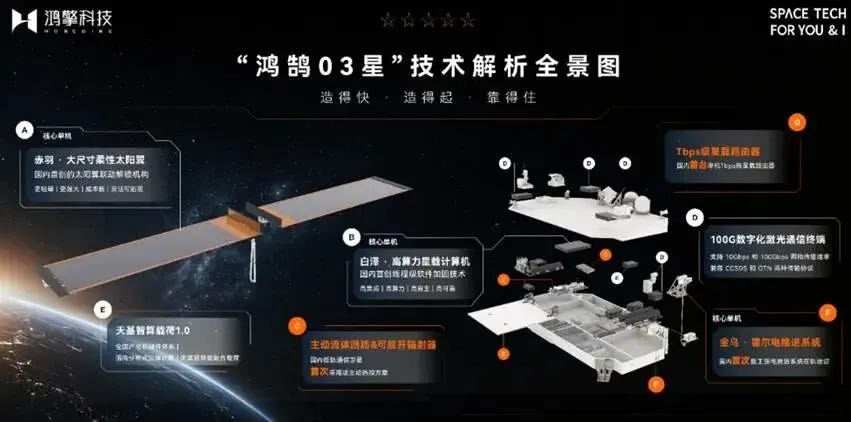
When Musk marveled that LandSpace might catch up with or even surpass the Falcon 9 within five years, the premise he offered was actually quite telling: “By then, SpaceX will already have entered the Starship era.”
LandSpace is also betting on this race. This IPO plans to raise 7.5 billion yuan, of which 4.7 billion yuan will go toward reusable technology and 2.8 billion yuan toward reusable production capacity. Perhaps this includes the “Lanyan” engine now under development. This 220-tonne-class liquid-oxygen-methane full-flow staged combustion cycle engine follows the same technical route as SpaceX’s Raptor and completed a long-duration, full-system hot-fire test of the entire engine in March this year.
Perhaps LandSpace’s generational pursuit of SpaceX is compressing what was once a generational gap of more than a decade between China’s commercial space sector and the United States into one time window after another that must be validated within five years.
If that is truly the case, then, faced with a SpaceX with a market value of about $1.9 trillion today and a Blue Origin with a post-money valuation of $130 billion, what order of magnitude will the center of LandSpace’s valuation point to after it goes public?
